South Africa's Livestock Industry
South Africa is home to over 13 million cattle, 28 million sheep, 7 million goats, and hundreds of millions of poultry. Livestock farming is the backbone of rural livelihoods across all nine provinces, from the semi-arid Karoo sheep farms to the lush KwaZulu-Natal cattle country, from the Limpopo Boer goat farms to the Free State feedlots.
From a smallholder with 10 goats on a half-hectare plot in Soweto to a commercial farmer running 500 Brahman cattle on 2 000 hectares in Limpopo, the fundamentals of good livestock management stay the same: proper nutrition, effective disease prevention, good housing, sound breeding decisions, and a clear understanding of your markets.
This page covers all the major livestock species farmed in South Africa, with specific guidance on feeding, housing, health management, and estimated costs and returns, updated for 2026 market conditions.
Popular Breeds in South Africa
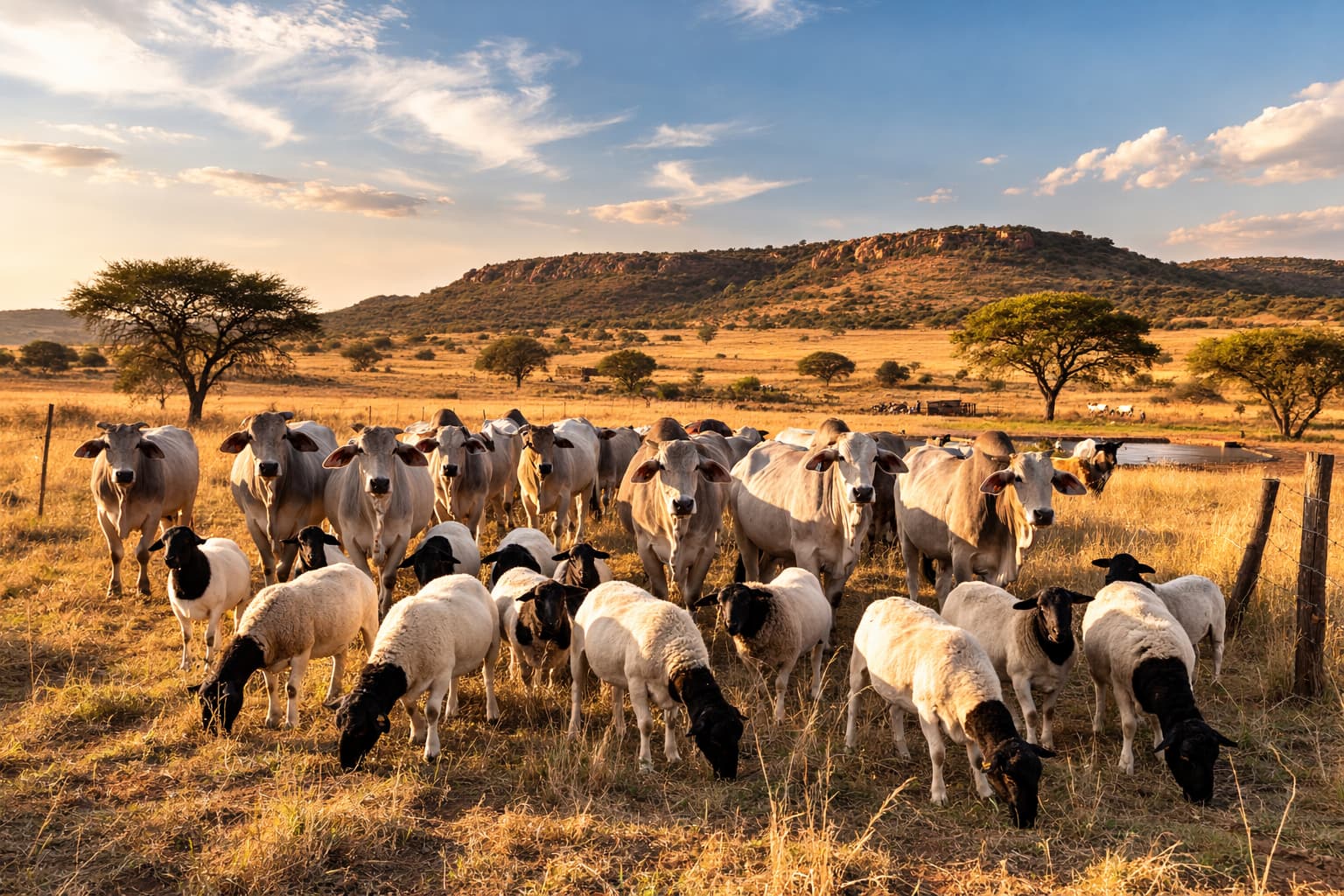
Choosing the right breed for your region, climate and market is the most important decision in livestock farming. Here are the most commercially important breeds in South Africa.
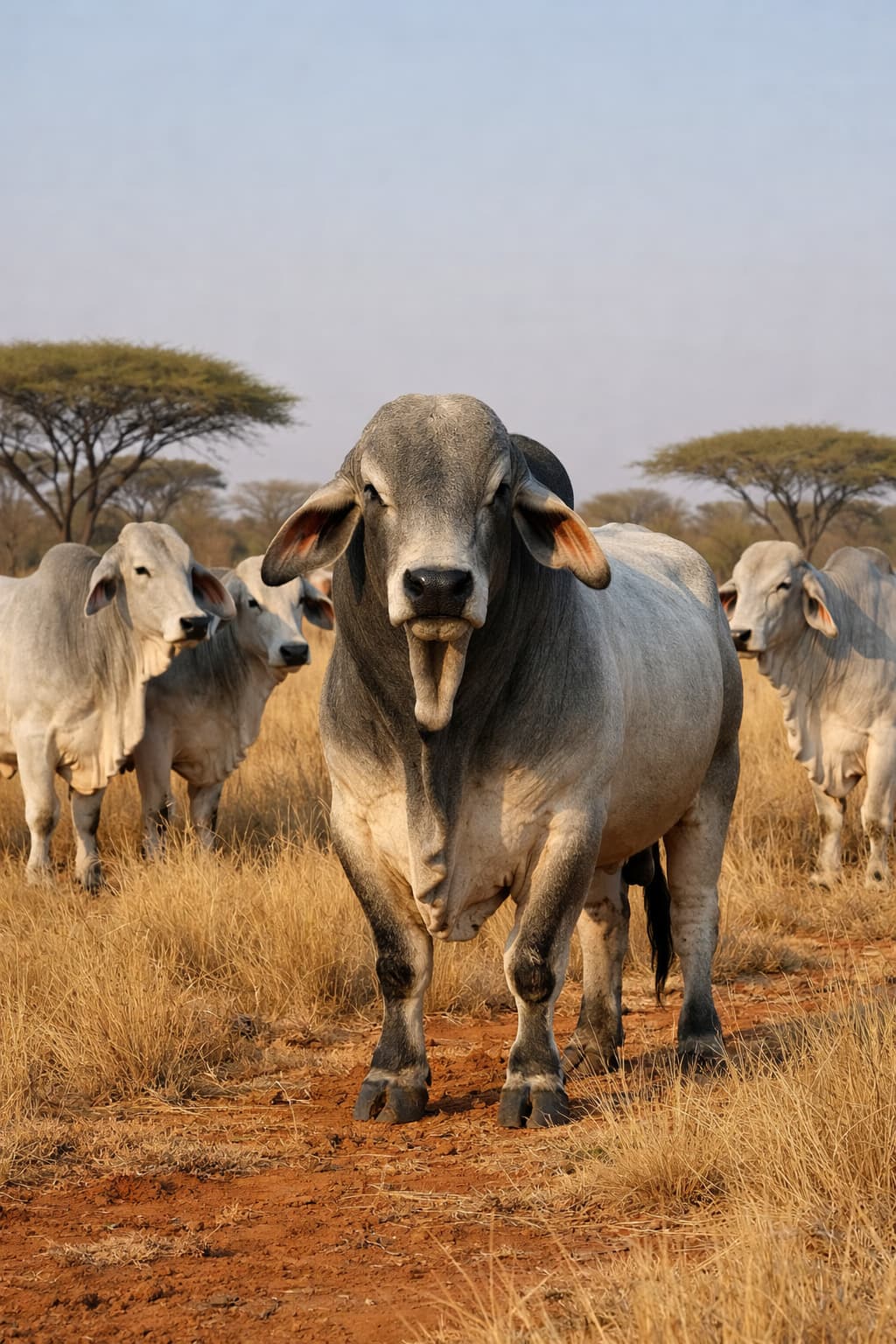
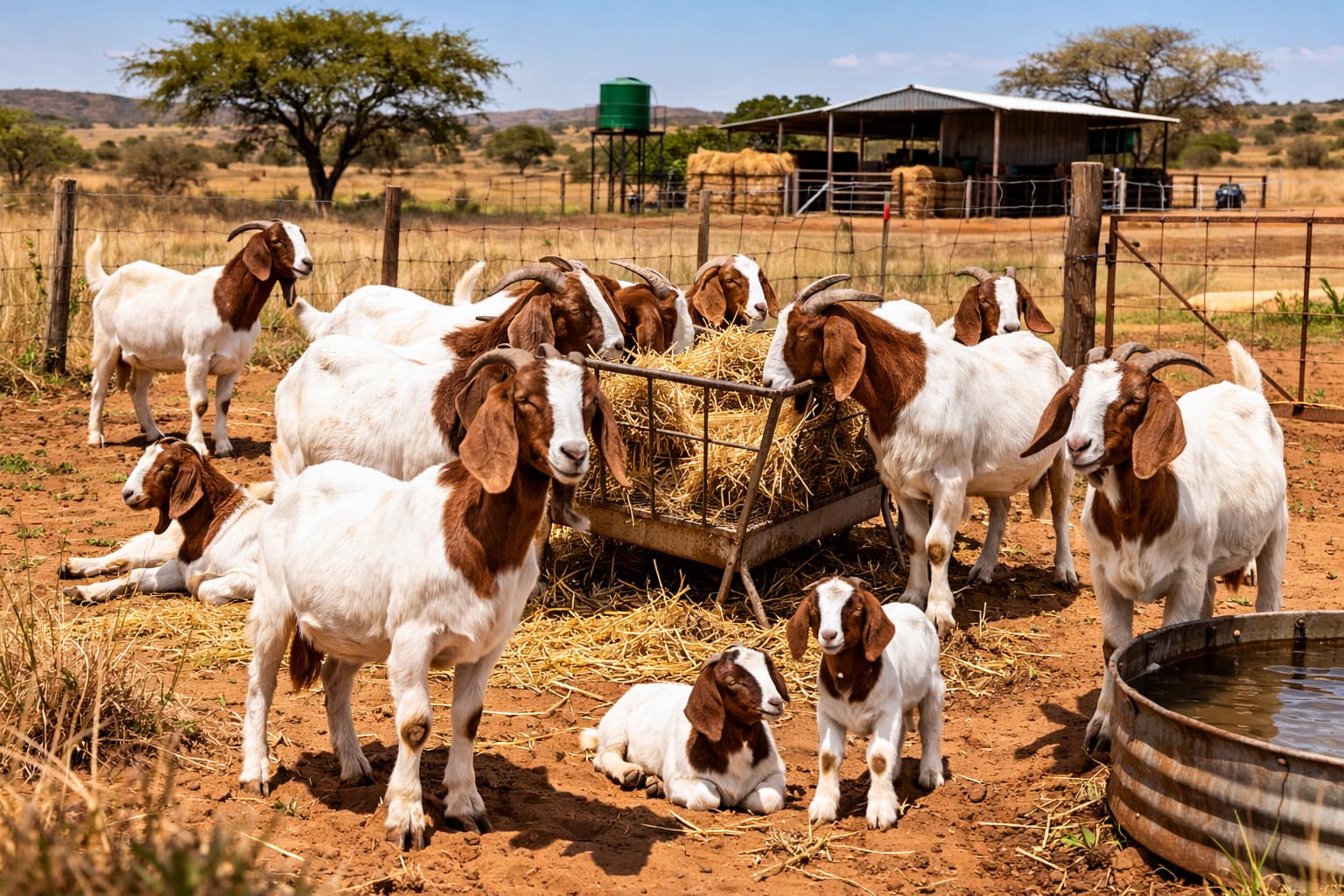
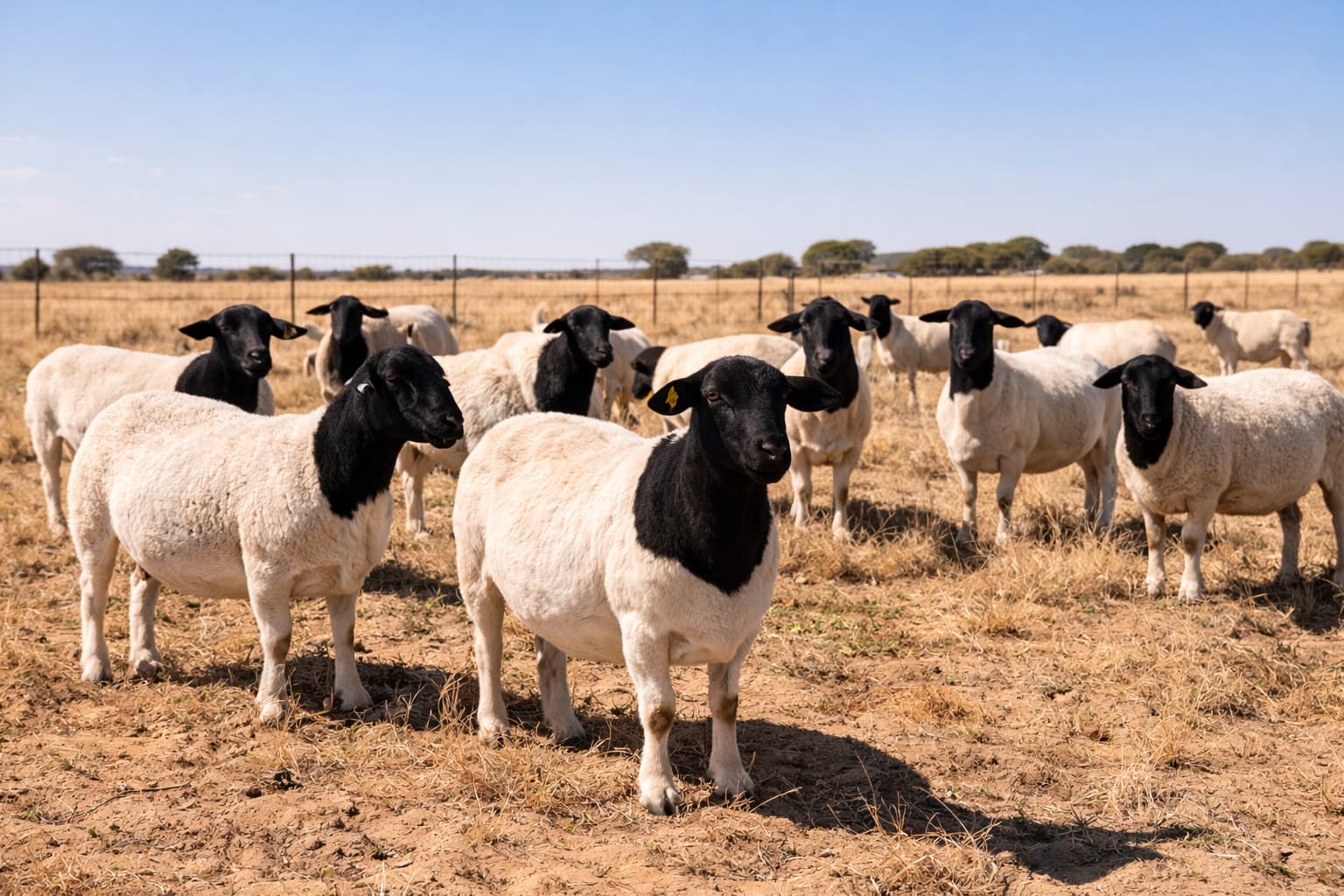
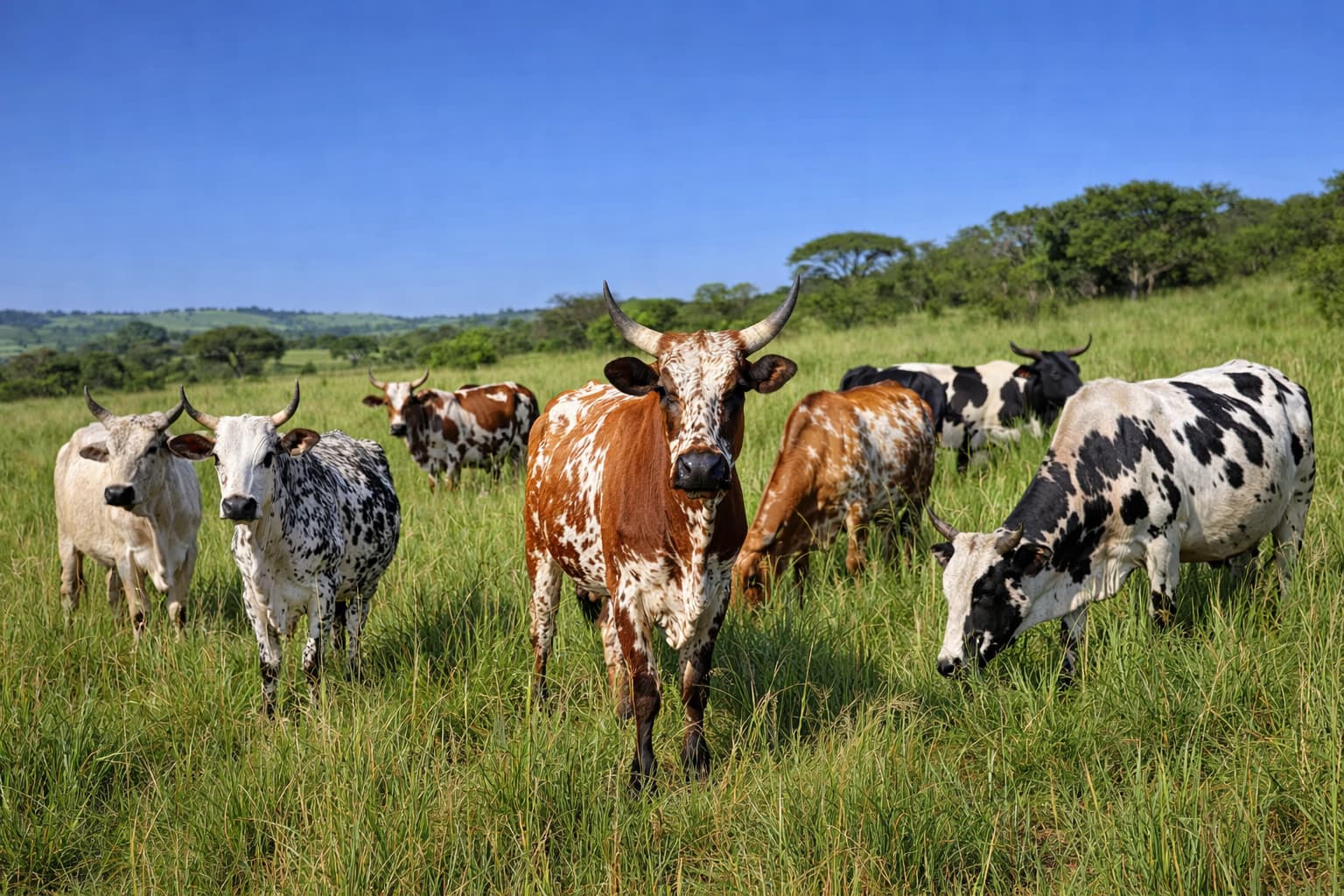
Chicken Farming in South Africa
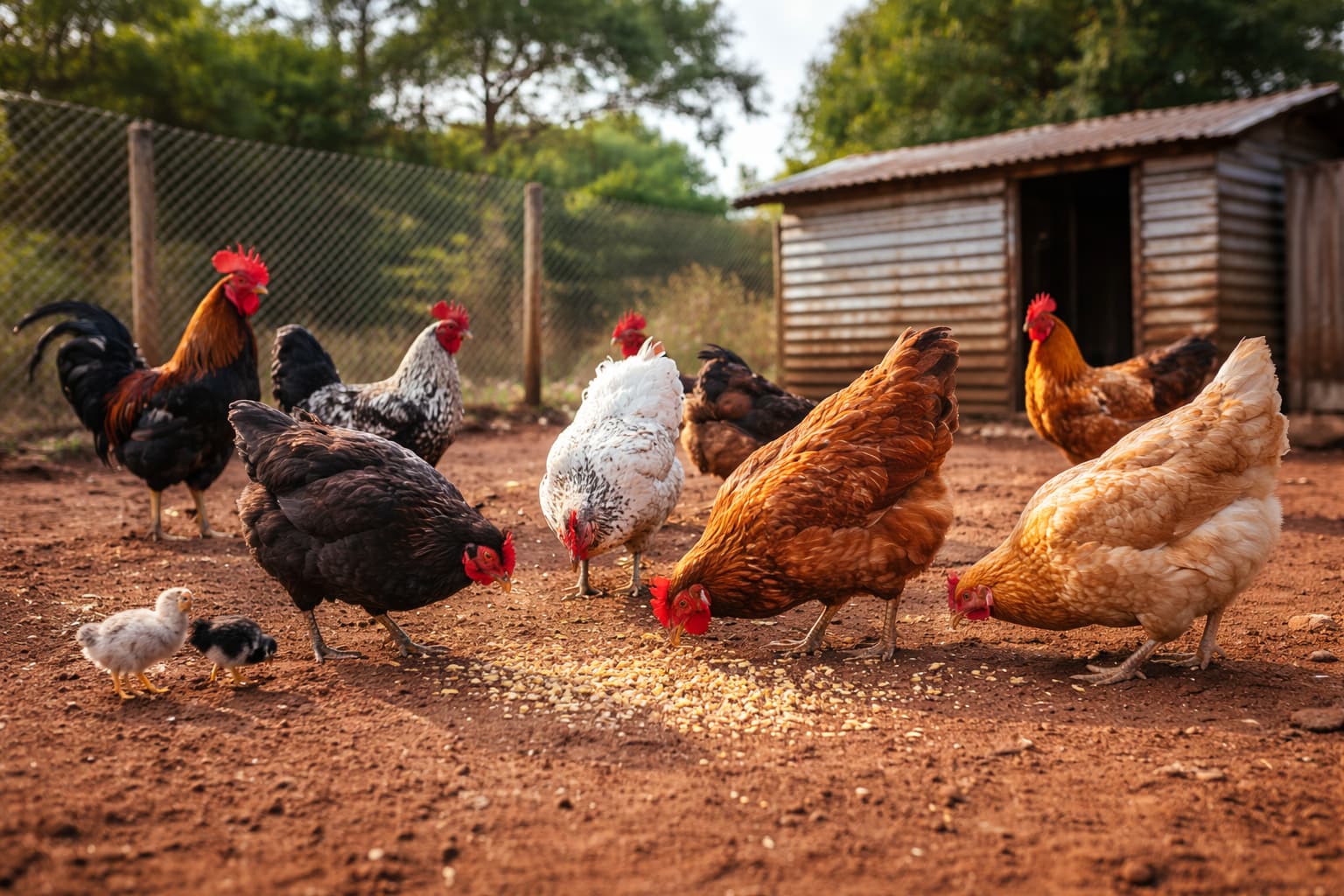
Poultry farming is the most accessible entry point into livestock farming for South African smallholders. The South African broiler industry produces over 1.8 billion chickens per year, making it one of South Africa's major agricultural production sectors. Backyard and small-scale poultry farming is booming in townships and peri-urban areas as demand for affordable protein grows.
Indigenous vs Commercial Breeds
South African small-scale farmers face a critical choice between indigenous breeds (Potchefstroom Koekoek, Venda, Naked Neck) and commercial broilers or layers. Each has very different requirements, growth rates and markets.
| Breed Type | Growth Rate | Feed Conversion | Best For | Market |
|---|---|---|---|---|
| Ross 308 Broiler | 2kg @ 35 days | 1.6:1 | Commercial scale | Abattoirs, processors |
| Potchefstroom Koekoek | 1.5kg @ 12 weeks | 3.5:1 | Smallholders | Live market, informal |
| Lohmann Brown (Layer) | 300 eggs/year | 2.1kg feed/dozen | Egg production | Direct, spaza shops |
| Venda Chicken | 1.2kg @ 16 weeks | 4:1 | Free range, rural | Live market, premium |
Chicken Vaccination Schedule, South Africa 2026
Vaccination is non-negotiable in South African poultry farming. Newcastle Disease and Avian Influenza can wipe out an entire flock within days. Follow this schedule strictly.
| Age | Disease | Vaccine | Route |
|---|---|---|---|
| Day 1 | Marek's Disease | HVT + SB-1 | Subcutaneous injection (hatchery) |
| Day 7–10 | Newcastle Disease | Clone 30 or Lasota | Eye drop or drinking water |
| Day 14 | Infectious Bronchitis | H120 | Drinking water |
| Day 14 | Gumboro (IBD) | Intermediate strain | Drinking water |
| Day 21 | Gumboro booster | Intermediate Plus | Drinking water |
| Day 28 | Newcastle booster | Lasota | Drinking water |
| 6 weeks (layers) | Fowl Typhoid | AviPro Salmonella Duo | Drinking water |
| 12 weeks (layers) | Newcastle + IB | Killed oil vaccine | Intramuscular injection |
🐔 Important: Never vaccinate sick birds. Always use clean, cold water free of chlorine for drinking-water vaccines. Store vaccines in a refrigerator (2–8°C) and never freeze. Contact your local state veterinarian if you suspect Newcastle Disease. It is a notifiable disease in South Africa.
Feeding Guide for Chickens
Feed accounts for 65–70% of the total cost of broiler production in South Africa. Getting nutrition right is the single most important profitability factor in chicken farming.
- Day 0–10 (Starter): 22–24% protein, 3 000 kcal/kg ME. Ad lib feeding essential for early growth.
- Day 11–24 (Grower): 19–21% protein, 3 100 kcal/kg. Reduce protein gradually as growth slows.
- Day 25 to slaughter (Finisher): 17–19% protein, 3 200 kcal/kg. High energy to finish muscle development.
- Layers (18 weeks+): 16–17% protein, 3–4% calcium for strong eggshells. Critical to increase calcium at point of lay.
💡 Tip: In South Africa's hot summer months, add extra vitamin C (250mg/litre) and electrolytes to drinking water during heat stress. Heat stress above 32°C can reduce egg production by up to 30% and broiler growth by 15%.
Boer Goat Farming, Guide
The Boer goat is an important meat-goat breed in South Africa. Developed in the Eastern Cape in the early 1900s by crossing indigenous Namaqua Hottentot goats with imported Indian and European breeds, the Boer goat has become a global breed known for rapid growth, adaptability, and superior meat quality.
Housing Requirements
Goats need shelter from rain, wind and extreme heat, but they do not need elaborate housing. A simple three-sided shed with a corrugated iron roof provides adequate shelter for most South African conditions. Allow at minimum 1.5m² per adult goat in the shelter, and 4m² per goat in the camp. Good drainage under the shelter is critical to prevent foot rot and respiratory disease.
Feeding Boer Goats
Goats are browsers, not grazers, they prefer shrubs, leaves and mixed vegetation over grass. In their natural environment they would cover large areas selecting a diverse diet. In intensive systems you need to supplement this:
- Pasture: Good quality mixed bushveld or planted pasture (eragrostis, lucerne) at 8–10 goats per hectare in average conditions
- Supplement: 200–300g of 16% protein pellets per adult goat per day in dry season or during pregnancy/lactation
- Minerals: Provide a loose mineral lick at all times, especially phosphorus, copper and selenium in SA soils
- Water: 2–3 litres per day minimum, more in summer. Never restrict water access
Breeding Programme
The ideal mating ratio is 1 buck per 30–35 does. Run the buck with the does for 6 weeks (covering two heat cycles). Does come into heat every 21 days with a heat duration of 24–36 hours. Gestation is 150 days (5 months). Aim for 2 kidding seasons per year, March/April and September/October work well in most SA regions.
Livestock Price Guide, South Africa 2026
The following are general market price estimates for major livestock categories in South Africa. Prices vary by province, breed quality, age, and current market demand. Always verify with your local auction house before buying or selling.
| Animal | Category | Price Range (ZAR) | Notes |
|---|---|---|---|
| Boer Goat | Weaner (3 months) | R800 – R1 500 | Mixed sex, unregistered |
| Boer Goat | Breeding doe | R1 800 – R4 000 | Depends on age & quality |
| Boer Goat | Stud buck | R5 000 – R35 000+ | Registered, show quality |
| Dorper Sheep | Breeding ewe | R1 500 – R3 500 | Unregistered, good quality |
| Dorper Sheep | Ram | R3 000 – R12 000 | Registered adds significant value |
| Brahman Cattle | Breeding cow | R12 000 – R22 000 | In-calf adds 20–30% premium |
| Nguni Cattle | Ox (slaughter) | R8 000 – R14 000 | Varies with weight and grade |
| Indigenous Chicken | Live adult | R80 – R180 | Higher in townships, festive season |
| Broiler Chicken | Live @ 2kg | R55 – R75 | Ex-farm gate, day-old chick cost ~R12 |
⚠️ Price Disclaimer: All prices are general market estimates only. Actual prices at auction and private sales vary significantly. Always verify current prices with your local auction house, Agri SA, or a registered livestock agent before making any buying or selling decisions.
Disease Management & Common Livestock Diseases in SA
Disease management is the second-largest cost in South African livestock farming after feed. Prevention is always cheaper than treatment. Build a relationship with a local veterinarian and establish a health calendar for your herd.
- Heartwater (Cowdriosis): Tick-borne disease, critical in bushveld areas. Vaccinate at-risk animals and control ticks with registered dip or spray.
- Blackquarter (Blackleg): Fatal clostridial disease in young cattle. Vaccinate annually with Blaauwkwartier vaccine before rainy season.
- Foot-and-Mouth Disease (FMD): Highly contagious and a notifiable disease. Animals in the FMD zone (Kruger Buffer) are vaccinated. Report any suspected cases immediately.
- Lumpy Skin Disease: Notifiable disease spread by insects. Vaccination is available and highly recommended in eastern and northern SA.
- Bluetongue: Affects sheep and goats. Spread by midges, most severe in summer-rainfall areas. Annual vaccination recommended.
- Internal Parasites (Worms): The number one production-limiting disease in small ruminants in SA. Use FAMACHA scoring to identify animals that actually need drenching, avoid blanket dosing to prevent resistance.