Getting Started: Choosing Your Earthworm Species
Not all earthworms are suitable for farming. Garden earthworms (the large, slow-moving worms you find when digging) do not thrive in the high-density, heavily fed conditions of a worm farm. The species used in vermiculture are specialist composting worms that naturally live in decomposing organic matter rather than deep soil.
The two species most widely farmed in South Africa are:
- Eisenia fetida (Red Wiggler / Brandling Worm): The global standard for vermiculture. Fast-reproducing, highly efficient at converting organic matter, tolerant of a wide range of conditions, and robust in the SA climate. Red wigglers are the recommended starting species for all SA worm farmers. They are available from worm farms and some garden centres across the country.
- Lumbricus rubellus (Red Earthworm): Slightly larger than E. fetida and often found wild in compost heaps and manure in South Africa. Performs well in worm farming systems and is commonly used alongside or as an alternative to red wigglers. Larger body size makes them popular for fishing bait markets.
Some SA worm farmers also work with Eisenia andrei (the tiger worm), which is closely related to the red wiggler and performs similarly well in vermiculture systems. If you are sourcing starter worms locally, you will often receive a mixture of these compatible species, which is perfectly fine for a productive worm farm.
Setting Up Your Worm Bins: Container Options for SA Farmers
Worms can be farmed in a wide range of containers and structures. The right system for you depends on your available space, capital, and intended scale of production. The four most common systems used by South African worm farmers are:
Plastic Tub System (Beginner / Small Scale)
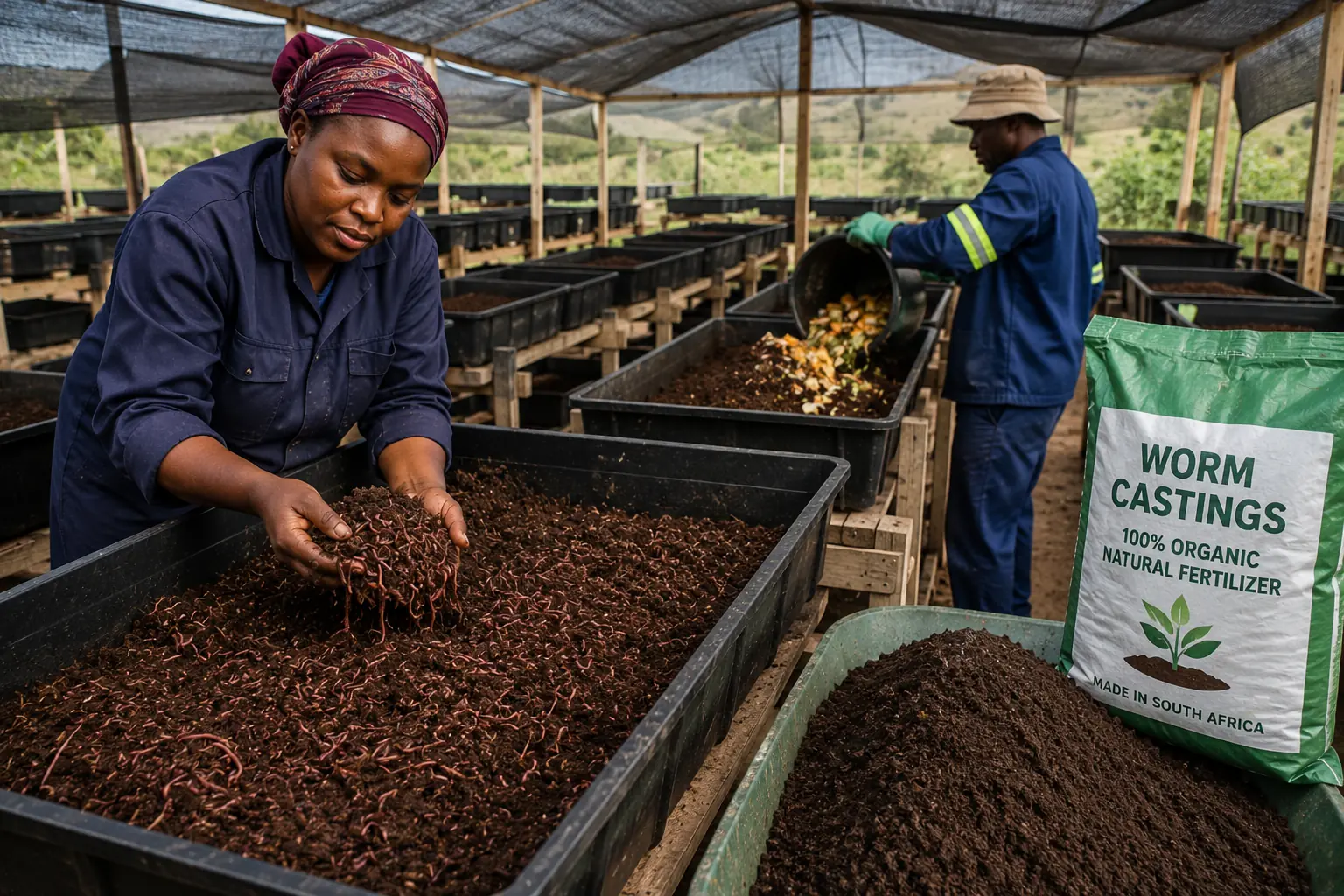
The simplest and cheapest entry point. Use 60–90L plastic storage tubs with drainage holes drilled in the base and ventilation holes in the sides or lid. Stack two tubs, one active worm bin above one collection tray for leachate (worm tea). This system costs R200–R500 to set up, is easy to manage, and can produce both castings and live worms from a single household or small farm operation.
Wooden Worm Bed (Intermediate / Medium Scale)
A wooden frame bed (typically 1.2m × 0.6m × 0.4m) built from untreated timber or old pallets. Wooden beds breathe better than plastic, maintain more stable moisture and temperature, and can hold larger worm populations. Multiple beds can be stacked or arranged in a row for higher production. A 4-bed wooden system can produce 15–25 kg of castings per month and support a significant live worm operation.
Continuous Flow Reactors (Commercial Scale)
Purpose-built vertical flow systems where fresh feed is added to the top and finished vermicompost is harvested from the bottom via a mesh grid. Very efficient for large-scale production as harvesting does not disturb the active worm population. Initial investment is R2 000–R8 000 per unit but labour and management are minimal at scale. Several SA companies supply these systems, or they can be fabricated locally.
Windrow System (Farm Scale)
Long narrow rows (windrows) of bedding and organic material inoculated with worms, managed outdoors or under shade cloth. This is the most scalable system for SA farmers with access to abundant organic inputs, particularly livestock manure. Windrows can be 30–50 metres long, are managed with minimal equipment, and can process tonnes of manure per month. Shade and moisture management are critical in SA's hot climate.
Earthworms are most productive between 15°C and 25°C. In South Africa's hot summer provinces (Limpopo, Northern Cape, Mpumalanga), shade cloth and regular moisture management are essential to prevent overheating, temperatures above 35°C kill worms rapidly. In Highveld winters (Gauteng, Free State), insulation or indoor placement protects worms from frost damage. KZN's moderate year-round climate is ideal for outdoor worm farming with minimal temperature management.
Feeding Your Worms: What to Use and What to Avoid
Earthworms eat decomposing organic matter. They do not eat fresh food directly but rather the microorganisms (bacteria and fungi) that begin breaking it down. This distinction matters: feeding worms very fresh material can cause heating and acidification that harms or kills them. Allow fresh organic material to pre-compost for a few days before adding it to an active worm bin.
Excellent Feed Sources in South Africa
- Cattle, horse, and goat manure: The ideal base feed for worm farms, already partially broken down, mild pH, and abundant in SA. Aged (not fresh) manure is best. Many SA worm farmers run their operations adjacent to their livestock to take advantage of free manure supply.
- Vegetable and fruit scraps: Excellent moisture source and nutrition. Avoid citrus in large quantities (acidic) and onion and garlic (repellent to worms). Pre-chop or blend scraps to speed decomposition.
- Cardboard and paper: An essential carbon source that balances the nitrogen in food scraps and manure. Shredded cardboard, newspaper, and office paper are all suitable. Remove any glossy or plastic-coated materials.
- Coffee grounds and tea leaves: Excellent worm feed, high in nitrogen, neutral pH, and appealing to worms. Coffee grounds can make up 20–30% of the feed mix without problems.
- Garden waste: Fallen leaves (in moderation, avoid very woody material), grass clippings (thin layers to prevent heating), and plant trimmings are good. Avoid diseased plant material.
Materials to Avoid
- Fresh meat, fish, and dairy products, they attract pests and create dangerous pH and anaerobic conditions
- Large quantities of citrus peel, onions, or hot chilli, repellent to worms in high concentrations
- Treated or chemically preserved wood chips or sawdust
- Dog and cat faeces, may contain parasites harmful to worms and human health
- Fresh chicken manure in large quantities, extremely high nitrogen causes dangerous ammonia levels; always pre-age or dilute heavily before adding to a worm bin
Managing Moisture, pH, and Bedding in Your Worm Farm
The three most important environmental parameters to manage in a worm farm are moisture, pH, and bedding structure. Getting these right is the difference between a active, rapidly reproducing worm population and a declining one.
Moisture
The ideal moisture content for a worm bin is around 70–80%, often described as "wrung-out sponge" consistency. When you squeeze a handful of bedding, a few drops of water should come out. Too dry (below 60%) and worms struggle to move, feed, and reproduce. Too wet (above 85%) and anaerobic conditions develop, the bin becomes smelly, and worms may try to escape or die.
In SA's hot, dry climates (Northern Cape, semi-arid Karoo, North West highveld), bins dry out quickly and need regular light watering, especially outdoor systems. In humid coastal areas (KZN coast), drainage is more important than moisture addition.
pH
Earthworms prefer a slightly acidic to neutral pH, ideally 6.0–7.5. Worm bins tend to acidify over time as organic matter breaks down. Adding crushed eggshells, dolomitic lime, or agricultural lime (small amounts, well mixed in) corrects acidity. Overfeeding citrus fruit, onions, or fresh grass clippings are common causes of sudden acidification in SA worm bins.
Bedding Structure
Good bedding provides structure, carbon, and moisture retention while allowing oxygen to reach the worms. Shredded cardboard is the best all-round bedding for SA conditions, widely available, cheap, effective, and beloved by worms. Coco coir (coconut fibre) is another excellent option. Aged wood chips, straw, and dry leaves can supplement cardboard bedding. A well-structured bin should have visible air pockets and should never appear compacted or waterlogged.
Harvesting Vermicompost and Live Worms
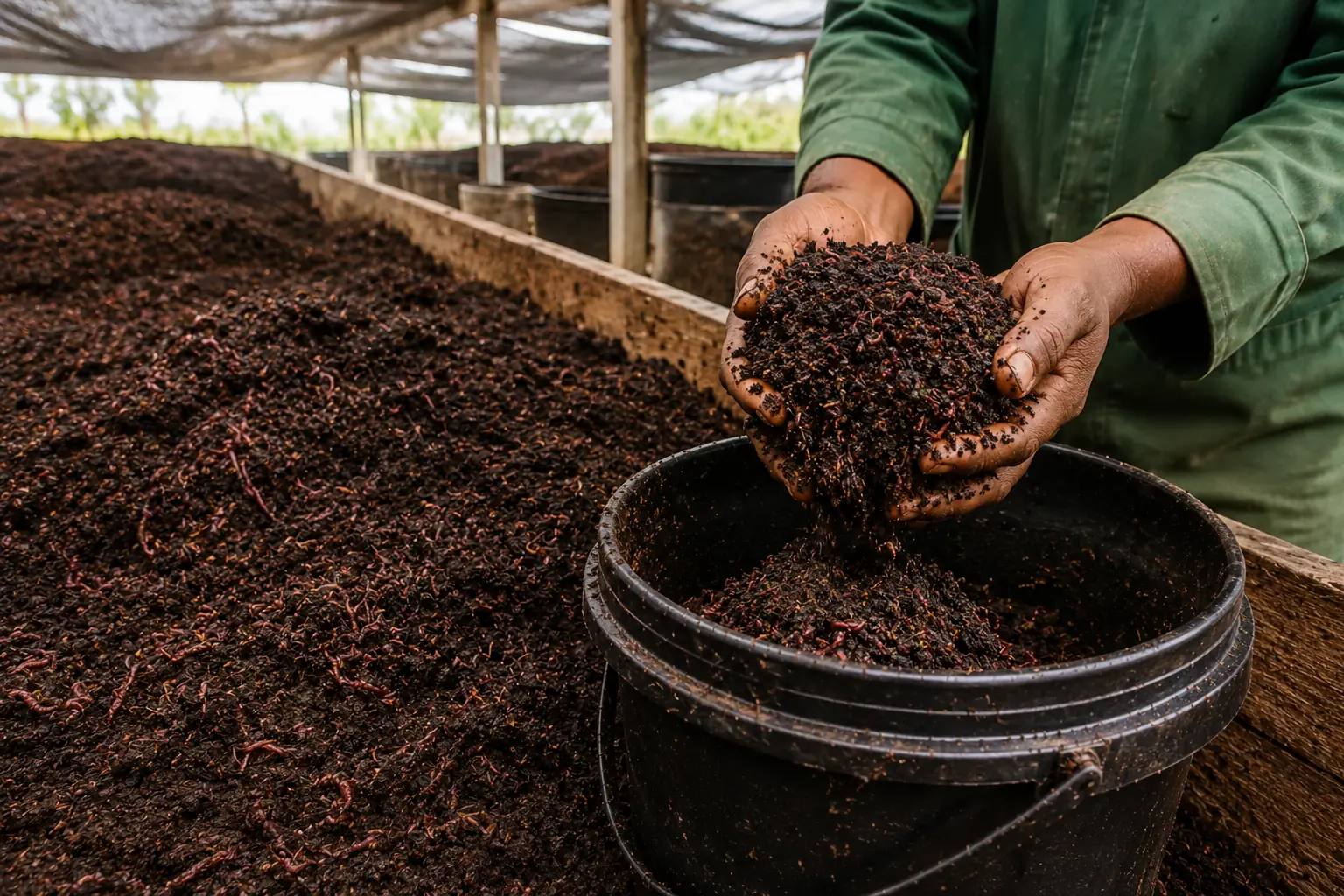
After 60–90 days of active feeding, your worm bin will begin to fill with finished vermicompost, a dark, crumbly, earthy-smelling material quite different in appearance and texture from the original bedding. This is your harvestable product.
Harvesting Castings
The simplest harvesting technique exploits the worms' natural light avoidance. Pile the finished compost in a cone shape in bright sunlight or under a bright lamp. The worms will burrow to the dark centre of the pile. After 20–30 minutes, scrape the outer, worm-free layer of castings into a collection container. Repeat until only the worm mass remains. This method is clean, fast, and stress-free for the worms.
Larger operations use a vibrating screen (trommel) to separate castings from worms and uncomposted material. A mesh size of 4–6mm works well for red wiggler sorting.
Harvesting Live Worms
For live worm sales (fishing bait, poultry feed, aquaculture, or sales to other worm farmers), use the same light method described above to concentrate worms, then weigh and pack in moist bedding. Live worms for bait and home composting are typically sold in 100g, 250g, or 500g quantities. Breeding stock for other vermiculture operations is sold in 1kg or larger lots.
The SA Vermicompost and Live Worm Market
The market for both vermicompost and live worms is active and growing strongly in South Africa, driven by rising interest in organic gardening, food security projects, and sustainable agriculture. Key market segments include:
- Home gardeners and urban farmers: The primary retail market for both live worms and bagged vermicompost. Farmers markets, local Facebook groups, and neighbourhood online marketplaces (Gumtree, Facebook Marketplace) are the main sales channels. Demand significantly exceeds supply in most SA urban centres.
- Garden centres and nurseries: Wholesale bagged vermicompost to retail nurseries and garden centres. Requires consistent quality, packaging, and reliable supply volumes. Typically pays R15–R30/kg wholesale for quality castings.
- Organic vegetable farmers: Bulk vermicompost for soil amendment and seedling growing medium. Long-term supply contracts with organic vegetable growers provide stable, predictable income for larger SA worm operations.
- Fishing bait suppliers: Live red wigglers and red earthworms are consistently in demand from fishing tackle stores and anglers. Clean, lively worms in good condition command R80–R150 per kg at retail.
- Poultry and aquaculture farmers: Live worms as a protein-rich feed supplement for backyard chickens, free-range layer hens, and tilapia aquaculture. This market is especially interesting for SA farmers who run both worm and livestock operations together.
- Worm leachate (worm tea): The liquid that drains from active worm bins is a potent, soluble fertiliser. Diluted 1:10 with water and applied as a liquid fertiliser or foliar spray, worm tea commands R30–R80 per litre from organic gardeners and farmers markets.
A well-managed 20-bin worm operation in South Africa can realistically produce: 60–100 kg of bagged vermicompost per month (R1 500–R5 000 at R25–R50/kg); 5–10 kg of live worms per month (R400–R1 500 at R80–R150/kg); plus worm tea sales. Combined, a serious part-time worm farm in a good urban or peri-urban market can generate R2 500–R7 000 per month, with minimal input costs.
Troubleshooting Common Worm Farming Problems in South Africa
Even experienced worm farmers encounter problems. Here are the most common issues on SA worm farms and how to resolve them:
- Worms escaping the bin: Typically caused by one of three issues, conditions inside the bin have become uncomfortable (too wet, too acidic, or overheated); new worms haven't settled and are exploring; or the bin is too bright. Check moisture, pH, and temperature first. If conditions are correct, escaping usually stops within 24–48 hours as worms settle.
- Foul smell from the bin: Indicates anaerobic conditions, usually caused by overfeeding, too-wet bedding, or feeding unsuitable materials (meat, dairy). Stop feeding, add dry shredded cardboard to absorb moisture and improve aeration, and remove any rotting material causing the smell. The bin should recover within a week.
- Flies and other pests: Fruit flies are attracted to fresh vegetable scraps. Always bury fresh food under a layer of bedding rather than leaving it exposed. Fly screen lids help. Ants are a problem in dry conditions, stand bin legs in water or petroleum jelly to prevent entry.
- Worm population declining: Check all environmental parameters. The most common causes of worm decline in SA are overheating in summer (shade and moisture critical), acidification from overfeeding citrus or protein sources, or fresh chicken manure added before aging. A recovering bin may need 4–6 weeks to rebuild population after adverse conditions are corrected.