Why Spirulina Farming is a Growing Opportunity in South Africa
Spirulina (Arthrospira platensis) is a blue-green microalgae that has captured global attention for ranking among the most nutritionally dense foods on earth. Gram for gram, it contains more protein than meat, more iron than spinach, and a unique concentration of antioxidants, omega fatty acids, vitamins, and minerals. South Africa's growing health food market, combined with the country's abundant sunshine and warm temperatures, positions it as an exceptionally promising location for spirulina production.
Global spirulina demand has been growing at 9–12% per year, driven by plant-based protein trends, health supplement consumption, and its adoption in food fortification programmes targeting malnutrition. In South Africa, spirulina is currently sold at retail prices of R300–R1,200 per 100g of dried powder, the vast majority of which is imported from China, India, or the USA. This import gap represents a clear commercial opportunity for South African producers who can grow, process, and market spirulina locally.
💚 What makes spirulina unique: Spirulina is approximately 60–70% complete protein by dry weight, higher than beef (26%), soy (36%), or eggs (13%). It contains all essential amino acids, is rich in B vitamins (including B12 precursors), iron, beta-carotene, and phycocyanin, its distinctive blue-green antioxidant pigment. It is one of the few non-animal sources that contains gamma-linolenic acid (GLA), an important omega-6 fatty acid.
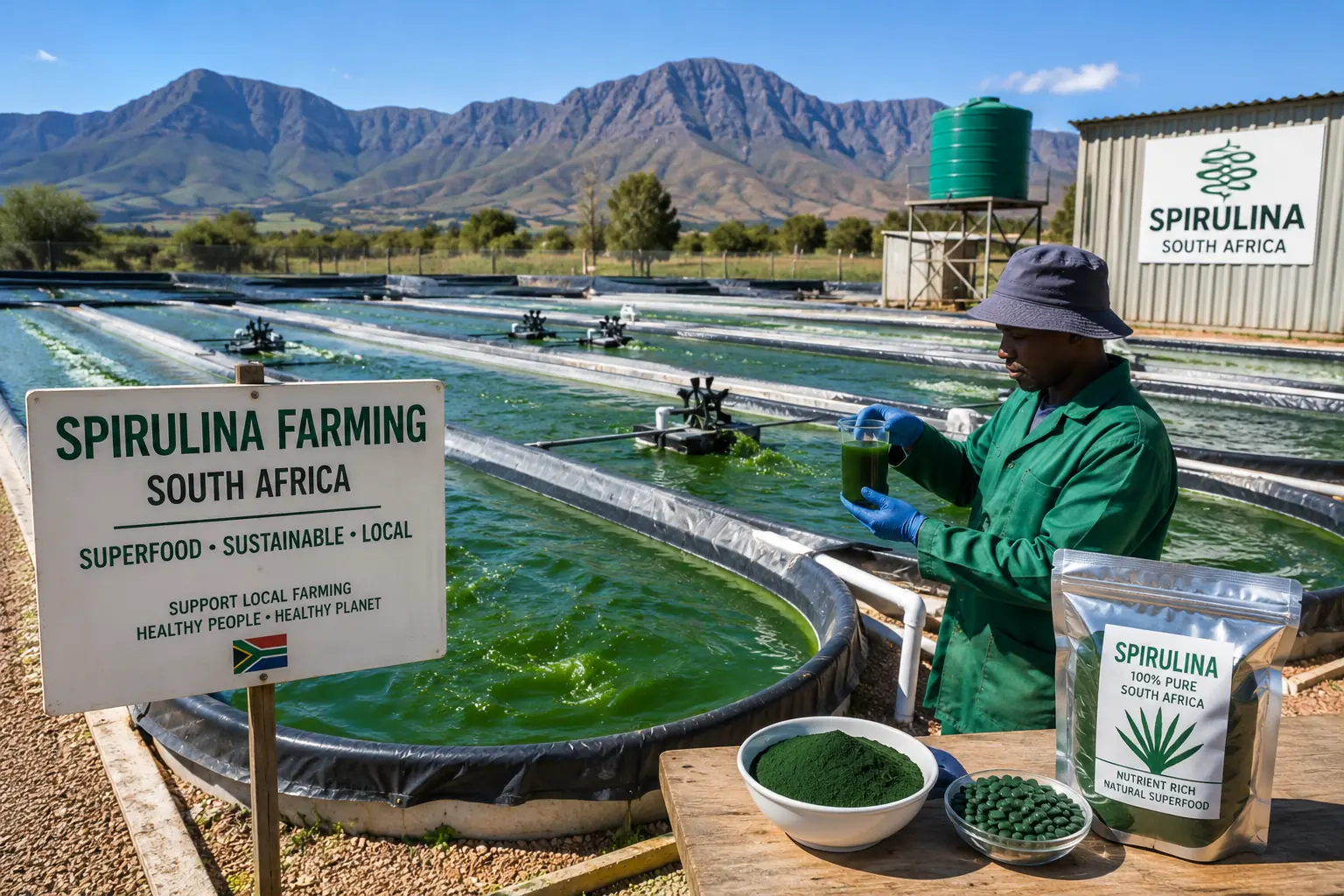
Spirulina farming differs fundamentally from conventional soil-based agriculture. It is cultivated in shallow open ponds (called raceway ponds) or closed photobioreactors using alkaline water enriched with nutrients. It requires sunlight, warmth, CO₂, and a carefully maintained mineral broth, making South Africa's climate a natural advantage, with year-round production possible in Limpopo, Mpumalanga, the Northern Cape, and Gauteng's warmer months.
Understanding Spirulina: The Basics for SA Farmers
Spirulina is technically a cyanobacterium (a photosynthetic microorganism, not technically a plant) though it is commonly called algae. It grows in highly alkaline water (pH 8.5–11.0) which prevents contamination by most other organisms and makes spirulina relatively easy to cultivate without chemical pesticides. It reproduces rapidly through photosynthesis, doubling its biomass every 2–5 days under optimal conditions.
Key Growth Requirements
- Temperature: Optimal growth occurs between 30–35°C. South African summer temperatures in Limpopo, Mpumalanga, and the Northern Cape fall squarely in this range. Below 20°C, growth slows significantly. Below 15°C, spirulina may crash (die off rapidly).
- Light: Spirulina needs 6–8 hours of strong sunlight daily. Shading from cloud or structures reduces productivity. South Africa's average of 2,500–3,000 sunshine hours per year is excellent for spirulina production.
- Water pH: Maintain pH between 9.0 and 10.5. This high alkalinity is spirulina's natural defence against competing organisms. pH drops below 8.5 indicate CO₂ uptake and healthy growth, or water chemistry issues if dropping too fast.
- Nutrients: Spirulina requires sodium bicarbonate (the main carbon source), sodium nitrate or urea (nitrogen), potassium phosphate, magnesium sulphate, ferrous sulphate, and trace micronutrients. Premixed spirulina nutrient solutions are available commercially.
- Water: Spirulina is often cultivated in recycled water. It tolerates borehole water (provided minerals are adjusted), treated effluent water, or municipal water. A major advantage is that up to 90% of the culture water can be recycled after each harvest.
How to Set Up a Spirulina Farm in South Africa
Spirulina can be cultivated at many scales, from a backyard tank system producing a few hundred grams per week to a commercial raceway pond operation covering several hundred square metres. The following guide covers both small-scale and semi-commercial setups appropriate for South African conditions.
System Options: Raceway Ponds vs Tanks
| System Type | Scale | Setup Cost | Productivity | Best For |
|---|---|---|---|---|
| Small plastic tanks (IBCs) | 50–500 litres | R500 – R5,000 | 50–500g dry/month | Home use, fresh spirulina, testing |
| DIY shallow channels (PVC / fibreglass) | 5–50m² surface area | R5,000 – R30,000 | 500g – 3kg dry/month | Small commercial; health markets |
| Raceway ponds (lined earthen / concrete) | 100–1,000m² per unit | R40,000 – R250,000+ | 5–50kg dry/month | Commercial production; powder sales |
| Closed photobioreactors (PBR) | 50–500 litres (vertical tubes) | R20,000 – R150,000 | High density; small footprint | Indoor/urban; high-purity premium product |
For most new South African spirulina farmers, starting with a DIY shallow channel system of 5–20m² is the practical entry point. This allows you to learn spirulina cultivation without large capital outlay, produce enough volume to test your local market, and refine your harvesting and drying process before scaling up.
Choose Your Location
Select a south-facing open area that receives full sun for at least 6 hours per day. The site should be sheltered from strong winds, which cause surface turbulence and reduce CO₂ absorption. Proximity to a water source (borehole, municipal supply) is important. In cooler provinces like Gauteng or the Free State, a greenhouse or shade structure that retains warmth can extend your growing season by 2–3 months.
Build or Source Your Growing System
A basic DIY spirulina channel can be built using a concrete base or food-grade PVC pond liner, shaped into a long oval channel 20–30cm deep. A paddlewheel (driven by a small motor or hand-operated) circulates the culture to ensure light exposure for all algae cells. Commercial raceway pond construction uses fibreglass or HDPE liners and paddle wheels driven by 0.5–1kW electric motors. For small-scale tanks, large IBCs (1,000 litre totes) cut to 20cm depth work well.
Prepare Your Nutrient Solution (Culture Medium)
Fill your pond or tank with water adjusted to pH 9.0–10.0 using sodium bicarbonate (baking soda) and sodium carbonate (soda ash). Add your nutrient mix, a standard spirulina nutrient formulation based on Zarrouk's medium includes sodium nitrate, potassium phosphate, magnesium sulphate, iron sulphate, and micronutrients. Premixed nutrient sachets are available from spirulina farming supply companies in SA, or ingredients can be sourced individually from agricultural chemical suppliers.
Inoculate with Starter Culture
You need a healthy spirulina starter culture to begin. In South Africa, starter cultures are available from specialist suppliers, some research universities (CSIR has conducted spirulina research), and existing spirulina farmers. Never use dried spirulina powder as a starter, you need live cells in liquid culture. Start with a 10–20% inoculation rate (1 litre of starter per 9 litres of fresh medium) and allow the culture to establish over 5–7 days before first harvest.
Maintain Culture Health Daily
Daily monitoring is essential for successful spirulina cultivation. Check pH every morning (ideal 9.0–10.5) and add sodium bicarbonate if pH drops. Measure culture density (colour and opacity are useful proxies; a Secchi disc or basic spectrophotometer gives more precision). Maintain water temperature above 25°C, insulate your pond sides in cooler weather. Stir or circulate the culture for 8–12 hours per day to maximise light exposure for all cells. Top up evaporated water with fresh water.
Harvest: Filtration and Collection
When culture density is sufficient (typically 0.5–1.0g/litre dry weight), harvest by pumping or scooping culture through a fine mesh filter (50–80 micron nylon filtration fabric or muslin cloth). The algae are retained on the filter as a thick green paste while the liquid (filtrate) passes through. This filtrate is nutrient-rich and should be recycled back into the pond, it contains most of the mineral solution. The spirulina paste is then ready for processing. For a 10m² pond, expect to harvest 200–400g of dry spirulina per day in good summer conditions.
Drying: Key to Product Quality
Drying is the most critical and technically demanding step. Spirulina paste must be dried quickly at low temperature (below 55°C) to preserve its nutritional content, particularly heat-sensitive B vitamins and phycocyanin. Options include: solar drying on food-grade trays in ventilated shade (low cost, slower); tunnel dryers using low-temperature forced air; or spray dryers (expensive but produce superior powdered product at scale). Improperly dried spirulina loses nutritional value and develops off-flavours. Most successful South African producers use a combination of solar and low-temperature forced air drying.
Common Problems in Spirulina Cultivation and How to Solve Them
Contamination by Other Organisms
Spirulina's high alkalinity normally prevents most bacterial and algal contaminants, but if pH drops below 8.5, other organisms can gain a foothold. Green algae (Chlorella, Scenedesmus) are the most common invaders. Prevention: maintain pH consistently above 9.0. If contamination occurs, harvest immediately, discard the contaminated batch, disinfect your pond (dilute hydrogen peroxide is commonly used), and restart with fresh culture.
Culture Crash
A culture crash (the sudden death of most or all of your spirulina) is the most feared event in spirulina farming. Causes include: extreme temperature fluctuation, pH drop below 8.0, nutrient depletion, heavy rain diluting and cooling your pond, or toxic contamination. Prevention: monitor daily, cover ponds during cold nights in winter months, test pH morning and evening, and always keep a reserve backup culture in an indoor container.
⚠️ Keep a backup culture always: Experienced spirulina farmers maintain a small indoor "mother culture" of 5–20 litres at all times. If your main pond crashes, your backup allows you to re-inoculate within days rather than waiting weeks for a new starter culture to arrive. This single practice prevents the most common catastrophic losses.
Seasonal Temperature Challenges
In Gauteng, the Free State, and parts of the Eastern Cape, winter temperatures (May–August) can drop below 20°C at night, significantly slowing spirulina growth. Strategies: use a low polytunnel or greenhouse structure over your ponds to retain heat; use black painted pond walls to absorb solar heat; install a simple water heater (solar geyser) to maintain minimum water temperature; or reduce production during winter and use the period for pond maintenance and infrastructure improvement.
Water Quality Issues
Borehole water in many South African regions contains high levels of calcium, magnesium, or heavy metals that can interfere with spirulina growth. Always test your water source before setting up. Reverse osmosis filtration can address most water quality issues but adds cost. Municipal water is generally suitable once dechlorinated (allow to stand for 24 hours, or use sodium thiosulphate at low doses to neutralise chlorine).
Where to Sell Spirulina in South Africa
South Africa's spirulina market is underdeveloped relative to global trends, almost all spirulina consumed locally is imported. This means high retail prices but also means building consumer awareness and distribution channels is a key challenge for new producers. The following sales channels represent the most viable options:
Health Food Stores and Wellness Retailers
Independent health food stores, Faithful to Nature (online), Wellness Warehouse, and similar retailers stock imported spirulina at R350–R900 for 100g. Local, freshly produced South African spirulina with provenance, sustainability credentials, and quality certification can command premium prices and differentiation. Approach stores with a professional sample pack, your quality analysis certificate, and a competitive wholesale price.
Direct-to-Consumer Online Sales
E-commerce through Takealot, your own website, or social media platforms is the rapidly growing channel for spirulina in SA. Build a brand around your location (e.g. "Limpopo Spirulina"), your farming practices, and your nutritional quality test results. Use Instagram, Facebook, and WhatsApp communities focused on health, veganism, and fitness, spirulina's target market. Subscription boxes, fitness clubs, and food bloggers are powerful marketing partners.
Fresh Spirulina Paste, the Premium Differentiation
One major advantage local South African producers have over importers is the ability to offer fresh spirulina paste, a refrigerated product that retains significantly higher nutritional content than dried powder. Fresh spirulina sells for R80–R200 per 100g at premium farmers' markets and health food stores in Cape Town, Johannesburg, and Durban. Shelf life is 7–14 days refrigerated, so distribution must be local and rapid.
Animal Feed and Aquaculture Markets
Spirulina is a premium feed ingredient for aquaculture (fish and shrimp), poultry (for egg yolk colour enhancement), and ornamental fish (koi, tropical fish). These markets are less price-sensitive than human health food on a per-kg basis, but volumes are larger and sales are more consistent. Approach aquaculture farms, koi breeders, and poultry operations with a sample and nutritional analysis showing protein and pigment content.
Food Fortification and Institutional Supply
There is growing interest in South Africa in using spirulina for food fortification, particularly for school nutrition programmes addressing iron deficiency, stunting, and protein malnutrition. The Department of Health and NGOs operating nutrition programmes have explored spirulina supplementation. This is a longer-term institutional sales channel requiring consistency and food safety certification, but it represents a high-volume, mission-aligned opportunity for spirulina producers.
Export Markets
With GlobalGAP or equivalent food safety certification and export compliance, South African spirulina can access export markets in Europe, the Middle East, and Asia. The EU market in particular pays premium prices for certified organic, non-China-sourced spirulina. Export requires additional compliance costs and third-party lab analysis, but the margins can be significantly higher than domestic retail.
💰 Spirulina market prices in South Africa (2024–2025): Imported spirulina powder retails at R350–R1,200 per 100g. Local producers can wholesale at R80–R250 per 100g (dried) and still be well above production cost once established. Fresh spirulina paste fetches R80–R200 per 100g at premium markets. Animal feed grade spirulina: R150–R400 per kg.
Spirulina Farming Budget: What Does It Cost in South Africa?
The capital cost of spirulina farming is highly variable depending on scale and system type. The following estimates are for a small-to-medium commercial setup of 50–100m² of growing surface, which is a realistic starting point for a dedicated spirulina business in South Africa.
| Item | Once-Off Cost | Monthly Running Cost |
|---|---|---|
| Pond / channel construction (50m²) | R25,000 – R70,000 | — |
| Paddle wheel motor(s) | R3,000 – R8,000 | — |
| Filtration equipment | R2,000 – R8,000 | — |
| Drying equipment (low-temp dryer) | R8,000 – R30,000 | — |
| Starter culture & initial nutrients | R2,000 – R5,000 | — |
| Ongoing nutrients | — | R800 – R2,500 |
| Water & electricity | — | R500 – R1,500 |
| Packaging & labels | — | R500 – R2,000 |
| Lab testing (quality certification) | — | R500 – R1,500 (quarterly) |
| Total capital (once-off) | R40,000 – R121,000 | — |
| Total monthly running costs | — | R2,300 – R7,500 |
Revenue Potential
A 50m² raceway pond under optimal South African summer conditions can produce approximately 1–3kg of dried spirulina powder per month. At a conservative wholesale price of R150/100g (R1,500/kg), this represents R1,500–R4,500 per month in revenue. At fresh paste prices of R100/100g retail, the same production is worth R10,000–R30,000 per month gross, but requires a local customer base and cold chain. A 200–500m² operation achieving 5–15kg/month dried output at premium prices becomes a viable full-time enterprise.
The key economics of spirulina farming in South Africa are: high margin per kilogram, low land cost, low water usage, high capital per unit of production area. Scale matters, profitability improves significantly as the operation grows from 50m² to 500m² and beyond, as fixed infrastructure costs are spread over greater production.
Food Safety, Quality Testing & Regulations for SA Spirulina Producers
Any spirulina sold for human consumption in South Africa must comply with the Foodstuffs, Cosmetics and Disinfectants Act (Act 54 of 1972) and relevant regulations administered by the Department of Health. Spirulina is regulated as a food supplement/health product. Key requirements include:
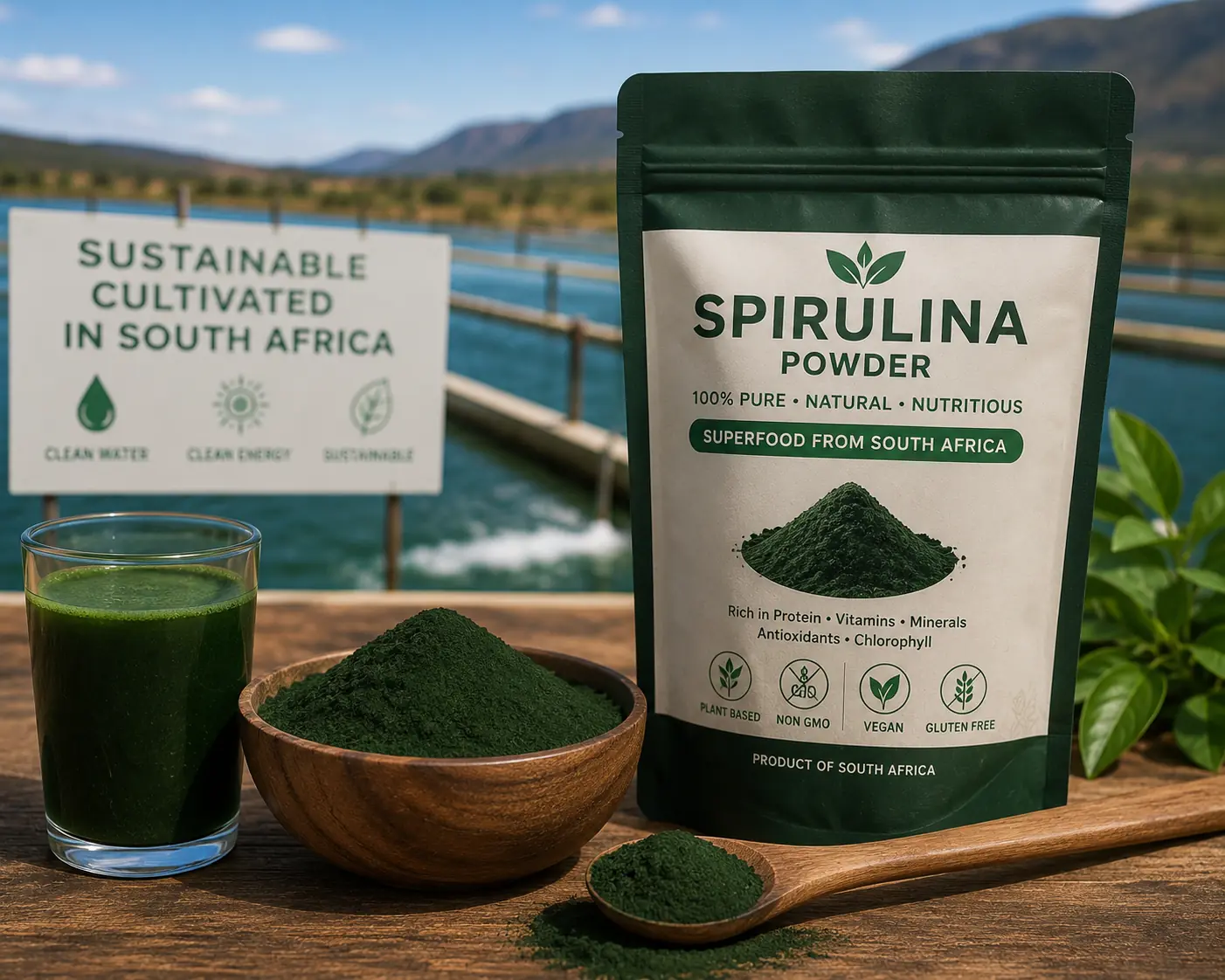
- Labelling compliance: All packaging must include weight, ingredients, country of origin, producer details, storage instructions, and any relevant health claims must comply with Regulation R236.
- Microbial testing: Spirulina must be tested for total plate count, coliforms, E. coli, Salmonella, and heavy metals (arsenic, lead, mercury, cadmium). Tests should be conducted at an accredited SANAS laboratory.
- Nutritional analysis: For packaging claims and health food store requirements, a full nutritional panel analysis is required.
- Facility hygiene: Production and processing areas must comply with basic food safety hygiene standards. HACCP (Hazard Analysis and Critical Control Points) certification strengthens your market access.
Contact the South African Health Products Regulatory Authority (SAHPRA) if your products include therapeutic claims, or your provincial Department of Agriculture for guidance on production facility registration.