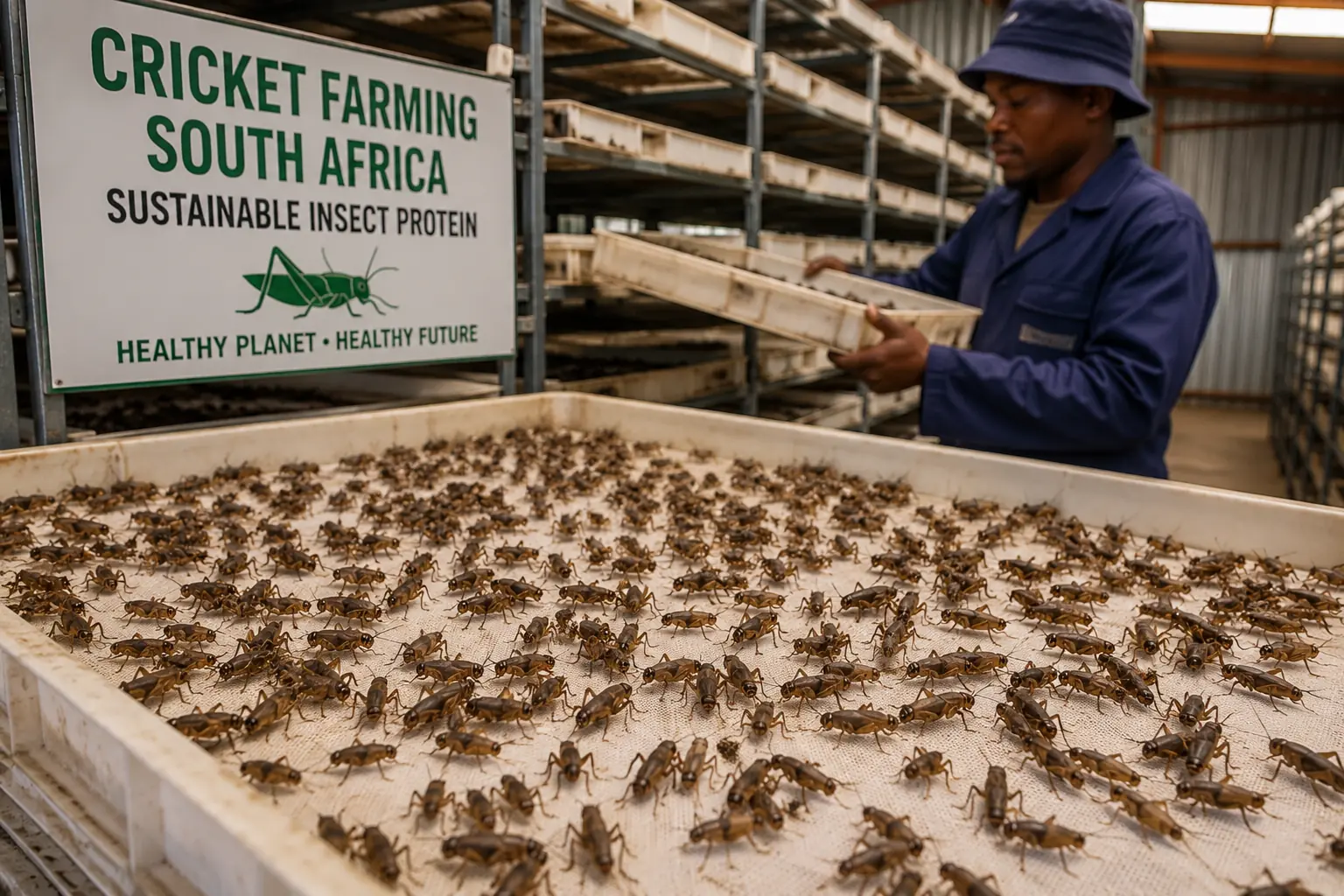
Getting Started with Cricket Farming in South Africa
One of the biggest advantages of cricket farming is the extremely low barrier to entry. A beginner operation can be established in a spare room, garage, or small outbuilding with a starting investment of as little as R2 000 to R5 000. At commercial scale, proper insect farming facilities can be built for a fraction of the cost of conventional livestock infrastructure.
Before you start, you need to decide on your production purpose. Are you farming crickets for human consumption (fresh, dried, or milled into flour)? For animal feed (poultry, fish, reptile pets)? Or for both? Your target market will influence your species selection, processing requirements, and regulatory obligations.
Choosing Your Cricket Species
The two most commonly farmed cricket species in South Africa are:
- Acheta domesticus (Common House Cricket): The global industry standard. Mild flavour, fast growth cycle of 6–8 weeks, and well-documented husbandry practices. Preferred for human food products and high-end pet food.
- Gryllus bimaculatus (African Black Cricket / Two-spotted Cricket): Naturally adapted to African conditions. Slightly larger and more robust than Acheta domesticus. Excellent for animal feed, poultry supplements, and local human food markets. More heat-tolerant, important for SA summers.
For beginners in South Africa, Gryllus bimaculatus is often recommended as a starting point due to its resilience to our variable climate. Many commercial SA producers, however, run both species simultaneously to serve different market segments.
Housing and Infrastructure Requirements
Crickets require a controlled environment with consistent temperature, humidity, and ventilation. Ideal conditions are:
- Temperature: 28°C–32°C. Below 20°C, growth slows dramatically. Above 38°C, mortality increases.
- Humidity: 50%–70% relative humidity. Too dry and crickets dehydrate; too wet and fungal issues arise.
- Ventilation: Good airflow is critical to prevent ammonia buildup from frass (cricket droppings).
- Light cycle: A 12-hour light / 12-hour dark cycle supports natural reproduction and growth rhythms.
Housing is typically done in plastic storage tubs (60 L or 90 L), wooden bins, or purpose-built metal shelving systems. Egg carton inserts are placed inside each bin to provide vertical surface area, crickets naturally climb and rest on rough surfaces. Each tub should have screened lids to prevent escapes while maintaining airflow.
In South Africa's warmer provinces (Limpopo, Mpumalanga, KZN lowveld), naturally warm ambient temperatures can reduce heating costs significantly during production months. In Gauteng's cold winters, supplementary heating (heat lamps or heat mats) will be necessary to maintain production year-round.
Cricket chirping can be significant at scale. A dedicated outbuilding or soundproofed room prevents noise complaints from neighbours and family, and allows you to maintain the controlled environment crickets need for optimal production.
Feeding Your Crickets: Low-Cost, High-Efficiency Nutrition
Firmly among cricket farming's most attractive features is feed flexibility. Crickets are omnivores and will thrive on a wide range of organic inputs, many of which are freely available or very low cost on South African farms.
A balanced cricket diet should contain carbohydrates for energy, protein for growth, and moisture for hydration. Common feed options used by SA cricket farmers include:
- Grain-based feed: Maize bran, wheat bran, sorghum, and fine oats are cheap, widely available, and high in carbohydrates. Many farmers use commercial chicken grower mash as a base feed.
- Protein supplement: Soybean meal, fish meal, or dried legume powder boosts protein content, which translates directly into higher protein percentages in your final cricket product.
- Fresh produce: Vegetable off-cuts (cabbage leaves, spinach stems, pumpkin), fresh grass, and fruit skins provide hydration and additional nutrients. Crickets get most of their water intake from fresh food rather than drinking from open water sources.
- Commercial insect feed: Several SA suppliers now offer purpose-formulated cricket feed, which simplifies management but increases input costs.
Frass (cricket waste) is itself a valuable product, a nutrient-dense organic fertiliser rich in nitrogen and chitin. Many SA cricket farmers sell frass as a soil amendment to organic farmers and gardeners, creating an additional revenue stream with zero additional cost.
The Cricket Life Cycle: Understanding Your Production Schedule
Understanding the cricket life cycle is fundamental to managing production effectively. Crickets are hemimetabolous insects. They do not undergo complete metamorphosis (no pupation stage), which simplifies farming enormously.
The life cycle proceeds as follows:
- Egg stage (10–14 days): Females lay eggs in moist substrate (typically a tray filled with damp coconut coir or vermiculite). Eggs are tiny and require consistent moisture and warmth to hatch.
- Nymph stage (4–5 weeks): Hatchlings (called nymphs or "pinheads") are tiny but fully formed. They progress through 8–10 moult stages, growing rapidly.
- Adult stage (2–3 weeks before harvesting): Adults develop wings and begin chirping. Females develop a visible ovipositor (egg-laying organ). Adults are typically harvested 1–2 weeks after reaching adulthood for best feed conversion.
From egg to harvest is typically 6–8 weeks at optimal temperatures. This fast cycle means you can run 6 or more production batches per year, and with staggered cohorts, you can achieve continuous weekly harvests rather than seasonal production.
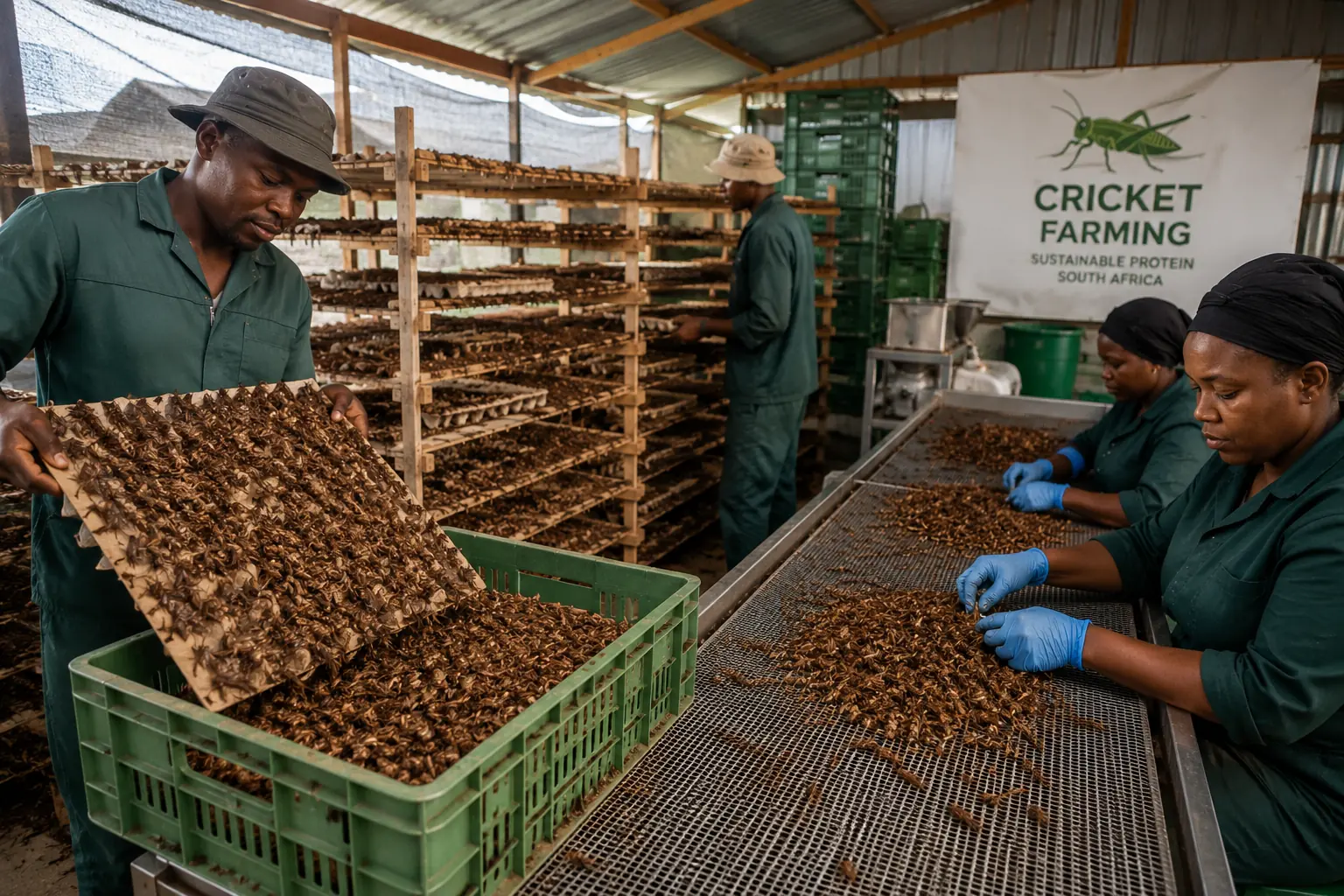
Harvesting and Processing Crickets in South Africa
Harvesting is straightforward. The most common method is cold stunning: place the cricket tubs in a cool room or freezer (around 4°C–5°C) for 30–60 minutes. The cold slows the crickets into a dormant state, making collection easy and humane. They are then removed from the tubs, separated from frass and feed residue, and processed immediately.
Processing options depend on your end market:
- Live sale: No processing needed. Pack and deliver to reptile pet stores, fishing bait suppliers, or poultry farmers who want live feed. Highest demand but requires rapid logistics.
- Dried whole crickets: After cold stunning, crickets are rinsed, blanched briefly in boiling water (60 seconds), then dried in a food dehydrator or low-heat oven (60°C–70°C for 4–6 hours). Dried crickets have a shelf life of 6–12 months when vacuum packed.
- Cricket flour (powder): Dried crickets are milled into a fine protein flour, which is used in health foods, protein bars, baked goods, and specialty pasta. Currently the highest-value cricket product in South Africa.
- Cricket oil: A newer product extracted from crickets that is rich in oleic and linoleic acids. Niche but growing in the health food sector.
The South African Cricket Farming Market
South Africa's insect food market is still in its early growth phase, which represents a genuine opportunity for first movers. Several local companies are already active (including established cricket farms in Gauteng, the Western Cape, and Eastern Cape) but demand currently outstrips domestic supply.
Key market segments include:
- Human food: Health-conscious consumers, athletes, and adventurous eaters are driving demand for cricket flour in protein bars, baked goods, and pasta. The SA health food retail market is growing rapidly and cricket flour is beginning to appear in specialist stores and online.
- Animal feed: Poultry farmers, aquaculture operators, and reptile pet owners are significant buyers. Crickets can partially replace soya and fishmeal in feed formulations, a market driver as conventional feed costs rise.
- Pet food industry: The South African premium pet food market has exploded in recent years, and insect protein is increasingly featured in premium dog and cat foods as an allergen-friendly alternative.
- Export: Processed cricket products (flour, dried whole crickets) can be exported to European and Asian markets under appropriate certifications. This is a longer-term opportunity for established producers.
Insect farming for human consumption in South Africa falls under the Department of Agriculture, Land Reform and Rural Development (DALRRD) and the Department of Health food regulations. As of 2025, regulations around novel foods including insects are still being formalised. For animal feed applications, crickets are generally categorised as a feed ingredient under the Fertilizers, Farm Feeds, Agricultural Remedies and Stock Remedies Act. Always confirm current requirements with DALRRD before commercialising your operation.
Profitability: What Can Cricket Farming Earn in South Africa?
Cricket farming profitability depends heavily on production scale, species, and your chosen market. Here are realistic benchmarks for South African conditions as of 2025–2026:
- Live crickets (reptile/pet feed): R80–R150 per kg wholesale to pet stores. High demand, consistent orders, but logistics-sensitive.
- Dried whole crickets: R250–R450 per kg to food manufacturers or direct online retail. Lower volume but better margins.
- Cricket flour: R400–R700 per kg for food-grade cricket powder. Highest value-add product with strong export potential.
- Cricket frass (fertiliser): R15–R30 per kg. Secondary income stream that costs nothing extra to produce.
A well-managed micro-farm running 20 production tubs can realistically produce 8–12 kg of dried crickets per week at full capacity, generating gross revenue of R2 000–R5 000 per week at retail prices. Scaling to 100 tubs with efficient systems and consistent markets represents a serious full-time farm income in the South African context.
Cricket Farming Challenges and How to Overcome Them
Like any agricultural enterprise, cricket farming comes with its own set of challenges. Being aware of them in advance will save you time, money, and frustration:
- Disease and die-offs: Acheta domesticus densovirus (AdDV) is the most serious disease risk in house cricket farming globally. Maintaining strict biosecurity, sourcing clean breeding stock, and never mixing batches of different ages are the best preventative measures.
- Cannibalism: Overcrowded or underfed crickets will cannibalise each other. Maintain adequate stocking density (no more than 500–700 adults per standard 60L tub) and ensure feed is available at all times.
- Escapes: A cricket escape is a serious nuisance. Check all lid seals regularly and apply petroleum jelly to the upper inner walls of tubs as a slip barrier.
- Market development: The SA insect food market is still early-stage. Success often requires direct marketing, farmer's market presence, social media, and educating potential customers about the benefits of insect protein.