Catfish farming is consistently among the most accessible entry points into aquaculture for South African farmers. The African sharptooth catfish (Clarias gariepinus), commonly known as barbel, is native to South Africa's river systems, making it biologically well-adapted to local conditions and free from the import-related biosecurity complications that affect exotic aquaculture species. It is hardy, fast-growing, disease-tolerant, and in strong demand at informal markets, township fish traders, and increasingly at formal retail outseeking locally farmed freshwater fish.
South Africa's aquaculture sector remains significantly underdeveloped relative to the country's freshwater resources and protein demand. The Department of Agriculture, Forestry and Fisheries (DAFF) has identified freshwater aquaculture, and catfish farming in particular, as a priority sector for smallholder and rural development. This combination of strong market demand, growing government support, and a species well-suited to low-input production methods makes catfish among the most promising aquaculture enterprises for South African farmers considering fish farming for the first time.
This page covers everything you need to establish and run a catfish farming operation, from selecting a site and designing ponds, to managing water quality, feeding, disease prevention, harvesting, and reaching profitable markets.
Why Farm Catfish in South Africa?
The African sharptooth catfish has several characteristics that make it particularly well-suited to South African aquaculture conditions:
Hardiness and air-breathing ability: Clarias gariepinus possesses a specialized accessory breathing organ (the arborescent organ) that allows it to breathe atmospheric air directly. This means it can survive in low-oxygen water conditions that would kill most other farmed fish species, significantly reducing the risk of mass mortalities from oxygen crashes, firmly among the most common catastrophic losses in aquaculture operations.
Fast growth rate: Under good management with adequate feeding, catfish can grow from fingerling (5–10g) to market size (400–600g) in 6–8 months. This rapid turnover allows multiple production cycles per year and faster return on investment compared to species like trout, which require 12–18 months to reach market size.
Feed conversion efficiency: Catfish achieve good feed conversion ratios (FCR) of approximately 1.5–2.0 kg feed per kilogram of fish produced under commercial feeding programmes, which is competitive with other farmed fish species and with land-based livestock production.
Market demand: Fresh catfish is in consistent demand at informal markets across Limpopo, Mpumalanga, Gauteng, and KwaZulu-Natal. Many consumers prefer the taste and cultural familiarity of catfish (barbel) over imported frozen marine fish. Live fish sales at farm gate also fetch premium prices from buyers who value fish freshness.
Where to Farm Catfish in South Africa
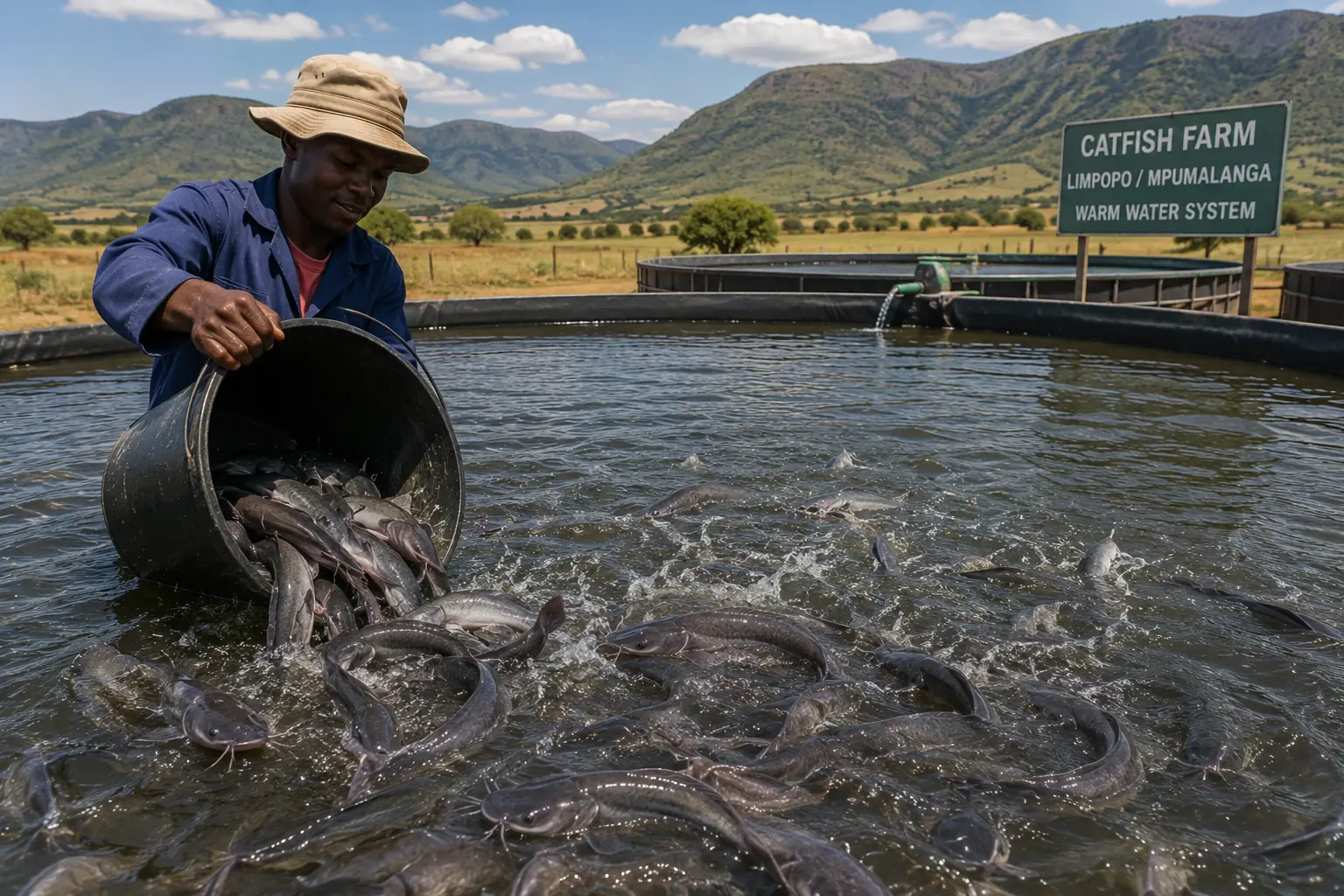
Catfish is a warm-water species and grows fastest when water temperatures remain between 25°C and 30°C. Growth slows significantly below 20°C and essentially stops below 15°C. This makes South Africa's northern lowveld provinces, particularly Limpopo and Mpumalanga, the most naturally suited regions for catfish aquaculture, with warm temperatures maintained for most of the year.
Limpopo Province
The Limpopo lowveld, including areas around Tzaneen, Lephalale, Musina, and the Giyani area, offers excellent conditions for catfish farming. The province's hot climate, availability of farm dams and irrigation infrastructure, and access to water from the Limpopo, Olifants, and Letaba river systems make it a priority region for aquaculture development. Several commercial and smallholder catfish farms operate successfully in Limpopo, and the ARC's Aquaculture Research Centre at Tzaneen provides technical support to producers in the region.
Mpumalanga Province
The Mpumalanga lowveld, particularly the areas around Bushbuckridge, Nelspruit (Mbombela), and the Komati River basin, is another strong catfish farming region. Warm temperatures, existing irrigation infrastructure, and proximity to Mozambique's fish market trade routes make this area attractive. The Lowveld Agricultural College at Nelspruit has historically offered aquaculture training relevant to catfish production.
Other Provinces
Catfish can be farmed in North West, Gauteng, KwaZulu-Natal, and parts of the Northern Cape with adequate summer temperatures and water access, but growth rates will be slower than in Limpopo and Mpumalanga due to cooler winters. In Gauteng, catfish farming in greenhouses or insulated tanks is practiced to maintain year-round production temperatures.
Site Selection and Water Requirements
Selecting the right site for your catfish farm is one of the most critical decisions you will make. Poor site selection leads to chronic problems with water availability, pond construction costs, disease, and production losses that are very difficult to resolve after the operation is established.
Water Supply
A reliable, year-round water supply is non-negotiable. Options include a farm dam or reservoir, a river abstraction permit, borehole water, or municipal water. Borehole water is often preferred for starting operations because it is typically pathogen-free, consistent in temperature, and not subject to seasonal flooding or drought fluctuations in surface water sources. However, borehole water must be tested for pH, hardness, and mineral content before use, some borehole sources have pH levels or iron concentrations that are unsuitable for fish without treatment.
Water quality parameters critical for catfish production include:
- Temperature: 25–30°C for optimal growth; minimum 20°C for acceptable production.
- pH: 6.5–8.5; the optimal range is 7.0–8.0. Outside this range, growth and health are compromised.
- Dissolved oxygen (DO): Minimum 3 mg/L; target above 5 mg/L. Catfish can survive lower DO due to air-breathing, but growth is maximised at adequate DO levels.
- Ammonia: Total ammonia nitrogen (TAN) below 1 mg/L; un-ionised ammonia (NH3) below 0.02 mg/L. Ammonia buildup from fish waste and uneaten feed is the most common cause of chronic stress and disease susceptibility in intensive catfish systems.
- Hardness: Moderate hardness (50–200 mg/L as CaCO3) is optimal. Very soft water is not ideal for catfish health.
Soil Type for Earthen Ponds
Earthen ponds are the lowest-cost production system for catfish. For earthen ponds to hold water effectively, the soil must have sufficient clay content, a minimum of 25–30% clay is typically needed to achieve adequate water retention. Silty clay loam and clay soils are ideal. Sandy soils require lining (with clay, plastic liner, or concrete) to prevent seepage, which significantly increases construction costs. Conduct a soil percolation test on your proposed pond site before investing in earthen pond construction.
Catfish Production Systems
South African catfish farmers use several production systems, each with different capital costs, management intensity, and yield potential:
Earthen Ponds
The traditional and most widely used system for smallholder and rural catfish farming in South Africa. Earthen ponds of 0.1 to 1 hectare in size are constructed with a compacted clay bund, inlet and outlet structures, and a drainage sump for harvesting. Stocking densities range from 5,000 to 30,000 fish per hectare depending on management intensity. Yields at moderate stocking densities with regular feeding typically range from 5 to 20 tonnes per hectare per production cycle. Advantages include low construction cost, natural productivity from pond organisms, and good fish welfare. Disadvantages include more difficult water quality management, greater disease risk from wildlife and birds, and less precise control of production inputs.
Recirculating Aquaculture Systems (RAS)
RAS technology, where water is continuously filtered, aerated, and recirculated through tanks with minimal fresh water input, allows very intensive catfish production in a small physical footprint. Stocking densities in RAS can reach 50–100 kg of fish per cubic metre of water. RAS is capital-intensive and requires reliable electricity and technical expertise to manage biofilter performance, but is increasingly being adopted for commercial-scale catfish production in South Africa, particularly by operators who want year-round production independent of seasonal temperatures. Government and development-finance-backed catfish RAS projects exist in several South African townships as food security and enterprise development initiatives.
Cage Culture
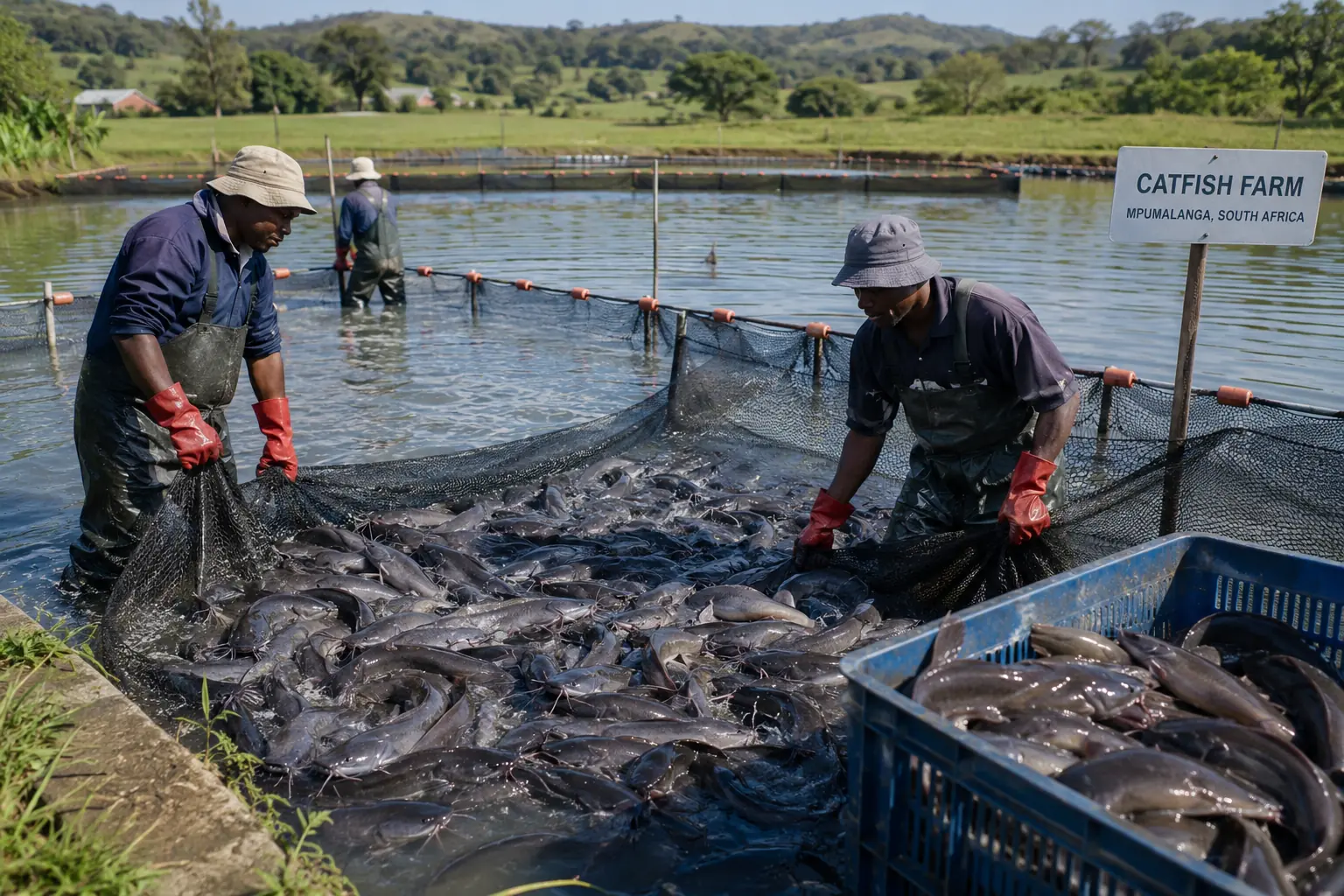
Catfish can be farmed in floating cages placed in existing farm dams or reservoirs. Cages of 25–50 m³ are stocked with fingerlings and fed to market size over 6–8 months. Cage culture makes use of existing water infrastructure without requiring pond construction, but requires regular cage maintenance, predator management, and careful monitoring of water quality under and around the cages.
Sourcing Fingerlings
The availability and quality of catfish fingerlings is firmly among the most significant constraints facing aspiring catfish farmers in South Africa. Unlike tilapia, which can reproduce in production ponds, catfish require hormone-induced spawning under controlled hatchery conditions to produce fingerlings reliably, the species does not breed naturally in captivity without hormonal intervention.
This means fingerlings must be sourced from a registered catfish hatchery. Several commercial hatcheries operate in Limpopo, Mpumalanga, and Gauteng. The ARC's Aquaculture Research Centre at Tzaneen in Limpopo has historically been a supplier of catfish fingerlings to emerging farmers in the region and provides technical training on catfish management.
When sourcing fingerlings, prioritize the following:
- Source from a disease-free, certified hatchery where possible.
- Fingerlings should be uniform in size (5–15 g) and active, with no visible lesions, discolouration, or erratic swimming behaviour.
- Acclimate fingerlings carefully to your pond water temperature and chemistry before stocking, rapid temperature changes cause severe stress and mortality.
- Start with a manageable stocking rate and scale up as your management skills and infrastructure improve.
Feeding Catfish
Feed represents the largest operating cost in catfish farming, typically 50–70% of variable production costs. Choosing the right feed and feeding programme has a major impact on both production costs and fish health.
Commercial Pellet Feed
Commercial extruded or sinking pellet feeds formulated for catfish (30–40% crude protein) are the standard feed for commercial South African catfish production. Feeds are available from several South African manufacturers including Vaaldam Feeds, Moore & Moore, and specialized aquaculture feed suppliers. Using a properly formulated commercial feed ensures balanced nutrition and reduces water quality problems associated with low-quality or homemade feeds.
Feeding Rates and Frequency
A general feeding rate for catfish is 3–5% of total body mass per day for fingerlings and juveniles, reducing to 2–3% per day as the fish grow. Feed is typically offered in 2–3 meals per day. Feeding to apparent satiation (feeding until fish stop actively responding to feed) can be used as an alternative to weight-based feeding in well-managed ponds. Remove uneaten feed from feeding areas after 30–60 minutes to prevent water quality deterioration.
Feed Conversion Ratio (FCR)
A well-managed catfish operation should achieve an FCR of 1.5–2.0. An FCR significantly above 2.5 indicates overfeeding, poor water quality, disease, or nutritionally inadequate feed, all of which need to be investigated and corrected promptly.
Water Quality Management
Maintaining acceptable water quality is the most technically demanding and operationally critical aspect of catfish farming. Water quality problems (particularly ammonia accumulation and low dissolved oxygen) are the primary drivers of fish stress, disease outbreaks, and production losses.
Key management practices to maintain water quality in catfish ponds include:
- Monitor regularly: Test dissolved oxygen, pH, and ammonia weekly at minimum, and daily during hot weather or at high stocking densities. Basic pond water test kits are available from aquaculture suppliers.
- Aerate when necessary: Paddlewheel aerators or air blowers maintain DO levels during hot weather and high feeding periods. Budget for aeration equipment from the start of your operation.
- Manage feeding carefully: Overfeeding is the most common cause of ammonia buildup. Feed only what fish will consume within 30–60 minutes.
- Partial water exchange: Regular partial water exchange (replacing 10–20% of pond volume per week) dilutes ammonia and other waste products. This is particularly important in intensive earthen pond and tank systems.
- Lime application: Agricultural lime (CaCO3) applied to earthen pond bottoms between production cycles improves soil pH, reduces disease pathogen survival, and enhances natural pond productivity.
Disease Management
African sharptooth catfish are generally hardier than many other farmed fish species, but disease outbreaks can and do occur, particularly when water quality deteriorates, fish are stressed from handling or temperature fluctuations, or biosecurity is compromised by introducing infected fingerlings.
Bacterial Diseases
Aeromonas and Pseudomonas bacterial infections are the most common disease problems in South African catfish farms. Clinical signs include haemorrhages (red patches) on the skin, ulcers, abdominal swelling, and behavioural changes (lethargy, surface swimming). These bacteria are opportunistic, they typically cause disease in fish already stressed by poor water quality. The primary prevention and treatment strategy is improving water quality and reducing stocking density. Antibiotic treatment should only be used under veterinary guidance.
Columnaris Disease
Flavobacterium columnare causes cotton-wool-like white patches on gills, skin, and fins. It is associated with warm, low-quality water and mechanical injuries from handling. Maintaining water quality and minimizing handling stress are the key preventive measures.
Parasites
External parasites including Ichthyophthirius (white spot disease), Dactylogyrus (gill flukes), and Trichodina can occur, particularly when water quality is poor or fish are sourced from infected hatcheries. Salt baths (3–5 g NaCl per litre for 10–15 minutes) can be used as a stress-reducing and mild parasite-management treatment during handling. For serious infestations, consult an aquatic veterinarian.
Harvesting and Processing
Catfish are typically harvested at 400–700g live weight, which is the preferred size range for most South African markets. Harvesting can be done by seine netting the pond (particularly effective in earthen ponds with a sump), draining the pond and collecting fish, or hand-netting in tank or cage systems.
Catfish can be sold live, fresh-chilled, or as dressed (gutted and cleaned) whole fish. Live fish consistently command the highest prices at informal and township markets. Fresh-chilled whole fish are preferred by formal retailers and restaurants. Transported live fish require well-aerated transport containers with added oxygen and, ideally, temperature-controlled water to minimize mortality during transport.
For operations selling to formal retail or restaurant channels, HACCP-compliant processing facilities and compliance with South Africa's food safety regulations under the Agricultural Product Standards Act are required. For informal market sales, basic hygiene during harvest and transport is sufficient for most markets.
Marketing and Selling Your Catfish
South Africa's catfish market is diverse and presents multiple sales channel options depending on your production scale, location, and market access:
Informal Markets and Hawkers
Live and fresh catfish are in high demand at informal food markets, township spaza shops, and from fish hawkers across Limpopo, Mpumalanga, Gauteng, and KwaZulu-Natal. This market pays well for live fish and requires no formal certification, making it the easiest entry market for new producers. Prices for live catfish at farm gate typically range from R25 to R45 per kilogram depending on location and season.
Fresh Produce Markets
The national fresh produce market network (Johannesburg, Tshwane/Pretoria, Durban, Cape Town) accepts fresh whole catfish from registered producers. Market commission agents can assist with sales on your behalf. This market requires consistent supply, basic packaging (insulated fish boxes with ice), and compliance with national freshness standards.
Restaurants and Hotels
An emerging market for locally farmed catfish exists in the restaurant and hospitality sector, particularly in Limpopo, Mpumalanga, and Gauteng. Buyers in this channel value locally farmed, traceable fish and are often willing to pay a premium over market prices for consistent supply of a specific size category. Building direct relationships with chefs and food service buyers in your area is a valuable strategy for medium-scale producers.
Direct Farm Sales
Many South African catfish farmers report excellent results from direct farm gate sales, customers visiting the farm to purchase live fish. Word-of-mouth, local advertising, and a roadside signboard are often sufficient to generate consistent direct sales traffic in areas where fresh fish are not readily available.
🐟 Key Success Factors for Catfish Farming
- Secure a reliable, clean water source before investing in ponds or tanks, inadequate water is the most common cause of catfish farm failure.
- Start small and master water quality management before scaling up stocking density and production volume.
- Source fingerlings from a reputable, disease-free hatchery, introducing diseased fish is a fast way to contaminate your entire production system.
- Monitor water quality weekly and invest in a dissolved oxygen meter. It is the single most useful piece of equipment for a catfish farmer.
- Identify your market and buyers before you stock fish, confirm who will buy, at what price, and in what format (live, fresh, dressed) before committing to production.
Government Support for Catfish Farmers
South African catfish farmers can access several government support mechanisms:
- DAFF Aquaculture Development Zones: The national Department of Agriculture has designated several Aquaculture Development Zones in South Africa, including in the Limpopo lowveld, where infrastructure support and streamlined permitting are available to aquaculture investors.
- ARC Aquaculture Research Centre (Tzaneen): Provides technical training, fingerling supply support, and extension services to catfish farmers in the Limpopo region. Contact the ARC for details on current training programmes and technical assistance available.
- CASP and MAFISA: The Comprehensive Agricultural Support Programme and the Micro-Agricultural Financial Institutions of South Africa fund provide capital grants and low-interest loans for qualifying smallholder and emerging aquaculture farmers. Apply through your provincial Department of Agriculture office.
- SEDA (Small Enterprise Development Agency): Provides business development support, feasibility study assistance, and market linkage support for small-scale catfish producers wanting to formalize and grow their operations.
⚠️ Permit Requirements
Catfish farming in South Africa requires compliance with several regulatory frameworks. A water use licence is required from the Department of Water and Sanitation for water abstraction. Stocking and transport of live fish may require a permit from your provincial conservation authority (e.g., Limpopo Department of Forestry, Fisheries and Environmental Affairs). Always verify current permit requirements with your provincial agriculture and environmental offices before establishing a new operation.