Your Soil Is Your Farm's Foundation
South African soils are diverse, from the rich red clay loams of Limpopo to the sandy coastal soils of KwaZulu-Natal, the heavy black turf soils of the Eastern Free State, and the leached sandy soils of the Highveld. Understanding your specific soil type and its nutrient status is the starting point for any successful fertilization programme.
Fertilizer is the single largest variable input cost in South African crop production, representing 30–40% of total production costs for most grain farmers. Applying the wrong fertilizer, at the wrong rate, at the wrong time, is firmly among the most expensive mistakes a farmer can make. Applying the right fertilizer programme based on soil analysis and realistic yield targets is the single biggest return-on-investment in farming.
Understanding N, P & K
Every fertilizer product is defined by its NPK ratio, the percentage of nitrogen (N), phosphorus (P) and potassium (K) it contains. These three macronutrients are the foundation of plant nutrition.
Understanding SA Fertilizer Ratios
South African fertilizer bags display an NPK ratio as three numbers, for example 3:2:1 (38) or 2:3:4 (22). The three numbers represent the ratio of N:P:K in the product. The number in brackets is the total analysis (the sum of all nutrients). Higher total analysis = more concentrated product = lower application rate needed.
| Ratio | N:P:K Description | Best Used For | Typical Rate |
|---|---|---|---|
| 2:3:4 (22) | Low N, medium P, high K | Basal application for maize, vegetables. Good starter. | 200–400 kg/ha |
| 3:2:1 (38) | High N, medium P, low K | Topdressing for leafy crops, early maize growth | 150–300 kg/ha |
| 5:1:5 (28) | High N, low P, high K | Mature maize, sugar cane, fruit trees | 200–350 kg/ha |
| 3:1:5 (31) | Medium N, low P, high K | Tomatoes, potatoes, root crops in production phase | 300–500 kg/ha |
| LAN 28% | Nitrogen only (28% N) | Topdressing maize, wheat, pasture | 150–300 kg/ha |
| Urea 46% | Nitrogen only (46% N) | Topdressing when incorporation possible. Cost-effective N. | 100–200 kg/ha |
| Superphosphate | Phosphorus (10.5% P) | Phosphorus correction on deficient soils | 200–400 kg/ha |
| KCl (MOP) | Potassium (50% K₂O) | Potassium correction, high-value crops | 100–200 kg/ha |
💡 Always base your fertilizer programme on a soil analysis result. The ratios above are general guidelines only. Your actual programme depends on your soil's existing nutrient levels, your yield target, and your crop type. A soil test costs R150–R350 and can save you R2 000–R8 000 in incorrect fertilizer applications per hectare.
How to Take a Soil Sample in South Africa
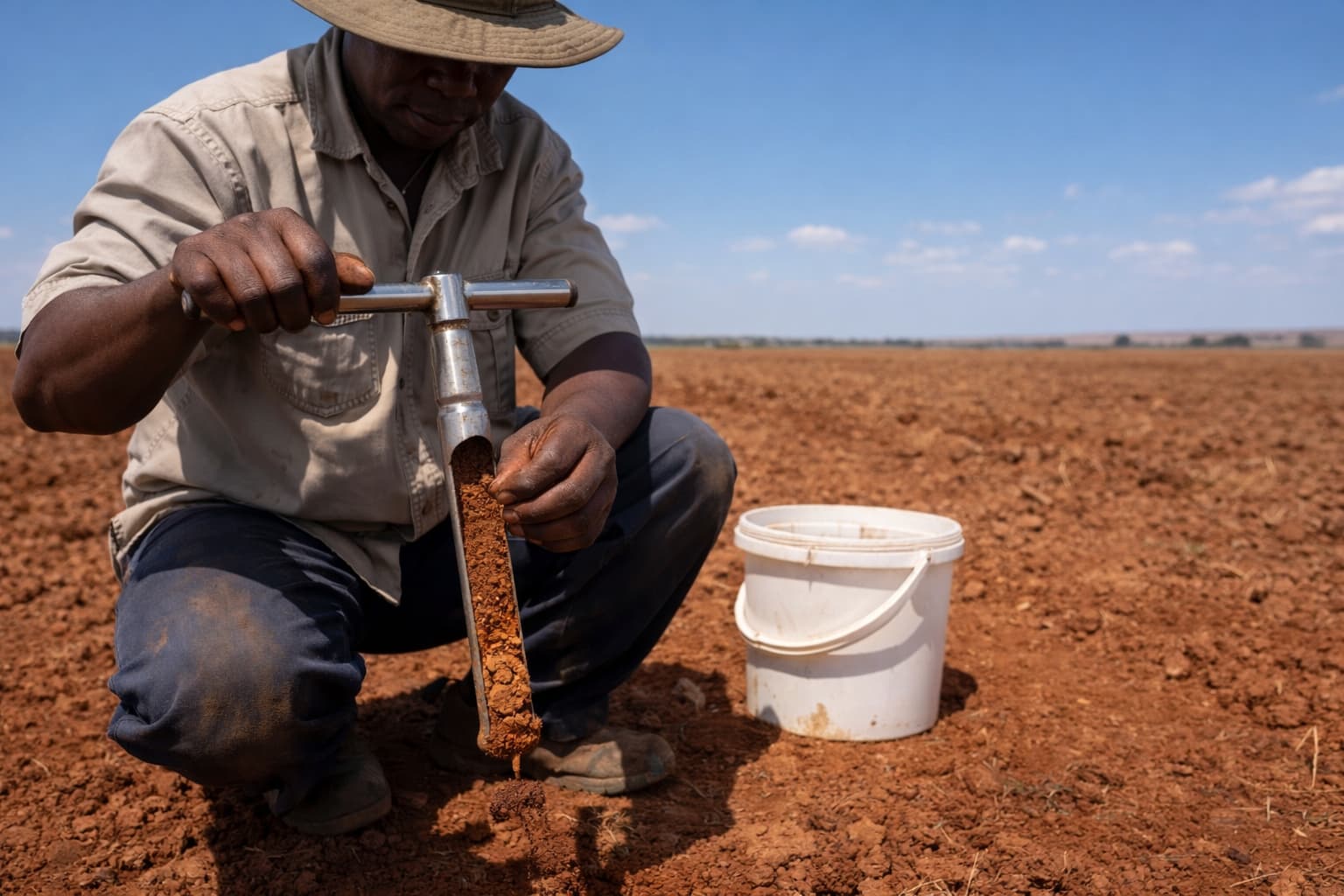
A soil sample is only as good as the sampling technique. Poor sampling (taking too few samples, mixing different soil types, sampling at the wrong depth) gives misleading results that lead to incorrect fertilizer recommendations. Follow this protocol for accurate results:
- Divide your farm into sampling zones: Separate zones by soil type, colour, slope, or historical yield performance. Each zone should be no larger than 5–10 hectares.
- Take 20–30 sub-samples per zone: Walk in a W or Z pattern across the zone. At each point, dig or probe to 200mm depth (or 300mm for perennial crops).
- Mix all sub-samples together: Place in a clean plastic bucket, mix thoroughly, and take a 500g representative sub-sample.
- Air dry and submit: Allow sample to air dry at room temperature. Place in a clean paper bag or the lab's sample bag. Label clearly with farm name, field number, and crop history.
- Submit to an accredited laboratory: Most SA co-operatives offer soil testing, or use independent labs such as Bemlab (Western Cape) or BVI (Gauteng/Free State).
Lime Application, Correcting SA's Acid Soils
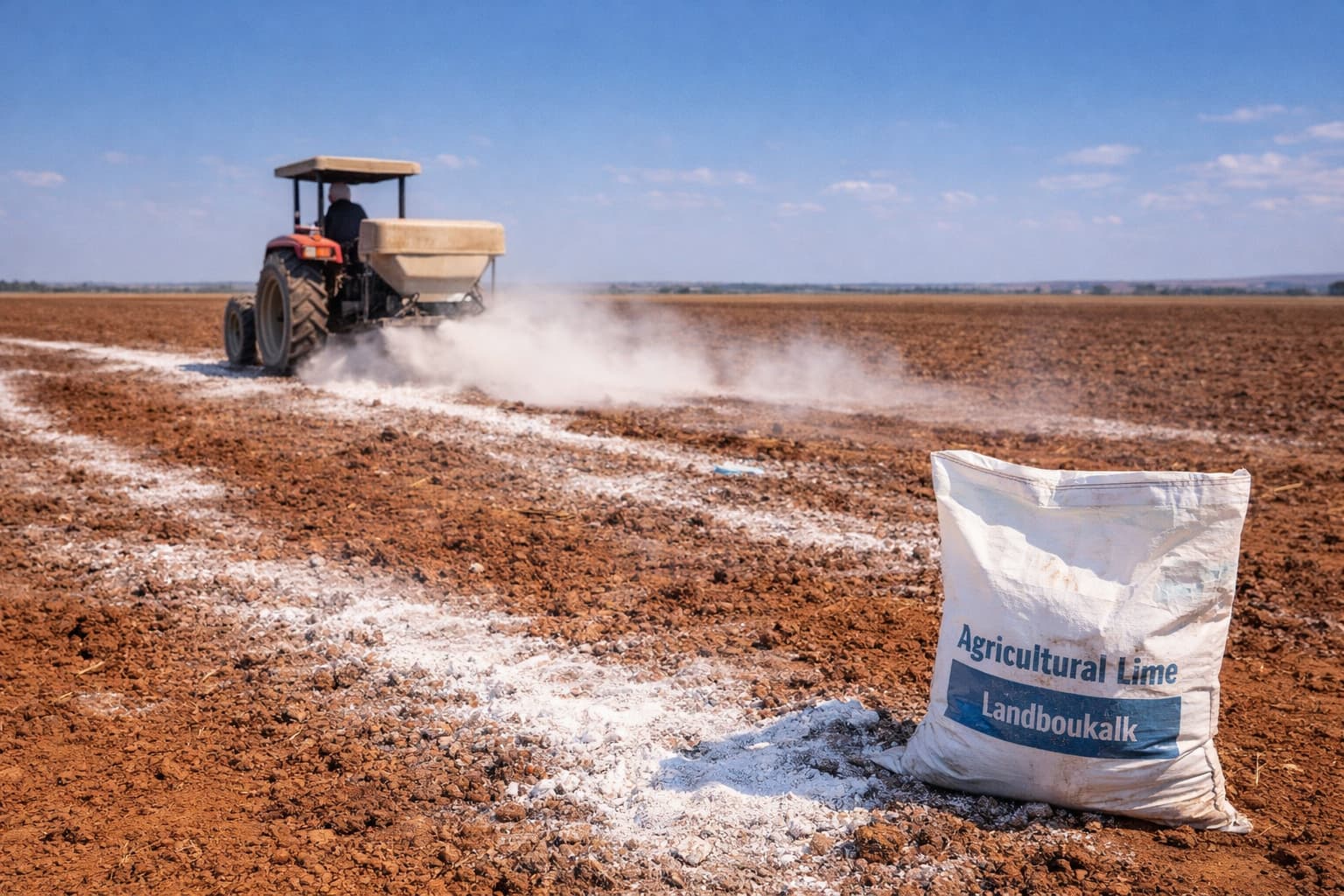
Soil acidity is among South Africa's most widespread and yield-limiting soil problems in South Africa. Most of the summer-rainfall zone (including large parts of Limpopo, Mpumalanga, KwaZulu-Natal and the Free State) has naturally acid soils with pH (KCl) values of 4.0–5.0. Most crops require a pH (KCl) of 5.0–5.5 minimum, with cereals and vegetables performing best at 5.5–6.5.
Lime Application Guidelines
- Timing: Apply lime at least 3–6 months before planting to allow it to react with the soil and raise pH. Never apply lime at planting, it competes with starter fertilizer.
- Rate: Determined by your soil test's lime recommendation. Typical SA rates range from 1–4 tonnes/ha of agricultural lime (calcitic or dolomitic).
- Incorporation: Lime must be incorporated into the soil to 150–200mm depth, surface application has very limited effect on deeper soil layers.
- Calcitic vs Dolomitic lime: Use dolomitic lime (contains both calcium and magnesium) in soils with low magnesium levels, common in sandy SA soils. Use calcitic lime where magnesium levels are adequate.
- Frequency: Most SA dryland crop soils require re-liming every 3–5 years due to natural acidification and removal of base cations by crops.
⚠️ Sub-soil Acidity: Surface liming does not correct subsoil acidity below 200mm, a serious problem on many SA farms. Deep-rooting crops like maize, soybeans and lucerne suffer from subsoil acidity. If your soil analysis shows low pH at the 200–600mm depth, consult an agronomist about gypsum application or deep ploughing to address this.
Composting, Making Free Fertilizer
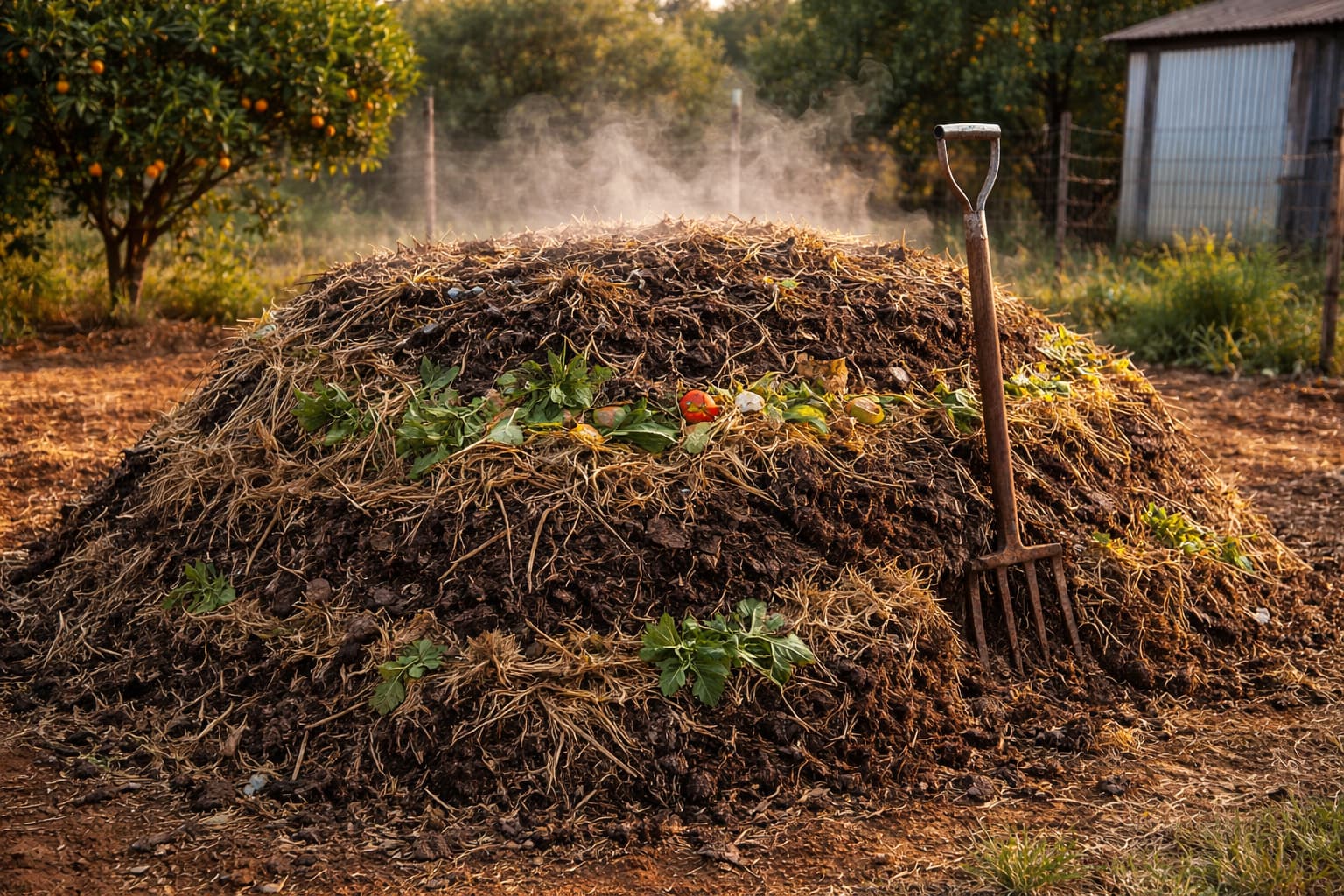
Well-made compost is among the most valuable inputs a South African farmer can produce. It improves soil structure, increases water-holding capacity, feeds soil microbes, and slowly releases nutrients over the entire growing season. A 50mm layer of compost dug into vegetable beds before planting can reduce chemical fertilizer requirements by 20–40% and significantly improve soil health over time.
🪣 How to Make High-Quality Compost
Choose your site and build a heap
Select a shaded site with good drainage. Build a heap at least 1m × 1m × 1m, this minimum size is needed to generate enough heat to kill weed seeds and pathogens. A bay made from pallets, wire mesh or bricks works well.
Layer carbon and nitrogen materials
The secret to good compost is the carbon-to-nitrogen ratio (C:N) of approximately 25–30:1. Layer brown materials (dry leaves, straw, wood chips, dry stalks) with green materials (kitchen waste, fresh grass clippings, green manure, fresh animal dung). Aim for roughly 3 parts brown to 1 part green by volume.
Add moisture and turn regularly
The heap should feel like a wrung-out sponge, moist but not dripping. Dry heaps stop decomposing. Turn the heap every 7–10 days to introduce oxygen and redistribute heat. A well-managed heap will reach 55–65°C inside, hot enough to kill most weed seeds and pathogens.
Monitor and test for readiness
Finished compost is dark brown, crumbly, and smells earthy, like forest soil. It should not smell like ammonia (too much nitrogen/wet) or have visible undecomposed materials. Ready in 6–12 weeks with regular turning, or 3–6 months in a passive heap. Test by putting a handful in a sealed bag for 3 days, no smell means it's ready.
Apply to your fields or beds
Apply compost at 4–8 tonnes/ha for field crops, or 3–5kg per m² for vegetable beds. Incorporate into the top 150–200mm. Apply 4–6 weeks before planting to allow it to integrate with the soil. For established orchards and perennial crops, apply as a mulch ring around the drip line.
Organic Fertilizers Available in South Africa
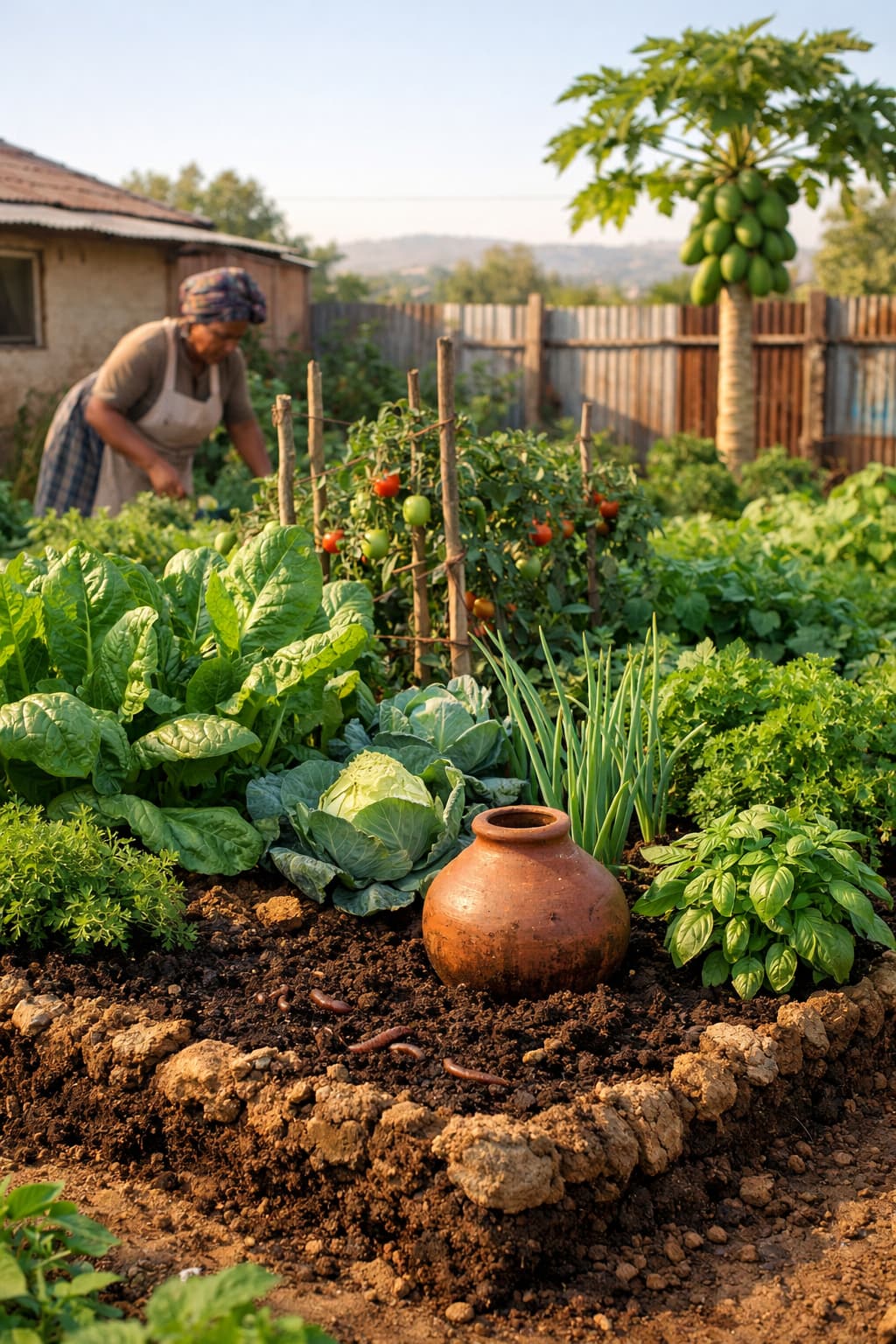
Beyond compost, South African farmers have access to a growing range of organic and biological fertilizer inputs. These can supplement or in some cases replace conventional chemical fertilizers, particularly in smallholder and organic production systems.
| Organic Input | Nutrient Content | Application Rate | Notes |
|---|---|---|---|
| Poultry manure (dry) | 3–4% N, 2.5% P, 2% K | 2–5 t/ha | High nutrient value; must be composted first. Risk of burning if fresh. |
| Cattle manure | 0.5–1% N, 0.3% P, 0.5% K | 5–10 t/ha | Lower nutrient value but excellent for soil structure. Widely available. |
| Kraalmis (dry kraal manure) | 1–2% N variable | 5–8 t/ha | Traditional SA organic amendment. Excellent combined with lime application. |
| Biosolids (treated sewage sludge) | 3–5% N, 2–3% P | Per agronomist recommendation | Regulated in SA. Avoid on edible vegetable crops. Good for pasture. |
| Vermicompost (worm castings) | 1.5–2.5% N, 1% P, 1.5% K | 1–3 t/ha or 0.5kg/m² | Premium organic amendment. Very high microbial activity. Expensive but effective. |
| Fish emulsion | 5% N, 1% P, 1% K | 5–10 L/ha foliar | Fast-acting nitrogen source. Good for transplant establishment and early growth. |
Micronutrients, The Hidden Deficiencies
While NPK gets most of the attention, micronutrient deficiencies are widespread across South African soils and are often the hidden yield-limiters that farmers overlook after addressing the major nutrients. Key micronutrients to watch in SA:
- Zinc (Zn): Deficiency is extremely common on SA's sandy, light-textured soils and on limed soils where high pH reduces zinc availability. Symptoms include short internodes, small leaves, and striped discolouration in maize. Apply zinc sulphate (22% Zn) at 10–15 kg/ha with basal fertilizer, or as a foliar spray at 3–5 kg/ha.
- Boron (B): Important for cell division, pollen viability and fruit set. Deficiency common in sandy soils and causes hollow heart in beets, cracked stems in celery, and poor fruit set in tomatoes and peppers. Apply borax at 1–2 kg/ha or as foliar spray.
- Manganese (Mn): Deficiency common on soils with pH above 6.5 (over-limed soils). Causes interveinal chlorosis on young leaves. Apply manganese sulphate as foliar spray at 2–4 kg/ha in water.
- Molybdenum (Mo): Critical for nitrogen fixation in legumes (soybeans, beans). Deficiency limits the ability of Rhizobium bacteria to fix atmospheric nitrogen. Apply sodium molybdate at 50–200g/ha as seed treatment or foliar spray.
🌱 Free nitrogen for soybeans: Always inoculate soybean seed with the correct Bradyrhizobium japonicum inoculant before planting. Properly nodulated soybeans can fix 150–200 kg N/ha from the air, completely free. This is firmly among the most cost-effective practices in SA crop production. Never apply nitrogen fertilizer to inoculated soybeans unless a nodulation failure is confirmed.