The Breadbasket of the Region
South Africa is a net exporter of maize and a regional grain powerhouse. The country produces approximately 15–17 million tonnes of maize per year, 1.5–2 million tonnes of wheat, and is one of Africa's largest soybean producers. The Free State, North West, Mpumalanga and Limpopo make up the primary grain belt.
Field crop farming in South Africa ranges from large commercial dryland farms in the Free State producing 1 000+ tonnes of maize per season, to small-scale subsistence plots in Limpopo or KwaZulu-Natal producing enough for household food security. This guide is written for both, the core principles of soil preparation, planting, fertilization, pest management and harvest apply at any scale.
How to Grow Maize in South Africa
Maize is South Africa's most important food crop, the staple grain that feeds the nation. Here is a complete step-by-step guide to growing maize commercially or on a small plot.
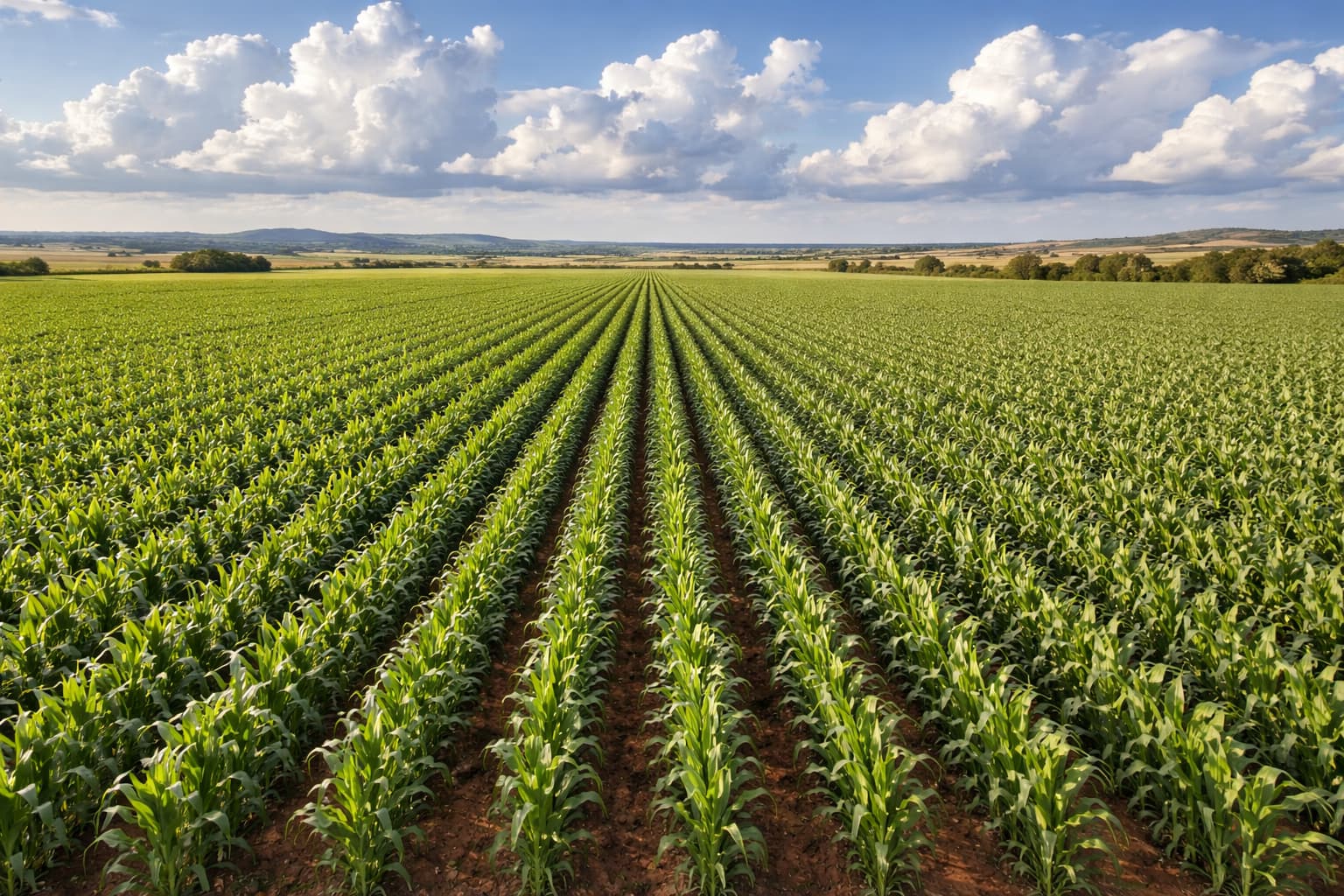
Step 1, Soil Preparation
Maize requires a well-prepared seedbed, deep (at least 300mm), free of large clods, and with good drainage. Soil pH should be between 5.5 and 6.5. If your soil pH is below 5.5, apply agricultural lime 3–6 months before planting at the recommended rate from your soil test results.
Conduct a soil sample analysis at least 6 weeks before planting. Most SA co-operatives and agribusinesses (NWK, OVK, TWK, Afgri) offer affordable soil testing. The results will guide your exact lime and fertilizer programme.
🧪 Pro Tip: Soil testing costs R150–R350 per sample but can save you thousands in incorrect fertilizer applications. It is the single highest-return investment in crop farming.
Step 2, Variety Selection
Choosing the right hybrid is critical. South African farmers have access to excellent locally bred and adapted hybrids. Key selection criteria are: yield potential, drought tolerance, disease resistance (especially grey leaf spot and northern corn leaf blight), stalk strength, and suitability for your rainfall zone.
| Hybrid | Yield Potential | Drought Tolerance | Disease Rating | Best Region |
|---|---|---|---|---|
| PAN 6616 | 12–14 t/ha | Medium–High | Excellent | Highveld, North West |
| DKC 73-70 | 11–13 t/ha | Medium | Good | Free State, Mpumalanga |
| SC 701 | 9–11 t/ha | High | Good | Limpopo, KZN lowveld |
| PAN 5Q-749 | 10–12 t/ha | High | Good | Drier highveld areas |
| Pannar 6479 | 10–12 t/ha | Medium | Excellent | Eastern Free State |
Step 3, Planting Date & Population
Planting date is the most important management decision in maize production. Planting too early (soil too cold) delays germination and increases disease risk. Planting too late reduces yield potential due to shortened growing season.
📅 Planting Window Rules: Plant when soil temperature at 50mm depth is consistently above 12°C. In the central Highveld this is typically mid-October to mid-November. In Limpopo and lower-lying areas, planting can start in late September. Never plant after 15 December in the summer-rainfall zone. It is too late for optimal yield.
Plant population depends on rainfall and hybrid:
- High rainfall areas (600mm+): 30 000–35 000 plants/ha
- Medium rainfall (450–600mm): 25 000–30 000 plants/ha
- Low rainfall or dry areas: 18 000–25 000 plants/ha
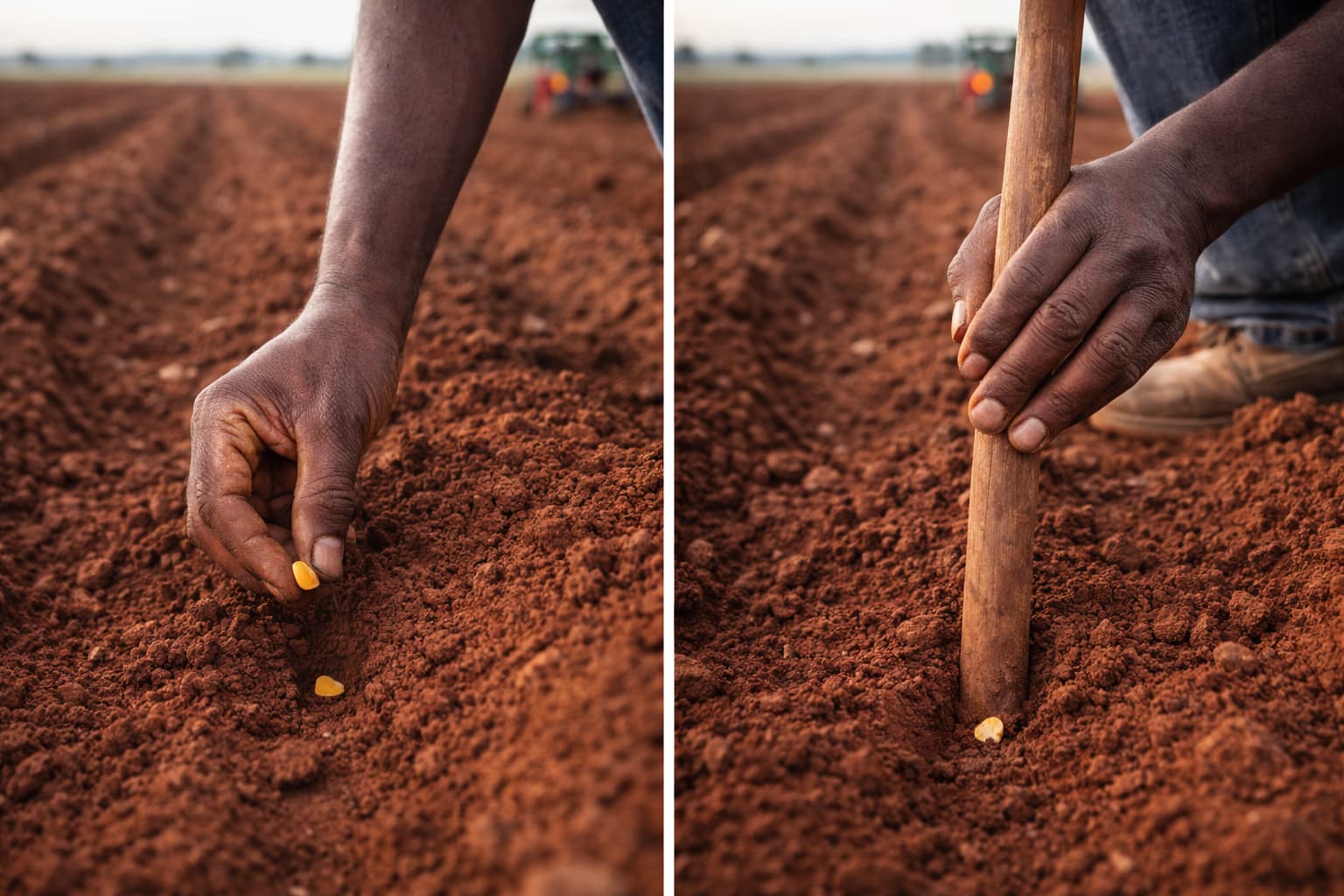
- Planting depth: 50–60mm in moist soil conditions
- Row spacing: 0.9m is standard; 0.76m or 1.0m also used
Step 4, Fertilization Programme
Maize is a heavy feeder, especially of nitrogen. A 10 t/ha crop removes approximately 190kg N, 35kg P and 160kg K from the soil. You must replace what the crop removes, plus correct any existing nutrient deficiencies shown in your soil analysis.
🗓️ SA Crop Planting Calendar, Summer Rainfall Regions
| Crop | Sep | Oct | Nov | Dec | Jan | Feb | Mar | Apr | May | Jun | Jul | Aug |
|---|---|---|---|---|---|---|---|---|---|---|---|---|
| 🌽 Maize | PLANT | PLANT | GROW | GROW | GROW | GROW | HARVEST | |||||
| 🫘 Soybeans | PLANT | PLANT | GROW | GROW | GROW | HARVEST | ||||||
| 🌻 Sunflower | PLANT | PLANT | GROW | GROW | GROW | GROW | HARVEST | |||||
| 🌾 Wheat (W. Cape) | PLANT | PLANT | GROW | |||||||||
| 🌿 Sorghum | PLANT | PLANT | GROW | GROW | GROW | GROW | HARVEST |
PLANT = planting window | GROW = active growing season | HARVEST = harvest period. Dates are for summer-rainfall Highveld. Western Cape winter-rainfall dates differ.
Maize Fertilizer Guide for South Africa
The fertilizer programme below is a general guideline for a yield target of 8 t/ha on typical Highveld soils. Your actual programme must be adjusted based on your soil analysis results.
| Application Timing | Product | Rate (kg/ha) | Purpose |
|---|---|---|---|
| At planting (in-furrow) | 2:3:2 (22) + Zn | 150–200 | Starter P, K, Zn |
| V3–V4 stage (topdress) | LAN (28%N) | 200–250 | Early nitrogen push |
| V6–V8 stage (topdress) | LAN (28%N) | 150–200 | Main nitrogen application |
| V10 (optional, high-yield targets) | Urea (46%N) | 100 | Late nitrogen for grain fill |
| Foliar (V6–V8) | Zn + B foliar | 2–3 L/ha | Micronutrient correction |
💡 LAN vs Urea: LAN (Limestone Ammonium Nitrate) is preferred for topdressing in South Africa because it is less volatile than urea and performs better in cooler, wetter conditions. Use urea only when you can incorporate it before rain or irrigation.
Maize Pest Management
South African maize faces serious pest pressure, particularly from the invasive Fall Armyworm (FAW) which was first recorded in SA in 2016 and has since become the primary pest threat to maize production across the country.
Fall Armyworm (Spodoptera frugiperda)
FAW is now present in all nine provinces. It attacks maize from seedling stage through to tasselling. Scout fields weekly from emergence. Look for telltale "window pane" feeding damage on leaves and frass (brown powdery excrement) in the whorl. Economic threshold is 1 larva per 5 plants during vegetative stages.
- Chemical control: Chlorpyrifos, Spinetoram, Emamectin benzoate or diamide insecticides. Rotate modes of action to prevent resistance.
- Biological control: Naturally occurring parasitic wasps (Cotesia spp.) help suppress FAW populations. Avoid broad-spectrum insecticides in early season to preserve beneficial insects.
- Cultural control: Early planting, uniform stands, and good fertilization reduce susceptibility.
Stalk Borer (Busseola fusca)
The indigenous African stalk borer remains a significant pest, particularly in Limpopo and lower-altitude maize areas. Early-season damage causes "dead heart" in young plants; later damage results in broken stalks and yield loss. Treat at first sign of egg masses on leaves, chemical treatment after larvae enter the stalk is ineffective.
Wheat Farming in the Western Cape
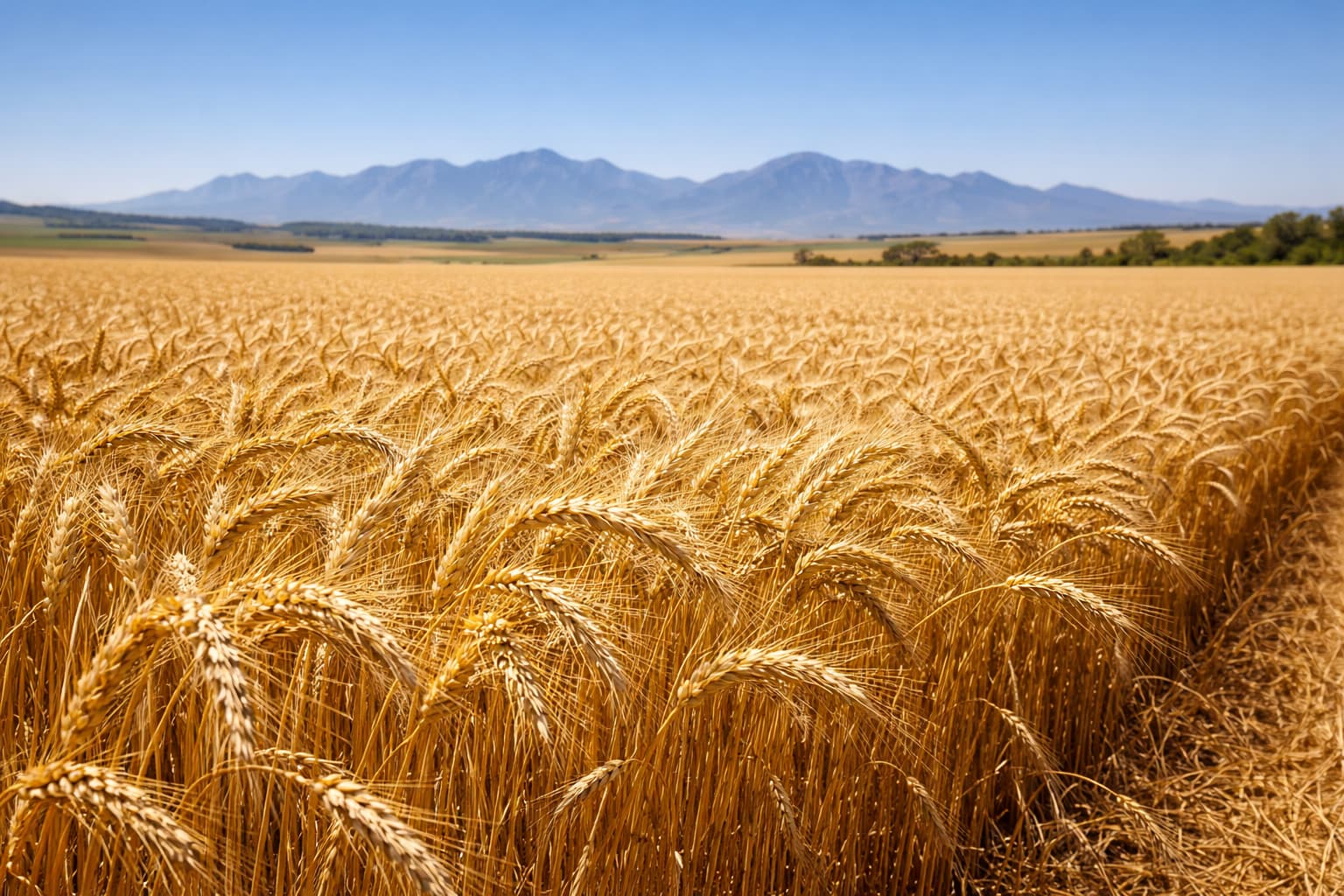
South Africa's wheat production is concentrated in the Western Cape Swartland region (around Malmesbury, Porterville and Moorreesburg) which produces approximately 60% of the national crop, and the Southern Cape (Riversdale area). The Free State and Northern Cape produce dryland wheat under irrigation.
Western Cape wheat is a winter crop, planted from late April to June and harvested in November–December. The Swartland's Mediterranean climate (cool wet winters and hot dry summers) is ideal for wheat production. Average yields in the Western Cape range from 2.5–4 t/ha under dryland conditions to 5–7 t/ha under irrigation.
Top Western Cape Wheat Varieties (2026)
- Koonap: High yield, good baking quality, widely planted in Swartland. Resistant to Russian wheat aphid biotype 1.
- Caledon: Excellent bread quality, medium yield. Best in coastal areas with moderate rainfall.
- SST 347: High-yielding, drought-tolerant spring wheat for Northern Cape irrigation.
- Duzi: New high-yielding variety with excellent disease resistance package. Gaining popularity in Overberg.
⚠️ Russian Wheat Aphid (RWA): Diuraphis noxia is a serious threat to South African wheat and barley. Biotype 2 (RWASA2) is now widespread and breaks resistance in many older varieties. Choose varieties with confirmed RWASA2 resistance when planting in high-risk areas.