Mushroom Farming in South Africa, A Year-Round, Space-Efficient Food Business with Strong Market Demand
Mushroom farming is one of South Africa's rapidly growing small-scale agricultural enterprises. The reasons are compelling: mushrooms can be grown in a repurposed shipping container, a cool garage, a spare room, or a purpose-built growing tunnel. They require no sunlight, produce a harvestable crop in as little as 21 days from inoculated substrate, and generate multiple harvests (called "flushes") from a single substrate block before the growing medium is exhausted. The spent substrate is then a valuable soil amendment for vegetable gardens or a component in composting systems, making mushroom farming a near-zero-waste enterprise.
South Africa's domestic mushroom market is dominated by commercially produced white button mushrooms (Portobello and Portabellini varieties), but the rapidly growing segment is specialty mushrooms, oyster mushrooms, shiitake, lion's mane, and king oyster, which command two to four times the price of buttons and are in increasing demand from restaurants, health-conscious consumers, and the rapidly expanding plant-based food sector. For new farmers entering the mushroom market, specialty varieties represent the most accessible and profitable entry point.
🍄 Market opportunity: South Africa's annual mushroom consumption is estimated at 20,000–25,000 tonnes, the vast majority of which is white button mushrooms grown by a small number of large commercial producers. The specialty mushroom segment (oyster, shiitake, lion's mane, enoki) is severely undersupplied and growing at 15–20% per year, driven by restaurant demand and health-food market growth. A small-scale specialty mushroom producer supplying 10–20 restaurants can build a R15,000–R50,000/month revenue stream with fewer than 200m² of growing space.
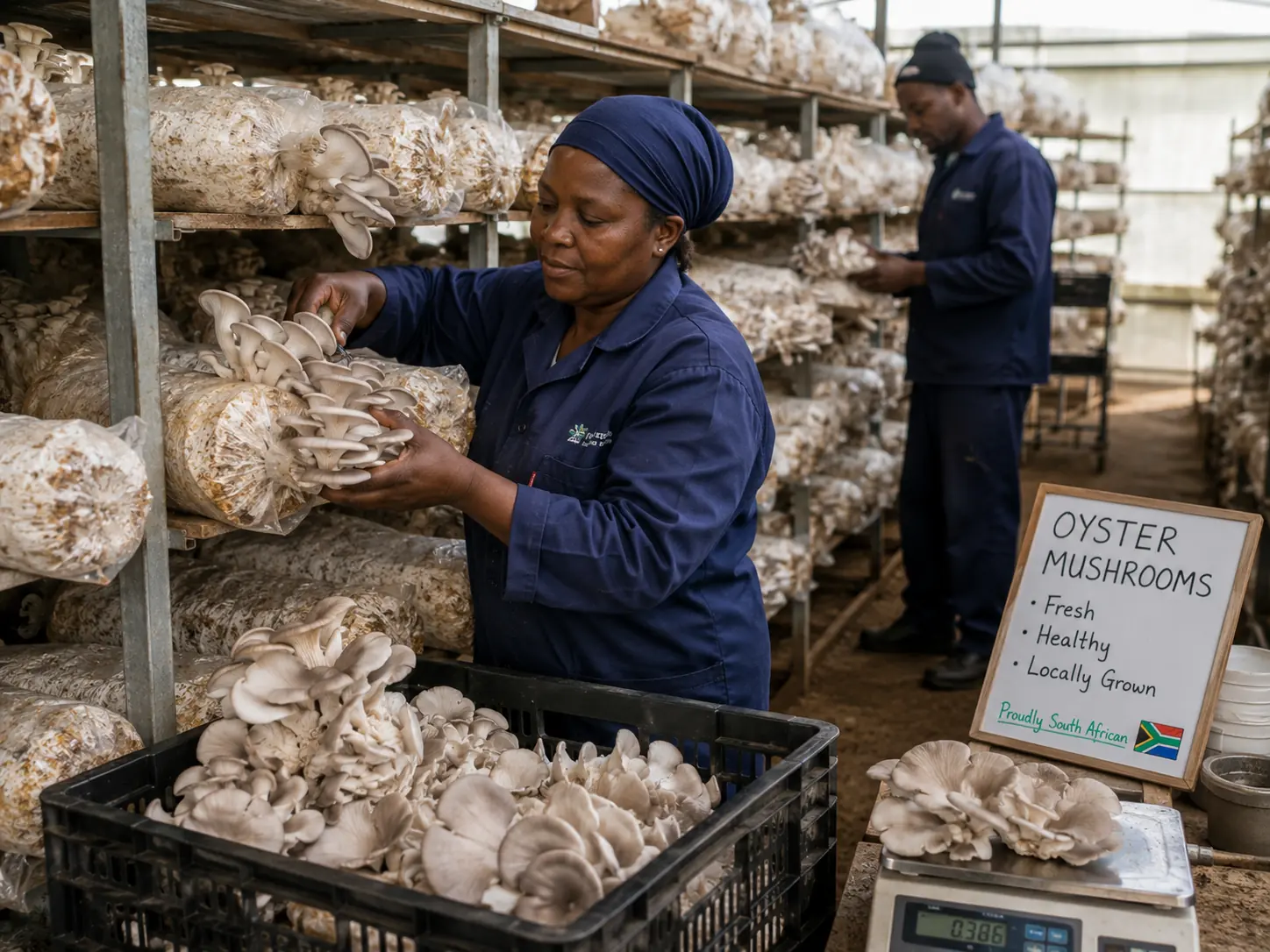
Best Mushroom Species for South African Conditions
South Africa's climate and available substrates favour several mushroom species, each with different growing requirements, substrate needs, market positioning, and profitability:
| Species | Common Name | Fruiting Temp | Days to First Flush | SA Market Price | Difficulty | Best Substrate |
|---|---|---|---|---|---|---|
| Pleurotus ostreatus | Grey Oyster | 15–25°C | 21–28 days | R60–R120/kg | Easy ✅ | Straw, sugarcane bagasse, sawdust |
| Pleurotus djamor | Pink Oyster | 20–30°C | 18–25 days | R80–R150/kg | Easy ✅ | Straw, sawdust, suits SA summer heat |
| Pleurotus eryngii | King Oyster (Trumpet Royale) | 10–18°C | 30–45 days | R120–R220/kg | Moderate ⚡ | Hardwood sawdust + wheat bran supplement |
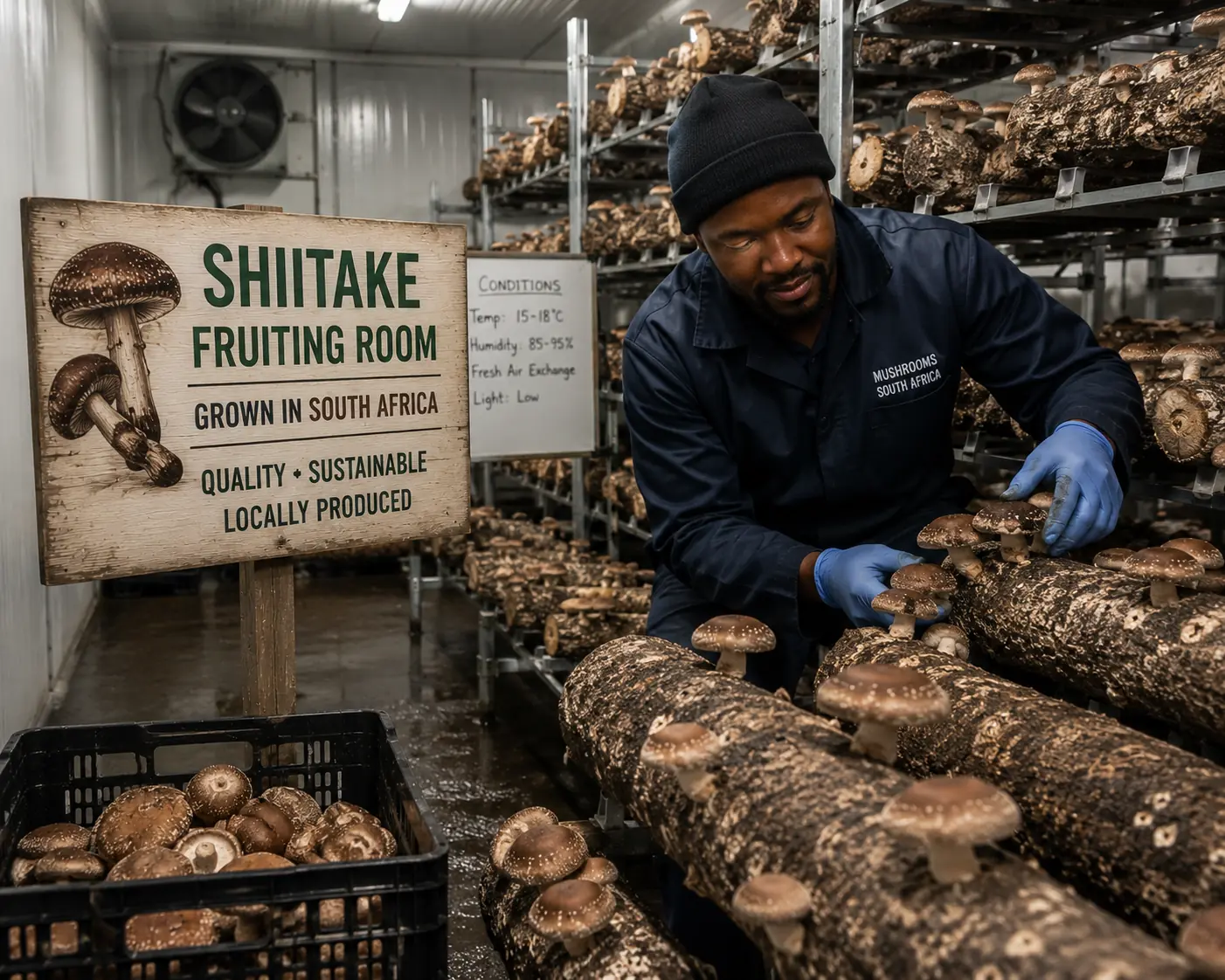
| Lentinula edodes | Shiitake | 10–22°C | 60–90 days (logs); 30–45 days (sawdust) | R120–R250/kg | Moderate ⚡ | Hardwood logs or supplemented sawdust blocks |
| Hericium erinaceus | Lion's Mane | 18–24°C | 30–45 days | R200–R400/kg | Moderate ⚡ | Hardwood sawdust; requires very high humidity |
| Agaricus bisporus | White Button / Portobello | 16–20°C | 21–28 days (from casing) | R35–R70/kg | Advanced 🔬 | Phase II compost + casing layer; complex production |
| Ganoderma lucidum | Reishi | 22–30°C | 90–120 days | R300–R600/kg (dried) | Advanced 🔬 | Hardwood sawdust; medicinal/health market only |
For new South African mushroom farmers, grey oyster and pink oyster mushrooms are the recommended starting point. Both colonise rapidly, fruit reliably, tolerate a wider range of temperatures than most other species, can be grown on widely available and inexpensive substrates (wheat straw is available across most of SA), and have excellent market demand. Once you have mastered oysters (understanding contamination prevention, humidity management, and the harvest schedule) adding shiitake or lion's mane for the premium restaurant market is a natural next step.
Substrate Preparation, The Foundation of Mushroom Production
Substrate is the growing medium that mushroom mycelium colonises. Getting substrate preparation right is the single most critical technical skill in mushroom farming, insufficient sterilisation or pasteurisation causes contamination by competitor moulds (especially Trichoderma green mould), which destroys entire batches.
🌾 Wheat Straw (Best for Oyster Mushrooms)
Wheat straw is the most accessible and widely used substrate for oyster mushrooms in South Africa. It is available as bales from grain farms across the country and is inexpensive (R80–R200 per bale, yielding 20–40 growing bags). Preparation method for South African conditions:
- Chop straw to 5–10cm lengths to increase surface area and packing density
- Pasteurise by submerging in water heated to 65–80°C for 1–2 hours (hot water pasteurisation), or by hydrated lime cold pasteurisation (pH 12 lime solution soak for 12–16 hours), lime pasteurisation is particularly popular among South African small-scale growers because it requires no heating equipment and is extremely effective against competing moulds
- After pasteurisation, drain thoroughly until straw is at "field capacity" (squeeze a handful, just a few drops should come out)
- Allow to cool to below 30°C before inoculating with spawn to prevent killing the mycelium
🪵 Hardwood Sawdust (Best for Shiitake, King Oyster, Lion's Mane)
Hardwood sawdust (avoid pine or eucalyptus which contain antifungal compounds) supplemented with wheat bran (10–20% by weight) provides a high-nutrient substrate for gourmet mushrooms. Supplemented sawdust blocks require sterilisation (not just pasteurisation), autoclaving at 121°C for 2–3 hours, or pressure cooking at 15 PSI for 2.5–3 hours for home-scale production. Sterilisation is essential for supplemented substrates because the added nutrition that feeds mushroom mycelium also makes them far more susceptible to bacterial and mould contamination.
Step-by-Step: Growing Oyster Mushrooms in South Africa
Source Quality Spawn
Mushroom spawn is the equivalent of seed. It is grain (usually sorghum, wheat, or rye) that has been colonised with mushroom mycelium. Quality spawn from a reputable supplier is essential, cheap or old spawn produces poor yields and is more susceptible to contamination. In South Africa, mushroom spawn is available from suppliers including Mzansi Mushrooms, SA Mushroom Farmers, and several smaller specialist producers operating in Gauteng and the Western Cape. Store spawn refrigerated at 2–4°C and use within its shelf life (typically 3–6 months). Never use spawn that shows signs of green, black, or orange contamination.
Inoculate Your Substrate Bags
Working in the cleanest environment possible (wipe all surfaces with 70% isopropyl alcohol; wear gloves; work quickly), fill polypropylene bags (20cm × 40cm) alternating layers of pasteurised straw and grain spawn. A typical spawn rate is 10–15% by weight of dry substrate. Seal bags with a polypropylene neck ring and filter disc (which allows gas exchange while blocking contaminants), or seal tightly with tape and poke small holes covered with micropore tape. Inoculate in a draft-free location, moving air carries contamination spores that will colonise before your mushroom mycelium can establish.
Colonisation Phase (Incubation)
Move inoculated bags to a warm (20–28°C), dark space for colonisation. The mycelium spreads through the substrate as a white, fluffy cotton-like growth. This is what you want to see. Full colonisation of a straw bag takes 10–21 days depending on temperature and spawn rate. Monitor bags daily for contamination, green mould (Trichoderma), black, or other coloured patches indicate competitor fungi and those bags should be removed immediately before they spread spores to healthy bags. Do not introduce fresh air exchange or high humidity at this stage, the mycelium does not need it, and a slightly CO₂-rich environment during colonisation actually suppresses some contaminants.
Fruiting Initiation
Once bags are fully colonised (white throughout, firm, and mycelium has consolidated), trigger fruiting by introducing the following conditions: increase fresh air exchange (the drop in CO₂ concentration is the primary fruiting trigger for oyster mushrooms), raise relative humidity to 85–95%, reduce temperature slightly (a 5–10°C temperature drop also stimulates fruiting), and introduce indirect light (12 hours per day is ideal). Cut "X" slits or remove the bag top to expose the colonised substrate to air, mushroom primordia (tiny pin-head formations) typically appear within 3–7 days of fruiting initiation.
Fruiting Room Management
The fruiting room is the heart of your mushroom operation. South Africa's dry interior climate (Gauteng, Free State, Northern Cape) makes maintaining 85–95% relative humidity challenging, you will need a humidifier or misting system running continuously. On the humid KZN coast and in the Cape Peninsula, humidity management is easier but temperature control during summer may be needed. Fresh air exchange (FAE), at least 4–6 air changes per hour in the fruiting room, prevents CO₂ buildup, which causes elongated, distorted mushroom growth ("leggy" stems, tiny caps). A small fan pulling fresh air into the space (not blowing directly onto mushrooms, which dries them) and an exhaust outlet is the minimum required setup.
Harvesting and Multiple Flushes
Harvest oyster mushrooms when the caps are still curved inward at the edges, before they flatten out and the edges start to wave. At this stage the mushrooms are at peak quality, flavour, and shelf life. Harvest by twisting the entire cluster from the substrate (don't cut with scissors, this leaves stem stubs that rot and contaminate the next flush). A single straw bag will typically produce 3–5 flushes over 6–10 weeks before the substrate is exhausted. Yields across all flushes from a 2kg straw bag are typically 400–800g of fresh oyster mushrooms (biological efficiency of 20–40%). After the final flush, the spent substrate can be added to compost or used directly as soil amendment, it contains abundant fungal biomass and is excellent for vegetable gardens.
Selling Mushrooms in South Africa
🍽️ Restaurants, The Premium Channel
Fine dining, modern bistros, and upscale hotels are the highest-value buyers for specialty mushrooms in South Africa. Chefs pay R80–R250/kg for fresh oyster, shiitake, and lion's mane, compared to R35–R65/kg for white buttons from supermarkets. The key to restaurant sales is consistency and reliability, a chef who puts your mushrooms on the menu needs to know they will arrive every Tuesday without fail. Start with free samples to 5–10 restaurants, establish weekly standing orders, and then grow your production to match your committed buyers. Packaging: deliver in branded clamshells or kraft paper bags, presentation matters to chefs.
🏪 Fresh Produce Markets and Health Stores
The national fresh produce markets (Johannesburg, Cape Town, Tshwane, Durban) handle significant mushroom volumes, though prices are lower than direct restaurant supply. Specialty mushrooms command R60–R120/kg at these markets. Health food stores (Wellness Warehouse, Faithful to Nature, independent delis) actively stock specialty mushrooms and typically pay R80–R150/kg wholesale. Approach their buyers with sample product and a supply commitment.
🌐 Direct Consumer Sales
Farmers markets, community market stalls, and online subscription boxes (weekly mushroom delivery via WhatsApp or social media ordering) are growing channels for South African mushroom farmers. Direct retail pricing of R180–R350/kg for specialty mushrooms at farmers markets is achievable and makes even small-scale production profitable. Dried mushrooms (dehydrated oyster, shiitake powder) significantly extend shelf life and open mail-order and health supplement sales channels.
⚠️ Contamination prevention, the make-or-break factor: Trichoderma green mould contamination is the primary cause of failure for new mushroom farmers in South Africa. It thrives in the same warm, humid conditions as your mushrooms and destroys substrate batches rapidly. Prevention: use freshly pasteurised/sterilised substrate immediately; work in the cleanest possible environment during inoculation; maintain good hygiene between flushes (remove any contaminated bags immediately); ensure good air exchange during colonisation to prevent excess CO₂ and moisture build-up. Never inoculate near compost heaps, garden soil, or areas with obvious mould. These are reservoirs of competing spores.