Step One: Soil Testing, Never Skip This
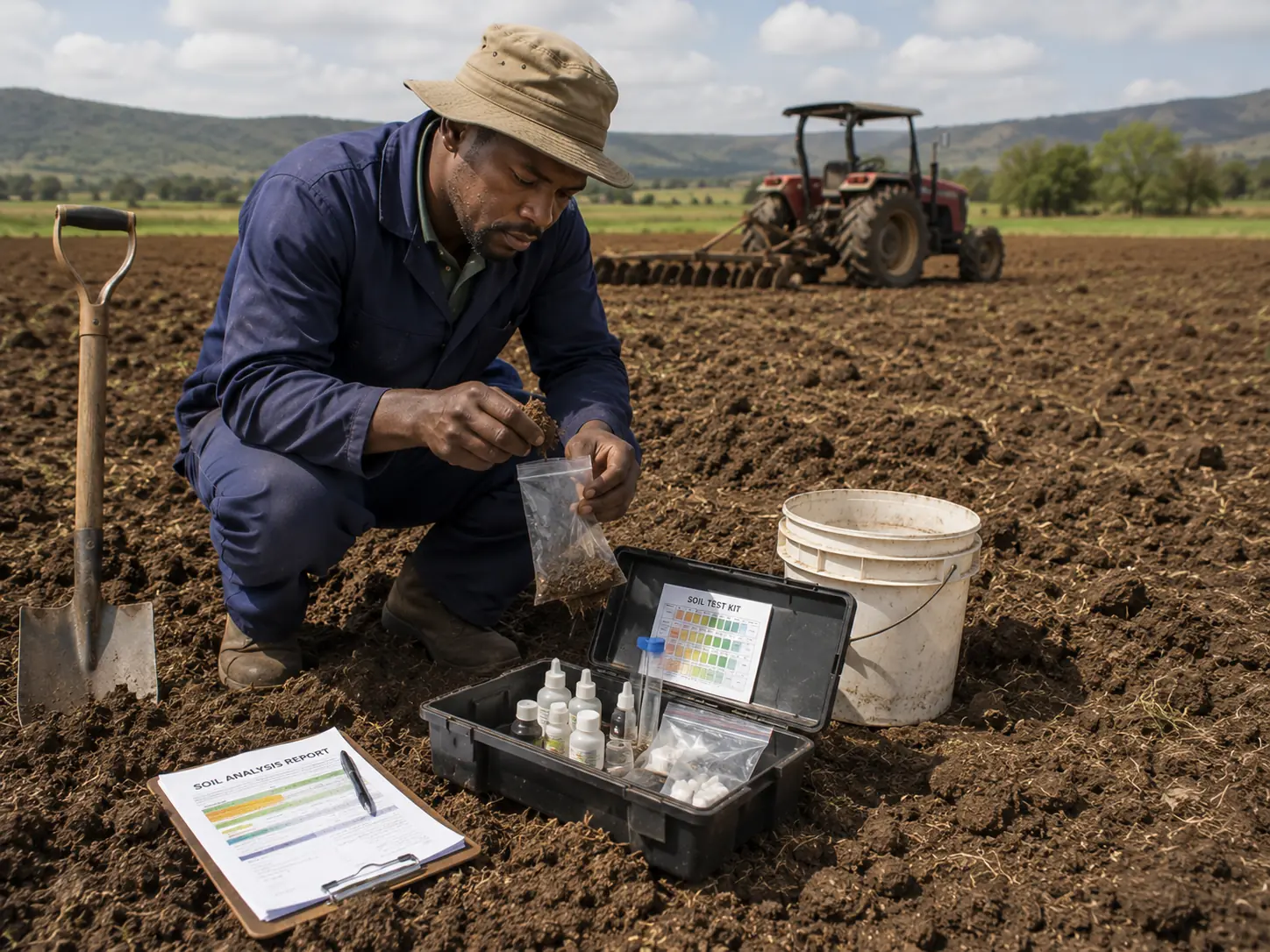
A soil test is the single most cost-effective investment in land preparation. Without knowing your soil's pH, nutrient status, organic matter content, and physical properties, every subsequent decision (lime application rates, fertiliser recommendations, irrigation scheduling) is guesswork. In South Africa, soil testing costs R150–R400 per sample and can identify problems that, if uncorrected, would cost thousands of rands in yield losses per season.
What a SA Soil Test Tells You
A comprehensive SA soil test typically reports on the following parameters. Understanding what each means for your land preparation programme is essential:
| Parameter | Ideal Range (Most Crops) | Below Target | Above Target | How to Correct |
|---|---|---|---|---|
| pH (KCl) | 5.5 – 6.5 | Acidic, nutrient lockout, Al toxicity | Alkaline, micro-nutrient deficiency | Apply agricultural lime; sulphur for alkalinity |
| Organic Matter % | 2.5 – 5%+ | Poor water retention, low microbial activity | N/A (more is generally better) | Add compost, manure, cover crops |
| Phosphorus (P) | 20–45 mg/kg | Poor root development, slow growth | Risk of P runoff to water bodies | Apply superphosphate or bone meal |
| Potassium (K) | 120–250 mg/kg | Reduced drought tolerance, poor fruit quality | Suppresses Mg uptake | Apply potassium chloride (KCl) |
| Calcium (Ca) | 800–2000 mg/kg | Cell wall weakness, tip burn in vegetables | N/A | Apply lime (CaCO₃) or gypsum |
| Magnesium (Mg) | 150–300 mg/kg | Interveinal chlorosis, reduced photosynthesis | High Mg suppresses K uptake | Apply dolomitic lime or Epsom salt |
Where to Get Soil Testing in South Africa
Accredited soil testing laboratories in South Africa include the ARC (Agricultural Research Council, ISCW division in Pretoria), Bemlab (Stellenbosch), Lancet Laboratories (agricultural division), Soil Foodweb SA, and numerous co-op and commercial agricultural laboratories attached to input suppliers like Omnia, Yara, and Nutri-Flo. Most provincial Departments of Agriculture can refer farmers to accredited local labs, and the FERTASA (Fertilizer Society of South Africa) website lists accredited facilities.
Lime Application: The Most Important Pre-Plant Amendment in SA
Soil acidity is the most widespread and economically significant soil constraint on South African agricultural land. Most SA soils are naturally acidic, and continuous cropping and nitrogen fertiliser application accelerate acidification over time. The primary lime types used in South Africa are:
- Agricultural limestone (calcitic lime, CaCO₃): The most commonly used SA liming material. High calcium content, moderate neutralising value. Available from quarries across SA at R300–R800 per tonne.
- Dolomitic lime (CaMg(CO₃)₂): Contains both calcium and magnesium, ideal where soil magnesium is also deficient. Slightly slower acting than calcitic lime. Widely used in SA fruit orchards and vineyards.
- Agricultural lime, fine ground: Finer particle size reacts faster in the soil than coarser grades. Preferred when rapid pH correction is needed before planting.
- Gypsum (CaSO₄): Does not raise pH but improves soil structure and provides calcium and sulphur. Used in SA for breaking sodic soils and as a calcium supplement in high-pH situations where lime would over-alkalinise.
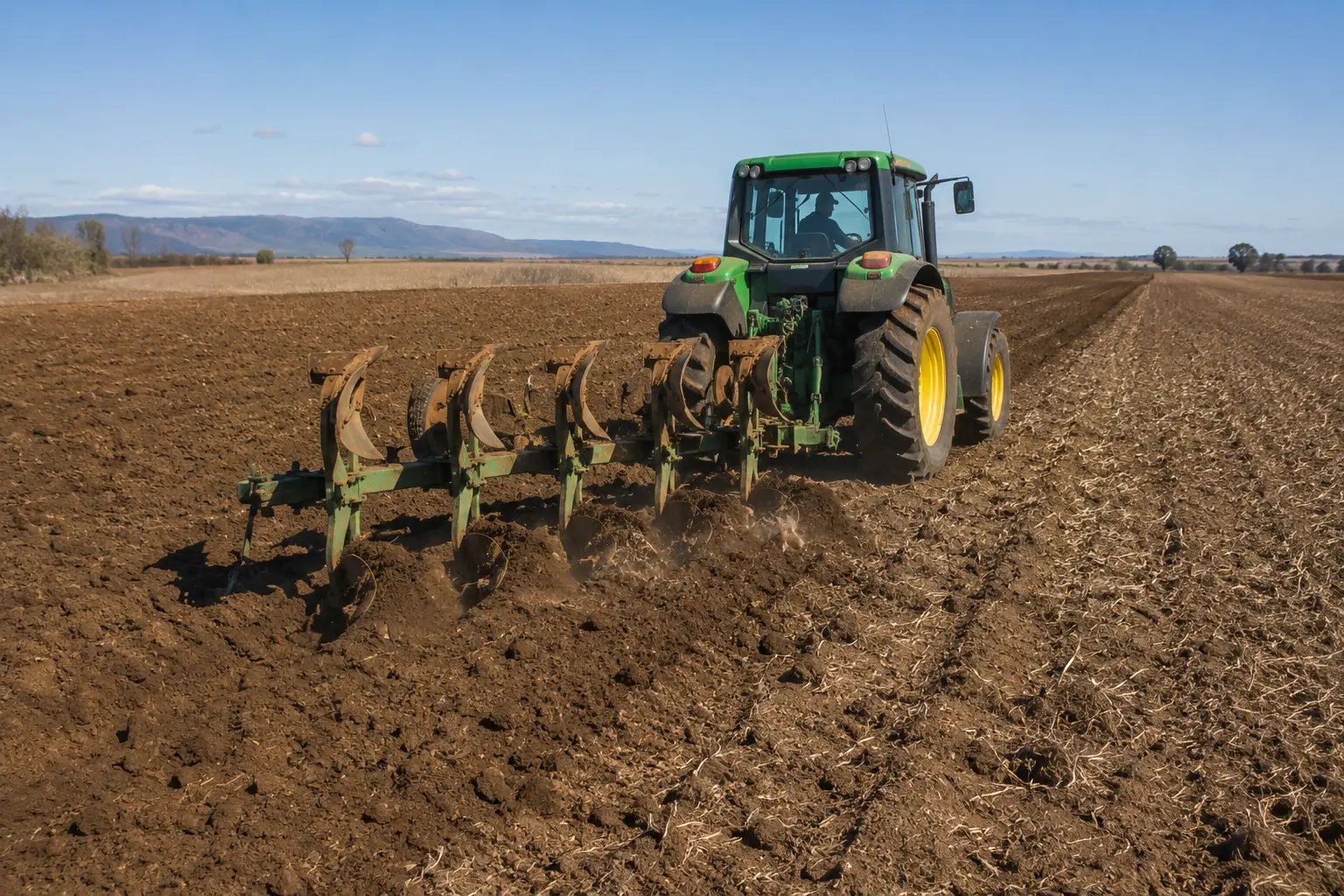
Lime application rates in South Africa are calculated from your soil test result and target pH. As a general guide, raising pH by one unit in a sandy SA soil requires approximately 1–2 tonnes of lime per hectare; in a clay or high-organic matter soil, 3–5 tonnes may be needed. Always apply lime based on your specific soil test recommendation, applying too much is as problematic as too little. Lime should be incorporated by disc harrowing to at least 150mm depth for effective pH correction throughout the main rooting zone.
Lime reacts slowly with soil. It needs moisture, time, and physical incorporation to dissolve and neutralise soil acidity. Applying lime immediately before planting delivers minimal benefit. Apply lime at least 6 weeks before your intended planting date, ideally 3–6 months before for the best pH correction results. For perennial orchards and vineyards, pre-plant lime correction 6–12 months ahead of establishment is the gold standard.
Organic Matter: SA Soils' Most Common Deficiency
South African agricultural soils typically contain 0.5–1.5% organic matter, well below the 3–5% threshold at which soils display good structure, water retention, microbial activity, and natural fertility. This widespread organic matter depletion is the result of decades of intensive tillage, residue removal, and minimal organic matter return under conventional SA farming systems.
Building organic matter is a slow process, a well-managed soil under cover crops and compost applications might increase organic matter by 0.1–0.2% per year. However, even modest improvements deliver measurable benefits: for every 1% increase in soil organic matter, a typical SA soil can hold an additional 8–14 litres of water per square metre in the top 30cm, a significant benefit in SA's drought-prone conditions.
The most practical organic matter building strategies for SA farmers are: incorporating cover crops (planted between main crops and rolled down or chemically terminated before planting); applying compost or well-aged animal manure before tillage (5–10 tonnes per hectare); retaining crop residues rather than burning; and adopting minimum-tillage practices that reduce organic matter oxidation.
Drainage and Earthworks: Overlooked but Critical
Poor drainage is among South Africa's most common and least-addressed causes of poor crop performance on South African farms. Waterlogged soils prevent root respiration, promote soil-borne pathogens (Phytophthora, Pythium), destroy soil structure, and make timely field operations impossible. In SA's summer-rainfall regions where heavy convective thunderstorms are common, waterlogging after rain is a frequent and serious production constraint.
Assessment of drainage before establishing any new cropping system is essential. Walk your field after heavy rain and map where water stands. These are your drainage problem areas. Solutions range from simple surface drains and furrows (low cost, effective for moderate problems) to deep subsurface drainage (mole drains or perforated pipes at 600–900mm depth, higher cost but long-lasting). On clay-dominated SA soils, deep ripping combined with organic matter addition improves internal drainage significantly.
Contour banks are a critical erosion control measure for all SA farms with any topographic slope. SA's high-intensity summer rainfall creates severe erosion risk on sloped, tilled land without contour protection. The ARC (Agricultural Research Council) provides contour spacing guidelines for different SA rainfall zones and slope classes, contact your extension officer for free technical assistance with contour planning.
Land Clearing and Stump Removal
New agricultural land in South Africa often requires clearing of bush, invasive aliens, or remnant vegetation before cultivation can begin. The correct approach depends on what needs clearing:
- Indigenous bush and veld clearing: DALRRD and provincial conservation regulations apply to clearing of indigenous vegetation, particularly in biologically sensitive areas (Cape Fynbos, Grasslands, Wetlands). Always obtain the necessary clearing permits from the Department of Environment, Forestry and Fisheries (DEFF) and provincial conservation authorities before clearing any area of indigenous vegetation.
- Invasive alien plants: SA has significant invasive plant problems (Port Jackson, Black Wattle, Bugweed, Prickly Pear) that require clearing before cultivation. The DEFF's Working for Water programme offers contracted clearing services in many SA regions at no cost to the landowner, contact your regional DEFF office.
- Stump grinding and removal: After clearing woody vegetation, stumps must be mechanically ground or chemically treated before tillage. Buried stumps and root masses cause tillage equipment damage and harbour soil-borne diseases for years.
Land Preparation for Specific SA Crop Systems
While the core principles of soil testing, lime application, and organic matter improvement apply universally, different SA crop systems have specific additional land preparation requirements:
- Maize and grain crops (Highveld, Free State, Mpumalanga): Deep ripping every 3–5 years to break tillage pans, annual shallow disc harrowing or tine cultivation, lime maintenance based on annual pH testing. Conservation tillage or no-till systems increasingly adopted.
- Vegetables (intensive production, all regions): Fine, well-structured seedbed essential. Deep compost incorporation (5–10 t/ha annually), pH correction to 6.0–6.5, fine disc harrowing, followed by bed formation. Plastic mulch systems on raised beds standard for premium vegetable production.
- Citrus and subtropical orchards (Limpopo, Eastern Cape, KZN coast): Deep ripping (600–800mm) with lime and compost incorporation before planting, this is a once-off opportunity to improve the soil environment that will support trees for 30+ years. Soil pH 5.5–6.5 for citrus.
- Vineyards and table grapes (Western Cape, Northern Cape): Deep ripping along vine rows, thorough pre-plant lime application, and detailed soil and subsoil analysis are standard practice. Soil preparation for a 25-year vineyard is the most critical operation in the entire farming system.
- Dryland grain (Northern Cape, Eastern Cape Karoo): Minimum tillage or no-till to maximise water conservation. Every tillage pass costs moisture. Single-pass rip-plant operations save water compared to multiple cultivation passes.