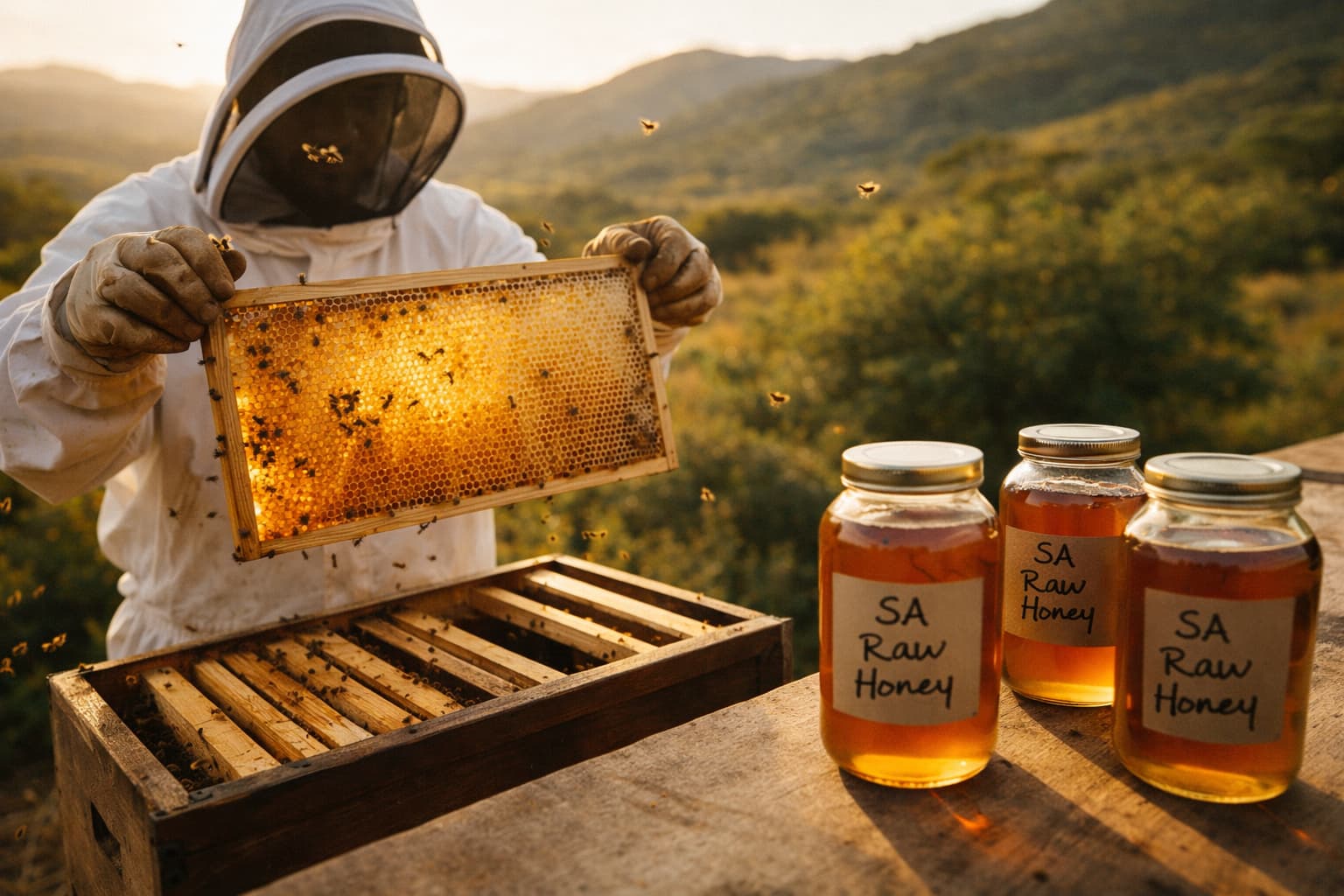
A Rewarding Addition to Any SA Farm
Beekeeping can add a second income stream to a farm, but returns depend heavily on forage, colony strength, weather and the price a beekeeper receives. Honey yields vary widely between sites, so a new beekeeper should budget around the local forage conditions rather than assume a fixed yield per hive.
Honey is only one reason farmers keep bees. Managed colonies can provide pollination where a crop depends on insect activity, particularly in orchards and some seed-producing crops. The benefit depends on crop variety, flowering conditions, weather and the number and strength of colonies available.
South Africa's African honeybee (Apis mellifera scutellata) is well adapted to local conditions but can be defensive. Good hive placement, protective clothing, calm handling and knowledge of colony behaviour matter more than expensive equipment when starting out.