Pig Farming in South Africa, A Fast-Turnover Livestock Enterprise with Strong Market Demand
Pig farming is a highly capital-efficient livestock enterprise for South African farmers. Pigs have an exceptionally fast reproductive cycle (a sow can produce two litters per year, each of 8–12 piglets) and grow rapidly from birth to slaughter weight in just 5–6 months. This combination of high reproductive output and fast growth means that a well-managed pig enterprise can generate returns far more quickly than cattle or sheep, making pig farming an attractive option for both commercial operators and smallholder farmers looking to build a sustainable livestock income.
South Africa's pork industry is dominated by large commercial integrated producers (breeding, growing, processing, and often retail in one vertical operation), but there is a strong and growing market for smaller-scale producers supplying local abattoirs, direct-to-consumer sales, informal market pork traders, and the rapidly expanding braai pork market. Per-capita pork consumption in South Africa is growing steadily, driven by urbanisation, the popularity of pork products in township retail and fast food, and growing consumer interest in locally sourced, traceable meat. For farmers with good feed access and the management discipline that pig farming demands, it remains firmly among the most rewarding livestock enterprises on the continent.
However, pig farming is also a highly management-intensive livestock enterprise. Pigs are highly susceptible to a range of diseases, are sensitive to environmental stress (heat, cold, overcrowding, poor ventilation), and are completely dependent on purchased feed, typically accounting for 65–75% of total production costs. Success in pig farming requires meticulous attention to biosecurity, housing, nutrition, health management, and record-keeping. This page covers all of these in practical, South African-specific detail.
🐷 Industry snapshot: South Africa produces approximately 320,000–380,000 tonnes of pork carcass weight annually. The industry is dominated by the Western Cape (particularly around Moorreesburg, Swartland, and the Boland), Gauteng, and KwaZulu-Natal. Pork products (including sausages (boerewors), bacon, ribs, and pork belly) are among the most widely consumed meat products in South Africa. The SAPPO (South African Pork Producers Organisation) represents commercial producers and publishes weekly market intelligence.
Best Pig Breeds for South African Conditions
South African commercial pig production relies almost entirely on a small number of improved European breeds and their crosses, selected for fast growth, lean meat percentage, large litter size, and good feed conversion. The major breeds used in SA include:
| Breed | Role | Key Traits | Best Use in SA |
|---|---|---|---|
| Large White (Yorkshire) | Maternal / Terminal | Excellent litter size (10–13 piglets), good milking ability, adaptable to various housing systems, white skin | Most widely used maternal line in SA commercial herds. Also used as terminal sire. Very popular with smallholders. |
| Landrace | Maternal | Long body, excellent litter size and milking, good mothering ability, lean carcass | Primary maternal breed in SA commercial production. Long body length valued by processors for bacon cuts. |
| Duroc | Terminal Sire | Fast growth rate, excellent feed conversion (FCR 2.2–2.5:1), good meat quality, red-brown colour | Dominant terminal sire in SA. Duroc × (Large White × Landrace) is the standard commercial cross. |
| Pietrain | Terminal Sire | Extremely lean, high muscle percentage, lower fat cover. Stress-sensitive (PSS gene, screen before buying) | Used by processors targeting very lean pork. Requires careful selection for PSS-free stock. |
| South African Landrace | Maternal | Locally adapted strain developed for SA conditions. Good heat tolerance compared to European Landrace. | Well-suited to smallholder and less intensive systems in warmer SA regions. |
For smallholder farmers starting out, Large White is a strong default breed choice. It is widely available from registered stud breeders across SA, robust, adaptable, productive, and well-known to most veterinarians and extension officers. Avoid exotic or unregistered breeds sourced from unknown origins, disease risk and performance unpredictability make these poor starting points. Always source pigs from registered, certified disease-free herds with documented health history.
Pig Housing Systems in South Africa
Housing is among South Africa's most important factors determining pig performance, health, and welfare. Pigs cannot regulate their body temperature as effectively as ruminants. They have no sweat glands and are very susceptible to both heat stress (above 28°C) and cold stress (below 15°C for growing pigs, lower for weaners). South Africa's hot summers make heat management a critical housing consideration, particularly in the Northern Cape, Limpopo, and Mpumalanga.
Commercial Confinement Housing
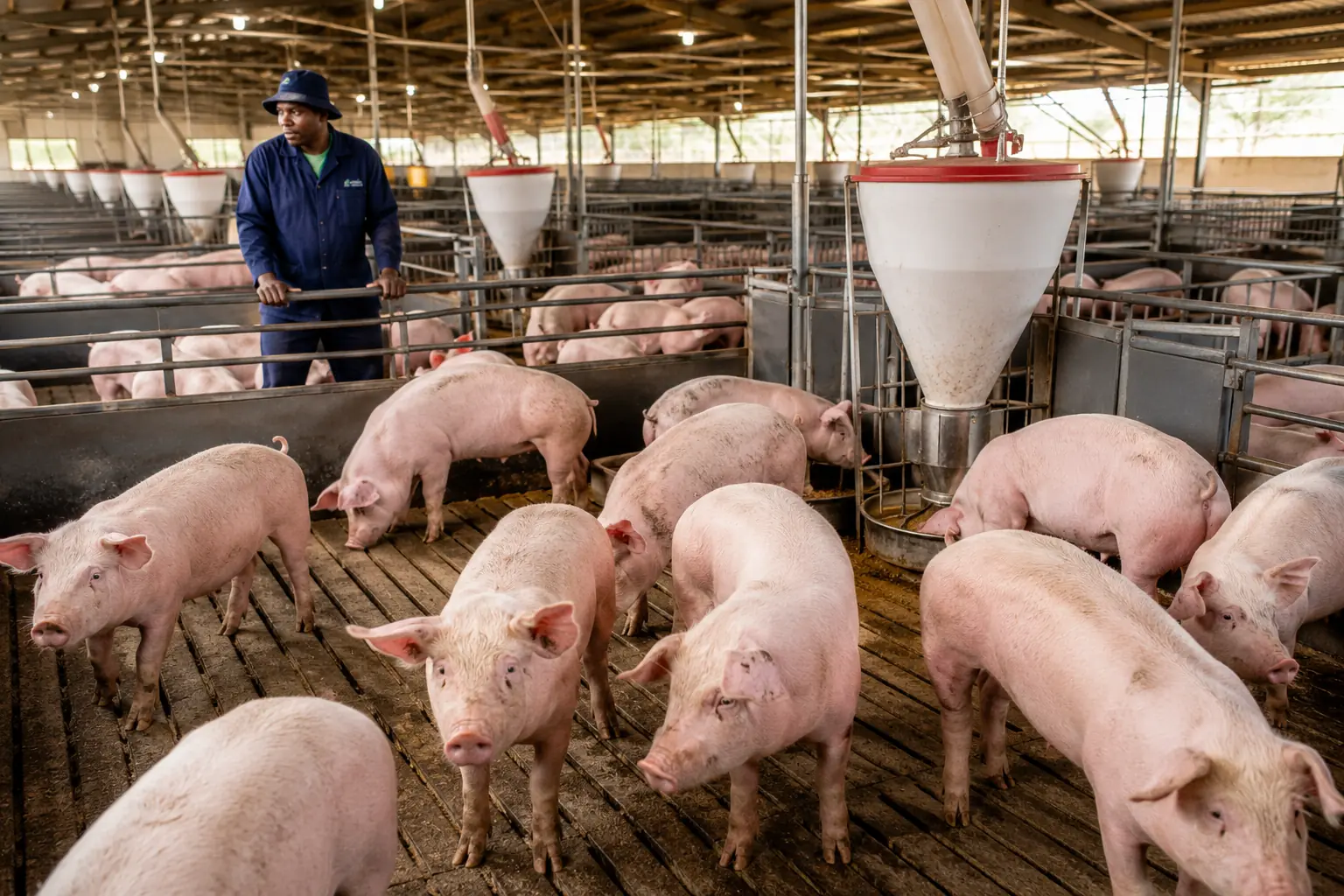
Fully enclosed buildings with concrete floors, individual farrowing crates, nursery pens, and grow-finish pens. Ventilation is critical, naturally ventilated buildings with adjustable ridge vents and sidewall openings are most common in South African commercial operations. Evaporative cooling or fogger systems are used in hot regions. Fully slatted or partially slatted floors over deep pits or flush channels facilitate manure management. This system maximises biosecurity and allows close monitoring of individual animals.
Smallholder Housing
For smaller operations (5–50 sows), simpler housing of concrete block or brick construction with corrugated iron or tiled roofing, concrete floors with drainage channels, and natural ventilation is standard. Key requirements regardless of scale: shade from direct sun, good airflow, separate farrowing area, dry sleeping area with bedding (straw or wood shavings), and secure fencing. A mud wallow or regular hosing-down during summer is highly beneficial. It is the pig's primary cooling mechanism. See our farming equipment guide for suppliers of basic piggery infrastructure.
Outdoor and Semi-Outdoor Systems
Outdoor pig production (pigs on pasture with access shelters) is practised by some niche and free-range operators in South Africa, particularly targeting premium and organic pork markets. Suitable on well-drained soils in moderate-rainfall areas. Requires electric fencing, wallows, and shade structures. Disease pressure is typically lower than intensive confinement, but biosecurity against wild boar contact (African Swine Fever risk) requires careful management. See our organic farming guide for certification implications of free-range pig production.
⚠️ African Swine Fever (ASF) alert: ASF is present in South Africa and poses a catastrophic risk to pig operations. It has a mortality rate approaching 100% in domestic pigs and there is no vaccine. Strict biosecurity, no contact with warthogs or wild boar, no feeding of raw kitchen scraps or swill, controlled access to the piggery, and immediate reporting of unusual deaths to your state vet, is non-negotiable. Visit the DALRRD website for current ASF movement control notices in your area.
Pig Feeding and Nutrition in South Africa
Feed accounts for 65–75% of total pig production costs in South Africa, making feeding management the single most important factor in determining profitability. Pigs are monogastric (single-stomach) omnivores with relatively simple but exacting nutritional requirements for each stage of their lives. They require balanced diets providing energy, protein (amino acids, particularly lysine, methionine, and threonine), vitamins, minerals, and clean water at all times.
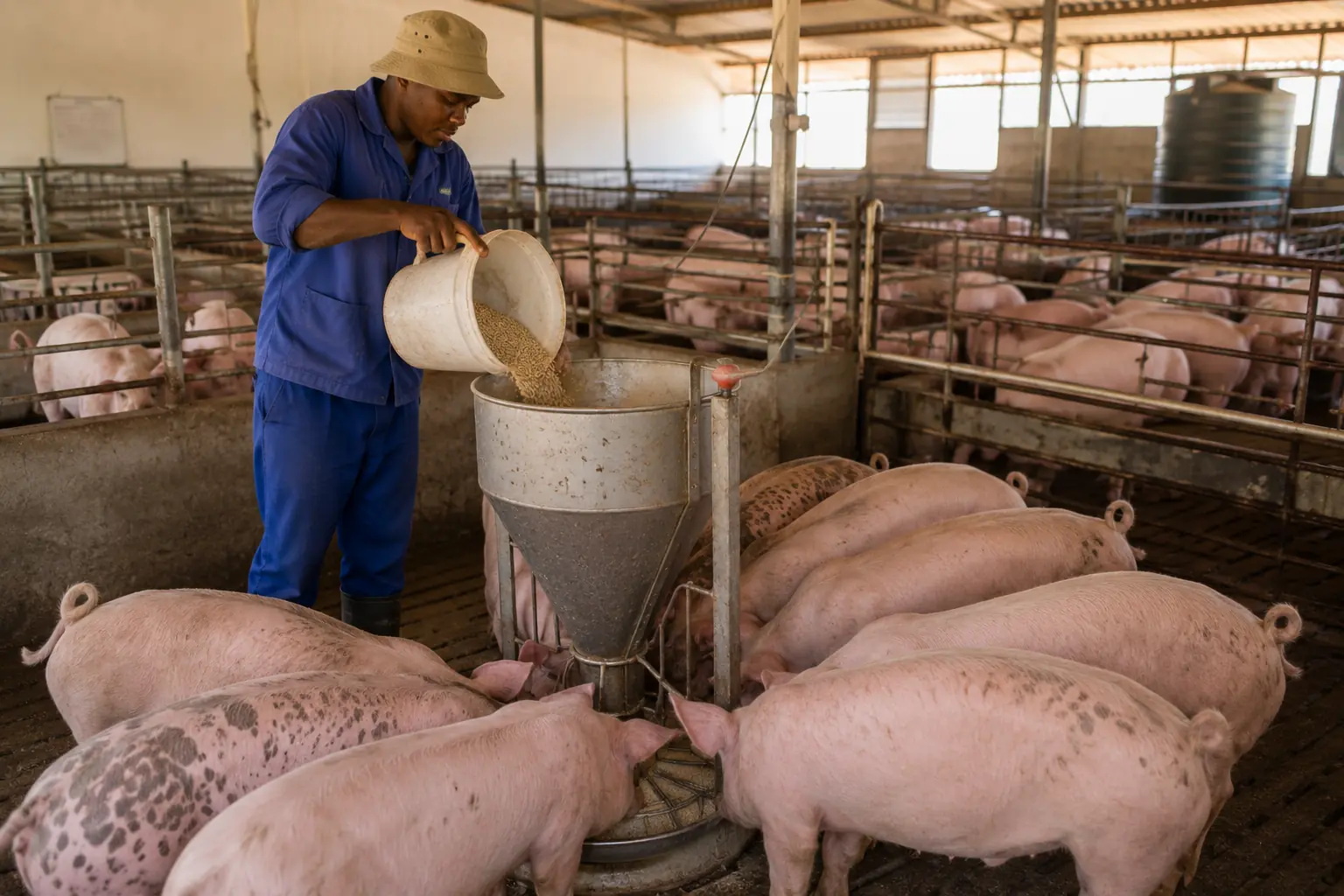
South African commercial pig producers primarily use compounded pelleted or meal-form pig feeds purchased from registered feed manufacturers (Meadow Feeds, Epol, Quantum, RCL Foods, and others). These feeds are formulated for specific production stages:
| Production Stage | Feed Type | Approximate Daily Intake | Key Nutritional Goals |
|---|---|---|---|
| Creep (pre-weaning piglets, 10–28 days) | Creep/starter pellets | 50–200g/day | Stimulate solid feed intake, support gut development, high digestibility |
| Weaner (28 days – 20kg) | Weaner pellets | 0.3–0.8 kg/day | High protein (20–22% CP), high energy, support rapid growth post-weaning stress |
| Grower (20–60 kg) | Grower meal/pellets | 1.2–2.0 kg/day | Balanced growth, lean tissue deposition |
| Finisher (60 kg – slaughter at ~100 kg) | Finisher meal/pellets | 2.0–3.0 kg/day | Efficient weight gain, minimise back fat, target 0.5–0.8 kg daily gain |
| Gestating sow | Gestation meal | 2.0–2.5 kg/day | Maintain body condition, support foetal development without excess weight gain |
| Lactating sow | Lactation meal | 5–8 kg/day (ad lib) | Maximise milk production for piglet growth, prevent excessive sow weight loss |
Some smallholder farmers supplement commercial feed with locally available by-products (maize bran, vegetable waste, bakery waste, or cassava) to reduce feed costs. This can be viable only if nutritional balance is maintained and the ingredients are safe. Never feed raw kitchen swill, restaurant waste, or meat scraps. This is both illegal under SA animal disease regulations and the primary transmission route for African Swine Fever. Fresh, clean water must be available ad libitum at all times, a lactating sow requires 30–40 litres of water per day.
Breeding and Reproduction Management
Effective breeding management is the engine of a profitable pig enterprise. Key reproductive targets for South African commercial pig production:
- Age at first mating: Gilts (young females) should be mated at 7–8 months of age and at least 130 kg liveweight. Mating too young reduces litter size and can impair the sow's long-term reproductive performance.
- Gestation length: 114 days (3 months, 3 weeks, 3 days, easy to remember).
- Litter size: Target 10–12 live piglets per litter for commercial breeds. Sows need to be culled when litter size drops consistently below 8.
- Weaning age: Commercial operations wean at 21–28 days. Earlier weaning allows the sow to return to oestrus faster (sows typically return to heat within 5–7 days of weaning), increasing the number of litters per year. Smallholder operations often wean at 5–6 weeks with good results.
- Litters per sow per year: Target 2.2–2.4 litters per sow per year on good management. This yields 22–28 weaned piglets per sow per year.
- Boar management: One boar can serve 15–20 sows in natural service. For artificial insemination (AI), boar semen is available from registered studs in SA, AI is increasingly used even on smaller operations for access to superior genetics without keeping a boar.
Pig Health Management and Vaccination in South Africa
Disease prevention through strict biosecurity and a comprehensive vaccination programme is far more cost-effective than treatment of established disease. Work with a registered veterinarian to develop a health protocol for your specific operation and region. Core diseases to vaccinate against in South African pig herds include:
- Porcine Parvovirus (PPV): Causes reproductive failure in gilts and sows, embryonic death, mummification, and stillbirths. Vaccinate all gilts before first mating and booster sows annually. A standard vaccine in every SA pig operation.
- Erysipelas (Erysipelothrix rhusiopathiae): Causes acute septicaemia, skin diamond-shaped lesions, and chronic arthritis and endocarditis. Vaccinate gilts before first mating and all adults every 6 months.
- Foot-and-Mouth Disease (FMD): Vaccinate in accordance with DALRRD requirements and current disease status in your area. Compulsory in most SA production regions.
- E. coli / Clostridial enteritis: Vaccinate sows pre-farrowing to pass protective maternal antibodies to pigvia colostrum.
- Glässer's disease (Haemophilus parasuis): Causes meningitis, arthritis, and polyserositis in young pigs. More prevalent under intensive conditions. Vaccination available.
alongside vaccination, implement these daily biosecurity measures: control all human and vehicle access to the piggery, shower-in and change clothes before entering, maintain all-in/all-out batch management in grow-finish pens, quarantine all new stock for a minimum of 3 weeks before introducing to the main herd, maintain vermin (rat and mouse) control programmes, and keep detailed movement and health records for all animals on the premises.
Growth Performance and Slaughter Targets
Commercial pigs in South Africa are typically slaughtered at 95–110 kg liveweight, producing carcasses of 70–80 kg. Key performance benchmarks for South African commercial pig production:
Slaughter Weight
Target liveweight at slaughter for commercial pork carcass
95–110 kgDays to Slaughter
From birth to target slaughter weight under good management
155–175 daysPork Price (Carcass)
Average SA abattoir carcass price, A-grade
R28–R42/kgFeed conversion ratio (FCR), the kilograms of feed required to produce one kilogram of liveweight gain, is the most important efficiency metric in pig production. Target FCR for a well-managed South African grow-finish operation: 2.2–2.6 kg feed per kg gain. Poor management, disease challenges, incorrect feeding, or heat stress can push FCR to 3.0+, directly eroding profitability. Monitor FCR weekly by tracking feed intake against weight gain.
Manure Management, Turning Waste into Value
A single commercial pig produces approximately 2.0–2.5 kg of manure per day. For an operation with 100 sows and associated growing pigs, this represents enormous volumes of organic waste that must be managed, but also represents a significant asset. Pig manure is an excellent fertiliser rich in nitrogen, phosphorus, and potassium. Options for SA pig farmers include:
- Composting: Composted pig manure is a valuable soil amendment. See our composting guide for pig manure composting procedures that safely break down pathogens.
- Biogas: Pig slurry is among the best substrates for biogas production. A biodigester can convert manure to methane for cooking, heating, and electricity generation on the farm, reducing energy costs and producing nutrient-rich digestate for fertiliser use. Increasingly popular on mid-size SA pig operations.
- Direct land application: Liquid slurry applied to cropping land or pasture. Manage application rates carefully to avoid nutrient runoff and comply with environmental regulations. Never apply raw manure near watercourses.
Selling Pork in South Africa, Market Access
South African pig farmers have several routes to market:
- Registered abattoirs: The primary route for commercial producers. Pigs are sold liveweight or carcass weight to registered abattoirs (South African Pork Producers Organisation SAPPO publishes weekly benchmark prices). Carcass grading determines price, A-grade carcasses (correct weight, P2 backfat 12–22mm) achieve the best prices. Contact SAPPO for a list of registered pork abattoirs in your province.
- Direct farm sales and butcheries: Selling whole or half carcasses directly to local butcheries, restaurants, or consumers. Requires a permit and compliance with meat safety regulations, but price premiums of 20–40% above abattoir carcass price are achievable.
- Informal and township markets: Live pig sales to informal traders and community slaughter events (particularly around year-end celebrations) can achieve good prices. Ensure compliance with local municipal bylaws regarding live animal trading and slaughter.
- Value-added products: Producing biltong, boerewors, smoked ribs, bacon, or salami from your own pork adds significant value per kilogram. Requires a registered processing facility and compliance with food safety legislation. See our agri markets guide for information on niche food market channels.
Grants and Support for Pig Farmers in South Africa
The DALRRD's CASP programme and the Ilima/Letsema programme can assist qualifying smallholder and emerging pig farmers with infrastructure (housing, water supply, fencing), starter stock, and training support. Provincial agricultural departments (particularly in the Western Cape, Limpopo, and Gauteng) have specific pig production support programmes. SAPPO also provides extension and technical support to registered producers. Visit our farming grants page for application guidance and eligibility requirements.