Container farming ranks among the most democratic forms of food production available to South Africans. You do not need land, you do not need soil, and you do not need a large budget to get started. A few plastic bags or buckets, a bag of potting mix, some seeds, a water source, and a sunny spot is all it takes to begin growing your own food. From small township backyards in Soweto to apartment balconies in Cape Town and school courtyards in the Eastern Cape, container farming is making fresh vegetable production possible for millions of South Africans who would otherwise have no access to growing space.
Beyond household food gardens, container farming has also emerged as a genuine micro-enterprise model in South African cities and peri-urban areas. Enterprising growers using 50–200 containers in a small backyard or community space can produce and sell sufficient volumes of spinach, herbs, tomatoes, and leafy greens to generate a meaningful monthly income, particularly when selling directly to neighbours, spaza shops, or at local markets where fresh produce is in high demand but limited supply.
This section covers everything you need to start and succeed with container farming in South Africa, container types and sizes, the best growing media, water and fertilizer management, which crops to grow and which to avoid, pest management in containers, and how to scale your container operation into a small income-generating enterprise.
Why Container Farming Works So Well in South Africa
Container farming has particular advantages in the South African context that make it especially well-suited to urban and peri-urban growing:
- No land required: Containers can be placed on any hard surface, a concrete yard, a paved driveway, a rooftop, a balcony, or a porch. In townships where most residents have no arable garden soil, this is a critical advantage.
- Poor soil is irrelevant: Most urban soils in South African townships are compacted, contaminated, or simply paved over. Container growing entirely bypasses soil quality problems by creating an ideal growing environment from scratch in each container.
- Water efficiency: Containers can be managed with drip systems, wick irrigation, or simple hand watering far more precisely than open ground. Water use per kilogram of food produced is typically lower in a well-managed container system than in conventional open-ground growing.
- Portability and flexibility: Containers can be moved to follow the sun, protect sensitive crops from frost or hail, or reconfigure your growing space as needs change.
- Low theft and vandalism risk: A container garden on a private yard or secure rooftop is far less vulnerable to theft and vandalism than an open community plot.
- Accessible to all ages and abilities: Container gardening can be managed from a standing position, at table height, or from a wheelchair, making it inclusive in a way that ground-level farming is not.
Container Types for South African Growers
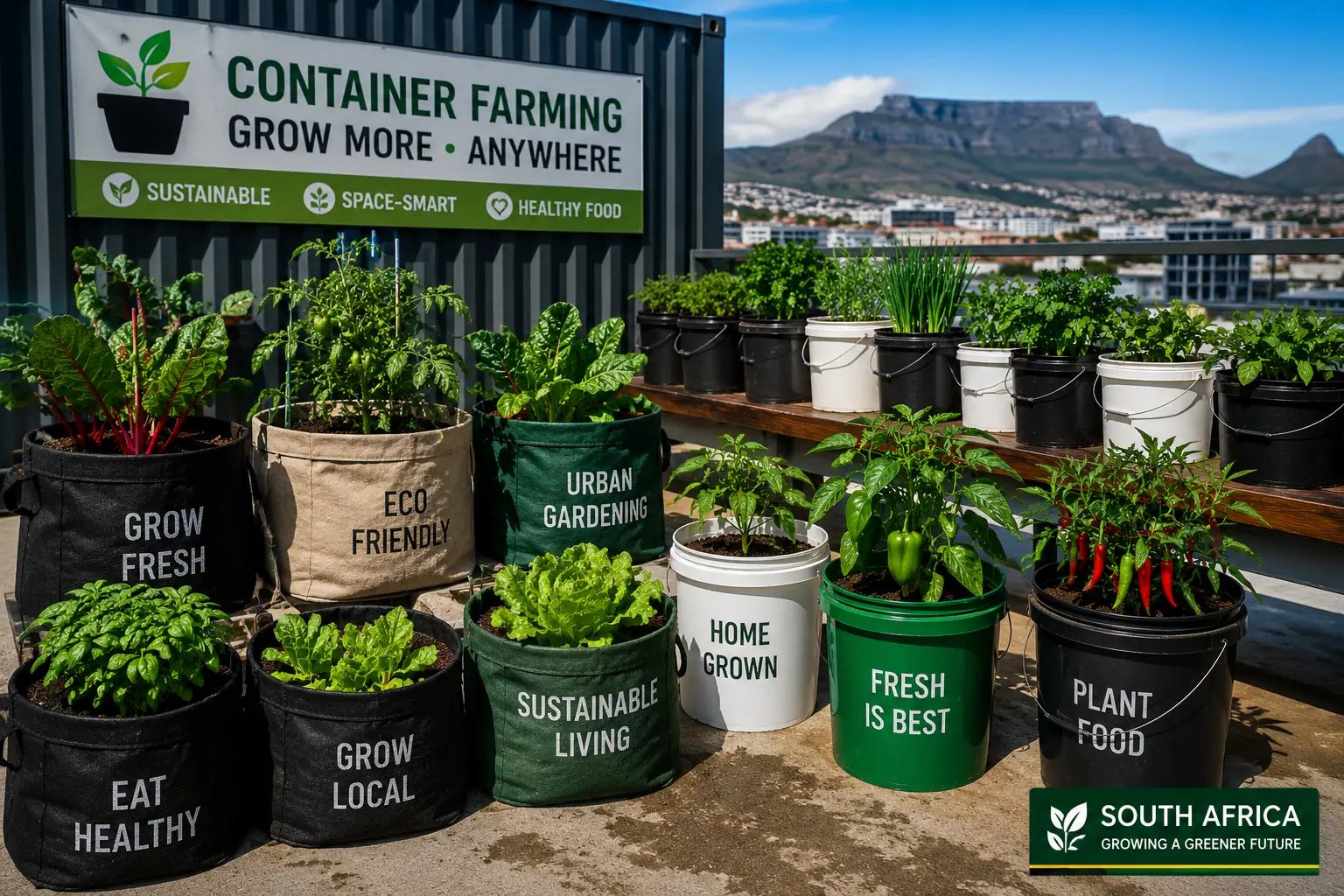
The good news for budget-conscious South African growers is that almost any watertight container can be used for growing vegetables, provided it has adequate drainage. You do not need to buy expensive purpose-made planters to get started.
Grow Bags / Planting Bags
20–50 litre black nursery bags are the most widely used container in South African township gardens. Cheap, widely available, and effective. Ideal for tomatoes, peppers, and large vegetables.
5–20 Litre Buckets
Recycled paint buckets, plastic containers, and food-grade pails work excellently. Drill drainage holes in the base. Best for spinach, herbs, lettuce, and smaller crops.
IBC Totes / Half Drums
Cut-down 200 L drums or quarter-cut IBC totes create large, productive growing containers ideal for sweet potatoes, cabbage, or a multi-crop herb garden.
Wooden Crates & Pallets
Lined with plastic sheeting, wooden fruit crates and pallet collars make inexpensive raised bed containers for greens, carrots, and herbs.
Repurposed Bottles & Tins
2 litre plastic bottles, large tins, and yoghurt containers are perfect for growing herbs on a windowsill or small balcony. Free and widely available.
Purpose-Made Grow Bags
Fabric grow bags (10–50 L) promote air pruning of roots and prevent overwatering. Available from garden supply stores and increasingly from online retailers in SA.
Container Size and Drainage
Container size is the single most important factor determining what you can grow and how well it performs. As a general rule, bigger containers are better, they hold more growing medium, retain moisture more reliably, and give roots more room to develop. At minimum, use the following container depths and volumes for each crop category:
- Herbs and microgreens: 10–15 cm depth, 2–5 litres minimum
- Leafy greens (spinach, lettuce, Swiss chard): 20–25 cm depth, 10–15 litres minimum
- Tomatoes: 30–40 cm depth, 20–30 litres minimum per plant
- Peppers and chillies: 25–30 cm depth, 15–20 litres per plant
- Cabbage: 30 cm depth, 20 litres per plant
- Carrots and radishes: 30–40 cm depth, 10 litres per 4–6 plants
- Green beans: 30 cm depth, 15 litres per cluster of 4 plants
Drainage is non-negotiable. Every container must have adequate drainage holes in its base, at least 4–6 holes of 1–1.5 cm diameter for a 20 litre container. Without drainage, roots sit in waterlogged growing medium, oxygen is excluded, and root rot kills the plant within days. Elevate containers slightly on bricks or rails to allow free drainage from the base holes.
The Right Growing Medium for Container Farming
This is where most beginners go wrong: filling containers with ordinary garden soil or bare clay subsoil. Garden soil compacts in containers, drains poorly, and suffocates roots. Container growing requires a lightweight, well-draining growing medium that holds adequate moisture and nutrients while remaining loose and aerated.
Budget-Friendly SA Potting Mix Recipe
For most South African container growers, the following mix provides an excellent growing medium at a fraction of the cost of bagged commercial potting soil:
- 40% compost (homemade or purchased), provides nutrients and moisture retention
- 40% river sand or coarse sand, provides drainage and aeration
- 20% fine topsoil or loam, adds weight for stability and mineral nutrients
Add a handful of slow-release granular fertilizer (like 2:3:2 general fertilizer) per 20-litre container when mixing. This base mix will support most vegetables for the first 4–6 weeks. For premium production (particularly in containers for tomatoes, peppers, and high-value crops) replace the topsoil component with perlite or vermiculite for improved aeration and root health.
Refreshing Growing Medium Between Crops
Container growing medium becomes progressively depleted and compacted with each crop. After each production cycle, remove and refresh the medium. Spent growing medium makes an excellent addition to a compost heap or can be dug into open garden beds. Replenish with 30–50% fresh compost before replanting. Do not reuse the same medium for the same crop family without a break, this encourages the buildup of crop-specific soil-borne diseases.
Best Crops for Container Farming in South Africa
| Crop | Min Container Size | Days to Harvest | Best Season (SA) |
|---|---|---|---|
| Spinach / Swiss Chard | 10 L per 3–4 plants | 45–60 days | Year-round |
| Lettuce & salad greens | 5 L per plant | 30–45 days | Autumn–Spring |
| Tomatoes (determinate) | 20–30 L per plant | 70–90 days | Spring–Summer |
| Cherry tomatoes | 15 L per plant | 60–75 days | Spring–Summer |
| Chillies & bell peppers | 15–20 L per plant | 80–100 days | Spring–Summer |
| Spring onions / chives | 5 L per cluster | 30–45 days | Year-round |
| Herbs (basil, parsley, coriander) | 2–5 L per plant | 25–40 days | Year-round |
| Radishes | 10 L per 6–8 plants | 25–30 days | Autumn–Spring |
| Green beans (bush variety) | 15 L per 4 plants | 55–65 days | Spring–Summer |
| Kale & morogo | 15 L per plant | 50–70 days | Year-round |
| Carrots (short variety) | 30 L, 30 cm deep | 70–80 days | Autumn–Winter |
| Strawberries | 5 L per plant | 90–120 days | Winter–Spring |
Crops to Avoid in Containers
Not all crops are suitable for container production. The following are generally impractical for container farming due to their size, root depth requirements, or production volumes: maize (corn), pumpkins and watermelons (need too much space), sweet corn, full-sized cabbage (can be done but requires very large containers), most root vegetables grown for commercial volume, and tall climbing crops like cucumbers without significant support structures.
Watering Container Plants in South Africa's Climate
Watering is the most critical daily management task in container farming, and the one most frequently done incorrectly. Containers dry out far faster than open ground, particularly in South Africa's hot, dry summers and the strong Cape South-Easter wind. In summer in Johannesburg or the Northern Cape, a container in full sun may need watering twice daily. In winter, once every 2–3 days may be sufficient.
The Finger Test
The simplest and most reliable way to check if a container needs watering is the finger test: push your finger 2–3 cm into the growing medium. If it feels dry at that depth, water thoroughly. If it still feels moist, wait. Overwatering, keeping the medium constantly saturated, is as damaging as underwatering and is the most common cause of root rot, yellowing leaves, and plant death in container gardens.
Watering Best Practices
- Water at the base of plants rather than from above, this keeps foliage dry and reduces fungal disease risk on crops like tomatoes.
- Water slowly and thoroughly until water drains freely from the bottom of the container, this ensures the entire root zone is moistened, not just the top layer.
- Water in the early morning where possible. This allows foliage to dry during the day and reduces disease pressure.
- In hot summer conditions, placing a layer of straw, dry grass, or shredded cardboard on the surface of containers significantly reduces evaporation and keeps roots cooler.
- For larger container operations, simple drip irrigation kits (available from Builders Warehouse, Agri-Mark, and hardware stores) with a timer can automate watering and dramatically reduce daily labour time.
Fertilizing Container Crops
Because containers have a limited volume of growing medium and water drains through them repeatedly, washing nutrients out with each irrigation, container crops need more frequent feeding than plants growing in open ground. A regular fertilization programme is essential for sustained production.
Liquid Feeding Programme
Liquid fertilizers (either commercial concentrated liquid feeds or homemade compost tea or worm tea) are the most effective way to feed container plants because they deliver nutrients directly to the root zone in immediately available form. A simple programme for most vegetable containers:
- Weeks 1–4 after planting: Apply a balanced liquid fertilizer (such as Nitrosol, Multifeed, or a fish emulsion product) at half label strength every 10–14 days. This supports establishment without excessive vegetative growth.
- From week 5 through harvest: Apply liquid fertilizer at full label strength every 7–10 days. For fruiting crops (tomatoes, peppers), switch to a higher-potassium formulation at first flowering to promote fruit set.
- Compost tea: Homemade compost tea (steep compost in water for 24 hours, strain and dilute 1:10) applied as a soil drench weekly feeds plants, introduces beneficial microorganisms, and reduces the need for purchased fertilizer.
Pest and Disease Management in Containers
Container plants are not immune to pests and diseases, but their contained nature makes monitoring and intervention easier than in open ground. The most common pest and disease problems affecting container vegetable gardens in South Africa include:
- Aphids: Cluster on growing tips and undersides of leaves, causing distortion and stunting. A strong spray of water dislodges colonies. Neem oil spray (5 ml per litre of water with a drop of dish soap) applied weekly controls persistent infestations without harming beneficial insects.
- Whitefly: Common on tomatoes, peppers, and tomatoes in warm conditions. Yellow sticky traps are effective monitors and partial controls. Neem oil spray at weekly intervals manages populations.
- Leaf miners: Produce characteristic tunneling damage in spinach and leafy greens. Remove and destroy affected leaves. Yellow sticky traps trap adult flies.
- Fungal leaf diseases (early blight, powdery mildew): Prevalent on tomatoes and squash in humid conditions. Ensure adequate spacing between containers for airflow, avoid overhead watering, and apply potassium bicarbonate or diluted neem oil at first signs.
- Root rot (Pythium, Phytophthora): The most common container disease, caused by consistently waterlogged medium. Prevention through correct watering is the only reliable management approach. Affected plants cannot typically be saved.
Scaling Your Container Farm Into a Small Business
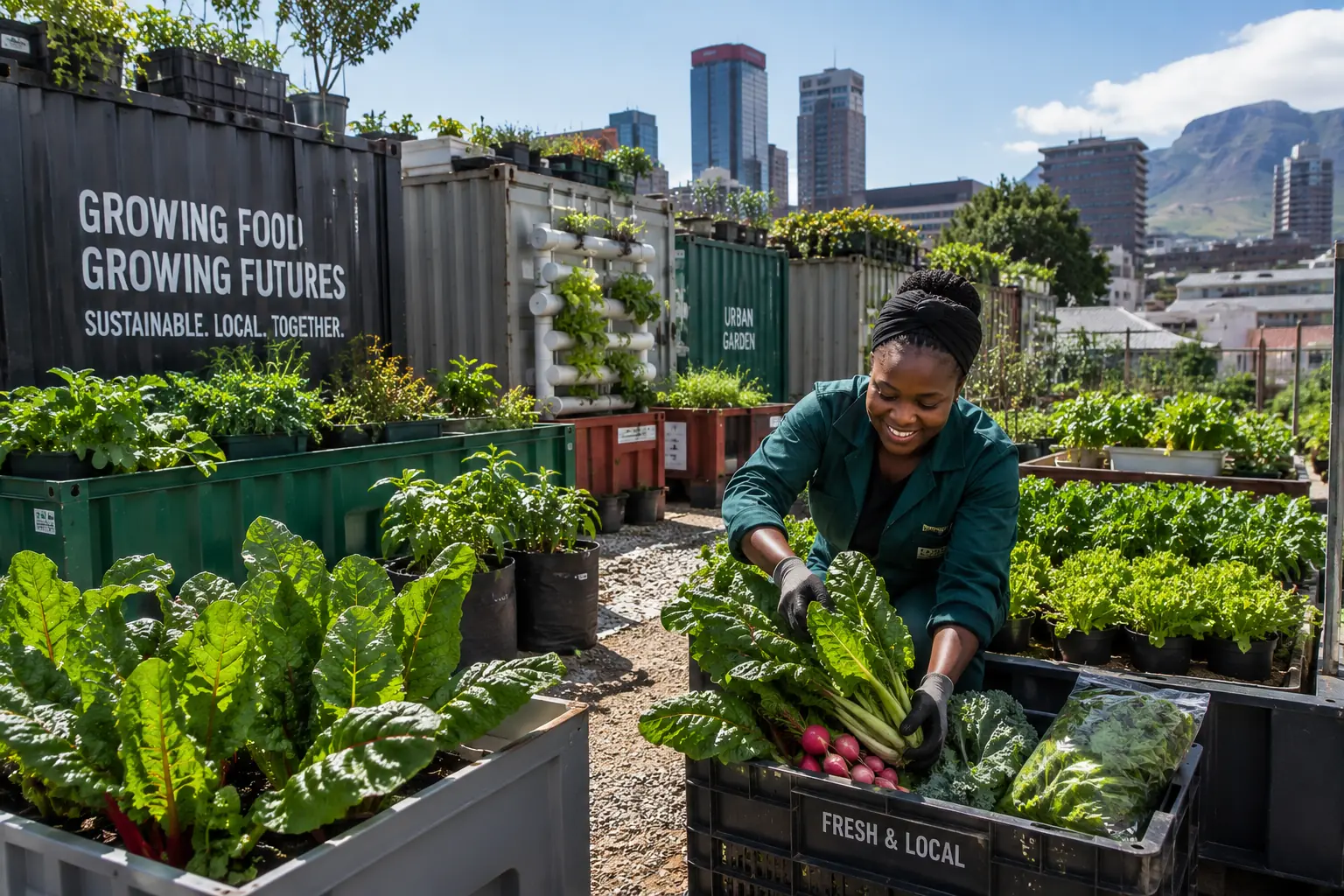
A dedicated container farmer with 50–150 containers in a backyard or community space can produce and sell meaningful quantities of fresh produce to neighbours, local spaza shops, restaurants, and informal markets. The key steps to scaling a container garden into a viable micro-enterprise are:
- Identify your best sellers: Start with the crops that sell fastest in your local area. In most South African urban contexts, spinach, Swiss chard, cherry tomatoes, chillies, spring onions, and fresh herbs command the best per-kilogram prices relative to their production cost and time in container systems.
- Stagger your plantings: Plant new containers every 2–3 weeks in a rolling schedule so you have crops ready to harvest on a consistent weekly basis rather than all at once. Consistent supply is what converts a once-off buyer into a regular customer.
- Track your costs and sales: Record what you spend on seeds, growing medium, fertilizer, and water against what you earn from sales. This data shows you which crops are potentially profitable and where to invest in expansion.
- Build regular buyer relationships: Restaurants, guesthouses, local schools, and spaza shop owners are all potential regular buyers who value the reliability of a local supplier they can count on.
- Access support: The SEDA (Small Enterprise Development Agency) provides free business development support to micro-enterprise growers including container farmers. Your local municipality's urban agriculture office may also provide seeds, containers, or training support to qualifying urban food producers.
🪴 Top Tips for South African Container Farmers
- Never use plain garden soil in containers, it compacts and kills roots. Always use a lightweight, well-draining potting mix or make your own compost-sand-soil blend.
- Bigger containers are almost always better, they stay moist longer, give roots more room, and forgive management mistakes more readily than small pots.
- Feed regularly, container plants run out of nutrients faster than open-ground crops. Weekly or bi-weekly liquid feeding keeps production strong.
- Move containers to follow the sun, most vegetable crops need 6+ hours of direct sunlight. Use the mobility advantage of containers to maximise light exposure.
- Water consistently, inconsistent watering (allowing the medium to dry then flooding) causes blossom end rot in tomatoes and peppers and bitter flavours in leafy greens.
- Harvest frequently, regular harvesting of leafy greens and herbs stimulates new growth and keeps plants productive far longer than allowing them to mature fully before cutting.
⚠️ Disclaimer
This guide is for general educational purposes. Crop performance, water requirements, and market conditions vary by province and season. Consult your local extension officer or municipal urban agriculture office for advice specific to your area. Always verify current regulations around greywater use and rainwater harvesting with your local municipality.