Rabbit Breeds for South African Conditions
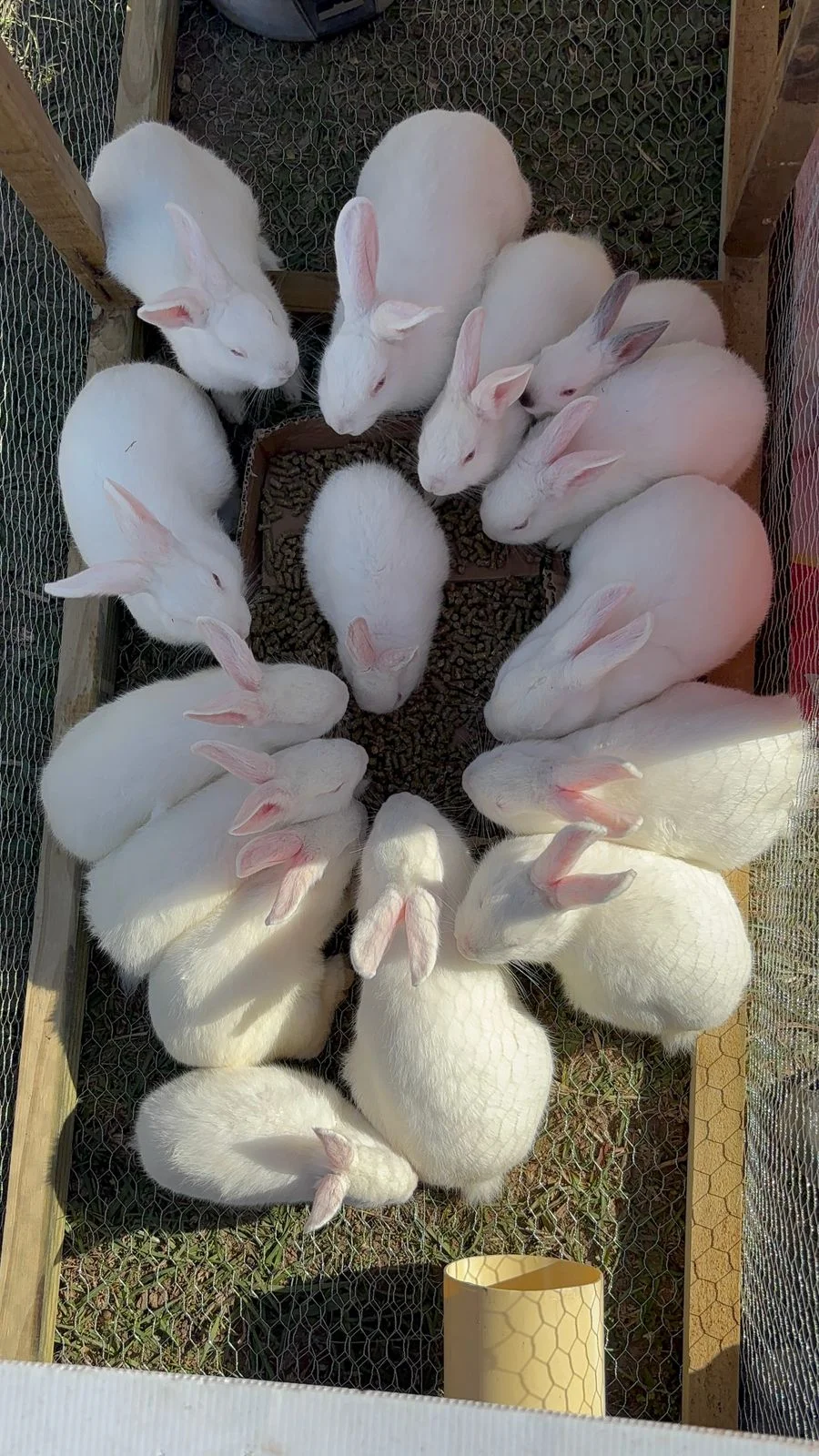
Choosing the right breed is the first critical decision in rabbit farming. South Africa's climate varies enormously, from the cool, wet Western Cape to the hot, humid KwaZulu-Natal coast and the dry, hot Limpopo bushveld. Different breeds have different heat tolerance, growth rates, and meat-to-bone ratios. The following six breeds are the most widely farmed in SA:
Housing & Hutch Design for SA Climate
Rabbits are highly sensitive to heat stress. In South Africa, heat is the primary killer of rabbits in poorly designed operations, temperatures above 30°C cause heat prostration, reduced fertility, and death, particularly in pregnant does and young kits. Hutch placement and ventilation are your most important housing decisions.
Hutch Construction
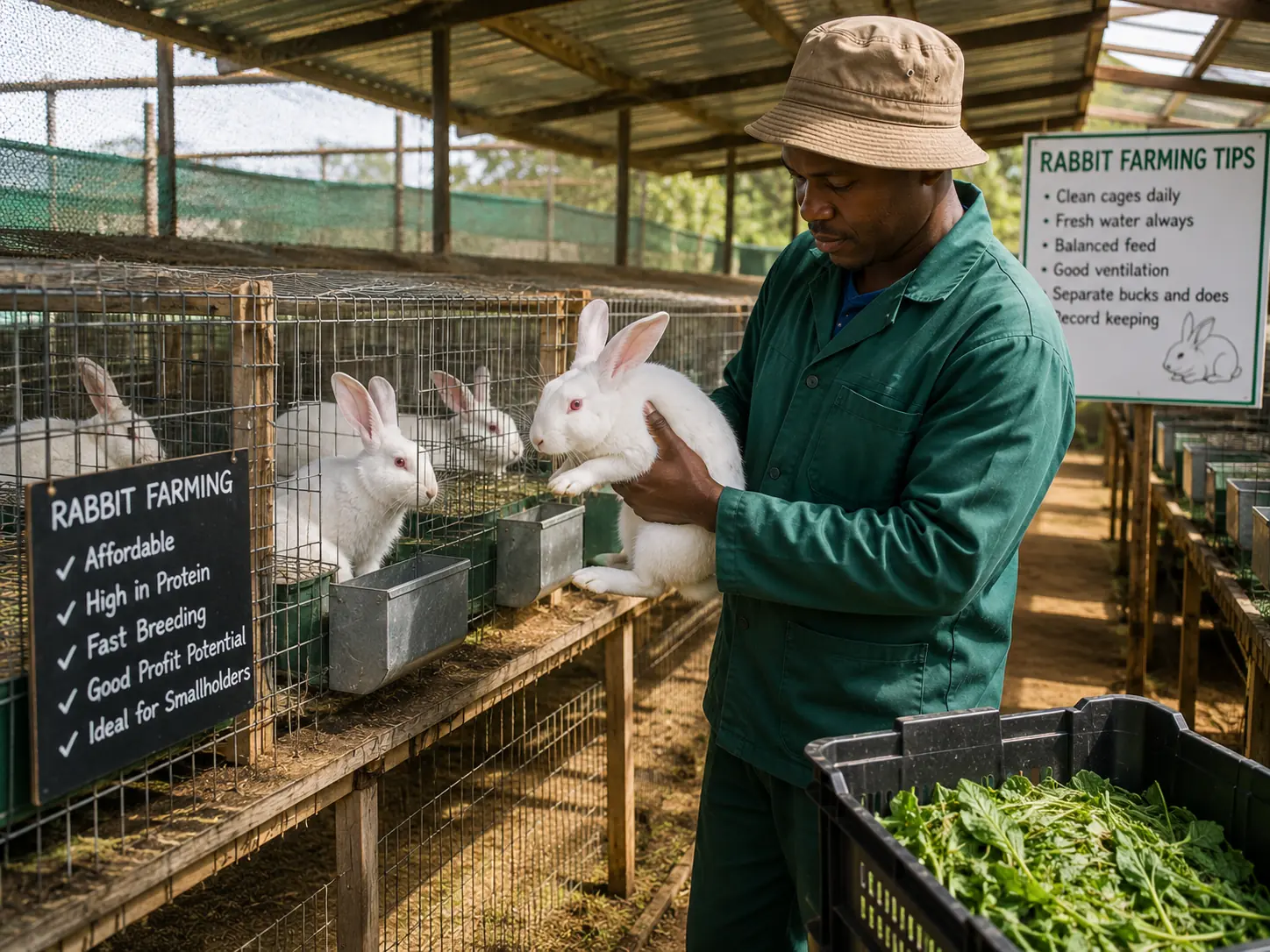
Commercial rabbit hutches in SA are typically constructed from welded wire mesh (16-gauge, 25mm × 25mm or 25mm × 50mm) for the floor and sides, with a solid roof of corrugated metal or shade cloth on a timber frame. Wire floors allow droppings to fall through (keeping the rabbit clean and reducing disease) while the solid roof provides shade and rain protection. A standard single hutch unit measures approximately 90cm wide × 60cm deep × 45cm high for a medium breed doe with litter.
In hotter provinces (Limpopo, Mpumalanga, North West, Northern Cape), shade cloth rated at 40–70% solar exclusion over the hutch area is essential. Evaporative cooling (wet hessian over cages or a misting system on very hot days) can save lives during summer heatwaves. In colder areas (Highveld, Western Cape highlands), solid sides on three walls of the hutch provide wind protection in winter.
Housing Layout Options
- Colony housing, A larger enclosed space where rabbits live in groups on a dirt floor. Lower cost and more natural, but harder to manage disease, fighting, and accurate breeding records. Best for very small-scale backyard producers.
- Individual wire cages stacked in tiers, The most common commercial system in SA. Each doe has her own cage with a removable nesting box. Easy to manage, monitor health, and keep records. Requires good ventilation to prevent ammonia build-up from urine.
- Mobile rabbit tractors, A wire-bottomed cage moved daily across a lawn or pasture. Rabbits graze through the wire floor, receiving fresh grass daily. Low cost and excellent for urban or peri-urban settings where pasture space is limited but available.
Rabbits can tolerate cold far better than heat. Never place hutches in direct afternoon sun in SA summers. Provide fresh, cool water at all times, water intake doubles in hot weather. On days above 35°C, place frozen water bottles in cages and wet the ears (a rabbit's main heat exchange organ).
Feeding Rabbits in South Africa
Rabbits are herbivores with a digestive system adapted to process large quantities of fibrous roughage. Their feeding programme consists of three components: roughage (fibre), concentrates (pellets), and fresh greens. Getting the balance right is critical, too little fibre causes fatal gut stasis; too many concentrates without fibre causes obesity and liver disease.
Roughage, The Foundation
Good quality lucerne (alfalfa) hay is the ideal roughage for SA rabbits, high in protein (15–18% CP) and calcium, fragrant, and highly palatable. Lucerne is widely available from feed merchants across SA at R80–R140 per bale. Timothy grass hay or oat hay are acceptable alternatives for adult bucks and non-breeding does where the lower protein content is appropriate. Hay must be available at all times in the hutch, never let rabbits run out of roughage for more than a few hours.
Fresh-cut garden vegetation is excellent and free: kikuyu grass, ryegrass, clover, comfrey leaves, carrot tops, kale and brassica leaves, sweet potato vines, banana leaves, and most common SA garden greens are safe and nutritious. Avoid plants from the Solanaceae family (tomato, potato, pepper leaves), rhubarb, and any vegetation that has been treated with pesticides. Pesticide contamination from neighbour gardens is a real risk in urban settings.
Commercial Pellets
A commercial rabbit pellet (16–18% protein, 12–15% fibre) provides balanced nutrition and is the cornerstone of commercial SA rabbit operations. Brands available in SA include Epol Rabbit Pellets, Nutri-Feeds, and various local feed mill formulations. Feed rates: breeding does receive 100–150g per day + ad lib hay; slaughter kits receive 80–120g/day; bucks receive 80–100g/day. Over-pellet feeding without adequate roughage is the most common nutrition mistake in SA rabbit farming.
Water
Fresh, clean water must be available at all times. A doe with young kits drinks up to 1 litre per day in summer. Nipple drinkers (ball-valve type) attached to a gravity-fed header tank are the most hygienic and labour-efficient system for commercial SA rabbit farms. Change water daily in summer, warm standing water is a bacteria risk.
Breeding & Reproduction Management
Rabbits are one of the fastest-reproducing domesticated animals on earth. Understanding and managing their reproductive cycle is the core skill of a successful rabbit farmer:
- Sexual maturity: Does reach maturity at 4–5 months (small/medium breeds) to 6–8 months (large breeds). Bucks mature slightly earlier. Never breed does before 4 months, it stunts growth and causes reproductive problems.
- Mating: Always bring the doe to the buck's cage, never the other way around. Does are territorial and will attack an unknown buck in their own space. Leave together for 10–15 minutes; the mating (a successful mount followed by the buck falling sideways) takes seconds.
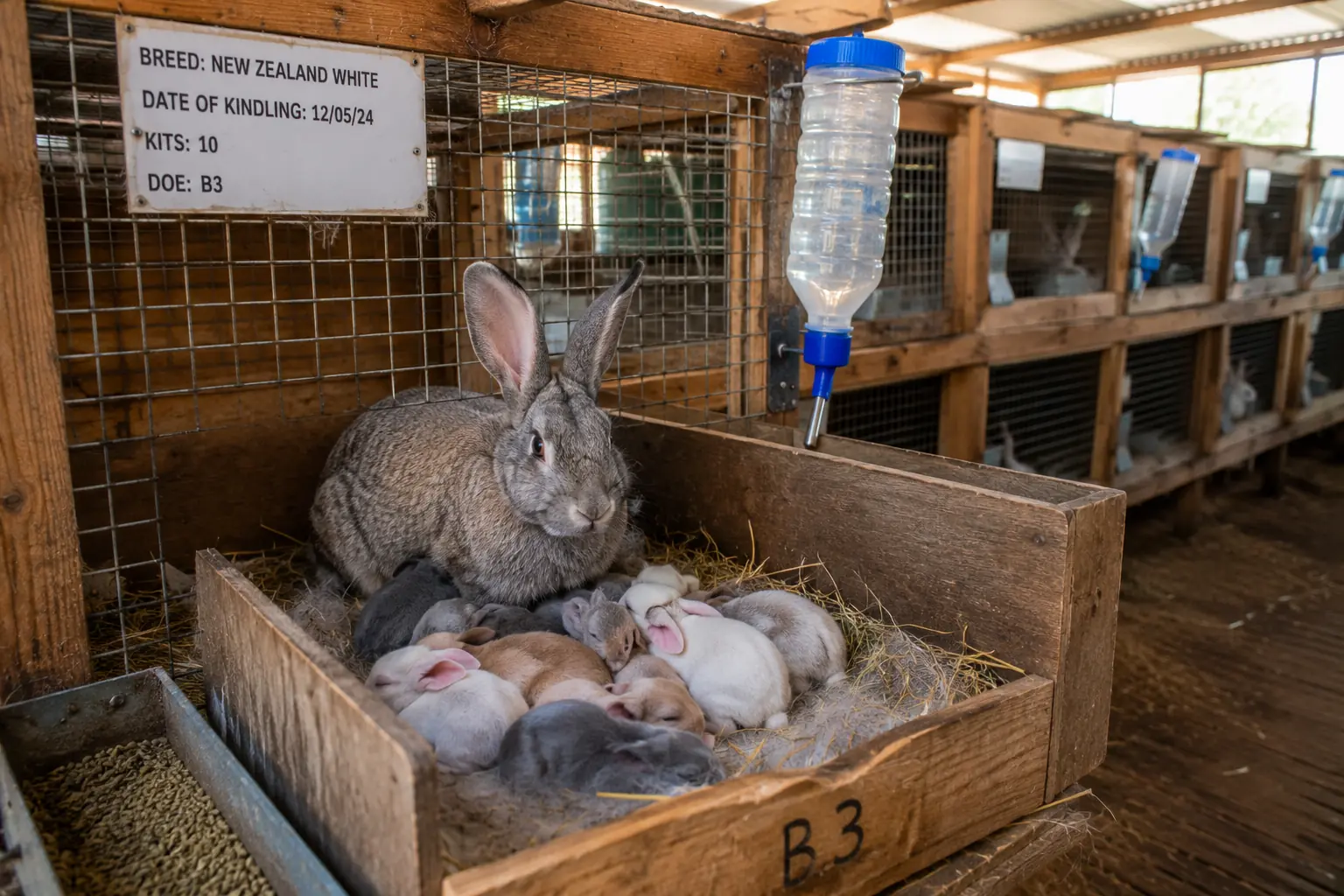
- Gestation: 28–32 days, averaging 31 days. Place a nesting box filled with hay in the doe's cage from day 25, she will pull fur from her chest and belly to line it.
- Litter size: 6–10 kits is typical for NZW and Californian. Litters of more than 10 should have excess kits fostered to does with smaller litters. Does have only 8–10 functional teats.
- Weaning: Kits are weaned at 4–6 weeks. Does can be re-mated 14–21 days after kindling for an intensive 4–5 litter per year schedule. Allowing 6–8 weeks between litters reduces doe fatigue and improves kit survival.
- Breeding records: Keep a card on each doe recording: mating date, buck used, kindling date, litter size, kits weaned, and body condition score at each event. Cull does that consistently produce fewer than 5 kits per litter or fail to mother successfully.
Health Management & Common Diseases
Rabbits are generally hardy but susceptible to several diseases that can devastate an operation if not managed proactively. Key health threats for SA rabbit farmers:
- Rabbit Haemorrhagic Disease (RHD / RHDV2), A highly contagious and often fatal viral disease spreading through Africa. Vaccination is strongly recommended where available. Biosecurity, no contact with wild rabbits, wash hands between operations, quarantine new stock for 2 weeks, is the primary prevention tool in SA where vaccines are not always accessible.
- Pasteurellosis (Snuffles), Bacterial respiratory infection caused by Pasteurella multocida. Signs: chronic nasal discharge, sneezing, head tilt. Spreads rapidly in overcrowded, poorly ventilated conditions. Treat with antibiotics (enrofloxacin) early; cull chronically affected animals.
- Coccidiosis, Intestinal and hepatic forms caused by Eimeria species. Most common in young rabbits post-weaning. Maintain wire floors (reduces faecal contamination), keep hutches dry, and use coccidiostats in feed or water during high-risk periods.
- GI Stasis, Shutdown of the gut due to insufficient fibre, stress, or dehydration. A silent killer, a rabbit that stops eating and producing droppings for more than 12 hours needs immediate intervention (hydration, gentle massage, veterinary care if no improvement).
- Myxomatosis, Viral disease spread by biting insects (mosquitoes, fleas). Causes severe facial swelling and is usually fatal. Control biting insects in the hutch area; use insect-proof netting in high-risk areas.
- Sore hocks, Wire floors can cause foot sores (ulcerative pododermatitis) in heavy breeds or if wire gauge is too thin. Provide resting mats (timber slats or plastic mats) in one section of each cage for heavier animals.
Slaughter, Processing & Selling
In South Africa, small-scale rabbit slaughter for personal consumption on a farm does not require abattoir registration. However, selling rabbit meat to the public, restaurants, or retailers requires slaughter at a registered facility under the Meat Safety Act. For most small-scale SA rabbit farmers, two practical routes exist:
- Live bird / live animal sales, Sell live rabbits directly to consumers, restaurants, or other farmers. No slaughter regulations apply. Many SA Muslim households purchase live rabbits for home slaughter under halal requirements, a significant and consistent demand channel.
- Farm gate slaughter for direct sale, Many small SA rabbit operations process on-farm and sell directly to neighbouring households, informal markets, or community groups under informal or municipal permit arrangements. This is a legal grey area, check with your local municipality before proceeding.
Rabbit meat is sold at R60–R120 per kg in South Africa, depending on the channel. Whole carcasses (dressed weight approximately 1.5–1.8kg from a 3kg live bird) sell to restaurants at R90–R140 each. Fresh produce markets and direct community sales are the most accessible channels for small-scale producers. As SA's middle-class grows more health-conscious, rabbit meat (with its very low fat content (3–4%), high protein (21%), and mild flavour) is attracting increasing restaurant interest.
Rabbit Manure, A Hidden Revenue Stream
Rabbit manure (frass) is exceptional garden fertiliser. Unlike chicken or pig manure, it can be used directly on vegetable beds without composting, it will not burn roots and will not introduce weed seeds. Rabbit pelcontain approximately 2.4% nitrogen, 1.4% phosphorus, and 0.6% potassium, plus a range of micronutrients. A productive colony of 10 does produces approximately 180kg of manure pelper year.
SA urban and smallholder vegetable farmers increasingly value rabbit manure highly, it integrates perfectly with a composting system or can be applied directly as a top dressing. Some SA rabbit farmers sell bags of manure to urban gardeners for R30–R60 per 10kg bag, a meaningful additional income stream. This is the permaculture principle of "produce no waste" in action: every output from the rabbit operation feeds another system.
Start-Up Costs & Profitability
Rabbit farming has one of the lowest barriers to entry of any livestock enterprise in South Africa. A realistic start-up budget for a small commercial unit of 5 does and 1 buck:
- 6 wire hutches (DIY construction): R2 000–R4 000
- Nesting boxes (6 units): R300–R600
- Nipple drinker system: R200–R500
- Feeders (6 units): R200–R400
- Breeding stock (5 does + 1 buck): R1 500–R3 000
- First month's feed (pel+ lucerne): R400–R800
- Total estimated start-up: R4 600–R9 300
At full production (Year 2+), 5 does producing 4 litters per year of 7 kits each = 140 slaughter rabbits annually. At R100 per dressed carcass wholesale: R14 000 annual revenue. With feed costs of approximately R6 000/year, net income is approximately R8 000/year, meaningful additional income for a household operation before considering manure sales or live animal sales at premium. Check current DAFR and CASP grant programmes, rabbit farming for emerging farmers has been supported under several food security initiatives.