Why Spinach Farming Makes Sense in South Africa
Spinach is consistently among the most consistently demanded vegetables in South Africa. Whether it is the indigenous morogo sold fresh at informal markets in Soweto, baby spinach packaged for Pick n Pay shelves in Cape Town, or Swiss chard grown in a backyard in Polokwane, leafy greens touch virtually every market segment in the country. For small-scale farmers, spinach is one of the fastest entry points into commercial vegetable production. It requires relatively modest capital, grows across all provinces, and produces harvestable leaves in as little as six to eight weeks from planting.
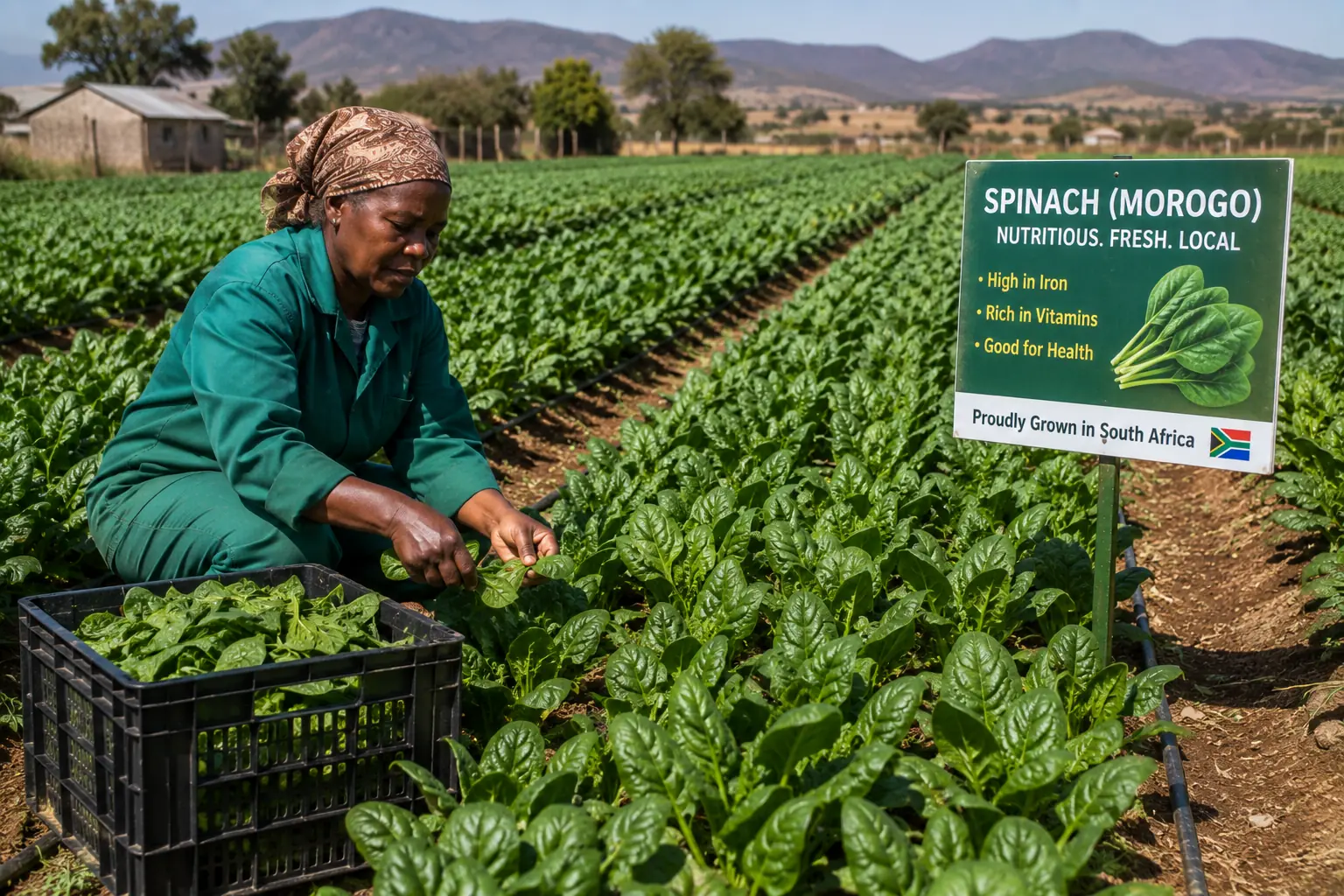
South Africa's fast-growing urban population has increased demand for affordable, nutritious leafy vegetables year-round. Morogo in particular, a broad local term for indigenous leafy greens including Amaranthus hybridus (imbuya), Cleome gynandra (cat's whiskers), and wild spinach varieties, holds deep cultural significance across Limpopo, Mpumalanga, KwaZulu-Natal, and the North West. These traditional greens are under-supplied through formal retail but command strong prices at fresh produce markets and township spaza shops alike.
🥬 South African spinach production spans four main types: English spinach (Spinacia oleracea), Swiss chard (Beta vulgaris var. cicla), baby spinach (young English spinach leaves), and indigenous morogo varieties. Each serves a different market and requires slightly different growing conditions.
We cover all four spinach types relevant to South African farmers, from the smallholder growing morogo on half a hectare to the commercial grower supplying pack houses with baby spinach. Understanding which type to grow, for which market, and in which season is the foundation of a profitable spinach enterprise in SA.
Types of Spinach Grown in South Africa
1. English Spinach (Spinacia oleracea)
True spinach, also called English spinach, is the variety most familiar to formal retail buyers and export markets. It produces smooth, dark green, oval leaves and prefers cool growing conditions. In South Africa, it performs best in the Western Cape, Highveld winter gardens, and highland areas of KZN. It bolts (runs to seed) quickly in hot weather, which limits its summer production window in warmer provinces. Popular commercial varieties include Bossanova F1, Tyee F1, and Bloomsdale Long Standing.
2. Swiss Chard (Beta vulgaris var. cicla)
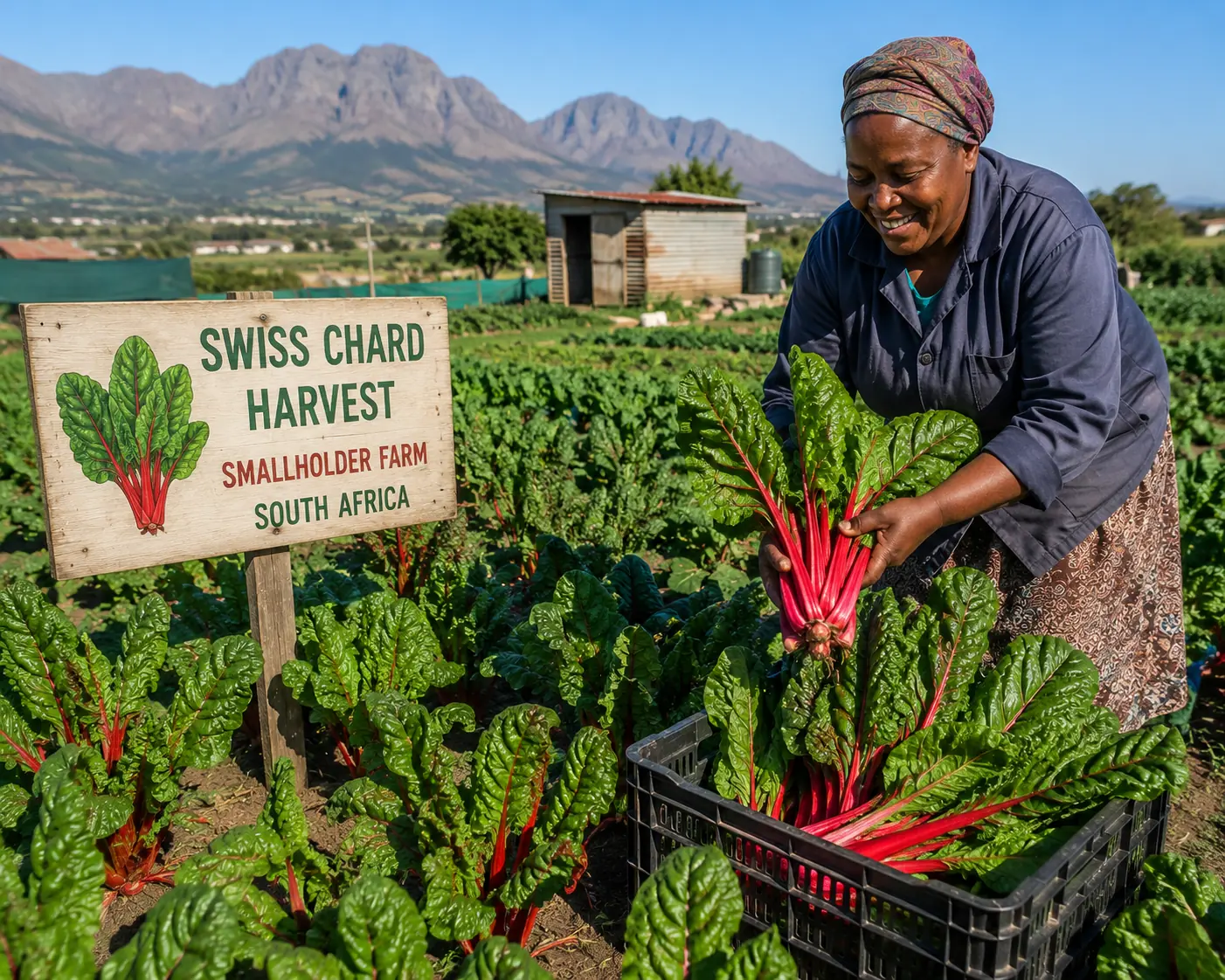
Swiss chard is by far the most widely grown "spinach" in South Africa and is what most township and informal market sellers refer to when they say spinach. It is far more heat-tolerant than English spinach, continues producing through summer in Limpopo and Mpumalanga, and re-grows vigorously after cutting. Varieties with colourful stems (red, yellow, white) are sold as Rainbow Chard and attract a premium in urban farmers' markets and specialty retailers. Standard green-stemmed varieties like Fordhook Giant and Lucullus dominate smallholder production.
3. Baby Spinach
Baby spinach is young English spinach harvested at 15–20 days after germination. It commands significantly higher prices than mature spinach, typically R25–R50 per 200g bag at retail. Commercial baby spinach is largely produced hydroponically or under protected cropping (tunnels) and supplied to Pick n Pay, Woolworths, and Checkers. For conventional soil growers, baby spinach in open fields is viable in cooler provinces during autumn and spring.
4. Indigenous Morogo
Morogo is not a single plant but a cultural category of leafy vegetables consumed widely in rural and peri-urban SA. Amaranthus (imbuya, thepe), Cleome gynandra, and various wild spinach relatives are grown and harvested for home use and informal market sale. Morogo is among the most nutritionally dense crops in southern African agriculture, rich in iron, calcium, folate, and vitamin C. The commercial cultivation of morogo is still emerging, but demand from township retailers, community feeding schemes, and school nutrition programmes presents a growing opportunity.
Climate Requirements and Best Provinces for Spinach
Spinach's main advantage in South Africa is adaptability. Swiss chard in particular thrives in a wide band of conditions, making it viable in every province. English spinach and baby spinach need cooler temperatures and are concentrated in the Western Cape, the Highveld (Gauteng, Free State), and the cooler uplands of KwaZulu-Natal. The following provincial overview helps you choose the right type:
| Province | Best Spinach Type | Growing Season | Key Notes |
|---|---|---|---|
| Western Cape | English spinach, baby spinach, Swiss chard | All year (English spinach: autumn–spring) | Best province for English spinach; mild winters ideal |
| Gauteng / Highveld | Swiss chard, baby spinach (tunnels), morogo (summer) | All year; English spinach Apr–Aug | Frost risk May–Aug; protect tender varieties |
| Limpopo | Swiss chard, morogo (Amaranthus) | All year; avoid extreme mid-summer heat | Major morogo province; strong informal market |
| KwaZulu-Natal | Swiss chard, English spinach (uplands), morogo | All year in coastal areas; cool-season for English spinach | Coastal heat limits true spinach; chard performs well |
| Free State | Swiss chard, English spinach (spring/autumn) | All year (tunnels for winter) | Heavy frost province; tunnels recommended in winter |
| Eastern Cape | Swiss chard, morogo | All year | Good smallholder production conditions |
| Mpumalanga | Swiss chard, morogo, English spinach (highland) | All year; hot lowveld in summer | Highveld areas suit English spinach well |
Soil Requirements
Spinach and Swiss chard prefer well-drained, fertile loamy soil with a pH of 6.0–7.0. Sandy soils dry too quickly and require more frequent irrigation, while heavy clay soils cause waterlogging and root disease. Before planting, work in generous quantities of compost or well-rotted kraal manure to improve both water retention and nutrient availability. Spinach is a heavy nitrogen feeder, poorly prepared soil is the single most common reason for pale, slow-growing plants.
⚠️ Soil pH matters: Spinach is sensitive to acidic soils. If your soil pH drops below 5.5, apply agricultural lime at least 6 weeks before planting. Get a soil test done through your provincial department of agriculture or a private laboratory, a soil test typically costs R200–R500 and can save you from a failed crop.
How to Start Spinach Farming in South Africa, Step by Step
Choose Your Spinach Type and Market First
Before buying a single seed packet, decide which market you are targeting. Baby spinach for a supermarket chain requires GlobalGAP certification and consistent volumes. Swiss chard for a fresh produce market (Tshwane Market, City Deep, Montague Gardens) requires good volumes but less certification. Morogo for township retailers requires relationship selling and packaging suited to informal trade. Your market determines your variety, your quantities, and your price point.
Prepare Your Land and Test Your Soil
Till the soil 20–30cm deep, remove weeds thoroughly, and incorporate compost at 5–10 tonnes per hectare. For smallholders, one 30kg bag of good compost per 10 square metres is a useful rule of thumb. Apply any lime as indicated by soil test results 4–6 weeks before planting. Raised beds work well for backyard and urban spinach operations, improving drainage and making harvesting easier.
Source Quality Seeds
Buy seeds from reputable South African suppliers: Starke Ayres, Hygrotech, Sakata SA, or Living Seeds for untreated heirloom varieties. Swiss chard seeds are inexpensive and widely available. English spinach and baby spinach hybrid varieties are pricier but produce uniform, marketable leaves. For morogo, Amaranthus seeds are available from Living Seeds and specialty seed shops, or save and share seeds from existing plants.
Planting: Direct Seed or Transplant
English spinach and Swiss chard can both be direct-seeded into prepared beds. Sow seeds 2–3cm deep, 10–15cm apart in rows spaced 30–45cm apart. Germination takes 7–14 days at soil temperatures of 10–24°C. For baby spinach, broadcast or drill seeds densely (30–40g per 10m²) and harvest the whole plant at 15–20 days. Transplants can be used but spinach generally resists root disturbance, direct seeding is preferred.
Irrigation and Fertilisation
Spinach needs consistent moisture, water stress causes bitterness and premature bolting. Drip irrigation is ideal and reduces fungal disease risk compared to overhead sprinklers. Water 2–3 times per week in summer, once per week in cool weather, adjusting for rainfall. Apply a balanced NPK fertiliser (e.g. 2:3:2 or 3:1:5) at planting, then side-dress with LAN (limestone ammonium nitrate) every 3–4 weeks to support leafy growth. Do not over-apply nitrogen, it can cause nitrate accumulation in the leaves.
Harvest and Post-Harvest Handling
Swiss chard can be harvested from the outside in, removing outer leaves from 6 weeks after planting while the plant continues producing. A single Swiss chard plant can be harvested for 3–6 months with proper management. English spinach is typically cut-and-come-again or harvested as a whole plant. Baby spinach is cut once. Harvest early in the morning when leaves are cool and turgid. Cool rapidly, spinach wilts quickly in heat. Store at 1–4°C and sell or deliver within 3–5 days of harvest.
Common Pests and Diseases in South African Spinach Farming
Spinach and Swiss chard are relatively hardy crops, but certain pests and diseases can cause significant losses if not managed promptly. Integrated Pest Management (IPM), combining cultural, biological, and chemical controls, is the recommended approach, especially for farmers pursuing organic certification.
Key Pests
- Aphids: Cluster on undersides of young leaves. Knock off with a strong water spray, introduce beneficial insects (ladybirds, parasitic wasps), or apply neem oil. Aphids multiply fast in hot weather, monitor weekly.
- Cutworms: Larvae cut young seedlings at soil level overnight. Bait with Cutworm Bait (granule formulations) around seedling rows. Avoid over-irrigating, which attracts egg-laying adults.
- Leaf miners: Larvae tunnel inside leaves, leaving white trails. Remove and destroy affected leaves. Severe infestations may require registered insecticides, consult your local pest control guide.
- Bollworm / caterpillars: Mainly an issue with morogo. Hand-pick or apply Bacillus thuringiensis (Bt) biological spray, which is safe for organic production.
- Snails and slugs: A night-time problem in wetter months. Iron phosphate pel(organic), beer traps, and copper barriers are effective controls.
Key Diseases
- Downy mildew (Peronospora farinosa): Shows as yellow patches on upper leaf surface with grey-purple spores underneath. Most common in cool, humid conditions. Improve air circulation, avoid overhead irrigation, and apply registered fungicides if necessary.
- Damping-off: Fungal disease that kills seedlings at soil level. Caused by Pythium and Fusarium species. Prevent by avoiding overwatering, using sterile growing medium, and treating seeds with a registered fungicide.
- Cercospora leaf spot: Brown spots with purple borders. Common in warm, wet conditions. Remove infected leaves and apply copper-based fungicide.
- White rust (Albugo occidentalis): White pustules on leaf undersides. More common in humid coastal areas. Select resistant varieties and manage irrigation carefully.
Where and How to Sell Spinach in South Africa
Getting your spinach to the right market is as important as growing it well. South Africa has a layered vegetable marketing system, and understanding where you fit is critical to pricing your crop correctly and building a sustainable business.
Fresh Produce Markets (National Fresh Produce Markets)
The Tshwane Fresh Produce Market (Pretoria), City Deep (Johannesburg), Durban Market, and Montague Gardens (Cape Town) are the central hubs of South African vegetable trading. Registered market agents sell your produce on consignment, typically taking 7–10% commission. Swiss chard and English spinach are traded in standard 5kg boxes. Prices fluctuate significantly with season and supply. Visit your nearest market, register with an agent, and understand price trends before committing large volumes.
Supermarket and Retailer Supply Chains
Woolworths, Pick n Pay, Spar, and Checkers all source spinach and baby spinach from pack houses and large producers. Direct access to these chains requires GlobalGAP certification, consistent weekly volumes, and the ability to meet food safety and quality standards. For most smallholders, supplying a pack house that aggregates product from multiple small farms is a more realistic route into formal retail.
Township and Informal Markets
Informal market selling (at taxi ranks, spaza shops, street stalls, and community markets) is the backbone of morogo and Swiss chard sales in South Africa. Bunching your spinach and pricing competitively (R5–R15 per bunch depending on size and location) can generate good weekly turnover for small-scale growers. Build relationships with consistent buyers who come back weekly. This market rewards quality and reliability.
Schools, Hospitals, and Institutional Buyers
The Department of Basic Education's National School Nutrition Programme (NSNP) and provincial health departments procure fresh vegetables for school feeding schemes and hospitals. Register as a supplier through your provincial supply chain portal. Payment may be slower than market selling but volumes are consistent and predictable.
Direct-to-Consumer: CSAs, Markets, and WhatsApp Groups
Community Supported Agriculture (CSA) boxes, farmers' markets, and WhatsApp order groups allow you to sell directly to consumers and capture the full retail price. For urban and peri-urban farmers growing in Johannesburg, Cape Town, Durban, or Pretoria, this can be the highest-margin sales channel, often R20–R40 per 500g for premium-packaged baby spinach or rainbow chard.
💰 Approximate wholesale prices (2024–2025): Swiss chard (R6–R14 per bunch at informal markets; R8–R20 per kg at fresh produce markets. Baby spinach) R20–R45 per 200g retail pack. English spinach (R12–R25 per kg at produce markets. Morogo) R5–R12 per bunch informally. Prices vary significantly by season, province, and quality.
Spinach Farming Budget and Potential Returns in South Africa
Spinach is among the most capital-efficient vegetable crops available to South African farmers. The following figures are illustrative estimates for a 1-hectare Swiss chard operation. Actual costs and yields vary by province, input costs, and management practices.
| Item | Estimated Cost (per hectare) | Notes |
|---|---|---|
| Soil preparation & compost | R3,500 – R7,000 | Tilling, lime, compost application |
| Seeds (Swiss chard) | R500 – R1,200 | Approx 1–2kg per hectare |
| Fertilisers | R2,500 – R5,000 | Base + top-dress nitrogen over season |
| Irrigation (drip setup, once-off) | R8,000 – R20,000 | Annualised over 5-year lifespan |
| Labour (seasonal) | R6,000 – R15,000 | Planting, weeding, harvesting |
| Pest & disease management | R1,000 – R2,500 | Preventative + reactive sprays |
| Packaging & transport | R2,000 – R5,000 | Bunching bands, bags, market trips |
| Total estimated costs | R23,500 – R55,700 | Highly variable; irrigated drip lower over time |
| Estimated revenue | R60,000 – R140,000 | Based on 6–12 harvests/year, R10–R16/kg wholesale |
Swiss chard's multi-cut production system means a single planting can yield 6–12 harvests over a 4–6 month period, dramatically lowering the cost-per-harvest compared to single-cut crops. With good management, a well-irrigated 1-hectare Swiss chard plot can generate R60,000–R140,000 in annual gross revenue. After costs, net profit margins of 35–55% are achievable for established producers with consistent market access.
Government Support for Spinach Farmers in South Africa
Several national and provincial funding programmes support vegetable growers in South Africa. The Comprehensive Agricultural Support Programme (CASP) and the Ilima/Letsema Projects, both administered by the Department of Agriculture, Land Reform and Rural Development (DALRRD), provide infrastructure support including irrigation installation, fencing, and input subsidies. Contact your provincial department of agriculture or visit your nearest Agri-Hub to apply.
The Land Bank and IDC offer production loans for established farmers. The National Empowerment Fund (NEF) has funded agribusinesses including vegetable enterprises. For youth farmers, the NARYSEC programme provides skills training and access to production inputs. See our full farming grants guide for details on how to apply.