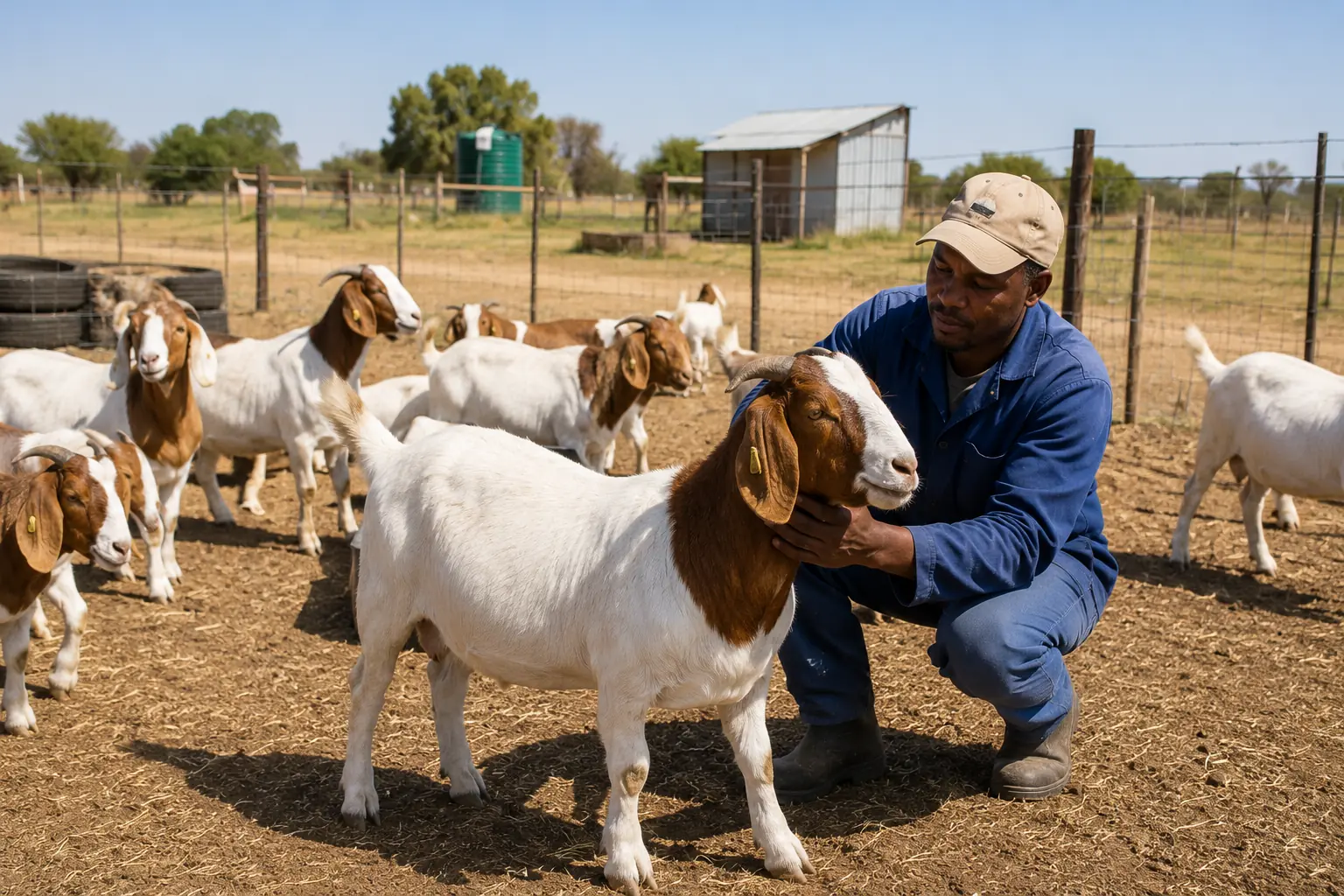
SA Goat Breeds: Choosing the Right One for Your Farm
Choosing the correct breed is the foundation of a profitable goat farming operation. The right breed depends on your climate, available grazing, target market, management capacity, and capital. Here are South Africa's principal goat breeds:
Housing and Kraaling Requirements for SA Goats
Adequate housing is essential for goat health, predator protection, and productivity. Goats are more vulnerable to stress, cold-wet conditions, and predation than cattle, and poor housing is one of the primary causes of kid mortality and disease on South African smallholder farms.
Basic Night Kraal Requirements
A secure night kraal is non-negotiable in South Africa, where predator pressure (black-backed jackal, caracal, African wild dog, and domestic dogs) is a serious production threat. A solid, predator-proof perimeter fence (minimum 1.8m high for meat goats, 2.1m recommended in high-predator areas) with a secure gate is the most important single infrastructure investment on a SA goat farm.
Floor space recommendations are 1.5–2.0 m² per adult goat in a covered shed, or 3–5 m² in an open kraal with windbreaks. Drainage is critical, goats are highly susceptible to foot rot and internal parasite challenges when standing on wet, muddy ground. Concrete floors with a slight slope away from the shelter make cleaning manageable and reduce disease pressure significantly.
Kidding Facilities
A separate, warm, dry kidding pen for does about to kid and for neonates is firmly among the potentially profitable management investments a goat farmer can make. Kid mortality is highest in the first 72 hours, primarily from hypothermia, starvation, and failure to receive colostrum. A simple covered pen with clean bedding, protection from wind and rain, and good visibility for the farmer reduces first-week mortality dramatically.
Feeding and Nutrition for South African Goats
Goats are browsers by nature, they prefer shrubs, forbs, and course vegetation over grass, and this browsing behaviour makes them particularly efficient on the mixed bushveld and Karoo scrub that characterises much of South Africa's communal and commercial goat farming areas. On well-managed veld, meat goat breeds can often be run with minimal supplementary feeding outside of the dry season and late pregnancy/lactation.
Veld and Browse
Good quality SA veld, particularly in the Karoo, Bushveld, and Northern Cape, provides excellent year-round nutrition for goats when stocking rates are managed correctly. Overgrazing is the single biggest threat to the long-term productivity of South African goat farms, it degrades the veld, reduces carrying capacity, and ultimately leads to declining goat condition and profitability. A conservative stocking rate and a proper camp rotation system are essential for sustainable goat production on SA veld.
Supplementary Feeding
Strategic supplementary feeding is necessary in three key situations: during the dry winter season when veld quality and quantity drops; during the last six weeks of pregnancy when foetal growth accelerates and nutritional demand increases sharply; and during early lactation when does are nursing kids. Lick blocks, energy supplements (molasses, maize), and protein meals (cottonseed, sunflower cake) are the most commonly used supplements on SA goat farms.
Phosphorus deficiency is widespread on South African veld, particularly in the Northern Cape, Bushveld, and Karoo. Chronic phosphorus deficiency causes poor growth, reduced reproductive performance, and in severe cases, bone-chewing (osteophagia). Regular provision of a phosphorus-containing lick, year-round in deficient areas, is a high-return management input.
Though goats are drought-tolerant, clean drinking water is essential for optimal production. A lactating doe needs 4–6 litres of water per day; a growing kid 1–2 litres. Water restriction reduces milk production, growth rates, and reproductive performance. In areas with limited natural water, check and fill water troughs daily.
Breeding Management in South African Goat Herds
Efficient reproduction is the engine of goat farm profitability. Boer goats are seasonally polyoestrous, they cycle most actively during the decreasing day length of autumn (March–June in the Southern Hemisphere), though well-nourished does in good body condition will cycle year-round. Most SA commercial goat operations aim for two kidding seasons per year, an autumn kidding (kids born February–April) and a spring kidding (kids born August–October).
Buck-to-doe ratios in commercial SA goat herds are typically 1:25 to 1:50 for naturally mated herds. Bucks should be condition-scored before mating season, a thin or over-fat buck will have reduced libido and fertility, directly affecting your kidding percentage. Always introduce bucks 6–8 weeks before your planned kidding season begins, allowing for a full 21-day oestrous cycle before the target kidding period.
The most important reproductive metric to track is kidding percentage, the number of kids weaned per doe exposed to a buck. A target of 130–150% for commercial Boer goat herds (meaning 130–150 kids weaned per 100 does) is realistic on well-managed SA farms. Herds consistently below 100% should investigate the primary causes, nutrition, disease, predation, or genetic fertility.
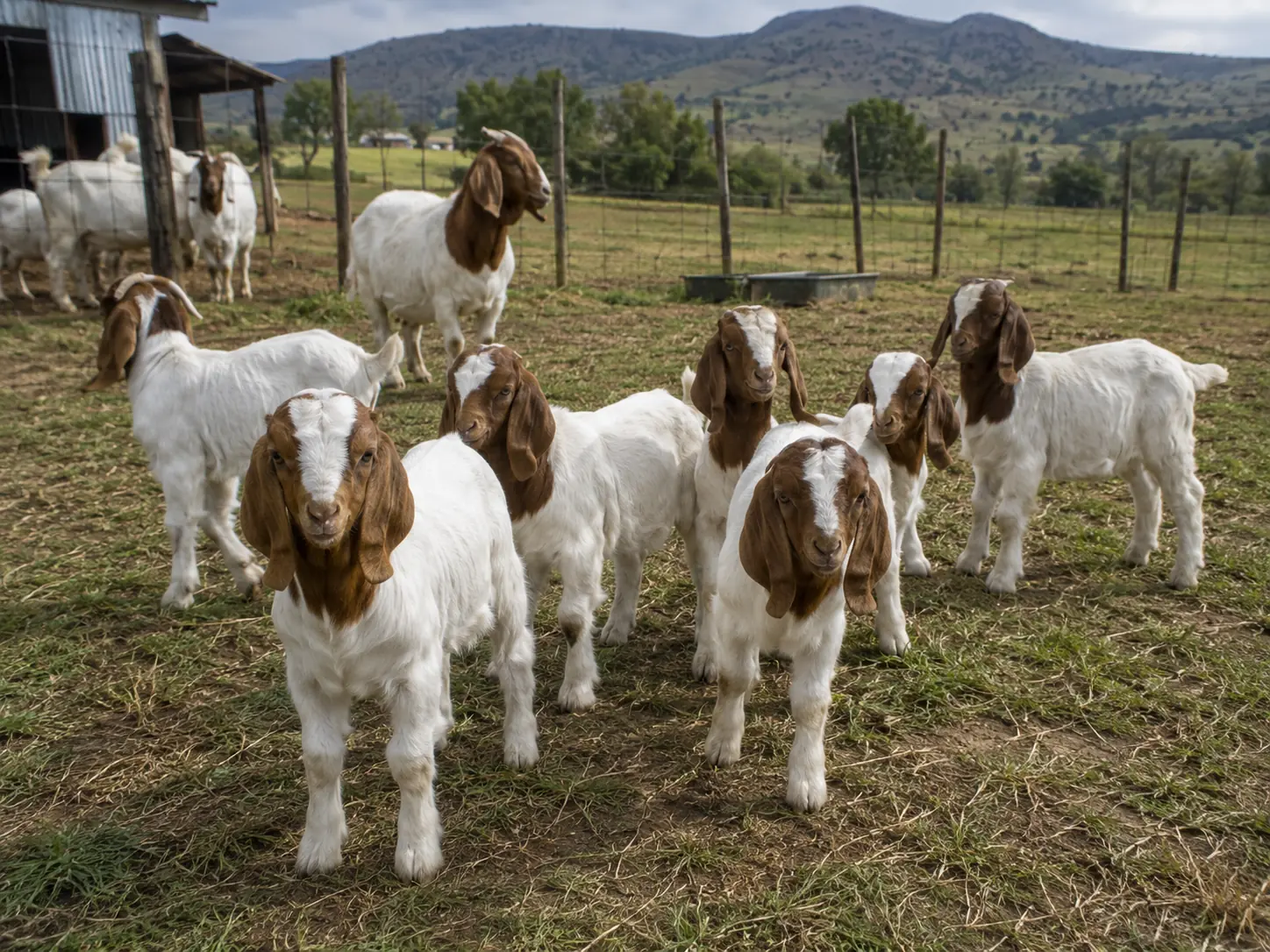
Health Management: Key Goat Diseases in South Africa
A proactive health programme is far more cost-effective than reactive treatment. The following diseases are the most significant threats to South African goat producers:
- Internal parasites (Haemonchus contortus, Barber's pole worm): The single biggest health challenge on SA goat farms, especially in summer-rainfall regions. Haemonchus causes rapid anaemia and death in heavily infected animals. The FAMACHA© eye colour scoring system, developed in South Africa, allows farmers to identify and treat only the most severely affected animals, reducing the development of drench resistance. Resistance to all major anthelmintic groups is a serious problem on many SA farms.
- Heartwater (Ehrlichia ruminantium): Tick-borne disease causing neurological signs and high mortality in susceptible animals. Serious threat in the bushveld, Eastern Cape, and KZN. Tick control and vaccination in high-risk areas are the primary prevention strategies.
- Bluetongue: Virus spread by midges. Causes mouth and foot lesions, fever, and mortality, particularly in Merino and exotic breeds. Boer goats show more resistance. Annual vaccination is recommended in at-risk areas.
- Pulpy kidney (Enterotoxaemia, Clostridium perfringens type D): Causes sudden death in well-nourished, fast-growing kids and adults. Prevented by annual vaccination with Multivax P or equivalent combined clostridial vaccine.
- Orf (Contagious ecthyma): Viral disease causing crusty sores around the mouth of kids, interfering with nursing. Highly contagious. Vaccination available; infected animals recover naturally but spread the virus to pen mates.
- Caseous lymphadenitis (CLA): Chronic bacterial disease causing abscesses in lymph nodes. Highly contagious and very difficult to eradicate from a herd once established. Cull and do not introduce animals from unknown-status herds.
Goat Markets and Profitability in South Africa
Goat meat (chevon/mutton) is among South Africa's most consistently in-demand red meats in South Africa, with particularly strong seasonal demand during religious and cultural events, Eid al-Adha, cultural celebrations in the Eastern Cape, and year-end festive slaughter all drive significant demand spikes. This cultural market is one of the most reliable and highest-priced outlets for SA live goat sales.
Current SA live goat prices range from R45–R70 per kg live weight for commercial-grade weaners and slaughter animals, with premium registered Boer goat studs commanding R3 000–R20 000 per animal at auction. The commercial goat meat market (abattoirs and butcheries) typically pays R48–R65 per kg live weight, while direct sales at farm gate to individual buyers routinely fetch R60–R80 per kg during peak demand periods.
Registered Boer goat stud breeding is the highest-return segment of the SA goat industry for producers willing to invest in genetics and registration with the Boer Goat Breeders' Association of South Africa (BGBASA). Premium stud animals are exported globally and SA-bred genetics command international premiums.