No-Till Farming in South Africa, Rebuilding Soil While Reducing Costs
No-till farming (also called zero tillage or direct seeding) is the practice of planting crops directly into undisturbed soil, without the ploughing, discing, or ripping that characterises conventional tillage agriculture. It is the cornerstone of Conservation Agriculture (CA), the farming system actively promoted by the Department of Agriculture, Land Reform and Rural Development (DALRRD), Grain SA, and the Agricultural Research Council (ARC) as the most sustainable path forward for South African crop production.
South Africa's soils are under enormous pressure. Decades of conventional tillage (deep ploughing followed by multiple discing and harrowing operations) have broken down soil organic matter, destroyed soil structure, accelerated erosion, and created hard pans that restrict root growth and water infiltration. The result is soils that are increasingly dependent on chemical inputs to maintain yields, more vulnerable to drought, and progressively less productive over time.
No-till farming reverses this trajectory. By leaving crop residues on the soil surface, eliminating mechanical disturbance, and integrating crop rotation and cover crops, no-till rebuilds soil organic matter, restores biological activity, improves water infiltration, reduces erosion, and, over time, reduces input costs while maintaining or improving yields. Long-term trial data from South Africa's main grain production regions consistently shows that well-managed no-till systems out-perform conventional tillage in drought years and match conventional yields in good years, with significantly lower operating costs.
🌱 SA adoption rate: It is estimated that over 30% of South Africa's commercial grain production area (particularly in the Free State, Mpumalanga, and KwaZulu-Natal) is now under some form of reduced tillage or no-till management. Grain SA's Conservation Agriculture programme has supported hundreds of farmers in transitioning to no-till systems, with documented fuel savings of 30–60 litres/ha per season and measurable improvements in soil organic matter within 3–5 years of transition.
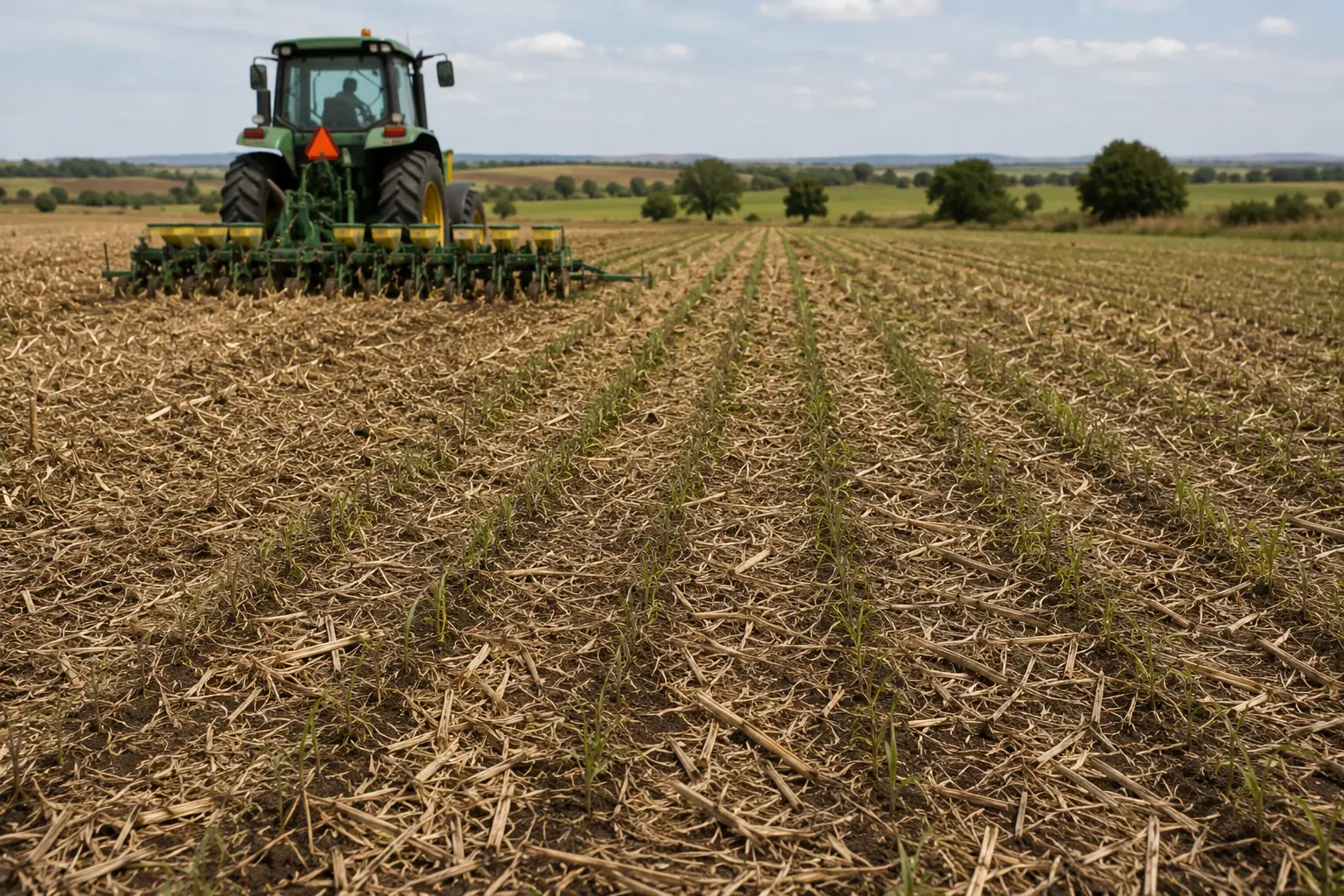
The Six Core Benefits of No-Till Farming for South African Conditions
Dramatically Improved Water Infiltration
Undisturbed soil with permanent surface cover absorbs rainfall 2–4× faster than tilled soil. In South Africa's variable rainfall environment, this means more water enters the soil profile rather than running off, directly improving drought resilience and reducing irrigation requirements.
Soil Organic Matter Accumulation
Every tillage operation destroys soil organic matter by exposing it to oxygen and accelerating decomposition. No-till, combined with surface residue retention, progressively builds soil carbon and organic matter, improving soil fertility, water-holding capacity, and biological activity year by year.
Reduced Fuel and Labour Costs
Eliminating 2–4 tillage operations per season saves 30–80 litres of diesel per hectare annually. At current diesel prices (R23–R26/litre), this represents R700–R2,000/ha/year in direct fuel savings, plus reduced tractor hours, maintenance, and labour.
Erosion Prevention
Bare tilled soil is highly vulnerable to both wind and water erosion, the primary cause of topsoil loss on South African farms. Permanent surface cover from crop residues physically protects the soil surface and dramatically reduces erosion. This is particularly critical in the Eastern Cape, Limpopo, and KZN where sheet and gully erosion are serious problems.
Restored Soil Biology
Tillage physically destroys soil biology, earthworm populations, fungal networks (mycorrhizae), beneficial bacterial communities, and the macro-fauna that drive nutrient cycling. No-till allows these communities to recover and build, progressively reducing the crop's dependence on synthetic fertilisers as biological nutrient cycling improves.
Improved Drought Resilience
ARC long-term trial data from multiple South African sites shows no-till systems produce more stable yields during below-average rainfall years than conventional tillage. The improved water infiltration, higher soil organic matter, and better root penetration combine to make no-till crops significantly more drought-resilient, a critical advantage in South Africa's increasingly variable climate.
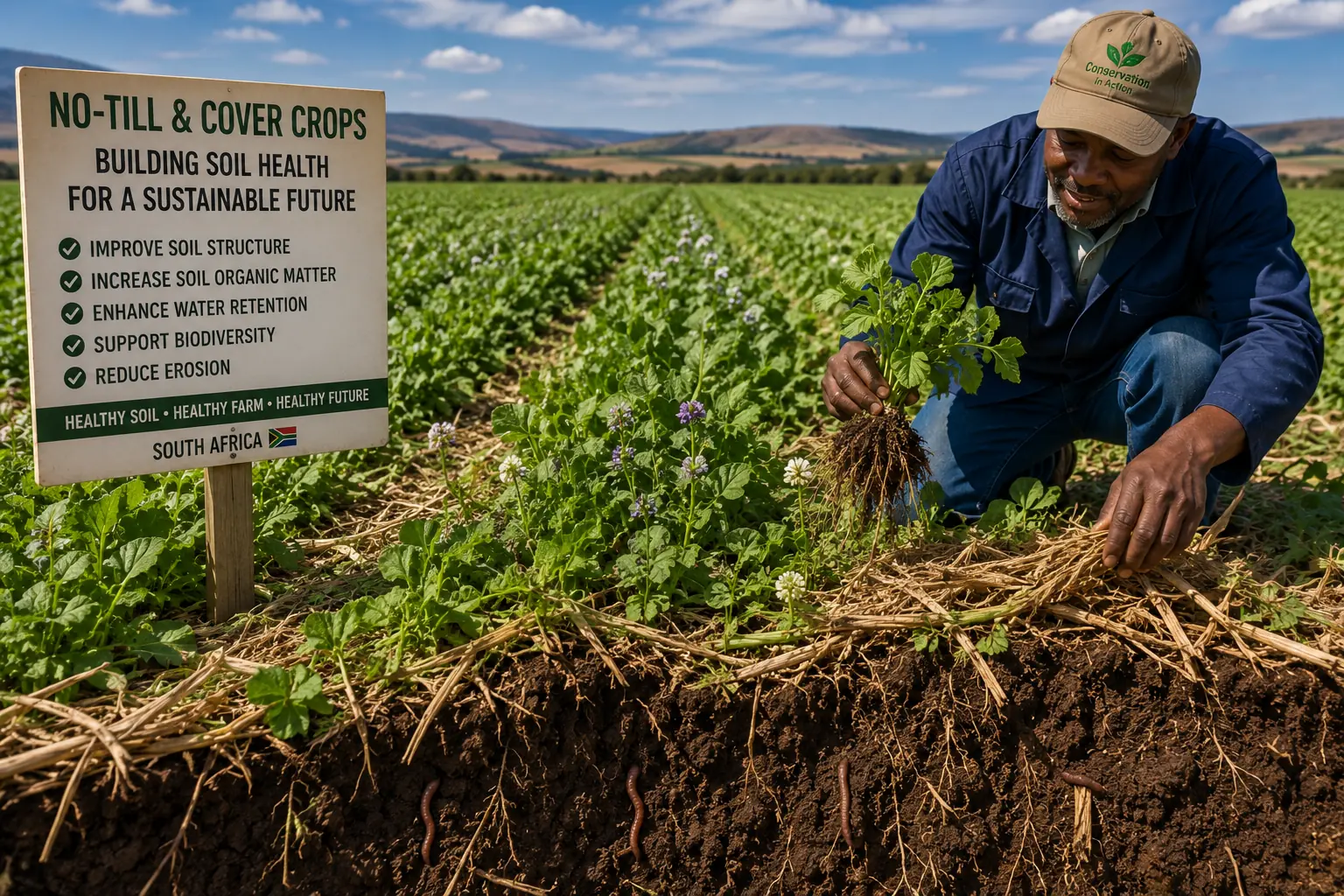
No-Till Equipment, What You Need in South Africa
The most important piece of equipment for no-till farming is a no-till or direct seeding planter, a specialised planter designed to cut through crop residue and place seeds at the correct depth and spacing in undisturbed soil. Standard conventional planters and grain drills cannot do this effectively, they ride over residue, leave seeds at inconsistent depths, or cause hair-pinning (residue folded into the seed furrow preventing seed-to-soil contact).
No-Till Planter Features to Look For
- Coulter disc: A sharp leading disc that cuts through crop residue ahead of the seed furrow opener, essential for planting through heavy maize or sorghum stubble
- Individual row spring tension or hydraulic downforce: Ensures consistent seed furrow depth even across variable soil conditions and residue levels
- Seed firming wheels or press wheels: Close the seed furrow and ensure good seed-to-soil contact without disturbing surrounding soil
- Trash clearers or row cleaners: Move surface residue away from the seed zone in a narrow strip, reduces interference while keeping the between-row area covered
Leading no-till planter brands available in South Africa include John Deere (MaxEmerge series), Amazone (Cirrus), Horsch, and locally manufactured units from companies like Venter Agri. Second-hand no-till planters are available through AgriMag and agricultural auctions, see our farming equipment guide for purchasing advice. Prices range from R80,000 for basic used units to R800,000+ for modern precision no-till planters.
Transitioning to No-Till, A Practical Guide for South African Farmers
The transition from conventional to no-till farming is a 3–5 year process that requires careful management and realistic expectations. Here is what South African farmers need to plan for:
Year 1–2: The Critical Transition Period
The first one to two seasons under no-till are often the most challenging, and the most likely to cause farmers to abandon the system prematurely. Understanding why helps you persist through the transition phase:
- Weed pressure typically increases in the first 1–2 seasons, the weed seed bank that tillage would have buried is now at the surface and germinates vigorously. This is temporary. Over successive no-till seasons, the weed seed bank depletes as more seeds germinate and are killed by herbicides or frost, without being replenished by fresh seeds turned up by tillage. Manage with pre-emergence herbicides and spot treatments rather than reverting to tillage.
- Soil compaction may seem worse initially, especially on soils that were already compacted before the transition. One strategic deep ripping pass (known as "zone tillage" or "strip tillage") before transitioning can break up any existing compaction layer while keeping no-till benefits going forward. Never repeat the ripping, the point is to break the compaction once, then let biology maintain structure.
- Yield may be slightly lower in the first 1–2 seasons. This is normal and well-documented in SA trials. Yields typically recover and exceed pre-transition levels by years 3–5 as soil structure and biology improve. Plan your finances accordingly.
Building Permanent Soil Cover
The second pillar of conservation agriculture is permanent soil cover, achieved through retaining crop residues on the surface after harvest. For no-till to work effectively, residue must be maintained at a minimum of 30% soil cover between crops. In South Africa's grain production regions, maize, sorghum, and wheat residues typically provide excellent cover if left standing or spread evenly at harvest.
Never burn crop residue in a no-till system, fire destroys the organic matter that is the foundation of soil improvement, kills soil biology, and removes the physical protection that residue provides. The one exception is if a disease-infected residue needs to be eliminated, in this case, carefully weigh the disease management benefit against the soil health cost.
Integrating Cover Crops
Cover crops are the third pillar, planted between cash crop seasons to maintain living soil cover, add organic matter, fix nitrogen (if legume species are included), and suppress weeds. For South African no-till farmers in summer rainfall areas, a winter cover crop mix (oats, rye, vetch, or oat/vetch blend) sown after maize harvest is the most widely used approach. In the Western Cape's winter rainfall system, summer cover crops (sunhemp, cowpeas, lablab) are planted after wheat harvest. The cover crop is terminated before the following cash crop's planting date (either by herbicide desiccation or mechanical rolling) leaving a mulch that protects the surface through the next crop's establishment phase.
Weed Management in No-Till Systems
Weed management is the most technically demanding aspect of no-till farming, and getting it right is the difference between a successful transition and a failed one. South African no-till farmers typically use a combination of:
- Pre-plant burndown herbicide: A non-selective herbicide (glyphosate is the most widely used in SA) applied 7–14 days before planting to kill all emerged weeds before the crop is established. This is the most important weed control operation in a no-till system.
- Pre-emergence herbicides: Applied immediately after planting to create a soil-active weed control layer before crop emergence. Choice of pre-emergence product is critical, different crops have different registered herbicide options.
- Post-emergence herbicides: Applied to control weeds that escape pre-emergence control. For no-till maize, atrazine and related products are commonly used in SA; for no-till soybeans, post-emergence broadleaf products are applied when weeds are small.
- Crop rotation for herbicide resistance management: Different crops require different herbicide programmes, rotating crops rotates herbicide modes of action, which is the most important tool for preventing herbicide resistance development. See our crop rotation guide.
⚠️ Herbicide resistance is a growing threat in SA no-till: Over-reliance on glyphosate for pre-plant burndown has led to the emergence of glyphosate-resistant Conyza (fleabane/flakweed) populations in many South African no-till fields. Rotate herbicide modes of action, use cover crops for physical weed suppression, and consult ARC or Grain SA's weed management guidelines annually to stay ahead of resistance development.
No-Till and Cover Crops, Province-by-Province Guide
| Province / Region | Primary No-Till Crops | Recommended Cover Crop Mix | Cover Crop Season | Key Consideration |
|---|---|---|---|---|
| Free State | Maize, soybeans, sunflower | Oats + vetch + radish | Winter (May–Aug) | Cold winters; frost-tolerant cover crops essential |
| Mpumalanga | Maize, soybeans | Sunhemp, cowpeas, lablab | Post-harvest summer | High summer rainfall; residue management critical |
| KwaZulu-Natal | Maize, soybeans, sugarcane ratoon | Cowpeas, sunn hemp, oats | Winter dry season | Subtropical; soil biology recovers rapidly |
| Western Cape | Wheat, canola, barley | Cowpeas, lablab, sunhemp | Summer fallow | Winter rainfall; summer cover crops address dry fallow period |
| Limpopo | Maize, cotton, sunflower | Sunhemp, cowpeas | Post-harvest summer | High clay soils in parts; zone tillage may be needed initially |
| North West | Maize, sunflower, groundnuts | Oats + vetch (winter) | Winter (May–Aug) | Sandy soils benefit quickly from organic matter addition |
Financial Case for No-Till in South Africa
The long-term financial case for no-till farming in South Africa is compelling, though it requires patience through the 3–5 year transition. Here is a realistic financial comparison for a maize production operation in the Free State:
| Cost Item | Conventional Tillage | No-Till System | Annual Saving |
|---|---|---|---|
| Tillage operations (fuel + contractor) | R2,800–R4,200/ha | R0 | R2,800–R4,200/ha |
| Fertiliser (N, as soil biology improves) | R3,500–R5,000/ha | R2,800–R4,000/ha (by year 5) | R500–R1,200/ha |
| Herbicides (additional in no-till) | R600–R900/ha | R900–R1,400/ha | −R300–R500/ha (additional cost) |
| Tractor maintenance and depreciation | R1,200–R1,800/ha | R700–R1,100/ha | R400–R800/ha |
| Net saving per hectare per year (year 5+) | — | — | R3,000–R5,700/ha |
On a 500-hectare operation, this equates to R1.5–R2.85 million in annual savings once the system is fully established, a powerful financial incentive beyond the environmental benefits.