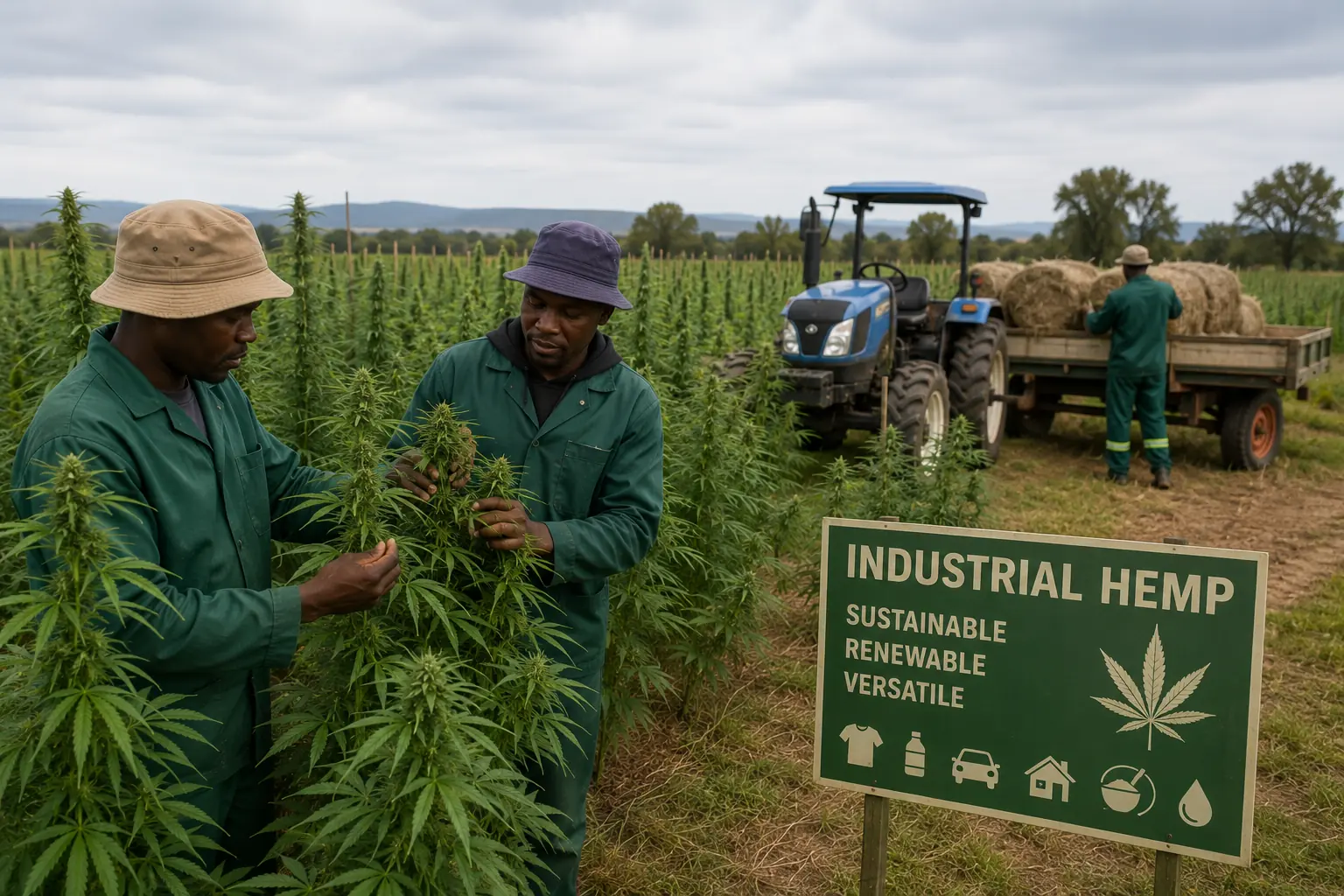
SA Hemp Licensing: The Regulatory Framework in 2025–2026
This is the section most South African prospective hemp farmers read first, and for good reason. Hemp farming in South Africa is legal but strictly regulated, and farming without the correct licence is a criminal offence under the Drugs and Drug Trafficking Act. Getting this right before spending a cent on seed or land preparation is absolutely essential.
The DALRRD Hemp Licence
Industrial hemp cultivation licences in South Africa are issued by the Department of Agriculture, Land Reform and Rural Development (DALRRD) under the Industrial Hemp Regulations (GN 599 of 2022 and subsequent amendments). A separate licence is required for each of the following activities: cultivation, processing, import of seed, and export of hemp products. Most farmers need at minimum a cultivation licence and, if processing on-farm, a processing licence.
The cultivation licence application requires: a completed DALRRD application form; a detailed farm management plan describing cultivation methods, security arrangements, and record-keeping systems; proof of land ownership or a lease agreement; a certified ID document; proof of a South African bank account; and payment of the prescribed licence fee. Applications are submitted to the Director-General of DALRRD and processed by the Agricultural Product Standards division.
Approved licence holders must: use only certified low-THC varieties (less than 0.2% THC); maintain detailed cultivation records; submit annual crop reports to DALRRD; allow inspection of fields by DALRRD officials; and destroy any crop or crop section that tests above the 0.2% THC threshold. THC testing is conducted by DALRRD-accredited laboratories using standardised sampling protocols.
South Africa's hemp regulatory framework is still actively evolving. Specific licence requirements, approved variety lists, THC limits, and processing rules may have changed since this guide was last updated. Always verify current requirements directly with DALRRD (dalrrd.gov.za / 012 319 6000) before investing in hemp farming. The SA Hemp Association (saha.org.za) is also an excellent current information source for SA hemp farmers.
Hemp End Markets: What Can SA Hemp Farmers Produce and Sell?
Industrial hemp's commercial appeal is its multi-product potential. The same licensed hemp crop can generate income from several distinct product streams depending on your variety selection, processing capability, and market relationships:
Choosing the Right Hemp Variety for South Africa
Variety selection for industrial hemp is determined by your target product: CBD flower, fibre, or seed. These objectives require fundamentally different plant types, management approaches, and harvest timing, and cannot be easily combined in a single variety:
- CBD/flower varieties: These are short-day varieties bred for high CBD and low THC content in the flower. They are typically planted at lower density (1 000–5 000 plants/ha), grown to maximise flower development, and harvested by hand. Varieties include Futura 75, Fedora 17, CRS Hemp, and numerous proprietary CBD-focused varieties. Requires very careful THC management throughout the crop cycle.
- Fibre varieties: Tall (2–4m), densely planted varieties (100 000–200 000 plants/ha) bred for high stalk yield and long bast fibre content. Varieties include Futura 75, Felina 32, and Tiborszállási. Mechanically harvested. Lower CBD content, not suitable for CBD extraction as primary product.
- Seed/dual-purpose varieties: Medium height varieties planted at moderate density (30 000–60 000 plants/ha) for seed production. Some yield acceptable fibre as a secondary product. Varieties include Finola, Anka, and Fedora 17. Mechanically harvested with a modified combine.
In South Africa's current regulatory framework, the approved variety list is maintained by DALRRD and is subject to update. Only varieties on the approved list may be planted by licensed SA hemp farmers. Importing new genetics requires a separate seed import licence from DALRRD. Check the current approved variety list before purchasing any planting material.
Hemp Cultivation: Growing the Crop in South African Conditions
Hemp is a relatively undemanding crop by agricultural standards, it grows fast, suppresses weeds through canopy closure, and requires fewer pesticide applications than most SA field crops. However, it does have specific requirements that determine commercial success:
Climate and Soil
Hemp grows best in temperate to warm climates with well-distributed rainfall or irrigation during the growing season. It is moderately frost-tolerant as a seedling but young plants cannot survive hard frost. In South Africa, the best production regions are the Western Cape (spring/summer planting, September–January), the KZN Midlands (summer planting, November–March), and the Eastern Cape interior. The Highveld (Gauteng, Free State) can produce hemp but requires careful timing to avoid late spring frost damage to emerging seedlings.
Hemp prefers deep, well-drained, fertile loamy soils with a pH of 6.0–7.5. It responds strongly to soil fertility, high organic matter content and balanced NPK nutrition are essential for good yields. Hemp will not tolerate waterlogged or compacted soils. A pre-plant soil test is strongly recommended.
Planting and Establishment
Hemp seed is planted directly into prepared seedbeds using standard grain drill equipment for fibre and seed varieties, or by hand or precision seeders for low-density CBD varieties. Seed germination occurs in 3–7 days at soil temperatures above 10°C. Optimal planting depth is 1–2cm in fine-textured soils and 2–3cm in sandy soils. Weed control in the first 4–6 weeks is critical, once the hemp canopy closes, it effectively suppresses most weed competition.
Irrigation during establishment is important in regions with unreliable summer rainfall. After canopy closure, hemp has moderate drought tolerance and may not require irrigation in summer-rainfall provinces with adequate rainfall. In the Northern Cape and drier Western Cape regions, full-season drip or sprinkler irrigation is necessary.
Nutrition and Fertilisation
Hemp is a heavy feeder, a commercial hemp crop can remove 100–150 kg of nitrogen per hectare in a full season. Applying 80–120 kg N/ha as split applications (basal + side-dress at 4–6 weeks) is typical for high-yield SA hemp production. Phosphorus and potassium requirements are also significant, balanced nutrition based on your soil test results prevents yield-limiting deficiencies. Hemp responds very well to organic soil amendments and composting history, making it an excellent rotation crop after livestock or poultry operations.
Harvest
Hemp harvest timing depends critically on the target product. CBD flower is harvested when trichome development indicates peak CBD concentration, typically 10–14 weeks after planting for short-day varieties. THC must be tested immediately before harvest to confirm compliance with the legal 0.2% limit. Fibre hemp is harvested at early flowering stage when stalk yield and fibre quality are optimal. Seed hemp is harvested when seeds have reached physiological maturity, a modified combine harvester with appropriate screen settings is used.
The SA CBD Market: Opportunities and Cautions
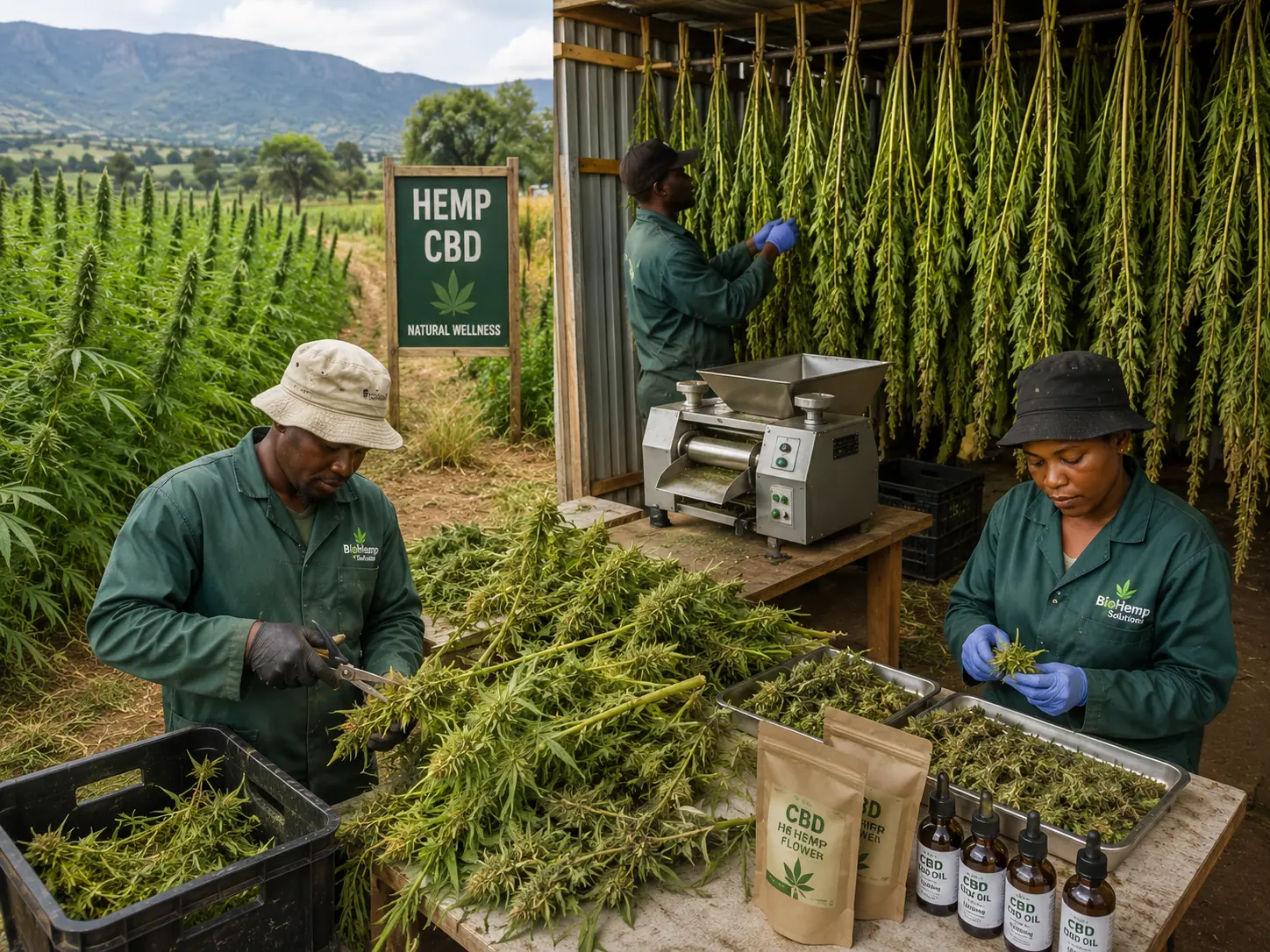
CBD (cannabidiol) is the primary revenue driver for most SA hemp farmers currently exploring the sector. The domestic SA CBD wellness market has grown rapidly, CBD oils, capsules, topicals, and food products are increasingly available in SA health stores, pharmacies (including major chains like Dis-Chem and Clicks), and online platforms.
However, SA hemp farmers targeting the CBD market must be aware of several important realities. First, global CBD prices have fallen significantly since the early market boom of 2019–2021 as production in the USA, Europe, and other markets has dramatically outpaced consumer demand growth. Second, SA's regulatory framework for CBD as a food ingredient, health supplement, and cosmetic ingredient is still evolving, different regulations apply depending on the CBD product category and intended use claim. Third, processing hemp into CBD extract requires a separate DALRRD processing licence and a compliant extraction facility, which represents significant additional capital investment.
The SA farmers most likely to succeed in CBD hemp are those who secure processing agreements with established CBD companies before planting, rather than growing speculatively and looking for buyers after harvest. Vertical integration (growing, processing, and selling branded CBD products directly) offers the highest margin but requires the most capital, regulatory compliance, and marketing capability.
Hemp as a Rotation and Soil-Building Crop in South Africa
Quite apart from its commercial potential, industrial hemp is one of the most effective soil-building rotation crops available to South African farmers. Hemp's dense canopy suppresses weeds, its deep taproot (up to 1.8m) breaks compaction layers, and the substantial biomass returned to the soil after harvest dramatically improves soil organic matter content over 2–3 seasons. Hemp also has phytoremediation properties, it can extract heavy metals from contaminated soils, though crops grown for remediation should not enter the food or CBD supply chain.
In crop rotation, hemp fits naturally between grain crops (maize, wheat, sorghum) and can significantly reduce weed pressure for the following crop. Some SA farmers are exploring hemp primarily as a rotation crop that pays for itself while improving their farm's soil health for subsequent higher-value crops, a practical approach that doesn't require navigating the full CBD processing and marketing ecosystem.