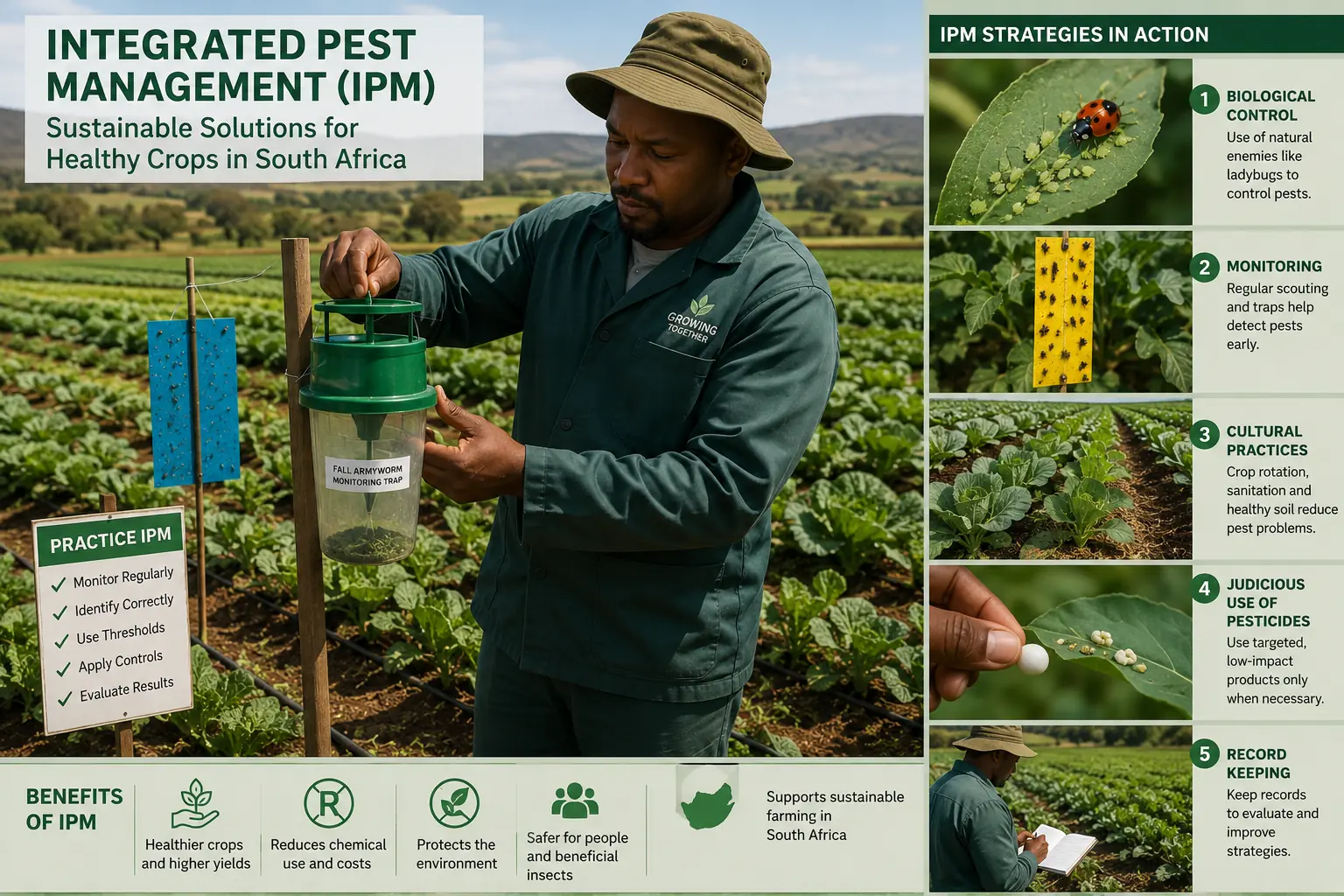
The 4-Tier IPM Framework for South African Farmers
Every IPM programme is built on the same logical sequence: prevent first, use biological controls second, apply targeted organic inputs third, and use chemical pesticides as a last resort, and only at economically justified thresholds. Here's what each tier looks like in practice on a South African farm:
Tier 1, Prevention & Cultural Controls
The cheapest and most effective pest management is preventing pests from establishing in the first place. Prevention strategies include:
- Crop rotation, Breaking pest and disease cycles by changing what is grown in each field each season. A tomato-brassica-legume-grain rotation significantly reduces soil-borne diseases and root-knot nematode pressure. Our crop rotation guide details the best rotation sequences for SA conditions.
- Resistant varieties, Planting varieties with resistance or tolerance to key local pests and diseases is the single highest-use prevention strategy. PANNAR, Afgri, and Hygrotech publish resistance ratings for their seed catalogue, always check before purchasing. See our seeds guide for sourcing registered seed in SA.
- Sanitation, Remove and destroy crop residues after harvest. Whitefly, Tuta absoluta (tomato leafminer), and grey mould (Botrytis) all overwinter in crop debris. Don't compost diseased material, burn it or bury deeply.
- Correct plant spacing and nutrition, Dense, stressed, over-fertilised-with-nitrogen crops are magnets for aphids, thrips, and fungal diseases. Balanced soil fertility and correct spacing for airflow are cultural controls that are often overlooked.
- Timing of planting, Planting outside the peak population window for a key pest can dramatically reduce damage. Fall armyworm emergence in SA's summer rainfall maize areas peaks in January–February, adjusting planting dates to miss this window reduces damage significantly.
Tier 2, Biological Control
Biological control uses natural enemies (predators, parasitoids, and pathogens) to suppress pest populations. South Africa has a well-developed commercial biological control industry, with several locally produced biocontrol agents available from companies including Koppert Biological Systems, Andermatt Madumbi, and Biological Crop Protection (BCP).
South Africa's Top 10 Most Damaging Crop Pests
The following pests cause the most economic damage to South African agriculture annually. Know them, monitor for them, and have your response plan ready before they arrive:
Fall Armyworm (Spodoptera frugiperda) and Bactrocera fruit flies are notifiable pests in South Africa. If you detect these for the first time on your farm, you are legally required to report to DAFR. Early reporting triggers a coordinated area-wide response that benefits all farmers in your region.
| Pest | Main Crops Affected | Damage Type | Risk Level | Primary Control |
|---|---|---|---|---|
| Fall Armyworm Spodoptera frugiperda | Maize, sorghum, wheat | Leaf, stem & cob destruction | High | Bt sprays early, Trichogramma release, registered insecticides |
| American Bollworm Helicoverpa armigera | Tomato, cotton, soybean, maize | Fruit & pod boring | High | Bt, Trichogramma, pheromone traps, registered pyrethroids |
| Tomato Leafminer Tuta absoluta | Tomato, potato | Leaf mining, fruit tunnelling | High | Pheromone traps, Steinernema, registered insecticides; strict hygiene |
| Red Spider Mite Tetranychus urticae | Tomato, pepper, grapes, beans | Leaf stippling, bronzing | High | Predatory mites (Phytoseiulus), neem oil, abamectin |
| Aphids Multiple species | All crops, especially brassicas, potatoes, citrus | Sap sucking, virus transmission | Medium | Lacewing release, ladybirds, neem, insecticidal soap, imidacloprid (targeted) |
| Root Knot Nematode Meloidogyne spp. | Tomato, potato, carrot, most vegetables | Root galling, plant stunting | High | Rotation with non-host crops, resistant varieties, Pasteuria penetrans, soil solarisation |
| Mediterranean Fruit Fly Ceratitis capitata | Citrus, apples, figs, peaches | Fruit infestation, export failure | High | Protein bait + insecticide, sterile insect technique (SIT), trapping |
| Whitefly Bemisia tabaci & Trialeurodes | Tomato, pepper, butternut, cucurbits | Sap feeding, sooty mould, virus vector | Medium | Beauveria bassiana, Encarsia formosa (parasitoid), yellow sticky traps, neem oil |
| Cutworms Agrotis spp. | All transplanted vegetables, maize, tobacco | Seedling stem cutting at soil level | Medium | Soil-applied Steinernema nematodes, collar barriers, pyrethroid seed dressing |
| Thrips Thrips tabaci, Frankliniella | Onion, citrus, avocado, most vegetables | Silver scarring, virus transmission (TSWV) | Medium | Blue sticky traps, Amblyseius cucumeris (predatory mite), spinosad, reflective mulches |
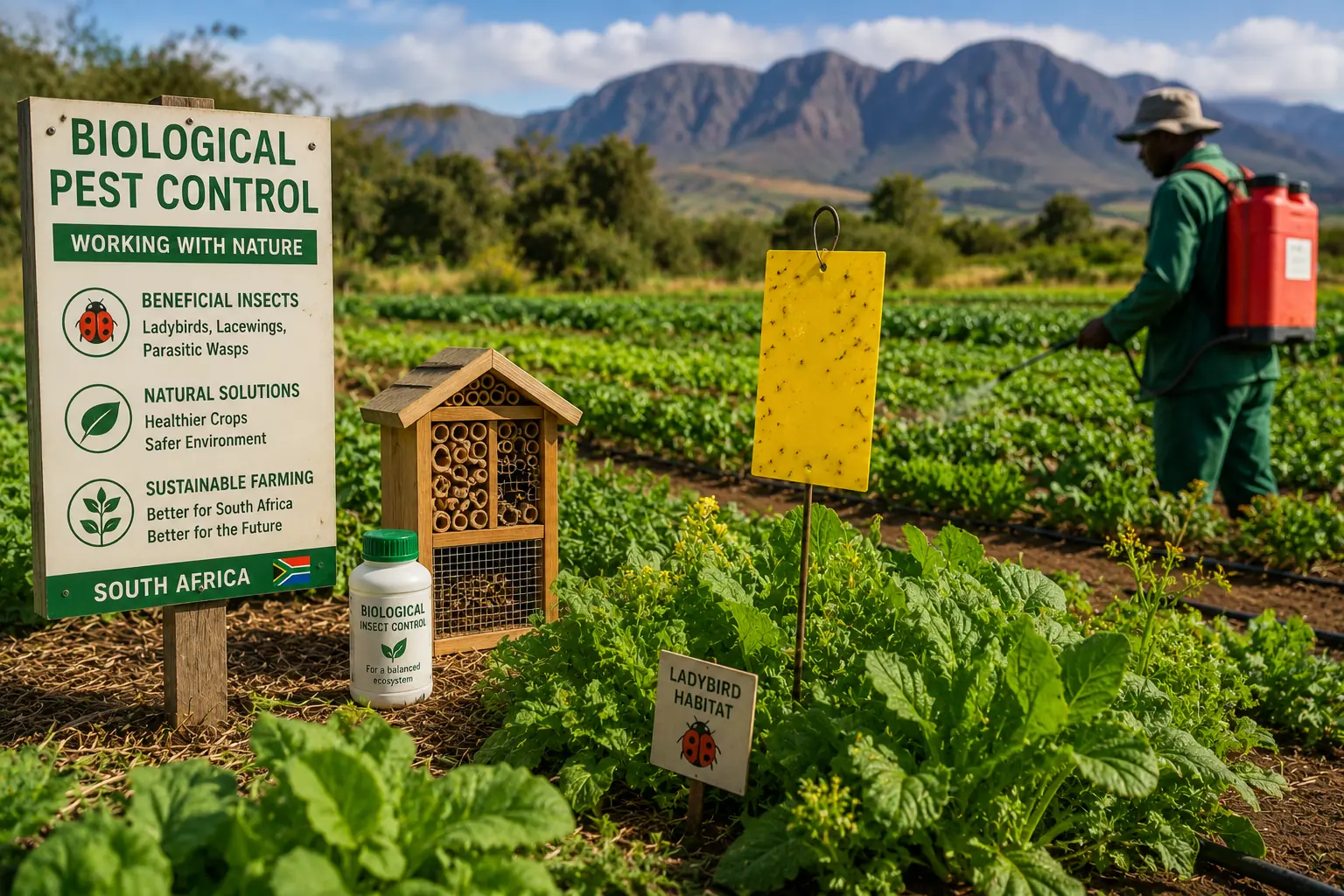
Organic & Low-Chemical Spray Options for SA Farmers
When biological controls are insufficient and chemical intervention is needed, the following products are registered for use in South Africa and represent the lowest-risk options for human health, beneficial insects, and soil biology. Always check the current South African Pesticides Register (maintained by DAFR) for the latest registrations, as products are regularly added and removed:
Neem Oil (Azadirachtin)
Cold-pressed neem oil and azadirachtin-based products (Neemix, AzaMax) are among the most useful tools in the organic pest management toolkit. Neem acts as a systemic insect growth regulator. It does not kill pests immediately but disrupts moulting and reproduction, causing population collapse over 5–7 days. It is effective against aphids, whitefly, mites, mealybugs, and a range of caterpillar species. Neem breaks down in UV light within 3–5 days, leaving no residue problems for export produce. Apply in the early morning or evening to avoid burning leaves and maximise efficacy before UV degradation.
Insecticidal Soap
Contact insecticide effective against soft-bodied pests, aphids, mites, whitefly nymphs, and mealybugs. Works by disrupting the pest's cell membranes on contact. No residual activity, must contact the pest directly. Safe for beneficial insects once dry. Can be made on-farm from pure potassium soap (not detergent) diluted at 1–2% in water. Commercial products include Savona (registered in SA).
Pyrethrin (Natural Pyrethrum)
Derived from the dried flower heads of Chrysanthemum cinerariifolium, pyrethrin is a broad-spectrum contact insecticide permitted in certified organic production in SA. It is effective but also toxic to beneficial insects, fish, and bees, use selectively and avoid application when bees are active. Products include Pyrethrins EC (various brands). Breaks down rapidly in sunlight.
Copper-Based Fungicides
Copper hydroxide and copper oxychloride products (Kocide, Cuproxat) are the backbone of organic disease management, effective against downy mildew, bacterial blight, phytophthora, and angular leaf spot across tomatoes, potatoes, grapes, and citrus. Use at the minimum registered rate and rotate with other fungicide classes to avoid copper accumulation in soils.
Diatomaceous Earth (DE)
Food-grade DE is a physical control, microscopic silica particles lacerate the exoskeletons of crawling insects, causing dehydration. Effective against ants, stored grain pests, and slugs. Apply as a dust to dry soil surfaces around plants or mix into stored grain at 1kg per tonne. Loses efficacy when wet, reapply after rain.
Pesticide Safety & Compliance in South Africa
All pesticide use in South Africa is governed by the Fertilizers, Farm Feeds, Agricultural Remedies and Stock Remedies Act (Act 36 of 1947), administered by DAFR. Key requirements:
- Only use pesticides registered by DAFR for the specific crop and pest combination shown on the label.
- Observe all pre-harvest intervals (PHIs), the minimum number of days between final application and harvest. PHIs are printed on every label.
- Keep a spray diary recording: date, product, rate, crop, pest target, and operator name. This is mandatory for export certification and GlobalGAP audits.
- Store pesticides in a locked, ventilated, purpose-built store, never in living areas or near food stores.
- Dispose of empty containers through the Agro-Chemical Association of South Africa's Croplife SA container disposal scheme.
- Pesticide applicators handling and applying any scheduled pesticide must hold a valid TETA (Transport Education and Training Authority) or AgriSETA pesticide application qualification.
EU, UK, and US export buyers apply Maximum Residue Level (MRL) requirements that are often stricter than SA domestic law. Before applying any pesticide on crops destined for export, verify the MRL status for that active ingredient in your target market. Non-compliance results in shipment rejection, a costly outcome. See our export farming guide for MRL compliance resources.