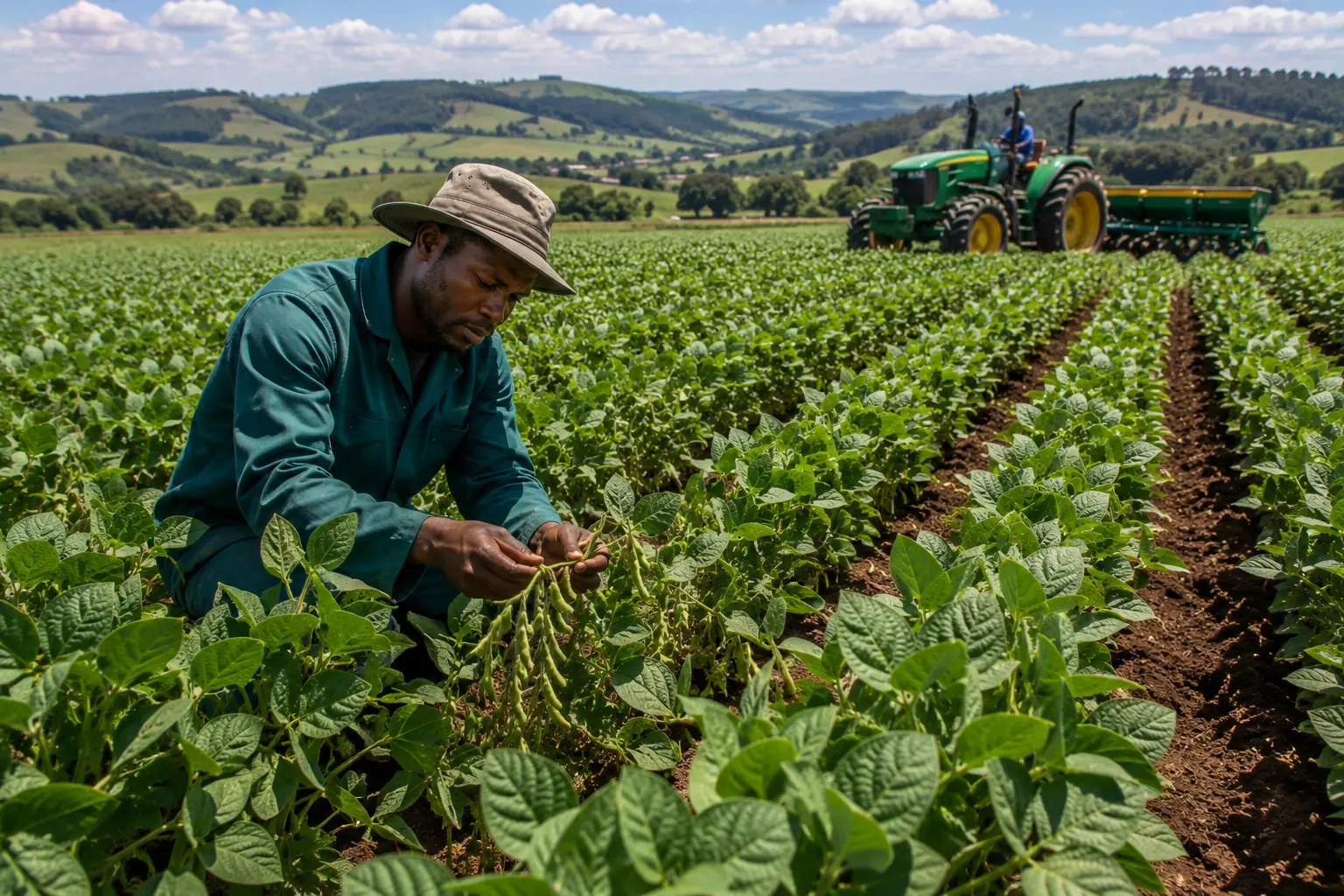
Why Soybeans? The Case for Growing SA's Hottest Oilseed
Soybean Varieties, Choosing the Right Maturity Group for Your SA Region
Soybean varieties are classified into maturity groups (MG), a measure of how quickly they flower and mature in response to day length. In the Southern Hemisphere, SA soybean MGs range from the very early MG 4 (short-season, suitable for areas with early frost risk or short summer rainfall windows) to the later MG 7–8 (long-season, suitable for KZN's extended subtropical growing season). Matching the correct MG to your latitude and planting date is the single most important variety decision:
- MG 4–5 (Very Early to Early): Free State Highveld, high-altitude Eastern Cape, areas with frost risk by April. Varieties: LS Pharaoh, PAN 1583, DM 3810.
- MG 5–6 (Early to Medium): Mpumalanga Highveld, northern Free State, North West. The most widely planted maturity window in SA. Varieties: DM 6.2i, PAN 1664, Dundee.
- MG 6–7 (Medium to Late): KwaZulu-Natal Midlands, low-altitude Mpumalanga, northern KZN coastal hinterland. Longer growing season allows higher yield potential. Varieties: PAN 1666, Egret, LS 6968.
- MG 7–8 (Late): KZN coastal, Limpopo Lowveld under irrigation. Extended growing season maximises radiation interception and yield. Varieties: Heron, PAN 1777.
Always consult the GRAINSA / SA Graan/Grain Soybean Variety Trial results for your specific district before making a final variety decision. Variety performance varies significantly between seasons and locations, don't base decisions on seed company marketing alone.
Inoculation, The Single Most Important Input in Soybean Production
Soybeans have the biological ability to fix atmospheric nitrogen into the soil through a symbiotic relationship with Bradyrhizobium japonicum bacteria that colonise the plant's root nodules. This nitrogen fixation can supply the crop's entire nitrogen requirement (100–200 kg N/ha) at no chemical cost, but only if the correct rhizobium bacteria are present in the soil in sufficient quantities.
In South African soils, especially fields where soybeans have not been grown before, the native rhizobium population may be too low to achieve effective nodulation. Inoculation, coating the seed with a high-quality Bradyrhizobium japonicum inoculant before planting, is therefore critical. Fields that are not inoculated on first-time soybean planting can produce yields 30–60% below their potential and require full synthetic nitrogen fertilisation, destroying the rotation economics that make soybeans valuable.
The 4-Step Inoculation Process for SA Soybean Farmers
Many soybean seed dressings (fungicides, insecticides) contain chemicals toxic to Bradyrhizobium japonicum. Always apply inoculant as a separate step after any chemical seed treatment has dried, or use compatible co-applied formulations specifically designed for soybeans. Ask your seed company for compatibility data before combining products on the same seed.
Soil Requirements & pH Management
Soybeans are far more sensitive to soil acidity than maize. The optimal soil pH for soybean production is 6.0–6.5 (water), significantly higher than the 5.5 minimum acceptable for maize. At pH below 5.5, aluminium and manganese toxicity suppresses root development and rhizobium activity, dramatically reducing both yield and nitrogen fixation. This is the most commonly overlooked constraint in new SA soybean areas where soils have acidified under continuous maize production.
Lime requirements should be determined by a soil test from an accredited SA laboratory. Apply dolomitic or calcitic lime at the recommended rate at least 3 months before planting to allow full incorporation and reaction. On very acidic soils (pH below 4.8), two seasons of lime applications may be necessary before profitable soybean production is achievable. See our soil and fertilizers guide for SA lime application rates and product comparisons.
Planting Agronomy
Soybean planting agronomy directly determines yield potential. Getting establishment right is non-negotiable:
- Soil temperature: Plant only when soil temperature at 5cm exceeds 14°C (ideal: 18–24°C). Cold soil causes slow, patchy germination and increases Phytophthora root rot risk. In the Free State and high-altitude Mpumalanga, this means planting no earlier than mid-November in most years.
- Planting depth: 3–5cm into firm, moist soil. Shallow planting (less than 2.5cm) risks desiccation in dry conditions; deep planting (over 6cm) causes emergence problems. Uniform seeding depth is critical for even crop establishment and harvest timing.
- Row spacing: Standard commercial practice is 75–91cm row spacing for mechanical harvest. Narrow-row (45cm or less) production systems increase early canopy closure, improve weed suppression, and consistently yield 8–15% higher than wide rows, but require specialised planters and may complicate in-row cultivation.
- Population: Target 280 000–350 000 plants/ha for most SA conditions. Adjust upward (to 400 000/ha) in very short-season, drought-prone environments and downward (to 250 000/ha) in high-yield, long-season KZN environments where branching compensates for lower density.
Nutrition & Fertilisation
With effective inoculation, soybeans require minimal or no synthetic nitrogen. The nutritional focus shifts to phosphorus, potassium, sulphur, and micronutrients that support pod fill and seed development:
- Phosphorus (P): 20–30 kg P/ha for yield levels of 2–3 t/ha. Apply as single superphosphate (SSP) or MAP. Soybean is particularly responsive to P on low-P soils, P deficiency causes purple leaf discolouration and severely restricts nodulation.
- Potassium (K): 30–60 kg K/ha depending on soil K levels and expected yield. Potassium is the second-highest nutrient removal from the grain after nitrogen. K deficiency causes leaf edge scorch and pod shatter.
- Sulphur (S): 15–25 kg S/ha on soils testing below 10 mg/kg available S. Sulphur deficiency (increasingly common on SA soils as acid rain sulphur deposition has declined) limits protein synthesis and reduces oil content.
- Molybdenum (Mo): Trace amounts (20–50g/ha as sodium molybdate) are critical for Bradyrhizobium nitrogen fixation enzyme function. Often included in inoculant formulations or applied as a foliar at V3–V5. Mo deficiency on acidic soils severely limits N-fixation even when good nodulation is visible.
Pest & Disease Management
Soybeans face several significant pest and disease threats in South African conditions. An integrated approach combining variety resistance, cultural practices, and targeted chemical inputs is the most cost-effective management strategy:
Key Diseases
- Phytophthora Root & Stem Rot (Phytophthora sojae), The most damaging soil-borne disease of SA soybeans. Causes pre- and post-emergence damping-off and root rot on waterlogged, compacted soils. Use Phytophthora-resistant varieties (check variety ratings), apply metalaxyl seed dressing, and ensure adequate drainage.
- Frogeye Leaf Spot (Cercospora sojina), Increasingly common in KZN and Mpumalanga. Causes circular grey lesions on leaves and pods. Manage with fungicide sprays (azoxystrobin, propiconazole) at R3 (early pod) if disease threshold is exceeded, and rotate mode-of-action classes to prevent resistance.
- Soybean Rust (Phakopsora pachyrhizi), Potentially devastating if it establishes in SA's main soybean areas. Monitor the GRAINSA rust monitoring network for detection reports. Triazole + strobilurin fungicide combinations are the primary control. Ensure applications are made before visible symptoms appear for full efficacy.
- Red Leaf Blotch (Myrothecium verrucaria), Common in high-rainfall KZN seasons. Rotate fungicide chemistry and ensure adequate air movement through the canopy with appropriate plant populations and row spacing.
Key Pests
- Stink Bugs (Nezara viridula, Piezodorus guildinii), Pod-feeding bugs that inject saliva into developing seeds causing shrivelling, delayed maturity, and mycotoxin entry. Monitor with sweep netting from R3 onward; treat with pyrethroids when populations exceed 1 bug per metre of row.
- Looper Caterpillars (Chrysodeixis acuta), Defoliate soybean at high pressure. Economic threshold: 25% defoliation before R1 (flowering) or 15% after R1. Bt (Bacillus thuringiensis) products are effective on young larvae; registered insecticides for larger infestations.
- Red Spider Mite (Tetranychus urticae), Serious in hot, dry conditions, particularly in irrigated Northern Cape and Limpopo production. Causes leaf bronzing and premature defoliation. Use predatory mite releases or registered abamectin/clofentezine sprays. See our pest control guide.
Harvesting & Post-Harvest
Soybeans are ready for harvest when:
- 95% of pods are brown/tan coloured and dry
- Leaves have fully dropped from the plant
- Grain moisture is at 13–14% (the safe storage moisture level)
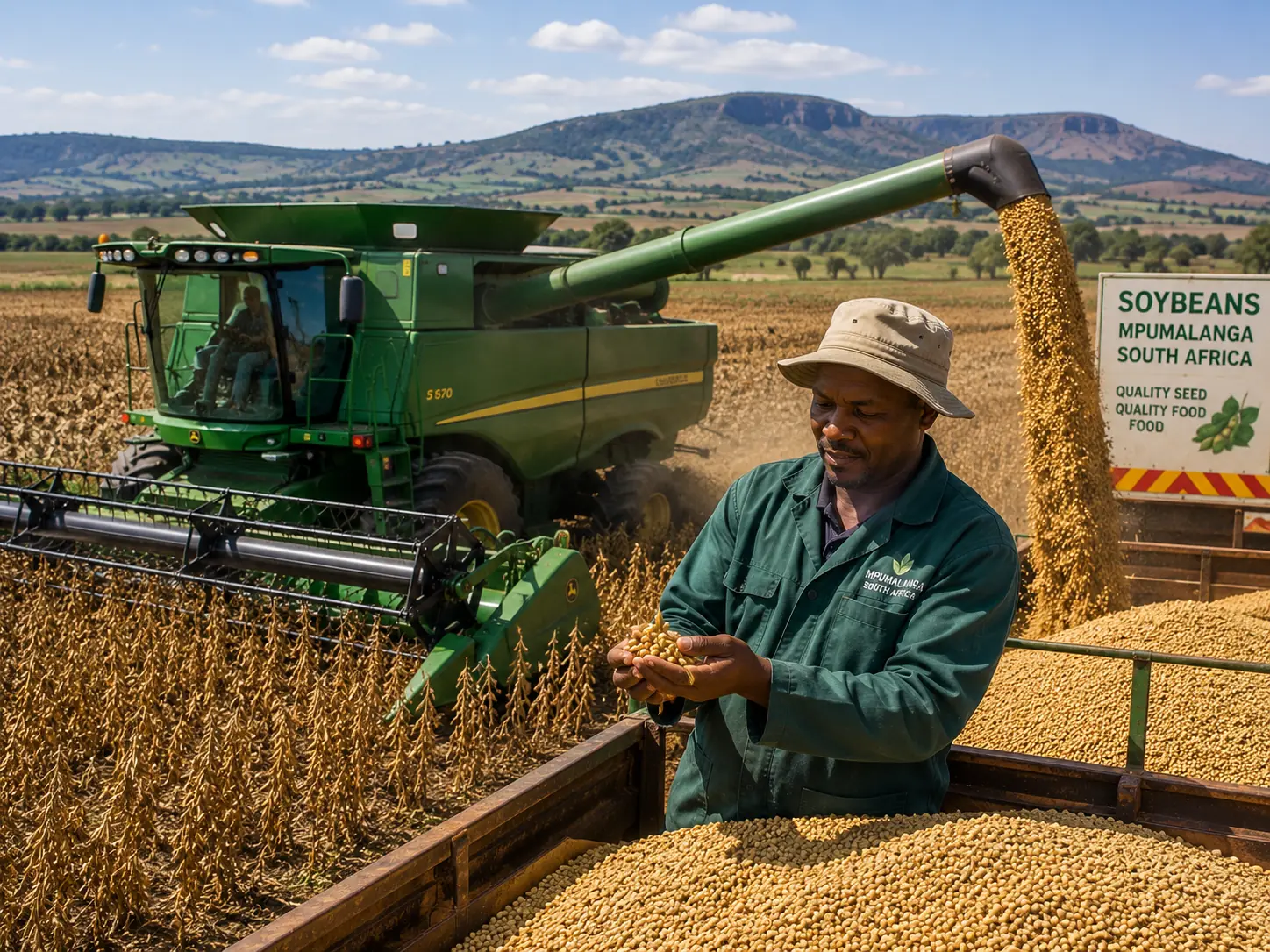
Harvest promptly once conditions are right, delayed harvest increases pod shatter losses (soybeans are prone to pod dehiscence in hot, dry conditions post-maturity) and allows pest and disease entry into the dry grain. Set combine header as low as possible, soybeans pod close to the ground and low header settings are critical to minimising harvest losses. Cylinder/rotor speed should be set conservatively (400–500 RPM) to minimise seed coat cracking, which reduces oil extraction efficiency and grade.
Store at below 13% moisture in clean silos or sealed grain bags. Soybean oil is prone to rancidity if stored at high moisture or temperature. Deliver to processors within 3–4 months of harvest for best quality premiums. Most SA processors apply quality discounts for moisture above 13%, oil content below 18%, and protein below 34%. Request a quality analysis from your cooperative elevator at delivery to understand your pricing position.
Soybean Markets in South Africa
South Africa's soybean market is characterised by strong structural demand that frequently exceeds domestic supply, keeping farmgate prices competitive:
- Crushing plants (oilseed processors): Willowton Group (KZN), NWK/AFGRI Oils (North West), Tiger Brands, and Nedan Oil Mills are the primary SA soybean crushers. They purchase soybeans for oil extraction (cooking oil) and soybean meal production (animal feed protein). These are the highest-volume buyers and the price benchmark for all other SA soybean markets.
- Animal feed compounders: Purchase soybean meal from crushers and occasionally whole soybeans for on-site processing. Poultry feed and pig rations depend heavily on soybean meal as their primary protein source.
- Export: SA soybeans are periodically exported to Asian markets (China, Japan, South Korea) when domestic prices are competitive with international benchmarks. Export-grade specifications require low moisture (below 12.5%), minimal green or damaged beans, and foreign material below 2%. See our export farming guide for shipping and export documentation requirements.
- Cooperatives and futures markets: Most commercial SA soybean producers sell through agricultural cooperatives (OVK, VKB, NWK, TWK) that provide grain intake, storage, and access to SAFEX futures contracts for price hedging. Forward selling a portion of expected production at planting time, when prices are typically strongest, removes price risk while allowing upside participation on the unhedged portion.
Access current SAFEX soybean cash and futures prices through your cooperative, the JSE's agricultural commodity markets website, or agri-media services like Agri4All, Farmersweekly, or SA Graan/Grain magazine. For grant opportunities for oilseed producers, see the DAFR and DAMC programme listings.