Horse Farming in South Africa, Among the Continent's Most Developed Equine Industries
South Africa has firmly among the most developed and commercially sophisticated equine industries in Africa, and among the top twenty in the world. The country's horse sector spans thoroughbred and standardbred racing, show jumping, dressage, polo, endurance riding, working stock horses, and the uniquely South African Boerperd and Nooitgedacht breeds developed for farm work and recreational riding across the veld.
Horse farming, or equine production, covers a broad range of activities: stud breeding and foal raising, livery (boarding other people's horses), equestrian training and coaching, riding schools, agritourism and trail riding operations, and the production and sale of horses for sport, leisure, and working purposes. South Africa's diverse landscape, from the rolling grasslands of the Natal Midlands to the Boland winelands and the Bushveld of Limpopo, provides some of Africa's finest equine country.
This guide is for farmers and entrepreneurs considering entering the equine sector, whether that means setting up a small riding school, establishing a stud operation, or developing a multi-revenue equine tourism business on an existing farm. Horse farming is a high-capital, skill-intensive enterprise, but for those with the land, the passion, and the management capability, it offers unique financial and lifestyle rewards that few other farming enterprises can match.
🐴 Industry overview: The South African horse racing industry alone generates over R5 billion annually in turnover, with more than 15,000 horses in formal training across the country. Gold Circle (KZN) and Phumelela Gaming & Leisure (Gauteng, Western Cape) are the primary racing operators. Beyond racing, the recreational and sport horse sector (show jumping, dressage, polo, endurance) has grown significantly as South Africa's middle class has expanded.
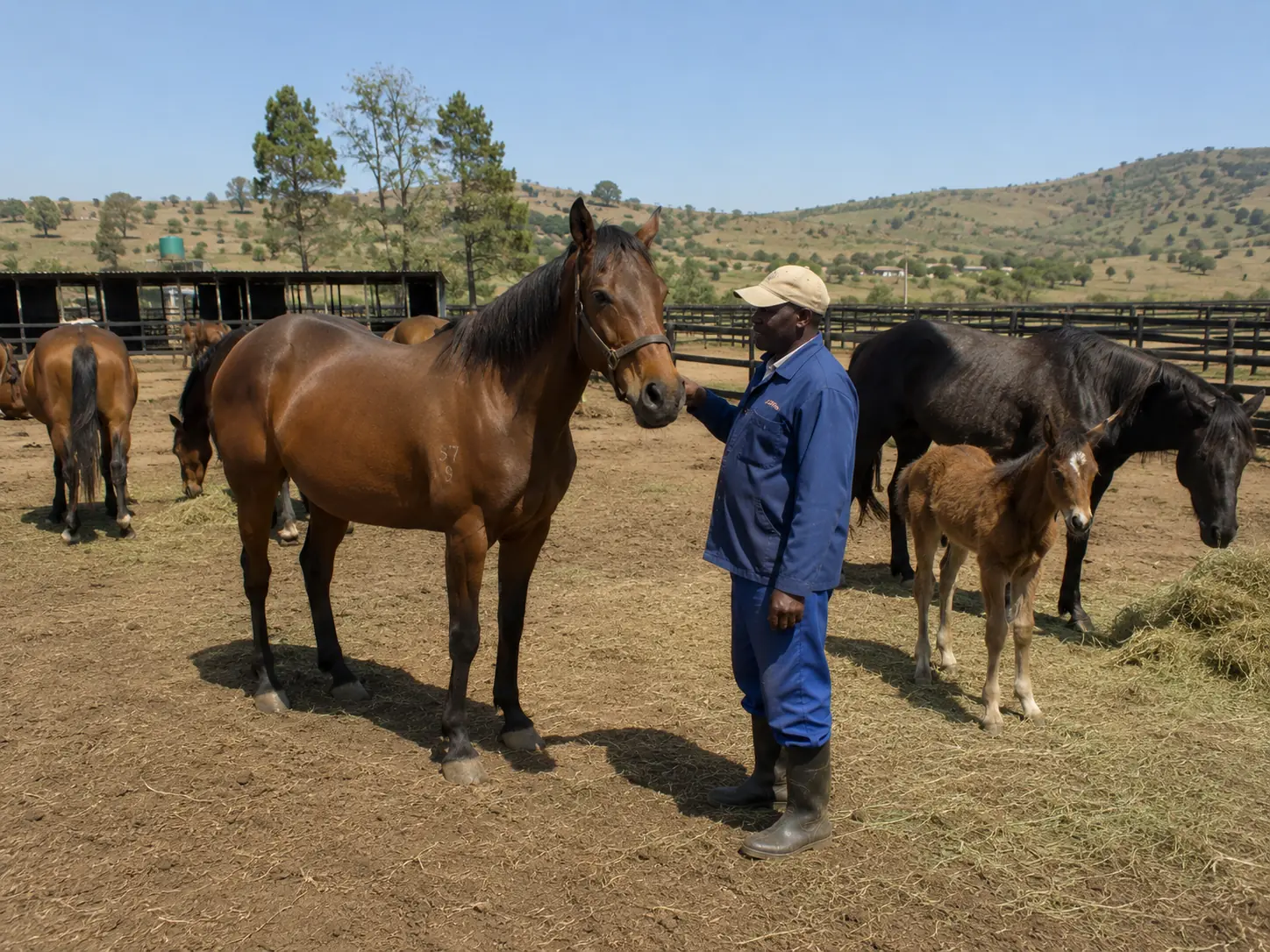
Choosing Your Equine Enterprise, Breeds and Business Models
The first decision in horse farming is choosing which discipline and breed to focus on, as this drives all infrastructure, management, and market decisions. South Africa's main equine sectors and associated breeds are:
Thoroughbred
South Africa's largest commercial equine sector. Top stud farms are concentrated in the KZN Midlands (Summerveld, Karkloof), Western Cape (Stellenbosch, Swartland), and Gauteng. Entry costs are very high but returns can be exceptional. Buyers are racing syndicates, trainers, and international buyers.
Warmblood & Sport Breeds
Dutch Warmblood, Hanoverian, SA Warmblood, and KWPN horses bred for show jumping, dressage, and eventing. Growing demand from SA's competitive equestrian community. Top sport horses sell for R80,000–R500,000+.
Boerperd & Nooitgedacht
Uniquely South African breeds developed for endurance, farm work, and trail riding. Hardy, sure-footed, and well-adapted to local conditions. Growing demand for trail riding tourism and endurance competitions. More affordable to produce and maintain.
Polo Ponies (Argentine-cross)
Polo is a growing sport in SA with active clubs in Gauteng, KZN, and Western Cape. Polo ponies are typically Argentine Thoroughbred crosses. A quality made polo pony sells for R80,000–R300,000. Polo farms can generate income from pony production, livery, and hosting matches.
Arabian & Arabian-Cross
Arabs are the dominant breed in endurance riding, South Africa's rapidly growing equestrian discipline. Arabian horses are also popular for showing and breeding. Well-bred Arabian stallion fees range from R2,500–R12,000 per cover.
Quarter Horse & Stock Horse
Popular with game farms, cattle operations, and trail riding businesses. Quarter Horses are versatile, quiet-natured, and well-suited to working livestock. Strong demand from game farmers, polo clubs, and Western riding enthusiasts across SA.
Infrastructure Requirements for a Horse Farm in South Africa
Horse facilities require more specific infrastructure than most livestock enterprises, and getting the design right from the start saves enormous cost and management problems later. Key infrastructure elements for a South African horse farm include:
🏠 Stabling and Shelter
Horses in formal training or stud conditions require individual stables of minimum 3.5m × 3.5m (ideally 4m × 4m for larger breeds like Warmbloods and Thoroughbreds). Stables must have good ventilation, respiratory disease is the number one health issue in stabled horses worldwide, and South Africa's dust and heat make ventilation critical. Rubber matting over a concrete base is the standard stable floor in SA. For breeding operations, a separate foaling box (minimum 4.5m × 4.5m) with CCTV monitoring and easy access for the vet is essential.
Not all horses need stabling, breeding mares, Boerperds, and horses in semi-wild conditions can be managed on pasture with simple shelter (three-sided structures or natural windbreaks). Pasture-based systems have significantly lower infrastructure costs but require higher land area per horse and more active pasture management.
Pasture and Grazing Management
Good pasture is the foundation of profitable horse farming. The standard stocking rate for horses on South African pasture is 1–2 hectares per horse in good rainfall areas, rising to 3–5 hectares per horse in semi-arid regions. South African horse farms are typically sown with a mix of Kikuyu, Eragrostis, Panicum, and ryegrass depending on the region. Rotational grazing (moving horses between paddocks and allowing rest periods) is essential to prevent overgrazing, which leads to compaction, weed invasion, and pasture degradation. Test soil and fertilise pastures with a balanced programme annually, lush, well-fertilised kikuyu pasture can provide a significant portion of a horse's energy needs and dramatically reduce feed costs.
🏇 Training and Exercise Facilities
For sport horses and thoroughbred operations, exercise facilities are a significant capital investment. A standard sand arena (20m × 40m for dressage, larger for jumping) costs R80,000–R250,000 to establish depending on footing material and drainage. A round pen (15–18m diameter) is an essential training tool for any horse operation and costs R15,000–R40,000 to build. Thoroughbred training operations require an all-weather canter track, which is a major capital item.
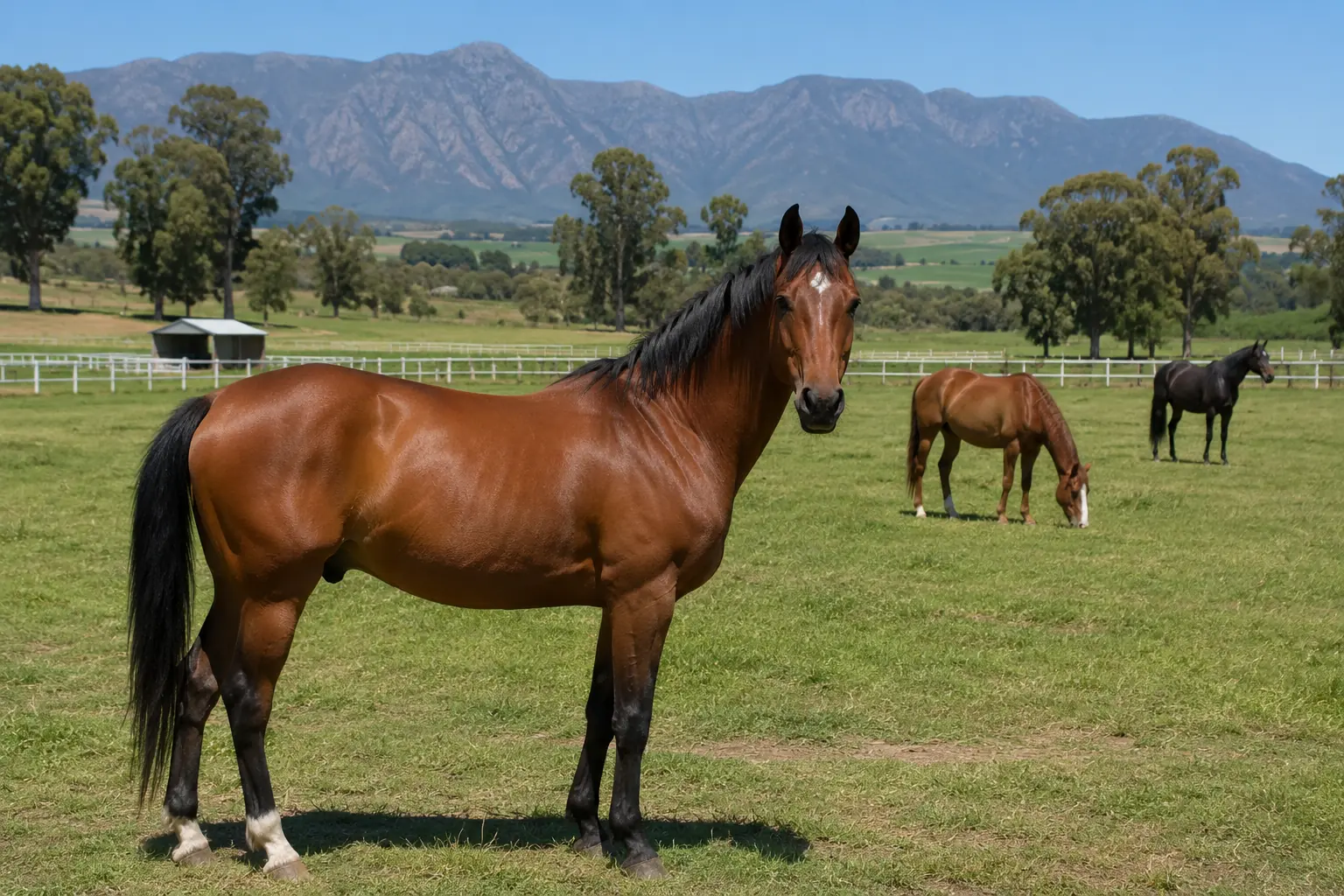
Nutrition and Feed Management for South African Horses
Feed is typically the largest ongoing cost in horse farming, accounting for 40–60% of total operating expenses. South African horse nutrition draws on both locally produced roughage and supplementary concentrates:
🌾 Roughage (Forage)
A horse requires roughage (hay, grass, or pasture) equivalent to approximately 1.5–2% of its body weight per day. For a 500kg horse, that is 7.5–10kg of dry roughage daily. In South Africa, the most commonly used hay types are Eragrostis (Smutsvinger) hay (widely grown in the summer rainfall provinces and the most affordable option) Teff hay (increasingly popular due to lower sugar content and palatability), and Lucerne (alfalfa) hay, which is higher in protein and calcium and fed as a supplement or to breeding stock and growing youngsters. Lucerne hay costs R3,500–R6,000 per tonne depending on quality and region; Eragrostis hay R1,500–R3,000 per tonne.
Concentrates and Hard Feed
Horses in training, lactating mares, growing foals, and breeding stallions require supplementary concentrates to meet their elevated energy and protein requirements. South Africa has a well-developed equine feed industry, Epol, Equus, Coolmix, and several other brands offer formulated pelleted and textured feeds designed for specific classes of horses. A horse in active training typically requires 3–6kg of concentrate per day alongside ad libitum roughage. At R12–R18/kg for quality compound feed, this equates to R1,000–R3,000 per month per horse in concentrate costs alone, a significant operating expense at scale.
Health Management and Veterinary Care
Equine health management in South Africa requires a structured, proactive approach. Key routine health protocols for every South African horse farm include:
- Vaccination: Annual vaccination against African Horse Sickness (AHS) is mandatory in South Africa, AHS is a fatal disease transmitted by midges and is endemic in summer across most of the country. The African Horse Sickness polyvalent vaccine must be administered annually, timed correctly relative to the transmission season. Additional vaccines for equine influenza and equine herpesvirus are recommended for horses in contact with other horses (shows, training yards, sales). Consult a registered equine vet for a protocol appropriate to your region and management system.
- Parasite (worm) control: Internal parasites (particularly strongyles, roundworms (ascarids in foals), and tapeworms) are a major cause of ill-health, poor condition, and colic in South African horses. Implement a strategic deworming programme based on faecal egg counts rather than blanket treatment, this reduces anthelmintic resistance development and targets treatment where it is most needed.
- Dental care: Annual or bi-annual dental floating (rasping of sharp points) by a registered equine dentist or vet is essential for horses of all ages. Dental problems are a primary cause of weight loss, bit resistance, and poor performance in South African horses and are often overlooked by inexperienced horse owners.
- Farriery: Routine hoof care (trimming and, where necessary, shoeing) every 6–8 weeks is essential for all horses. Hoof health directly affects soundness, performance, and longevity. Budget R500–R1,500 per horse per shoeing cycle depending on whether shoes are applied.
- African Horse Sickness management: In AHS-endemic areas (essentially all of SA during the summer midge season), house horses in enclosed, midge-proof stabling from dusk to dawn during the high-risk season (November–May), apply insect repellents, and maintain the vaccination schedule strictly. AHS has a mortality rate of 50–95% in susceptible horses and remains one of the greatest risks to horse farming in South Africa.
Revenue Streams from Horse Farming in South Africa
Commercially viable horse farming in South Africa typically requires multiple income streams. The main options are:
| Revenue Stream | Description | Estimated Income |
|---|---|---|
| Horse sales (breeding) | Selling foals, youngstock, and broken horses from stud | R15,000–R2,000,000+ per horse depending on breed and quality |
| Stallion stud fees | Income from covering mares with a premium stallion | R2,500–R60,000+ per cover (Thoroughbred stallions command highest fees) |
| Livery / agistment | Boarding other people's horses on your property | R3,000–R8,000 per horse per month (full livery) |
| Riding school / lessons | Coaching beginner to advanced riders | R350–R800 per lesson; R5,000–R15,000/month per full-time student |
| Trail riding / agritourism | Guided rides for paying guests on farm or reserve | R350–R800 per hour; R2,500–R6,000 per full-day ride |
| Race horse training | Training horses for owners (licensed trainers only) | R15,000–R35,000 per horse per month in training fees |
| Hay and pasture sales | Selling excess hay or grazing rights | Supplementary income from well-managed pasture farms |
⚠️ African Horse Sickness (AHS) Controlled Area: South Africa is divided into AHS surveillance zones. Movement of horses between zones requires a movement permit and a valid AHS vaccination certificate. Horses in the AHS-free zone (a small area of the Western Cape) have special trade and export status, horses from this zone can be exported internationally without AHS quarantine. If you plan to export horses, understanding AHS zone status is essential. Contact the State Veterinarian in your district for current zone boundaries and movement protocols.