South Africa's Agricultural Export Industry, An Overview
South Africa is one of Africa's leading agricultural exporters and a significant player in global fresh produce markets. The country exports billions of rands' worth of fruit, vegetables, wine, nuts, wool, meat, and processed agri-products every year to markets across Europe, the Middle East, Asia, and sub-Saharan Africa. For South African farmers able to meet international quality and safety standards, export farming offers substantially higher farmgate prices than the domestic market, often two to four times more for certified premium produce.
Agriculture contributes roughly 2.5–3% of South Africa's GDP directly, but the agri-food value chain (including processing, logistics, and export) is a critical pillar of the broader economy and a major rural employer. In 2023, South Africa's total agricultural exports exceeded R200 billion, with fresh fruit (citrus, grapes, apples, pears, avocados, and stone fruit) leading the way.
But exporting is not as simple as finding a foreign buyer and shipping a pallet. International markets (particularly the EU, UK, and USA) impose strict phytosanitary (plant health), food safety, traceability, and labelling requirements. Understanding and meeting these requirements is the single most important step for any South African farmer who wants to break into export markets.
🌍 Key fact: The European Union is South Africa's largest agricultural export destination, taking approximately 35–40% of total fresh produce exports. The UK remains a significant separate market post-Brexit, with its own import protocols. Understanding the distinction between EU and UK requirements is essential for citrus and stone fruit exporters in particular.
South Africa's Top Agricultural Export Products
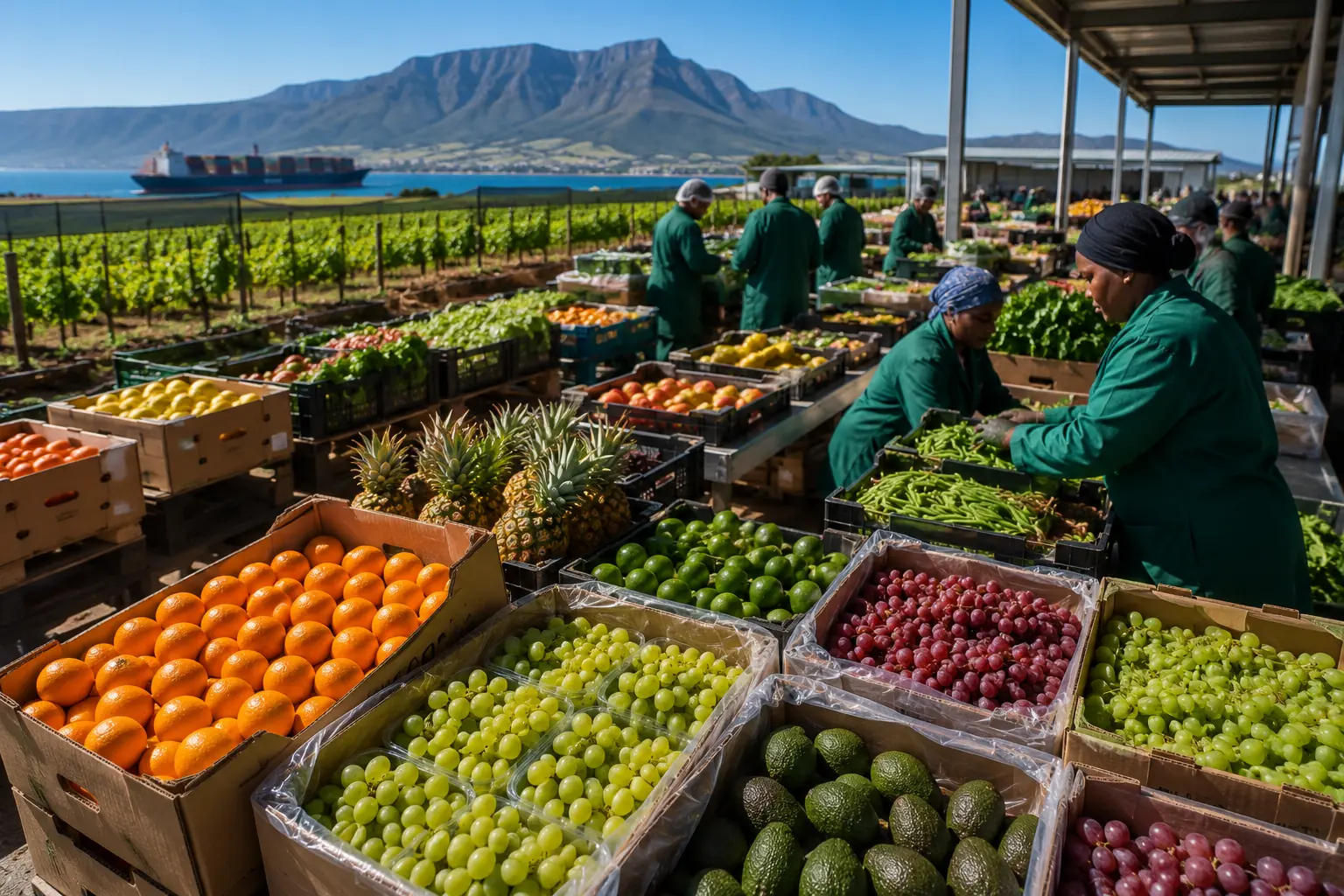
Not every commodity is equally suited to export. The following are South Africa's most significant and commercially viable agricultural export categories, along with the key markets and considerations for each:
| Product | Main Export Markets | Key Province | Export Value |
|---|---|---|---|
| Citrus (oranges, lemons, grapefruit) | EU, UK, Middle East, Russia | Limpopo, Eastern Cape, Western Cape | Largest single export category |
| Table Grapes | EU, UK, Asia | Northern Cape, Western Cape | Major earner, Oct–Feb season |
| Avocados | EU, UK, Middle East | Limpopo, Mpumalanga | Fast-growing, premium prices |
| Apples & Pears | UK, Middle East, Asia, Africa | Western Cape (Ceres, Elgin) | Established, stable volumes |
| Macadamia Nuts | China, USA, Germany | Limpopo, Mpumalanga | Fastest growing export nut |
| Blueberries | EU, UK | Western Cape | Emerging, high value per kg |
| Wine | UK, EU, USA, Asia | Western Cape | Major processed export earner |
| Wool & Mohair | China, Italy, Czech Republic | Eastern Cape, Karoo | Significant livestock export |
| Maize & Grains | Sub-Saharan Africa, Asia | Free State, Mpumalanga | Volume-based, price-sensitive |
Understanding Export Certification in South Africa
Before a single kilogram of South African produce can legally enter most international markets, it must pass through a certification and inspection process. There are several layers to this, and understanding each one is critical to avoiding rejected shipments, port-of-entry bans, or loss of market access.
GlobalGAP Certification
GlobalGAP (Global Good Agricultural Practices) is the one of the world's most widely recognised pre-farm-gate food safety standard. It is a pre-condition for selling fresh produce to major EU retailers (Tesco, Carrefour, Lidl, Aldi, etc.) and most Middle Eastern importers. It covers pesticide use, worker safety, traceability, environmental management, and hygiene. In South Africa, certification is conducted by accredited bodies including SGS, Bureau Veritas, and Intertek. Annual audit costs range from R5,000 to R25,000 depending on farm size and scope.
PPECB Inspection
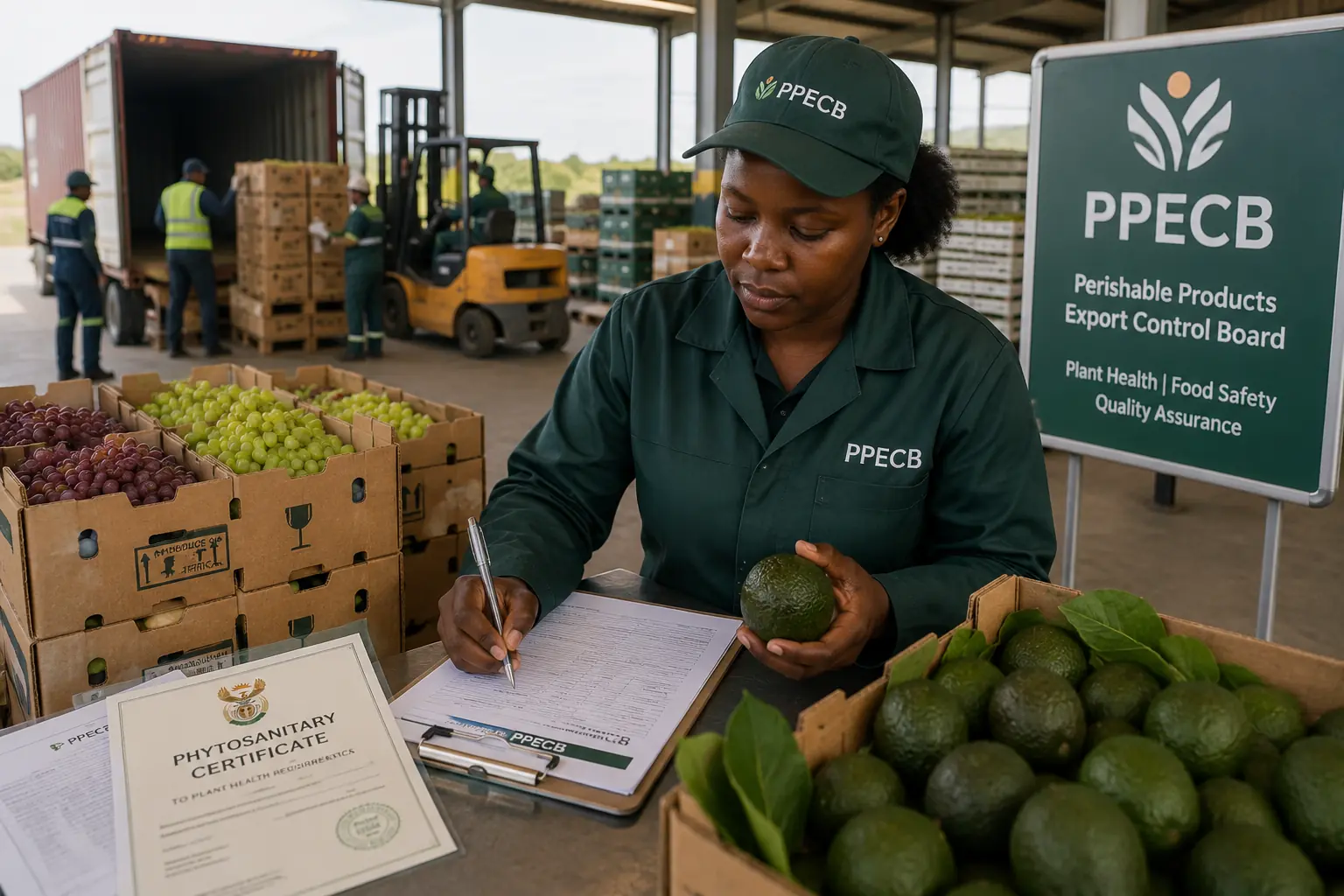
The Perishable Products Export Control Board (PPECB) is the South African statutory body responsible for the inspection and certification of perishable products destined for export. Every consignment of fresh fruit, vegetables, or other perishables exported from SA must be accompanied by a PPECB certificate. PPECB also manages cold chain compliance, ensuring correct temperatures are maintained from packhouse to port. Register at ppecb.com. Inspection fees are per consignment.
DALRRD Phytosanitary Certificate
A phytosanitary certificate issued by the Department of Agriculture, Land Reform and Rural Development (DALRRD) is required for fresh plant material, seeds, bulbs, and most fresh produce to confirm the shipment is free from pests and diseases of quarantine concern to the importing country. Issued by DALRRD Plant Health inspectors. Requirements vary by destination country, the EU, UK, USA, China, and India all have different pest lists and import conditions.
ECOCERT / SANAS Organic Certification
Farmers targeting the premium organic export market need third-party organic certification. In South Africa, the most widely recognised certification bodies are ECOCERT (for EU and global markets) and local SANAS-accredited bodies. The conversion period is typically three years, during which the farm must operate organically but cannot market produce as certified organic. Once certified, organic fresh produce commands 20–50% premiums on European wholesale markets. See our organic farming guide for full details.
Step-by-Step: How to Start Exporting Your Farm Produce
Export farming builds up in stages. It is not something you switch on overnight. Here is a realistic, practical roadmap for South African farmers who want to enter export markets for the first time:
Assess Your Product's Export Potential
Not all produce is equally exportable. Start by researching whether your specific crop, variety, and volume are commercially viable for export. Citrus must meet EU minimum maturity standards; avocados must be a specific variety and size profile; table grapes must pass berry size, Brix sugar content, and visual inspections. Contact your commodity organisation (CGA for citrus, SAAGA for avocados, SATI for table grapes) for current market specifications before investing in infrastructure.
Register with DALRRD and PPECB
All agricultural exporters in South Africa must register with the DALRRD as an exporter. Fresh produce exporters must additionally register with the PPECB. Registration is done online and requires proof of farming activity, a company or sole trader registration, and bank details. There are no prohibitive registration costs, but the process can take two to six weeks, so start early. Visit ppecb.com and the DALRRD portal for current registration forms.
Achieve GlobalGAP or Equivalent Certification
This is non-negotiable for most EU and UK retail markets. Contact an accredited certification body, conduct a gap analysis against the GlobalGAP standard, implement the required practices (record-keeping, pesticide management, worker health and safety, risk assessments), and schedule your certification audit. The timeline from first contact to certification is typically six to twelve months. Many South African agricultural extension officers through DALRRD and Agri SA can assist with the process at low or no cost.
Sort Out Cold Chain Infrastructure
Most fresh produce exports require continuous cold chain management from the moment of harvest. This means pre-cooling infrastructure at the farm or packhouse, refrigerated transport to the port, and correct temperature protocols during sea freight. Without a certified cold chain, your PPECB certificate will not be issued. Many smallholder and emerging exporters use shared packhouse facilities and co-operative cold chain services to avoid the high capital cost of building their own infrastructure. Speak to your local farming equipment supplier or commodity organisation about cold room hire or shared pack facility options in your area.
Find an Export Agent or Importer
Most first-time exporters work through a licensed export agent or freight forwarder who handles documentation, shipping logistics, customs clearance, and buyer relationships. Export agents typically earn a commission of 8–15% of FOB (Free on Board) value. Alternatively, once you have established volumes and certification, approach importers directly through platforms like Fresh Plaza, Produce Report, and SATI's buyer network. South African trade missions run by DTIC (Department of Trade, Industry and Competition) and the FPEF (Fresh Produce Exporters' Forum) are also excellent networking opportunities.
Understand Shipping, Incoterms, and Payment
Agricultural exports are almost always shipped as sea freight in refrigerated containers (reefer containers) or as air freight for high-value, perishable product. Understand Incoterms, the international trade terms that define who is responsible for shipping costs, insurance, and risk at each stage of the journey. FOB (Free on Board) means you are responsible until the goods cross the ship's rail; CIF (Cost, Insurance, Freight) means you cover costs to the destination port. Payment terms also matter: most first-time exporters receive payment 30–60 days after delivery, which requires cash flow planning. Letter of Credit (LC) payment provides the most security for new export relationships.
Key Export Markets for South African Produce
🇪🇺 European Union
The EU is South Africa's largest agricultural export market. South Africa benefits from a preferential trade agreement under the EU-SADC EPA (Economic Partnership Agreement), which provides tariff-free or reduced-tariff access for most agricultural products. However, the EU has some of the world's strictest food safety and pesticide Maximum Residue Level (MRL) regulations. Regular EU pesticide MRL changes are a constant compliance challenge for South African citrus, stone fruit, and berry exporters. Monitor EU RASFF (Rapid Alert System for Food and Feed) notifications closely, interceptions for MRL violations can result in market bans.
🇬🇧 United Kingdom
Post-Brexit, the UK maintains its own import protocols separate from the EU. South Africa and the UK signed the SACUM-UK EPA in 2019, ensuring continued preferential market access. UK retailers (Tesco, Sainsbury's, Marks & Spencer, Waitrose) are among the most demanding in the world for food safety and ethical sourcing standards, many require GRASP (GlobalGAP Risk Assessment for Social Practices) alongside standard GlobalGAP certification. The UK is particularly important for South African citrus, avocados, apples, pears, and table grapes.
🌍 Sub-Saharan Africa (SADC Region)
Do not overlook regional African markets. South Africa exports significant volumes of maize, processed foods, fresh vegetables, and chicken to neighbouring countries under the SADC Free Trade Agreement. Zimbabwe, Mozambique, Namibia, Botswana, and Zambia are all significant buyers of South African agricultural produce. Regional exports often have lower certification barriers than EU/UK markets, making them an excellent first step for farmers new to exporting. See our agri markets guide for information on fresh produce markets and regional trading.
🌏 Middle East and Asia
The Middle East (UAE, Saudi Arabia, Qatar, Oman) is a fast-growing market for South African citrus, stone fruit, and premium fresh produce. Halal certification is not typically required for fresh produce but is essential for processed meat and poultry exports to Muslim-majority countries. China has become one of South Africa's largest export markets for macadamia nuts and is a growing market for citrus and wool. Export protocols to China are governed by bilateral agreements with GACC (General Administration of Customs China), registration of South African farms and packhouses with GACC is required for direct access.
⚠️ False Fruit Fly Protocols: South Africa's False Fruit Fly (Bactrocera dorsalis) status is a major ongoing export issue. Several markets including the EU, USA, and Japan impose cold treatment or fumigation requirements on South African stone fruit and citrus as a condition of entry. These protocols add cost and logistical complexity. Confirm current requirements with DALRRD Plant Health before booking your first shipment.
Government Support for Agricultural Exporters in South Africa
Several government departments and agencies provide direct support for South African agricultural exporters, particularly for smallholder and emerging farmers entering export markets for the first time:
- DTIC Export Marketing and Investment Assistance (EMIA): Provides financial assistance for export market research, attending international trade shows, and inbound buyer missions. Applications are made through the DTIC portal.
- DALRRD Agricultural Export Standards: The Directorate Plant Health provides phytosanitary certificates and assists with pest-free area protocols. The Directorate Agricultural Product Inspection Services (APIS) oversees export quality standards.
- AGOA (African Growth and Opportunity Act): South African processed agricultural products qualify for duty-free access to the US market under AGOA. This is particularly relevant for canned fruit, wine, and processed citrus products.
- FPEF (Fresh Produce Exporters' Forum): Industry body representing fresh produce exporters. Provides market intelligence, compliance updates, and networking opportunities for members.
- Fruit SA: Umbrella industry body covering citrus (CGA), deciduous fruit (DFPT), avocados (SAAGA), table grapes (SATI), and subtropical fruit (SUBTROP). Essential first contact for new exporters in these sectors.
For smallholder farmers, the CASP and Ilima/Letsema grant programmes can fund infrastructure needed for export compliance, including packhouse upgrades, cold room installation, and irrigation systems needed to achieve export quality production.