South Africa is one of the world's premier citrus-producing and exporting nations. The country exports over 150 million cartons of citrus annually (primarily oranges, soft citrus (mandarins and clementines), lemons, and grapefruit) to markets in Europe, the Middle East, Asia, and North America. Citrus is South Africa's most valuable fresh fruit export commodity, generating foreign exchange earnings that place it among the country's top agricultural export earners year after year.
For South African farmers, citrus represents among the most commercially attractive tree fruit investments available, provided the correct varieties are planted in the right regions on suitable soils with reliable irrigation water. The return on a well-managed citrus orchard, once established, can span 30 to 50 years with consistent annual production, making citrus one of the longest-duration and potentially profitable agricultural investments in the country.
This page covers the main production decisions about establishing and managing a successful citrus orchard in South Africa, from site selection and rootstock choice through to post-harvest handling, export protocol compliance, and accessing international markets.
Why Grow Citrus in South Africa?
South Africa's geographic advantage in citrus is significant. The country's major citrus production windows fall during the Northern Hemisphere's summer off-season (when European, American, and Chinese consumers have no domestic citrus supply) giving South African exporters a premium pricing window that few competitors can match. This counter-seasonal production advantage is one of the foundational economic pillars of the South African citrus industry.
Domestically, citrus consumption is robust and growing, driven by increasing health consciousness and the expanding middle class. Fresh oranges, naartjies (tangerines/clementines), lemons, and grapefruit are staple items at fresh produce markets, street vendors, and retailers across all income segments. The combination of strong export premiums and healthy domestic demand gives South African citrus farmers multiple market channels and price risk diversification options.
Major Citrus Growing Regions in South Africa
Limpopo, Tzaneen & Letsitele Valley
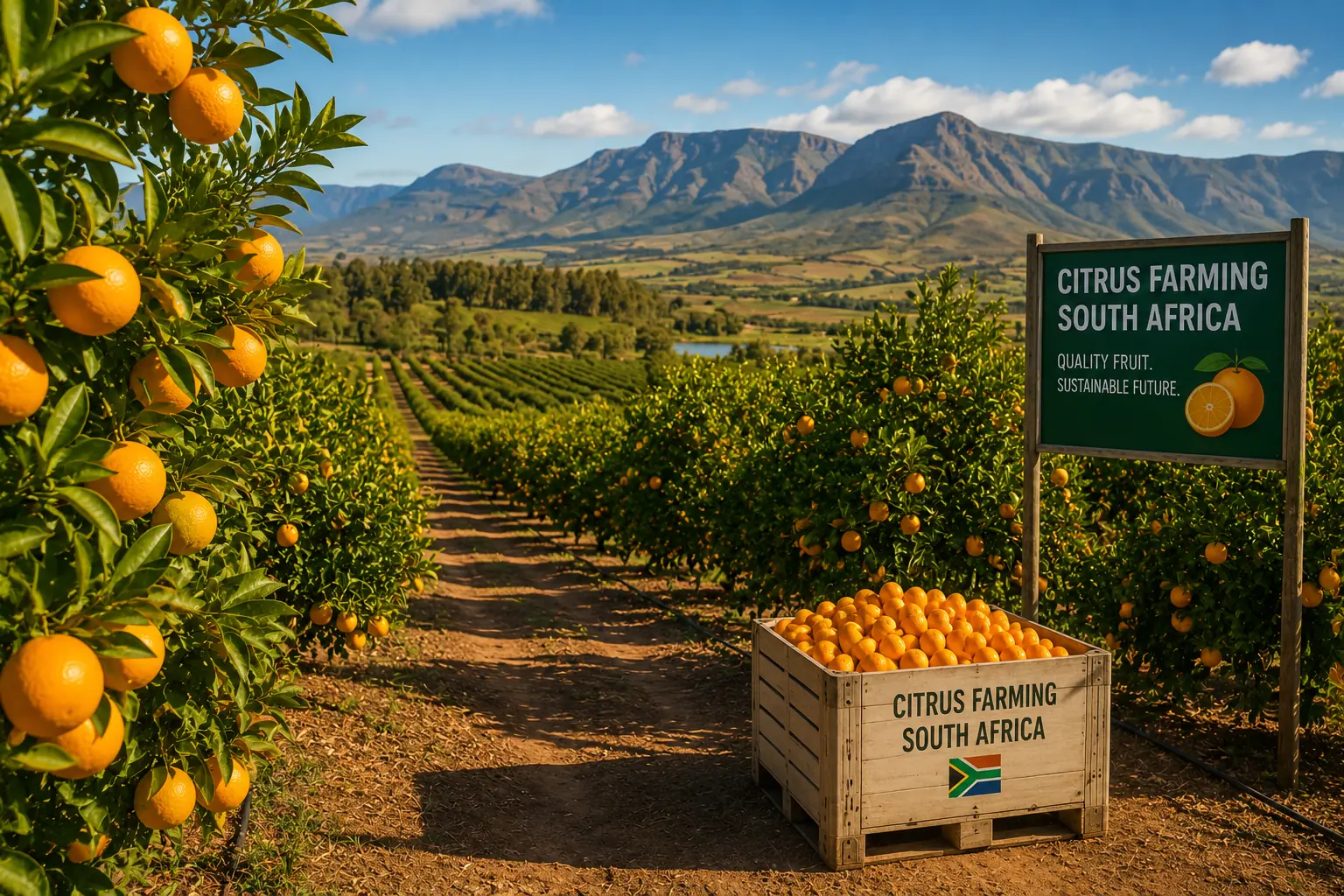
The Letsitele and Tzaneen valleys in Limpopo's subtropical lowveld are the heartland of South African citrus production. The region's deep, well-drained soils, hot summers, mild winters, and reliable irrigation water from the Letaba and Tzaneen dam systems create near-perfect conditions for Valencia oranges, Navel oranges, and soft citrus. Limpopo consistently produces some of the country's highest-yielding and highest-quality citrus for export.
Mpumalanga, Nelspruit & Marble Hall
The Nelspruit area and the Marble Hall irrigation district in Mpumalanga are major citrus-producing zones. The Marble Hall district is particularly renowned for its Navel oranges and lemons. The warm lowveld climate and Olifants River irrigation scheme support intensive, high-value citrus production for both export and domestic markets.
Eastern Cape, Sundays River Valley
The Sundays River Valley near Addo and Kirkwood in the Eastern Cape is one of South Africa's oldest and most established citrus-growing regions. Valencia oranges from this region have been exported for over a century. The valley's unique microclimate (hot days and cool nights during fruit maturation) produces fruit with excellent colour and brix (sugar) levels that are highly valued by European importers.
Northern Cape, Upington & Gariep
The Orange River irrigation scheme around Upington produces high volumes of citrus, particularly Navel oranges and lemons. The desert climate, with extreme heat and very low humidity, helps reduce fungal disease pressure and can produce fruit with excellent rind colour.
Western Cape, Citrusdal & Clanwilliam
The Olifants River valley in the Western Cape, centred on Citrusdal and Clanwilliam, is the traditional home of the soft citrus and grapefruit industry. The region's Mediterranean climate, with cool winters and dry summers, suits varieties that require a degree of cool-temperature colour development.
Citrus Varieties for South African Conditions
Valencia Oranges
Valencia is South Africa's dominant export orange variety, prized for its high juice content, excellent flavour, and long-season availability. Valencias mature later in the season (June to November depending on region), fitting perfectly into the Northern Hemisphere demand window. Major Valencia selections used commercially include Olinda, Delta, and Late Lane. Valencias are suited to all main production regions but perform best in the hot, summer-rainfall lowveld of Limpopo and Mpumalanga.
Navel Oranges
Navel oranges are a large, seedless, easy-peeling variety highly valued for fresh consumption in retail markets. Washington, Fukumoto, and Cara Cara selections are widely planted in South Africa. Navels mature from May to July, coming before Valencias in the seasonal cycle. They are suited to cooler growing regions and have a shorter shelf life than Valencias, requiring careful post-harvest management for export.
Soft Citrus (Mandarins and Clementines)
Soft citrus (including Clementine, Nova, Nadorcott (W. Murcott), and Orri mandarin) is a fast-growing export segment with premium pricing in European supermarkets. Easy-peeling, seedless varieties like Nadorcott and Orri attract significant price premiums and are in high demand, though some varieties are under Plant Variety Protection (PVP) and require licensing to plant. Soft citrus is best suited to warmer growing regions and requires more precise irrigation and nutrition management than oranges.
Lemons
Lisbon and Eureka lemon varieties are the primary lemons grown commercially in South Africa. Lemons are essentially ever-bearing (producing fruit year-round) and supply both export and domestic markets. Marble Hall in Mpumalanga is particularly known for lemon production. Lemons are sensitive to frost and perform best in frost-free subtropical and semi-arid regions.
Grapefruit
Star Ruby (red-fleshed) and Marsh (white-fleshed) grapefruit are grown primarily in the Western Cape and Northern Cape for export to Europe and the Far East. Grapefruit requires the coolest conditions of all commercially grown citrus types in South Africa and is the most challenging for hot lowveld production areas.
Site Selection and Soil Requirements
Citrus is a long-term investment, a poorly sited orchard will underperform for decades. Key site selection criteria include:
- Frost risk: Citrus is frost-sensitive, particularly young trees and developing fruit. Sites in known frost hollows must be avoided or protected with frost fans and wind machines for the most cold-sensitive varieties.
- Soil depth and drainage: Well-drained, deep soils (minimum 1.2–1.5 m without restrictive layers) are essential. Citrus is highly sensitive to waterlogging, even brief periods of saturated soil cause root asphyxiation and phytophthora root rot. Sandy loam to clay loam soils with good internal drainage are ideal.
- Soil pH: A soil pH of 6.0–7.0 is optimal. Strongly acidic or alkaline soils require amendment before planting.
- Water quality: Citrus is moderately sensitive to salinity. Irrigation water with an electrical conductivity (EC) above 1.0 mS/cm requires management; above 2.0 mS/cm is generally unsuitable for long-term citrus production without specialist intervention.
- Wind exposure: Strong or persistent winds cause physical fruit damage (rind blemish from wind rub), reduce photosynthetic efficiency, and increase water stress. Windbreaks on the prevailing wind side of orchards are standard practice in exposed sites.
Rootstock Selection
In citrus, the scion variety (the fruit-bearing part) is budded onto a rootstock plant, and rootstock choice has a major impact on tree vigour, fruit quality, soil adaptation, disease tolerance, and productivity. Rootstock selection is consistently among the most important decisions in citrus orchard establishment.
Key rootstocks used in South African citrus production include:
- Troyer Citrange and Carrizo Citrange: Widely used for Navel and Valencia oranges on well-drained soils. Good vigour, good yields, tolerant of tristeza virus (CTV). Not suited to heavy clay or high-pH soils.
- Swingle Citrumelo: Excellent tolerance of phytophthora root rot, performs well on heavier soils, and gives good fruit quality. Increasingly popular as a Carrizo alternative in wetter or heavier soil conditions.
- Rangpur Lime: Drought-tolerant and adapted to acid, lower-fertility soils. Widely used in the drier Northern Cape and some Mpumalanga areas. Produces smaller trees with good yields.
- Rough Lemon: Very vigorous, highly drought-tolerant rootstock historically used in the subtropical lowveld. Produces large trees and high yields but lower juice quality than citrange rootstocks. Use is declining in favour of higher-quality rootstocks.
All nursery trees sold in South Africa must be sourced from registered citrus nurseries certified free from regulated pests and diseases under the CRI (Citrus Research International) clean plant programme. Never plant material of unknown or unregistered origin.
Orchard Establishment
Establishing a new citrus orchard is a capital-intensive, long-duration investment. From land preparation to the first commercially significant crop takes approximately 4–6 years, and full orchard maturity at maximum yield is typically reached at 10–15 years of age. Thorough planning and execution of establishment practices are essential to set the orchard up for its full productive life.
Key establishment steps include deep ripping and subsoiling to break compaction, soil sampling and pH correction (typically with agricultural lime if pH is below 5.5), fumigation where nematode pressure is high, marking out and installing irrigation infrastructure before planting, and planting young nursery trees of certified origin at the planned spacing (typically 4.5–6 m between rows, 2.5–4.5 m in-row, depending on rootstock vigour and tractor access requirements).
Irrigation Management
Citrus is irrigated on virtually all commercial South African farms. Drip and micro-sprinkler irrigation are the dominant systems. Citrus total annual water requirements range from approximately 800 mm to 1,200 mm depending on climate, tree size, and soil type. Critical irrigation periods are during fruit set (September to November in subtropical regions), cell division (October to December), and fruit fill (January to April).
Water stress during flowering and fruit set significantly reduces fruit numbers. Deficit irrigation at other times can be managed to some degree, but chronic water stress causes reduced fruit size, rind quality issues, and reduced tree health over time. Invest in soil moisture monitoring equipment (tensiometers or capacitance probes) to guide irrigation scheduling and avoid both over- and under-irrigation.
Nutrition and Fertilization
A producing Valencia orange orchard at a yield of 40–50 tonnes per hectare removes significant quantities of nutrients annually. Nitrogen, potassium, and calcium are the major elements required in the largest quantities. Annual soil and leaf analysis is standard practice in commercial citrus, leaf analysis gives the most direct indication of tree nutritional status and guides fertilizer programme adjustments.
Fertigation (applying fertilizer through the drip or micro-sprinkler irrigation system) is now standard practice on most commercial South African citrus farms. It allows precise, timely nutrient delivery matched to crop demand stages throughout the season, reducing wastage and improving uptake efficiency.
Pest and Disease Management
Citrus Greening (Huanglongbing, HLB)
Citrus greening, caused by the bacterium Candidatus Liberibacter asiaticus and spread by the Asian citrus psyllid (Diaphorina citri), is the most destructive citrus disease globally and represents the most serious biosecurity threat to the South African citrus industry. HLB has not been detected in South Africa's commercial citrus regions as of the time of writing, but the psyllid vector has been detected in some areas. All South African citrus farmers must be vigilant, know the symptoms (blotchy mottle leaf symptoms, asymmetric yellow shoots), and report any suspicious trees immediately to Citrus Research International (CRI) or the Department of Agriculture. Early detection is critical.
Phytophthora Root Rot and Gummosis
Phytophthora cinnamomi and P. citrophthora cause root rot and trunk gummosis in poorly drained soils or where irrigation is excessive. Prevention through site selection (well-drained soils), appropriate rootstock (Swingle Citrumelo has good tolerance), and avoiding trunk wetting during irrigation are the primary management strategies. Phosphonate fungicides applied as trunk paints or systemic applications provide curative and protective action.
False Codling Moth (FCM)
False Codling Moth (Thaumatotibia leucotreta) is a key pest of South African citrus, causing internal fruit damage and triggering quarantine rejections at export. FCM is a regulated pest in the EU, USA, and other major markets. South African exporters must comply with the USDA and EU phytosanitary protocols for FCM, which typically require integrated management programmes (using sterile insect technique, lure-and-kill, and registered insecticides) and cold-chain disinfestation treatment. CRI manages the national FCM management strategy.
Citrus Thrips and Mites
Citrus thrips (Scirtothrips aurantii) cause silvery rind blemish on young fruit, significantly affecting export pack-out percentages. Management with selective acaricides/insecticides applied at the right crop growth stage protects rind quality. Regular scouting using sticky traps and leaf monitoring is essential for timely intervention.
Harvesting, Post-Harvest and Export
Citrus fruit quality is assessed against minimum maturity standards (juice content, Brix:acid ratio) set by the PPECB (Perishable Products Export Control Board) before export clearance is granted. Harvesting is done by hand in South Africa, with trained picking teams clipping fruit with picking clippers to avoid stem puncture damage.
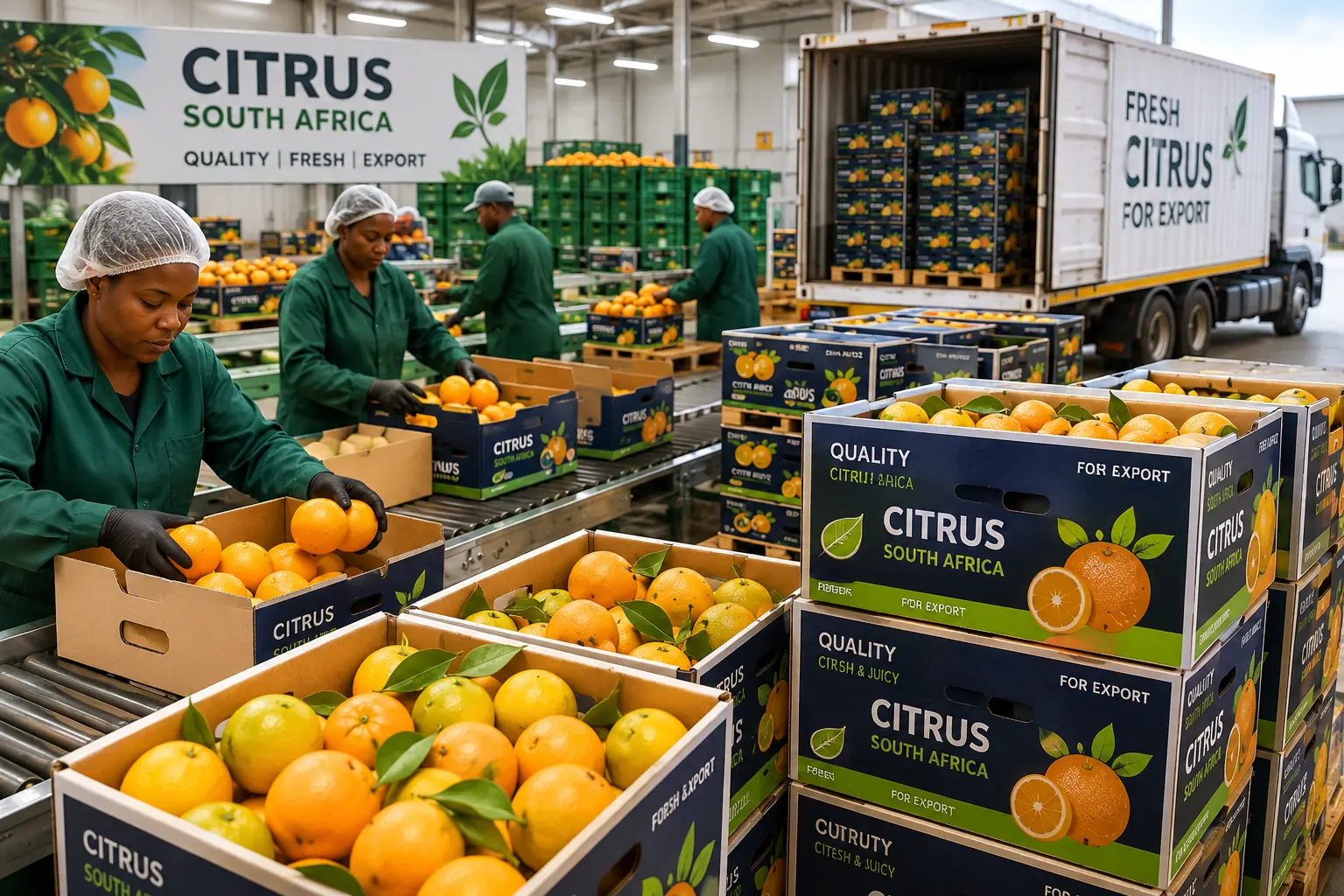
Post-harvest treatment at registered packhouses includes washing, fungicide application (imazalil, thiabendazole, and other approved treatments to prevent post-harvest decay), waxing, grading, and cold storage before loading into refrigerated shipping containers. The cold chain must be maintained from packhouse pre-cooling through to destination port.
Accessing export markets requires GLOBALG.A.P. (or equivalent) certification, registration with CRI's export monitoring programme, compliance with the importing country's MRL (Maximum Residue Level) requirements for pesticides, and PPECB inspection and certification of each export consignment.
🍊 Key Success Factors for SA Citrus Farming
- Match variety selection to your region and target market, not all varieties suit all growing areas.
- Source nursery trees only from CRI-registered, certified clean-plant nurseries, never plant material of unknown origin.
- Invest in soil drainage and never plant citrus in poorly drained or waterlogged sites.
- Know the HLB symptoms and monitor vigilantly, early detection is South Africa's best defence against this devastating disease.
- Obtain GLOBALG.A.P. certification early if export access is part of your business model, it opens the most valuable market doors.
⚠️ Disclaimer
This guide is for general educational purposes. Citrus production requirements, pest and disease risks, and export market regulations change regularly. Always consult CRI (Citrus Research International), a registered horticulturist, and the PPECB for current technical and regulatory guidance before making investment decisions.