Groundnut Farming in South Africa, A Drought-Tolerant Cash Crop with Multiple Markets
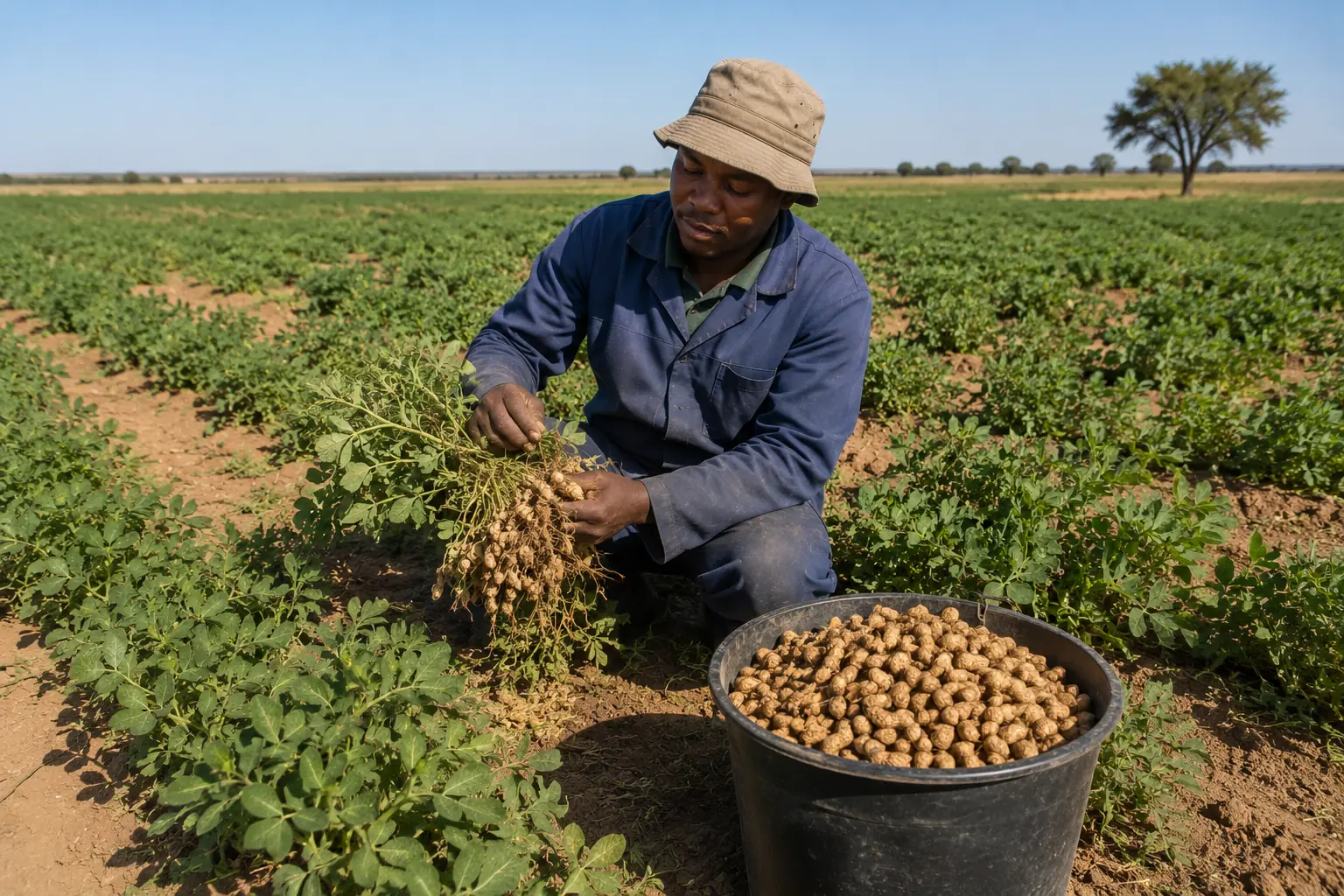
Groundnuts (Arachis hypogaea), known globally as peanuts, are among South Africa's most important oilseed crops and a major smallholder staple across the Northern Cape, Limpopo, the North West, and the Free State. South Africa produces between 50,000 and 80,000 tonnes of groundnuts per year, making it one of the continent's leading producers. The crop is valued both as a high-protein human food (roasted nuts, peanut butter, confectionery ingredients) and as a high-oil-content raw material for the edible oil and animal feed industries.
What makes groundnuts particularly attractive to South African farmers is their exceptional drought tolerance compared to other high-value crops. They thrive in the semi-arid conditions of the Northern Cape and the sandy, lower-rainfall areas of Limpopo and the North West, regions where many other cash crops struggle without irrigation. As a legume, groundnuts also fix atmospheric nitrogen through their root nodules, improving soil fertility for subsequent crops and reducing fertiliser costs. A well-managed groundnut season leaves behind 50–100kg of nitrogen per hectare in the soil, making them an excellent rotation partner for maize, sorghum, and sunflower.
For South African smallholder farmers, groundnuts are particularly meaningful because they serve both as a cash crop and a food security crop, the same plant that earns income at the market also provides nutritious food for the household, with protein content around 25–28% of dry weight and oil content of 45–55%.
🥜 Key numbers: A well-managed dryland groundnut crop in the Northern Cape or Limpopo can yield 1.5–3 tonnes per hectare of dry unshelled nuts. Under irrigation, yields of 3–5 tonnes/ha are achievable. Farmgate prices for confectionery-grade groundnuts range from R8,000 to R14,000 per tonne, giving gross revenues of R12,000–R70,000 per hectare depending on yield and market grade.
Groundnut Varieties for South African Conditions
South African groundnut varieties are classified by their growth habit into two main types: runner (spreading plants, large areas, suited to mechanical harvesting) and erect/bunch (upright growth, easier to harvest by hand, preferred by smallholders). The leading varieties released by ARC (Agricultural Research Council) Grain Crops and used commercially in SA are:
| Variety | Type | Growing Days | Yield Potential | Best Province | Key Trait |
|---|---|---|---|---|---|
| Sellie | Runner | 130–140 days | 2.5–4 t/ha | Northern Cape, Limpopo | High yield; widely used for confectionery |
| Akwa | Runner | 125–135 days | 2–3.5 t/ha | Northern Cape | Drought tolerant; large pod size |
| Anel | Runner | 125–135 days | 2–3.5 t/ha | Limpopo, North West | Good disease resistance; suitable for lighter soils |
| Harts | Runner | 135–145 days | 2.5–4 t/ha | Northern Cape (irrigated) | Large kernel; premium confectionery grade |
| Natal Common | Bunch (erect) | 110–120 days | 1–2 t/ha | KZN, Limpopo smallholders | Short season; suited to smallholder hand harvesting |
| Kwarts | Runner | 130–140 days | 2–3 t/ha | Limpopo, North West | Consistent performer; disease tolerant |
All the recommended commercial varieties above are available as certified seed from registered South African seed suppliers. Using certified seed is strongly advised for commercial production, it ensures varietal purity, known performance, freedom from seed-borne disease, and correct germination rates. Always treat seed with a registered fungicide and rhizobium inoculant specific to groundnuts (Bradyrhizobium spp.) before planting to ensure effective nitrogen fixation.
Climate and Soil Requirements
🌡️ Climate
Groundnuts are a warm-season crop requiring a frost-free growing period of 120–150 days and temperatures between 25°C and 35°C for optimal growth and pod fill. They are among the most drought-tolerant mainstream crops in South Africa (adapted to annual rainfall as low as 400mm) but they are highly sensitive to waterlogging. Even 48 hours of standing water during pegging or pod fill causes significant crop loss. The crop is also sensitive to cool temperatures during flowering, temperatures below 18°C at night during the reproductive phase cause poor pegging and dramatically reduced yield.
Soil
Groundnuts have a unique soil requirement that distinguishes them from most other crops: because the fertilised flowers (pegs) grow downward into the soil to form pods underground, the soil around the plant must be loose, friable, and well-drained to allow peg penetration and pod development. Sandy loam or loam soils with good structure and a pH of 5.8–6.5 are ideal. Heavy clay soils or compacted soils prevent peg entry and pod expansion, resulting in very poor yields even with good above-ground plant growth. In the Northern Cape, the naturally sandy, well-structured soils of the Kalahari and Hartswater areas are exceptionally well-suited to groundnut production. A soil calcium (Ca) level of at least 500mg/kg in the top 15cm is critical for pod quality, calcium deficiency causes "pops" (empty pods) and "concealed damage" in the kernel.
Step-by-Step Groundnut Production Guide
Land Preparation
Deep plough or rip to 300–400mm before planting to break up any compaction layer. This is critical for groundnuts, peg penetration is physically impossible in compacted soil. Follow with disc harrowing to create a fine, level seedbed. Avoid over-cultivation of sandy soils as this can cause crusting after rain. Incorporate lime (if pH is below 5.5) and gypsum (calcium sulphate at 200–500kg/ha) at land preparation. Gypsum provides calcium directly to the developing pods and is among the most important inputs in groundnut production, under-application of calcium is the primary cause of pop pods in South Africa.
Planting
Plant when soil temperature at 10cm depth is consistently above 20°C, in most South African production regions this means planting from mid-October to mid-November. Plant in-shell seed (whole pods) or shelled seed at 3–5cm depth. Row spacing is typically 90cm for runner varieties (to allow cultivator access) and 45–60cm for bunch varieties. Within-row spacing is 7–15cm, giving populations of 80,000–150,000 plants per hectare. Shell and treat seed gently, groundnut seed is easily damaged and splits, which dramatically reduces germination. Apply rhizobium inoculant immediately before planting and keep treated seed out of direct sunlight.
Fertilisation
As a nitrogen-fixing legume, groundnuts require minimal nitrogen fertiliser, provided effective rhizobium inoculation is achieved at planting. A typical fertiliser programme for South African groundnuts is: 200–250kg/ha of superphosphate (or equivalent P source) as a base application, plus gypsum at 200–500kg/ha applied at first flowering (when pegs begin to enter the soil). Potassium requirements are moderate, apply 80–100kg K₂O/ha on soils testing below 80mg/kg K. Do not apply excess nitrogen fertiliser, this stimulates leafy top growth at the expense of pod fill and reduces nodulation efficiency.
Weed Management
Weeds are among the most yield-limiting factors in South African groundnut production, particularly in the first 30–45 days before the canopy closes. Pre-emergence herbicides (metolachlor, pendimethalin) applied immediately after planting provide the foundation of a weed management programme. Inter-row cultivation at 3–4 weeks after emergence (before pegging begins) is effective for controlling emerged weeds without disturbing the developing pegs. Never cultivate after pegging starts, this damages the pegs and dramatically reduces yield. Hand weeding within rows is necessary in smallholder production where herbicides are not used.
Pest and Disease Management
Key pests include groundnut aphid (Aphis craccivora), which transmits Groundnut Rosette Virus (GRV), the most destructive virus disease of groundnuts in sub-Saharan Africa causing complete crop failure in severe outbreaks. Early planting (before aphid populations peak) and using virus-tolerant varieties are the most effective controls. White grubs (beetle larvae) are a serious soil pest in sandy soils, feeding on developing pods. Registered insecticide seed treatments provide partial protection. Early leaf spot (Cercospora arachidicola) and late leaf spot (Phaeoisariopsis personata) reduce leaf area and photosynthesis, apply registered fungicides at 14–21 day intervals during the mid-to-late season when humid conditions favour disease.
Harvesting
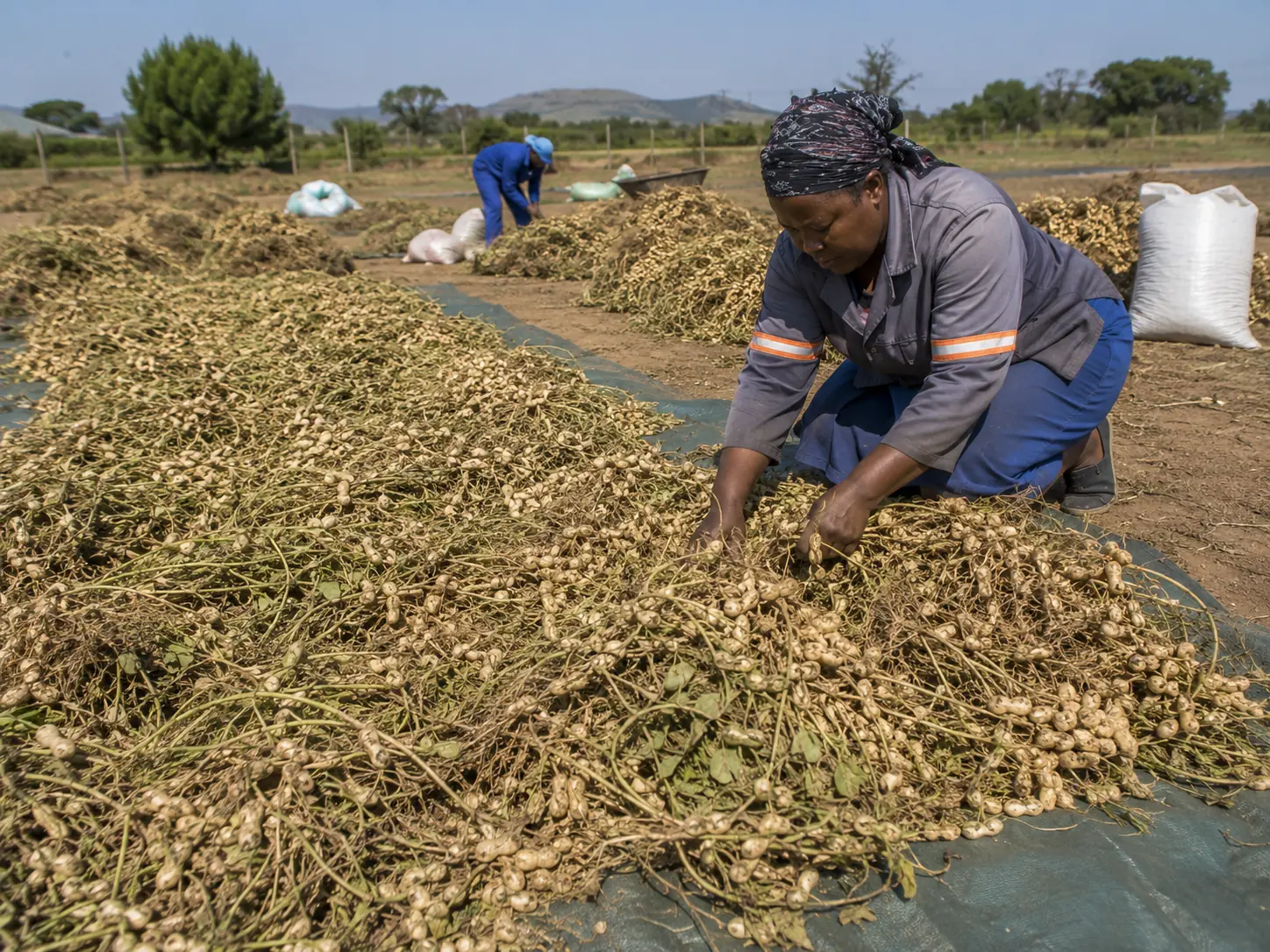
Groundnuts are ready to harvest when 70–75% of pods show an established inner pod wall colouration (check by opening sample pods, mature pods have darkened inner walls and tightly fitting kernels). Premature harvesting reduces yield and quality; late harvesting causes pod shattering and increases Aflatoxin risk. Lift plants using an inverter/digger or, on small farms, by hand loosening with a fork. Leave plants inverted in windrows in the field to field-dry for 5–10 days (shaking occasionally to promote airflow) before threshing. Avoid harvesting in wet conditions, soil clinging to wet pods greatly increases drying costs and Aflatoxin risk.
Drying, Curing and Storage
This is the most critical step for groundnut quality and safety. After threshing, dry unshelled groundnuts to a moisture content of 8–9% or below before storage. At moisture levels above 10%, Aspergillus flavus and A. parasiticus fungi proliferate and produce Aflatoxin, a potent mycotoxin that causes cancer and is a major food safety concern. South Africa's groundnut export market and most processing contracts have strict Aflatoxin Maximum Limits (typically below 10 ppb total Aflatoxin for confectionery grade). Dry in a single layer in a well-ventilated shade structure or use forced-air drying bins. Store in cool, dry conditions away from moisture ingress. Test moisture content with a calibrated grain moisture meter before bagging for sale.
⚠️ Aflatoxin, the most important food safety issue in SA groundnut production: Aflatoxin contamination from Aspergillus fungi is the single biggest quality and marketability risk for South African groundnut farmers. Contamination can occur in the field (especially during drought stress at pod fill), during harvesting in wet conditions, or in storage at high moisture. Strict drying to below 9% moisture, correct storage, and regular testing are non-negotiable for commercial production. Product exceeding Aflatoxin limits cannot be sold for human food and is rejected by processors.
Groundnut Planting Calendar for South Africa
| Region | Jan | Feb | Mar | Apr | May | Jun | Jul | Aug | Sep | Oct | Nov | Dec |
|---|---|---|---|---|---|---|---|---|---|---|---|---|
| Northern Cape (Hartswater, Prieska) | — | — | — | — | — | — | — | — | — | Plant | Grow | Grow |
| Northern Cape (cont.), Harvest | — | Harvest | Harvest | — | — | — | — | — | — | — | — | — |
| Limpopo (Mokopane, Bela-Bela) | Grow | Harvest | — | — | — | — | — | — | — | Plant | Grow | Grow |
| North West Province | Grow | Harvest | — | — | — | — | — | — | — | — | Plant | Grow |
| KZN Midlands (short-season) | Harvest | — | — | — | — | — | — | — | — | Plant | Grow | Grow |
Markets and Value Chains for South African Groundnuts
🏭 Confectionery Grade, Highest Value Market
Groundnuts meeting confectionery grade specifications (correct size, low Aflatoxin, low foreign matter, good colour) command the highest prices in South Africa. Major buyers include Tiger Brands (Stay Fresh peanut butter), AVI (Lucky Star), Willards, and numerous smaller food manufacturers. Prices for prime confectionery grade typically range from R10,000–R14,000 per tonne. Most commercial growers sell through registered groundnut merchants or agents who aggregate product and supply to processors. The SA Groundnut Forum and SAMGA (South African Maize, Grain and Groundnut Association) can assist with market contacts.
🫙 Peanut Butter and Oil Processing
South Africa has a well-established peanut butter processing industry, with Tiger Brands and several smaller producers manufacturing both commercial and premium-brand products. Groundnut oil processing is smaller in scale but growing, cold-pressed groundnut oil commands premium prices from health food retailers. Smallholder farmers can access this market by supplying to co-operative processing facilities, several of which operate in Limpopo and the Northern Cape with support from agri-processing grant programmes. See our farming grants guide for agri-processing support funding available through DALRRD and the DTIC.
Informal and Local Markets
Boiled groundnuts, roasted peanuts (sold fresh-roasted at roadside stalls), and raw nuts sold loose at informal markets represent a significant volume of South Africa's groundnut consumption, particularly in rural areas of Limpopo, Mpumalanga, and the Eastern Cape. These informal channels pay lower prices than processors but have zero certification requirements and provide immediate cash flow. Many smallholder farmers sell a portion of their crop through informal channels while storing the remainder for sale when processor prices improve.
Animal Feed
Groundnut haulms (the dried plant material left after removing pods) are an exceptionally nutritious livestock feed (with crude protein levels of 12–16% and high digestibility) and represent a significant secondary revenue stream for groundnut farmers. Haulms can be fed directly to cattle, sheep, and goats or baled for sale. The groundnut cake (expeller cake from oil pressing) is a premium protein supplement used in dairy and poultry rations and commands prices of R4,000–R6,000 per tonne. See our cattle farming and dairy farming guides for information on incorporating groundnut by-products into livestock rations.