South Africa's Game Farming Industry, Africa's Biggest Wildlife Economy
South Africa has the most developed commercial game farming industry on the African continent, and arguably in the world. With over 10,000 registered game farms covering more than 17 million hectares of privately owned land, the country's wildlife ranching sector generates billions of rands annually through venison, live game sales, ecotourism, trophy hunting, and wildlife photography.
The industry has grown explosively over the past three decades. Farmers across the Limpopo bushveld, Karoo, KwaZulu-Natal midlands, North West province, and Northern Cape have converted marginal cattle and sheep land into productive game ranches, often achieving significantly higher returns per hectare than conventional livestock, while improving the ecological integrity of the land at the same time.
Game farming appeals to a wide range of operators: from large-scale wildlife ranches running thousands of hectares of mixed species to small-scale emerging farmers setting up 50-hectare blesbok or springbok operations for the venison market. Meat production, live animal auctions, photographic tourism, and mixed operations are all established game-farming models in South Africa, supported by a developed legal and commercial framework.
🦌 Key fact: South Africa's game industry contributes an estimated R16–R20 billion to the national economy annually when all revenue streams are combined, venison, live sales, hunting, tourism, and value-added products. It is one of the few agricultural sectors that has grown consistently year-on-year for over 25 years.
Choosing the Right Game Species for Your Farm
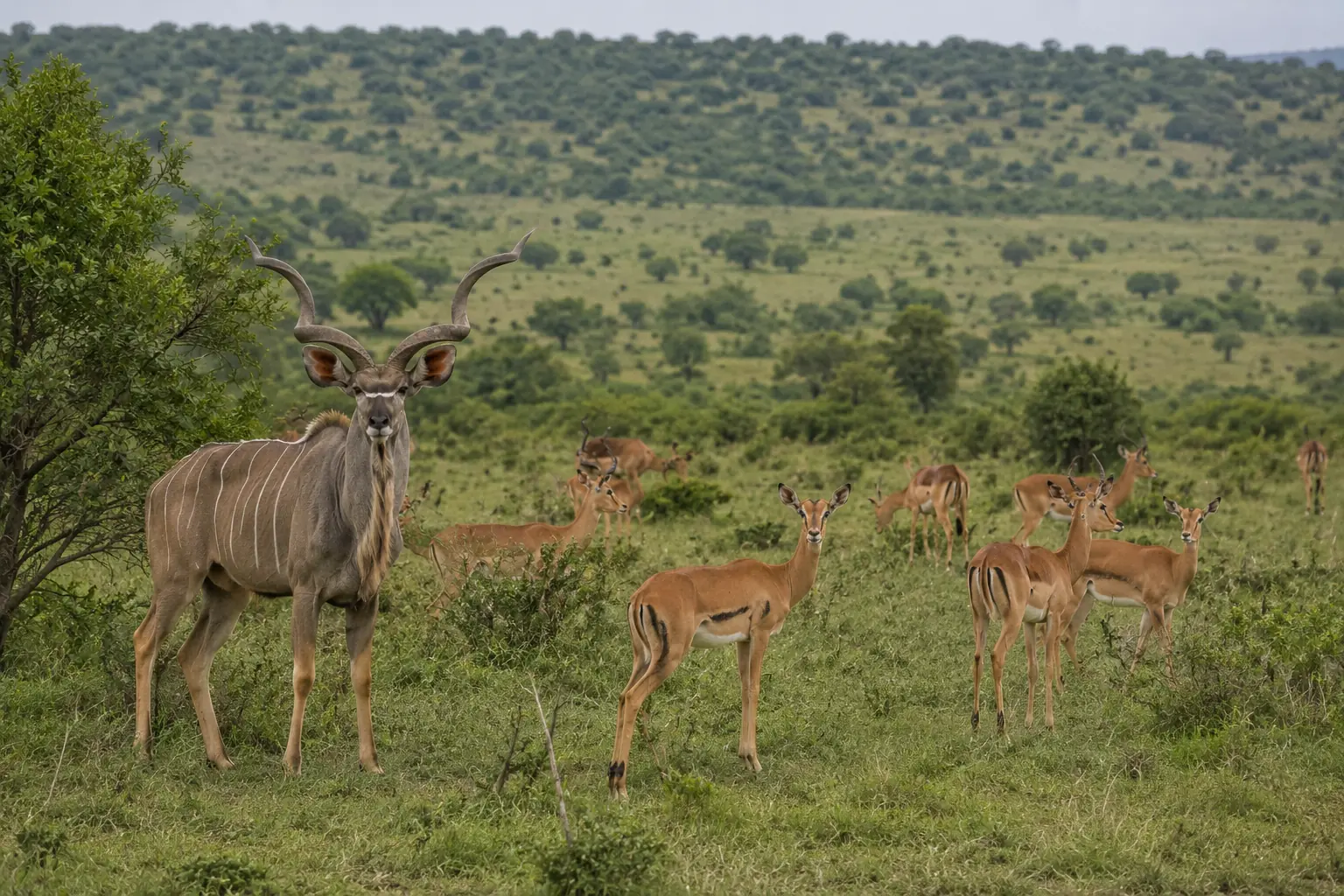
Species selection is the single most important strategic decision in game farming. The right species for your farm depends on your biome, rainfall, vegetation type, farm size, and target market. South Africa has four main farmable game species categories:
| Species | Best Biome | Min Farm Size | Primary Revenue | Stocking Rate |
|---|---|---|---|---|
| Impala | Bushveld (Limpopo, Mpumalanga, NW) | 50 ha | Venison, live sales, trophy | 1 per 3–5 ha |
| Blesbok | Highveld grassland (Free State, GP) | 30 ha | Venison, live sales | 1 per 2–4 ha |
| Springbok | Karoo, Northern Cape | 200 ha | Venison, live sales, trophy | 1 per 5–15 ha |
| Kudu | Bushveld, thicket | 100 ha | Trophy, live sales, venison | 1 per 10–20 ha |
| Wildebeest (Blue) | Grassland, mixed bushveld | 100 ha | Venison, live sales, trophy | 1 per 5–10 ha |
| Zebra | Mixed bushveld, grassland | 200 ha | Trophy, live sales, tourism | 1 per 8–15 ha |
| Sable Antelope | Bushveld (Limpopo, Mpumalanga) | 500 ha | Live sales (very high value), trophy | 1 per 25–40 ha |
| Buffalo | Bushveld, thicket | 1,000 ha | Live sales (disease-free premium), trophy | 1 per 20–30 ha |
| Eland | Mixed veld, grassland | 200 ha | Venison (highest yield), live sales | 1 per 10–20 ha |
| Warthog | Bushveld, mixed | 50 ha | Venison, trophy, tourism | 1 per 5–8 ha |
For first-time game farmers, impala (in bushveld biomes) and blesbok (on highveld and grassland farms) are sensible starting species. Both are hardy, prolific breeders, easy to manage, have well-established venison markets, and are in consistent demand at live game auctions. They are also relatively affordable to purchase as starter animals, impala herds can be bought for R1,500–R4,000 per animal depending on numbers and location, and blesbok for R1,200–R2,500 each.
The Four Revenue Streams of a South African Game Farm
Successful game farms in South Africa rarely rely on a single income stream. The profitable in some production systems operations stack multiple revenue sources across the same land and game population:
Venison Production
Selling game meat to abattoirs, butcheries, restaurants and direct-to-consumer. South African venison demand has grown steadily as consumers seek free-range, antibiotic-free protein.
R35–R65/kg carcassLive Game Auctions
Selling surplus animals, especially breeding females and trophy-quality males, at live game auctions. Rare colour variants (white impala, black impala, golden wildebeest) command extraordinary premiums.
R1,500–R500,000+ per animalEcotourism & Photographic Safaris
Hosting paying guests for game drives, bush walks, overnight stays and photography. South Africa's inbound and domestic tourism market makes this among South Africa's most scalable income streams on a game ranch.
R1,500–R8,000/person/nightTrophy Hunting
Hosting licensed trophy hunters, primarily from Europe, North America and Asia. Trophy fees vary enormously by species, impala trophies start at R3,000 while buffalo can reach R250,000 or more.
R3,000–R250,000+ per animalPhotographic Tourism
Day visitors, wildlife photographers, school groups and corporate team-building events. Accessible for smaller farms without overnight facilities. Lower yield but lower investment than full ecotourism lodges.
R250–R1,200/person/dayValue-Added Products
Biltong, droëwors, canned game meat, leather goods, and cosmetic products derived from game. Growing direct-to-consumer market through farmers markets and online retail channels.
R180–R450/kg (biltong)
Game Farm Infrastructure, Fencing, Water and Camps
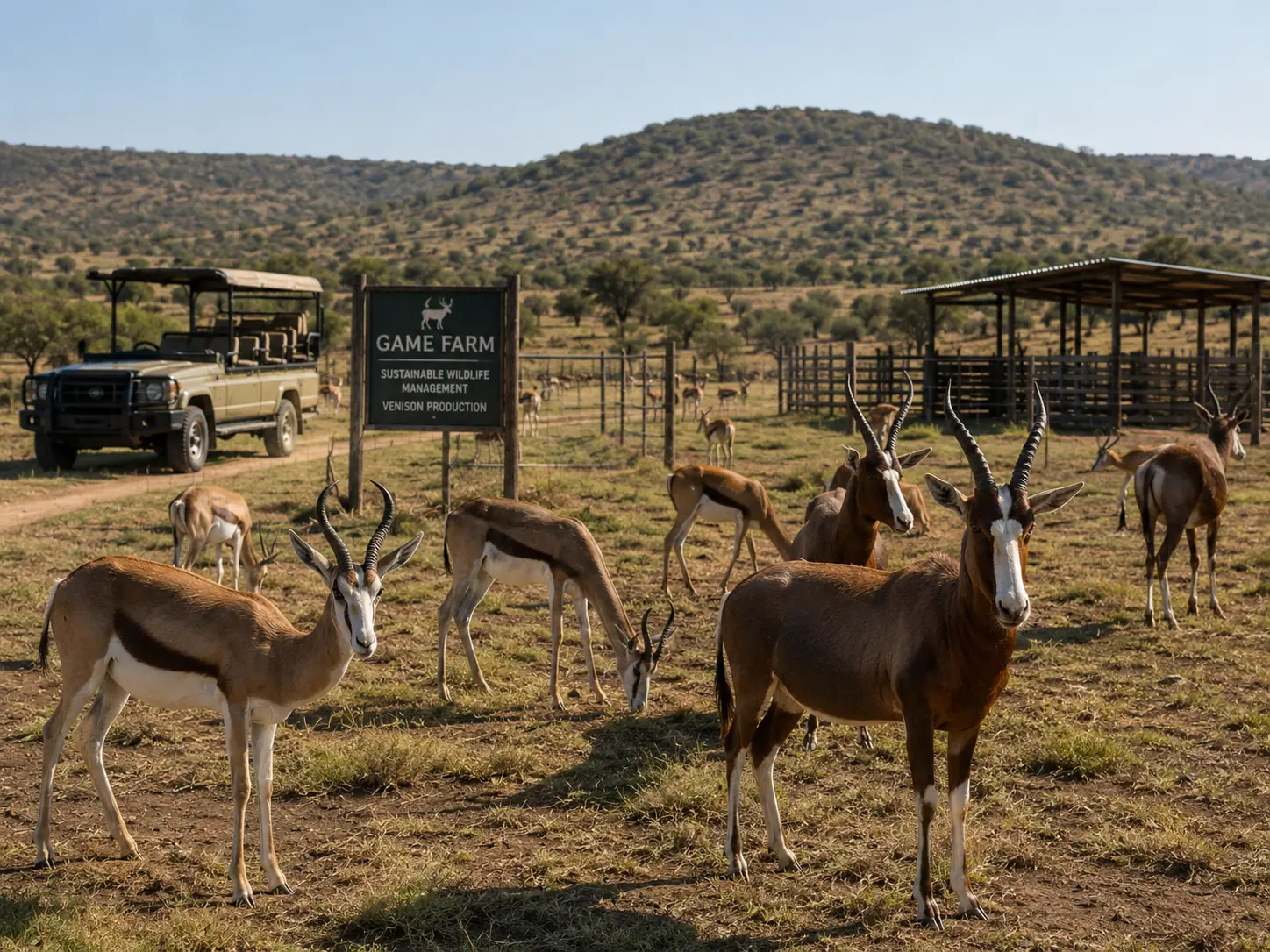
Infrastructure is the largest capital outlay in game farming, and fencing is the biggest single cost for most new game farms. Getting your fencing right from the start saves enormous expense in escaped animals, neighbour disputes, and poaching losses.
🔲 Game Fencing Standards in South Africa
The minimum legal standard for game fencing in South Africa is governed by provincial nature conservation ordinances and varies slightly by province, but the following are widely accepted industry standards:
- Plains game perimeter fence: Minimum 1.8m high; 12-strand high-tensile wire with droppers at 200mm spacing; concrete or steel corner posts at 50–60m intervals
- Buffalo/dangerous game fence: Minimum 2.4m high reinforced electrified perimeter, required by law for Big Five species and buffalo; significantly more expensive per kilometre
- Internal camp fencing: Lighter construction (1.2–1.5m) sufficient for separating camps within the perimeter fence; used for controlled grazing rotation and breeding management
Game fencing costs in South Africa currently range from R45,000 to R90,000 per kilometre depending on terrain, spec, and contractor. For a 100-hectare square farm, perimeter fencing alone can cost R500,000–R900,000. Many farmers reduce this cost by using existing cattle fencing as a base and upgrading where needed. Grants for game fencing are available through provincial conservation authorities in some provinces, check with your provincial DFFE (Department of Forestry, Fisheries and Environment) office.
💧 Water Infrastructure
Game, unlike managed livestock, distribute themselves across the landscape according to vegetation and water availability. Installing adequate water points (drinking troughs, earthen dams, or natural waterholes) is essential to prevent overgrazing around permanent water sources. The general rule of thumb is one water point per 50–100 hectares, depending on species and climate. In the arid Northern Cape and Karoo, water infrastructure requirements are substantially higher.
Legal Requirements and Permits for Game Farming in South Africa
Game farming in South Africa is regulated under the national Biodiversity Act (Act 10 of 2004), the National Environmental Management: Biodiversity Act (NEMBA), and provincial nature conservation ordinances. Key legal requirements include:
- Registration as a game farm: Required in most provinces before you can legally keep, sell, or hunt game. Apply through your provincial DFFE office or CapeNature (Western Cape), Ezemvelo KZN Wildlife (KZN), LEDET (Limpopo), or MTPA (Mpumalanga).
- Game capture and translocation permits: Required every time game animals are moved between properties or provinces. Issued by provincial authorities. Allow 4–8 weeks lead time for permit processing.
- Hunting permits and professional hunter (PH) licensing: All commercial hunting on a game farm must be conducted through a PHASA (Professional Hunters Association of South Africa) registered professional hunter. Trophy hunting requires separate provincial permits per species per season.
- CITES permits: Required for the export of hunting trophies or live animals of certain listed species to international buyers. Managed by DFFE in South Africa.
- Abattoir registration: Venison sold for human consumption must be slaughtered at a registered game meat abattoir. On-farm slaughter for personal consumption only is permitted under specific conditions.
⚠️ Dangerous game regulations: Keeping Big Five species (lion, leopard, elephant, rhino, buffalo) on a private farm triggers significantly more stringent security, fencing, and management requirements. Buffalo kept for game purposes must be certified disease-free (specifically for Foot and Mouth Disease, bovine brucellosis, and bovine tuberculosis) by a state veterinarian before they can be legally traded. This certification dramatically affects the value and marketability of buffalo herds.
Profitability and Starting a Game Farm in South Africa
Game farming profitability depends heavily on species mix, land quality, revenue diversification, and management skill. As a general benchmark, well-managed mixed-species game farms in prime biomes (Limpopo bushveld, for example) can generate R800–R2,500 per hectare per year across all revenue streams combined, substantially more than equivalent land used for cattle ranching in the same biome.
The key to profitability is stocking discipline, never exceeding your land's carrying capacity. Overstocking is the number-one management mistake on South African game farms and leads to vegetation degradation, poor animal condition, disease, and collapsed breeding performance. Work with a qualified wildlife biologist or game management consultant to set and monitor stocking rates on your specific land.
For emerging game farmers with limited capital, the most financially accessible entry point is a venison production operation using plains game species (blesbok, impala, springbok) on small to medium-sized land. This model has relatively low infrastructure requirements, established markets, and does not require the large capital outlay of a full ecotourism or trophy hunting operation. From here, additional revenue streams (live sales, day tourism, guided hunts) can be added incrementally as the operation grows.