Your cart

Loading…

Register 🏠 Home 📰 Articles 🎬 Videos 📚 Guides 🚜 Farm Market 🔥 Hot Products 💚 Donate
👤 Dashboard
🌾 Farmer Login 🌾 Farmer Register 🤝 Partner Login 🤝 Partner Register 🔗 Affiliate Marketer Register 🔗 Affiliate Marketer Login 🚛 Transporter Register 🚛 Transporter Login
🌾 Browse Farming Topics
🌽 Crops
All Field Crops Maize Sorghum Sunflower Soybeans Canola Sugarcane Cotton Groundnuts Tobacco
🥬 Vegetables
All Vegetables Tomatoes Potatoes Onions Cabbage Spinach Butternut Carrots Garlic Peppers & Chilli Green Beans
🍊 Fruit
All Fruit Farming Citrus Avocados Mangoes Table Grapes Viticulture Bananas Macadamia Pecans Blueberries Figs
🐄 Livestock
All Livestock Cattle Dairy Sheep Goats Pigs Chickens Ostriches Game Farming Rabbits Horses
🌿 Speciality
Bee Keeping Mushrooms Snails Earthworms Crickets Lavender Hemp Aquaculture Tilapia Catfish Oysters Aquaponics Hydroponics Microgreens Spirulina Container Farming Olives Rooibos & Tea Hops Aloe Community Gardens Floriculture
📚 Resources
Seeds & Planting Soil & Fertilizers Composting Cover Crops Pest Control Irrigation Systems Land Preparation Equipment Crop Rotation Organic Farming Permaculture No-Till Farming Farming Grants Agri Markets Export Farming
🛒 Store
Farm Store Farm Store Sponsor a Farm Donate
🤝 Get Involved
Partners & Sponsors Sell Your Produce (Farmers) Grower Affiliate Program Deliver Farm Produce (Transporters)
ℹ️ About
About Us Contact Us Disclaimer
🐟 Tilapia grows to harvest weight in 6–9 months
🌊 SA aquaculture market valued at R1.2 billion
🐠 Trout farming hotspot: Mpumalanga & Western Cape
💧 Recirculating Aquaculture Systems (RAS), the future of SA fish farming
🦐 Shrimp farming in KZN coastal zones, new guide available
🐟 Fish & Seafood Farming for SA

Aquaculture in
South Africa

From pond-based tilapia to high-tech recirculating trout systems, practical guides for SA fish farmers navigating our water constraints and growing protein demand.

7
Free Guides
R1.2B
SA Market
6–9
Months to Harvest
100%
Free to Read

Aquaculture in South Africa

Aquaculture in South Africa ranges from small freshwater ponds to intensive recirculating systems and marine farming. The right system depends on reliable water, electricity, temperature, feed supply, skills and a buyer. Those inputs should be assessed before fish are stocked, because production can be expensive to restart after a water-quality or market failure.

Tilapia is the most accessible entry point for SA smallholders, thriving in warm inland provinces like Limpopo, Mpumalanga, and North West. Rainbow trout dominates the cool upland streams of Mpumalanga, the Cape Winelands, and KZN Midlands. For coastal farmers in KZN and the Western Cape, oysters, mussels, and shrimp offer premium returns.

The practical issues for a South African producer are straightforward: choose a species that suits the site's temperatures, test the water, design for oxygen and waste removal, plan for power failures, and confirm the route to market. Regulatory requirements also depend on the species, production system and location, so they should be checked with the relevant authorities before construction.

Land requirements can be modest compared with extensive livestock, but pond size alone does not determine output. Stocking density, dissolved oxygen, water temperature, feed conversion, mortality and harvest size all affect the result. Before building a pond, calculate the water available during the driest part of the year and work backwards from the number of fish you expect to sell.

Fish farmers still have to compete with imported product, wholesalers and established local suppliers. A small producer usually has a better chance by finding a nearby market first, such as restaurants, informal traders, farm shops or a processor, and then choosing a production volume that the buyer can actually absorb. Cold storage and hygienic handling become important as soon as fish leave the farm.

Water licensing and environmental compliance are the most common hurdles for new SA aquaculture farmers, but they are navigable with proper preparation. Our regulatory guides walk you through the DWS General Authorisation thresholds, the DAFF Aquaculture Development and Enhancement Programme (ADEP), and the grant and loan facilities available to qualifying emerging fish farmers through government support programmes.

Aquaculture Guides for SA Farmers

Practical, step-by-step articles covering every species and system suited to South African conditions.

🐟
Beginner
Starting a Tilapia Farm in South Africa: The Guide
Pond design, stocking densities, feed management, water quality parameters, and harvesting, everything a first-time tilapia farmer needs to know.
Read Guide →
🌊
Systems
RAS vs. Pond vs. Cage Farming: Which System Suits Your Farm?
Compare costs, water usage, stocking capacity, and profitability across the three main aquaculture systems available to SA farmers.
Read Guide →
🐠
Species
Rainbow Trout Farming in Mpumalanga & the Cape Winelands
Cold-water trout farming requires specific infrastructure and water temperatures. This guide walks you through site selection, raceway design, feeding, and harvest for SA trout farmers.
Read Guide →
🦐
Coastal
Shrimp & Prawn Farming in Coastal KZN and Western Cape
Marine shrimp farming is emerging along SA's coast. Learn about species selection, nursery systems, biosecurity, and accessing export markets.
Read Guide →
💧
Water
Water Quality Management for SA Fish Farms
Dissolved oxygen, pH, ammonia, nitrite, and temperature, understanding and managing water chemistry is the foundation of profitable aquaculture.
Read Guide →
💰
Business
Selling Fresh Fish in South Africa: Markets, Pricing & Permits
Farm-gate sales, local restaurants, spaza shops, and formal retailers, how to price, package, and legally sell your SA-farmed fish.
Read Guide →
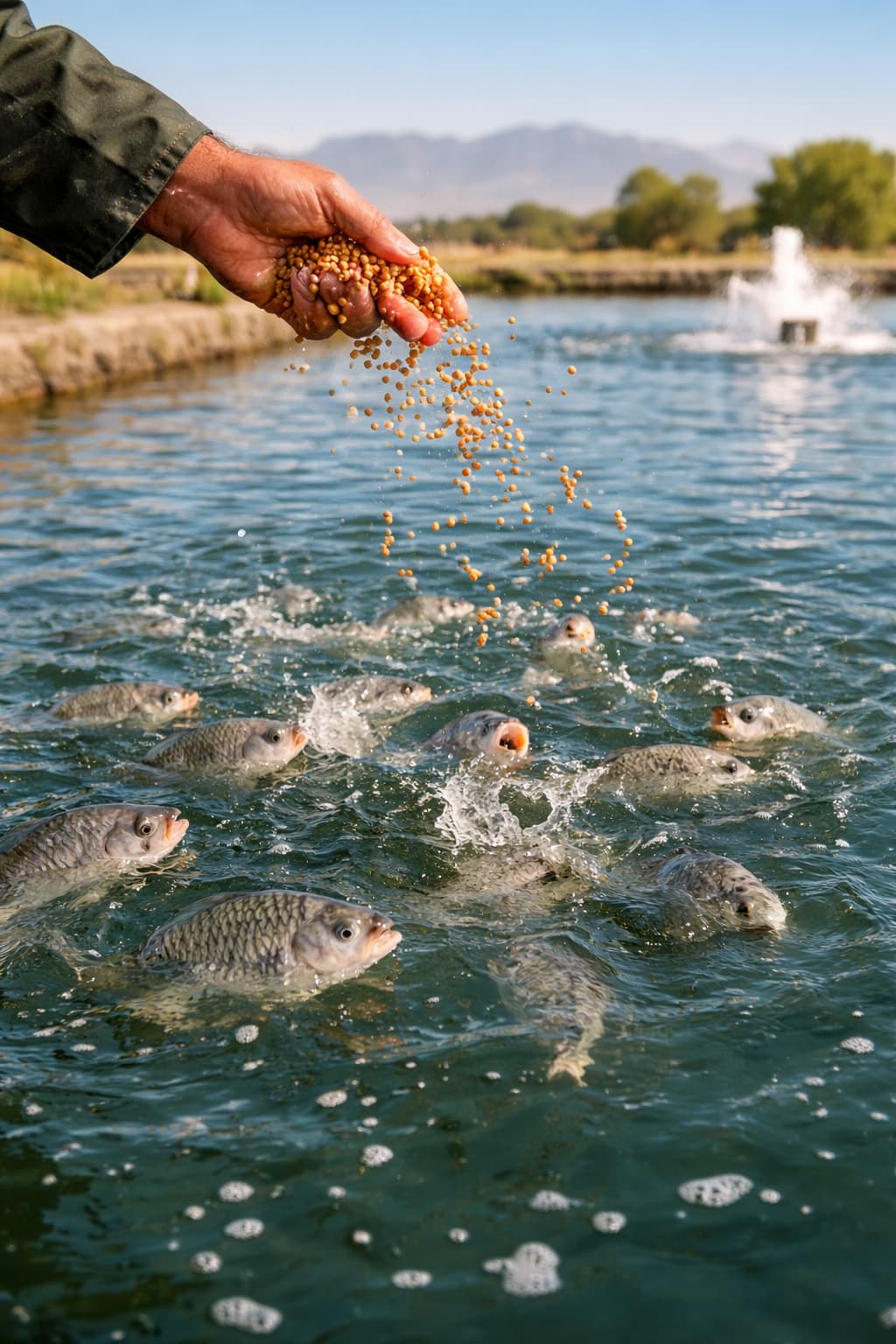
Tilapia aquaculture pond on a South African fish farm, fish feeding at the surface
🐟 Tilapia pond on a South African aquaculture farm, fish rising to surface feed. A 500m² pond can yield 1 500kg of tilapia per harvest cycle.

6 Steps to Your First Fish Harvest

Follow these steps and a first harvest requires planning around the species, water temperature, system design and market.

01
Choose Your Species
Tilapia for warm inland areas; trout for cool uplands; catfish for hardiness. Match species to your local water temperature and climate zone.
02
Design Your System
Earth pond (lowest cost), lined tank, or RAS (highest tech). Budget R15 000–R80 000 for a starter pond system with aeration.
03
Get Your Water Right
Test your source water for pH (6.5–8.5 ideal), oxygen levels, and chemical contamination before introducing any fingerlings.
04
Source Quality Fingerlings
Buy disease-free fingerlings from a DAFF-registered SA hatchery. Poor-quality stock is the most common cause of failed first harvests.
05
Feed & Monitor Daily
Feed 2–4% of fish body weight per day. Check water temperature, oxygen, and ammonia daily. Keep a logbook from day one.
06
Harvest & Sell
Tilapia reaches 350–500g in 6–9 months. Harvest in the cool of early morning, ice immediately, and deliver to buyers within hours for premium prices.

🐟 SA Aquaculture Quick reference

🌡️
Optimal Tilapia Temperature
Tilapia grows fastest at 25–30°C. Below 18°C growth slows dramatically, in highveld winters, insulate ponds or use solar heating.
💨
Aeration Is Non-Negotiable
A paddlewheel aerator or air stone is the single best investment. Low dissolved oxygen is the leading cause of overnight fish kills on SA farms.
🌿
Integrate with Your Crops
Aquaponics, combining fish ponds with vegetable beds, lets you grow spinach, lettuce and herbs using nutrient-rich fish water. Ideal for small SA farms.
📋
Register with DAFF Early
All commercial aquaculture operations in SA require DAFF registration. Apply 3+ months before stocking to avoid costly delays.

Before building a fish system

Use these checks before you invest in tanks, ponds or fingerlings. They are a practical starting point; species, water-quality and regulatory decisions should still be matched to the farm and current local guidance.

Further reading and primary sources