Organic Farming in South Africa, A Growing Market with Real Premium Opportunities
Organic farming is among the most significant and rapidly growing trends in South African agriculture. While certified organic produce still represents a small percentage of total food sales in South Africa, the market is expanding rapidly, driven by a growing urban middle class that is increasingly health-conscious, a retail sector that has embraced organic and clean-label products, and an export market where South African organic produce can command substantial premiums in the EU, UK, and Middle Eastern markets.
For South African farmers, organic farming is not simply about switching from synthetic to natural inputs. It is a complete farming philosophy that prioritises soil health, biodiversity, ecosystem function, and long-term productivity over short-term yield maximisation. Done correctly, organic farming builds soil organic matter over time, reduces input costs in later years, improves water retention, and creates a farm that is more resilient to drought, disease, and climate variability.
However, transitioning to certified organic production requires careful planning, a thorough understanding of the certification process, knowledge of permitted and prohibited inputs, and access to appropriate market channels where organic premiums are actually paid. This guide breaks down all of these aspects comprehensively, from the biological principles of organic farming and the South African certification landscape, through to the practical methods of building soil fertility, managing pests without synthetic chemistry, and accessing South Africa's premium organic markets.
🌱 Market opportunity: Organic produce in South Africa sells at price premiums of 20–150% above conventional prices depending on product and market channel. Woolworths, Checkers Sixty60 premium ranges, independent health food retailers, farmers' markets, and organic box-scheme operators are the primary premium market channels for certified organic produce. The global organic food market is growing at 10–12% annually, a major opportunity for export-certified South African growers.
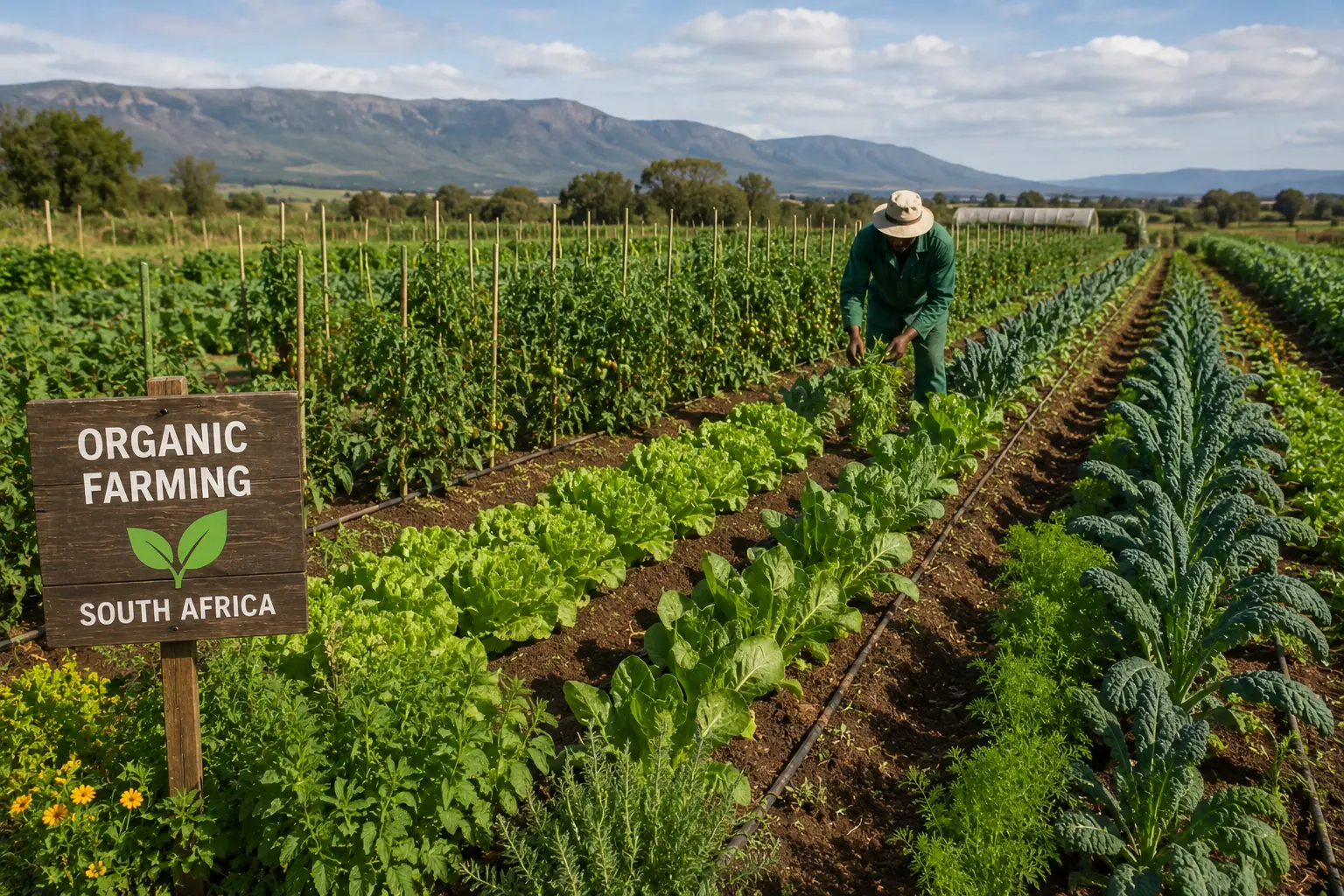
Organic Farming Certification in South Africa
To legally market produce as "organic" in South Africa (and particularly to access premium domestic retail channels and export markets) your farm must be certified by an accredited certification body. You cannot self-declare produce as organic for commercial sale without third-party certification. There are several certification bodies operating in South Africa, each offering different geographic coverage, recognised standards, and export acceptance:
South African Certification Bodies
- CANSA (Control Union South Africa) / Control Union Certifications: Consistently among the most widely recognised international certifiers operating in SA. Control Union certification is accepted in the EU (EU Organic Regulation), the UK (UK Organic), and the US (NOP). Essential for export-focused farmers. Based in South Africa with inspectors across all provinces.
- ECOCERT South Africa: A branch of the major international certifier ECOCERT, based in France. ECOCERT certification is accepted for EU, UK, and export markets. Particularly strong in the Western Cape fruit and wine sectors.
- BCS Öko-Garantie (South Africa): German-based certifier with significant presence in South Africa's deciduous fruit and export vegetable sector. Strong recognition in European markets, particularly Germany, the Netherlands, and Austria.
- Afrisco (African Farmers Certification Organisation): South Africa's only locally founded and operated organic certification body. Afrisco certification covers domestic South African organic standards and is widely recognised by local retailers and farmers' markets. Less expensive than international certifiers and particularly accessible for smallholder farmers. Afrisco also offers group certification, important for smallholder clusters.
- SGS South Africa: Part of the global SGS testing and certification network. Offers organic certification accepted in major export markets. Strong presence in the Eastern Cape and KwaZulu-Natal.
⚠️ Certification costs: Annual certification fees in South Africa typically range from R5,000–R25,000 per year depending on farm size, certifier, and number of farm visits required. International certifiers (Control Union, ECOCERT, BCS) are typically more expensive than Afrisco but essential if you plan to export to the EU or UK. Factor certification costs into your financial planning for the transition period, when you will not yet be able to sell at organic premiums.
The Organic Transition Period, What to Expect
The single most important concept for any farmer considering organic certification is the transition period. Certification bodies require a mandatory period, typically 24–36 months (two to three full growing seasons) from the date your farm stops using prohibited synthetic inputs, before your produce can be sold as certified organic. This is because:
- Residues of synthetic pesticides and herbicides need time to dissipate from the soil and plant tissues.
- The soil biology needs time to recover and rebuild the microbial communities suppressed by synthetic inputs.
- The certification body needs to verify through documented records and farm inspections that no prohibited inputs have been used.
During the transition period, you farm organically (without prohibited inputs) but cannot sell produce at organic premiums. Your produce is sold as "conventional" at conventional prices, while your input costs may actually be higher (because organic alternatives can cost more than synthetic inputs until you develop your own composting and biological systems). This is the most financially challenging phase of the organic transition, and careful planning, access to grants, and a phased transition approach (converting one field or enterprise at a time rather than the whole farm) significantly reduces financial risk.
Pre-Transition Assessment (6–12 months before starting)
Conduct a thorough farm audit: soil testing, pesticide residue testing on soil and water, mapping of all fields and their history of synthetic input use, review of input records, and identification of prohibited inputs currently in use. Contact your chosen certification body for a pre-inspection visit and initial compliance assessment. This gives you a clear picture of what changes are required before your transition clock starts. Review the soil health guide to understand your baseline soil condition.
Certification Application and Transition Start
Submit your formal certification application to your chosen certifier. The certifier will review your farm management plan, conduct a first farm inspection, and if satisfied, formally register the start of your transition period. From this date, no prohibited inputs may be used on your farm. Establish a rigorous record-keeping system, all inputs used, all applications (timing, rates, fields), purchase receipts, sales records, as this documentation is the backbone of your certification audit. Most certifiers now accept digital record-keeping systems.
Build Soil Fertility Systems During Transition
Use the transition period to develop your organic soil fertility infrastructure: build a compost facility, establish cover crop rotations, apply compost at scale to improve organic matter, and reduce reliance on purchased organic fertilisers over time. Plant green manure crops in off-season periods. Establish a crop rotation plan that systematically builds soil fertility across your entire farm. The investment in soil health during transition pays dividends in reduced input costs once you are certified.
Annual Inspections and Record Reviews
Your certification body will conduct at least one (sometimes two) unannounced or scheduled farm inspections per year during the transition period. Inspectors will review your records, inspect fields and storage areas, check input inventory against purchase records, and may take soil and tissue samples for residue testing. Maintain complete, accurate records. Any use of a prohibited input, even accidental, restarts your entire transition clock.
Certification Granted, Selling as Certified Organic
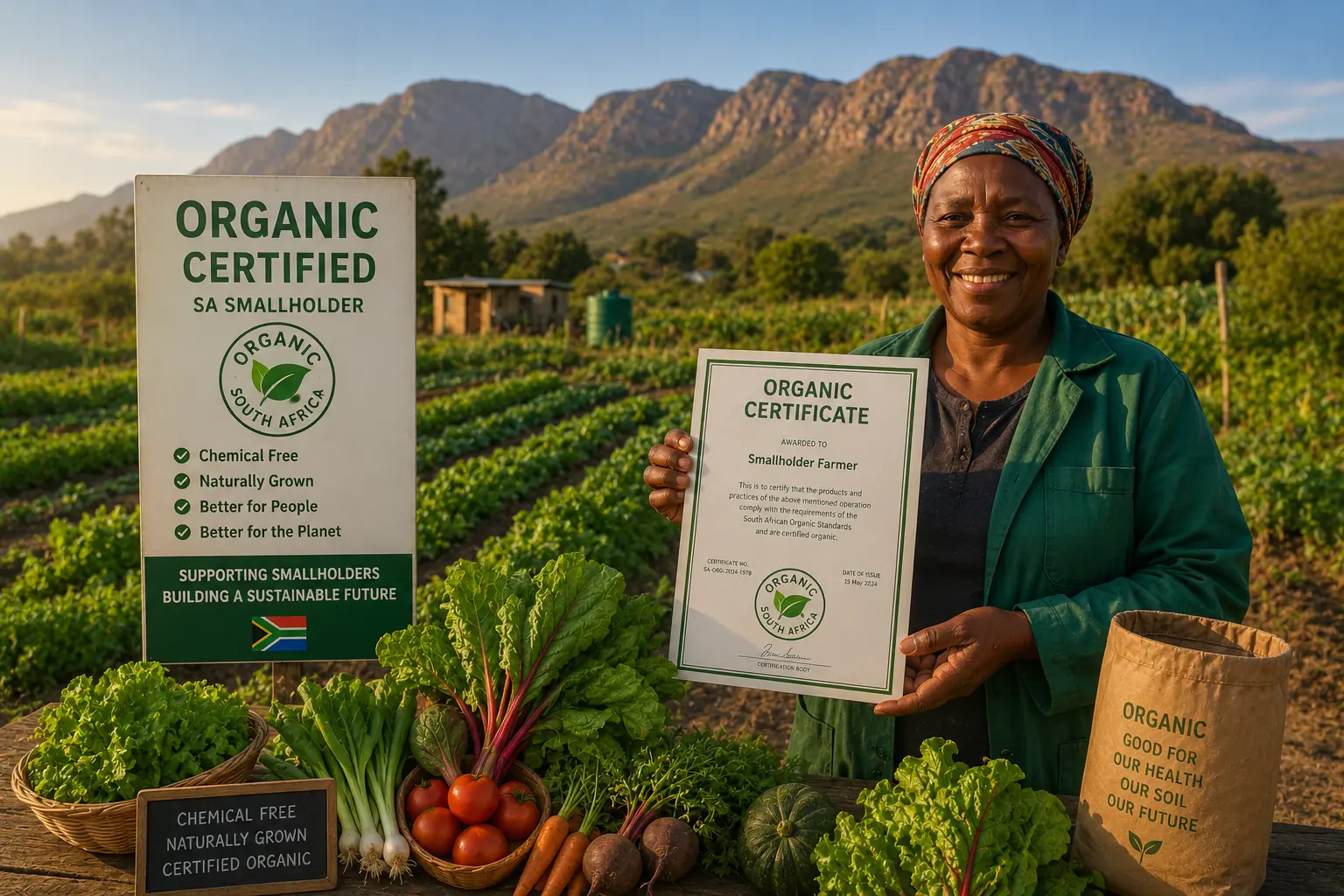
After 24–36 months of compliant transition management, the certifier issues your organic certificate. You can now legally label and market produce as certified organic. Approach premium market channels, health food retailers, farmers' markets, organic box schemes, upmarket restaurants, and export packing houses, with your certificate documentation. Register with Woolworths, Checkers, and Pick n Pay organic buying departments. Contact export specialists for EU and UK market access. Annual re-certification inspections continue every year.
Permitted and Prohibited Inputs in Organic Farming
Understanding which inputs are permitted and which are prohibited is foundational to organic farming compliance. The lists below reflect the general framework of South African and international organic standards, always verify specific products with your certifier, as permitted input lists are updated regularly.
Permitted Organic Inputs (Soil Fertility)
- Compost: Well-matured compost from plant and animal materials, the cornerstone of organic fertility. See our detailed composting guide for South African conditions.
- Animal manure: From livestock not routinely treated with prohibited veterinary medicines. Must be composted before application to fresh produce crops to comply with food safety requirements.
- Green manure crops: Leguminous cover crops ploughed in to add nitrogen and organic matter. See our cover crops guide for species suited to South African conditions.
- Rock phosphate: Natural, unprocessed rock phosphate. Releases slowly, must be applied well in advance of the crop's phosphorus demand.
- Seaweed and kelp products: Permitted as soil amendments and foliar feeds. Readily available from South African suppliers.
- Blood and bone meal: Permitted in most organic standards when sourced from organic or non-GMO livestock.
- Vermicompost (worm castings): Highly permitted and very effective organic amendment, see our earthworm farming guide for on-farm production options.
- Biostimulants: Mycorrhizal inoculants, humic and fulvic acids (natural sources), seaweed extracts. Check specific products with your certifier.
Prohibited Inputs (Never Permitted in Certified Organic Farming)
- All synthetic (manufactured) nitrogen, phosphorus, and potassium fertilisers (urea, MAP, DAP, KCl, LAN, etc.)
- All synthetic pesticides, herbicides, fungicides, and nematicides
- Synthetic growth regulators and plant hormones
- Genetically Modified Organism (GMO) seeds and planting material
- Sewage sludge and municipal biosolids
- Synthetic soil conditioners and some industrial by-products
- Irradiation of organic produce post-harvest
Permitted Pest Control Inputs
- Copper-based fungicides: Copper hydroxide, copper oxychloride, permitted in limited quantities. Rate-limited under EU standards (maximum 6kg Cu/ha/year).
- Sulphur: Elemental sulphur for fungal disease control and as an acaricide. Widely used in South African organic fruit and viticulture.
- Neem oil (Azadirachta indica): Broad-spectrum biopesticide effective against many soft-bodied insects. Permitted and widely used in South African organic vegetable production.
- Pyrethrin (natural): Extracted from pyrethrum daisies. Permitted as a contact insecticide, not to be confused with synthetic pyrethroids (NOT permitted).
- Spinosad: Derived from a soil bacterium (Saccharopolyspora spinosa). Effective against thrips, fruit fly, and caterpillars. Permitted in organic standards and widely available in SA.
- Bacillus thuringiensis (Bt): Naturally occurring soil bacterium used as a biological insecticide against caterpillars. Completely non-toxic to humans and beneficial insects. See our pest control guide.
- Biological controls: Predatory insects (Cryptolaemus, Aphidoletes), entomopathogenic nematodes (Steinernema, Heterorhabditis), parasitic wasps, all permitted and increasingly commercially available in South Africa.
- Kaolin clay: Creates a physical barrier against insects. Permitted and effective on fruit crops against false codling moth and fruit fly.
- Pheromone traps and disruption systems: Permitted and effective for monitoring and managing key pest species.
Organic Soil Health, Building Fertility Without Synthetic Inputs
The long-term success of an organic farming system depends entirely on the health of the soil. Organic farming views soil not as an inert growing medium to be fed with chemical nutrients, but as a living ecosystem, with billions of bacteria, fungi, protozoa, nematodes, earthworms, and other organisms per gram, that, when functioning optimally, makes nutrients available to plants, suppresses disease, improves structure, and retains water. The organic farmer's primary job is to feed and protect this living soil system.
Key soil health practices for South African organic farmers include:
- Regular compost application: Apply a minimum of 5–10 tonnes of quality compost per hectare per season. On sandy soils, apply more frequently in smaller amounts. On clay soils, compost improves structure and aeration. Detailed guidance in our composting guide.
- Cover cropping between cash crops: Never leave soil bare. Plant cover crops in every available window between cash crops. Legumes (soya, cowpea, vetch, lupins) fix atmospheric nitrogen. Grasses (oats, rye, triticale) add carbon and suppress weeds. Brassicas (mustard, radish) help suppress soilborne diseases through biofumigation.
- Reduced tillage: Every tillage event destroys soil structure and kills soil organisms. Move towards minimum tillage or no-till systems over time. Raised bed systems that avoid tillage of the growing zone are widely used in organic market gardens.
- Crop rotation: A well-planned crop rotation is fundamental to organic pest and disease management, nitrogen management, and weed suppression. Avoid growing the same crop family in the same field more than once every 3–4 years.
- Mulching: Apply organic mulch (compost, straw, woodchip) to the soil surface to suppress weeds, retain moisture, and feed soil organisms. Particularly valuable for organic vegetable production.
- Biological inoculants: Inoculate legume seeds with rhizobium bacteria for effective nitrogen fixation. Apply mycorrhizal inoculants at transplanting to support root development and nutrient uptake, particularly on phosphorus-poor soils.
Organic Pest and Disease Management
Organic pest management is fundamentally preventive rather than reactive. The goal is to create conditions where pest populations never reach economically damaging thresholds, rather than responding to outbreaks with emergency spraying. The tools for organic pest management include:
- Habitat for beneficial insects: Plant insectary strips (flowering plants: phacelia, buckwheat, marigolds, dill, fennel) around and through crop fields to attract and sustain populations of predatory and parasitic insects that naturally suppress pest populations.
- Companion planting: Strategic planting of repellent or trap crops alongside target crops. Classic examples: basil with tomatoes (deters aphids and whitefly), marigolds as nematode suppressants, nasturtiums as aphid traps.
- Physical exclusion: Fine mesh netting over high-value crops to exclude flying insects. Row covers to protect brassicas from diamondback moth and imported cabbageworm. These methods are effective in small-scale organic production.
- Pheromone monitoring and mating disruption: Use pheromone traps to monitor pest populations and apply mating disruption systems in orchards and enclosed crops to prevent pest population growth.
- Biological controls: Introduce or encourage predatory and parasitic insects. Trichogramma wasp releases for bollworm in organic tomatoes. Cryptolaemus for mealybug. Phytoseiid predatory mites for spider mite. See our detailed pest control guide.
Organic Markets in South Africa, Where to Sell
Access to premium market channels that actually pay organic premiums is the critical business question for any organic farmer. South Africa's organic market channels include:
Premium Retail
Woolworths, Checkers organic ranges, Spar Tops, require certification, consistency, and volume. Price premiums of 30–80%.
Best marginsFarmers Markets
Oranjezicht City Farm (Cape Town), Neighbourgoods Market, Brookside Market. Direct-to-consumer, highest % premium but limited volume.
20–150% premiumBox Schemes / CSAs
Organic weekly vegetable boxes delivered to subscribers, increasingly popular in Johannesburg, Cape Town, and Durban metropolitan areas.
Stable income- Health food and specialty stores: Wellness Warehouse, Faithful to Nature (online), The Harvest Table, and numerous independent health food stores stock certified organic produce. Contact buying departments directly with your certification documentation.
- Export markets: EU, UK, and Middle Eastern organic markets pay significant premiums for certified South African organic produce, especially rooibos, dried fruits, citrus, and vegetables. PPECB compliance and phytosanitary certification required alongside organic certification. See our export farming guide.
- Restaurants and hospitality: Farm-to-table restaurants, boutique hotels, and wellness retreats are growing customers for certified organic and naturally produced food. Typically want smaller, more varied quantities, ideal for small-scale organic market gardens.
- Online direct sales: Platforms such as Faithful to Nature, The Organic Marketplace, and direct farm social media sales are increasingly viable for certified organic producers reaching urban consumers.
Financial Reality, Organic Farming Profitability in South Africa
Organic farming is not automatically more profitable than conventional farming. It requires careful financial planning, especially during the transition period. The financial picture varies significantly by enterprise, market channel, and farm scale:
| Factor | Transition Period (Year 1–3) | Post-Certification (Year 4+) |
|---|---|---|
| Yield | Often 15–35% below conventional while soil biology rebuilds | Recovers toward conventional yield as soil health improves. Some enterprises match or exceed. |
| Input costs | Can be higher, purchased organic fertilisers are more expensive than synthetic; developing own compost takes time | Typically lower once on-farm compost systems are running; fewer purchased inputs |
| Market price | Conventional price only, no premium during transition | 20–150% premium depending on product and channel |
| Labour | Higher, organic systems are more labour intensive | Still higher than conventional. Can be offset by premium price and employment benefits |
| Net profit outlook | Often negative or break-even, the most financially challenging phase | Potentially significantly higher net margins than conventional in premium market channels |
The transition period's financial gap can be partially bridged by government grants. DALRRD's CASP programme supports organic transition, and some provincial agriculture departments offer specific support for smallholder organic farmers. Visit our farming grants page for current available support programmes.