The Foundation of Every Harvest
The single most impactful decision a South African farmer makes each season is seed selection. The right seed, planted at the right time, at the right depth, in the right soil, is the difference between a profitable season and a disappointing one. Here we cover key production information about seeds and planting in SA.
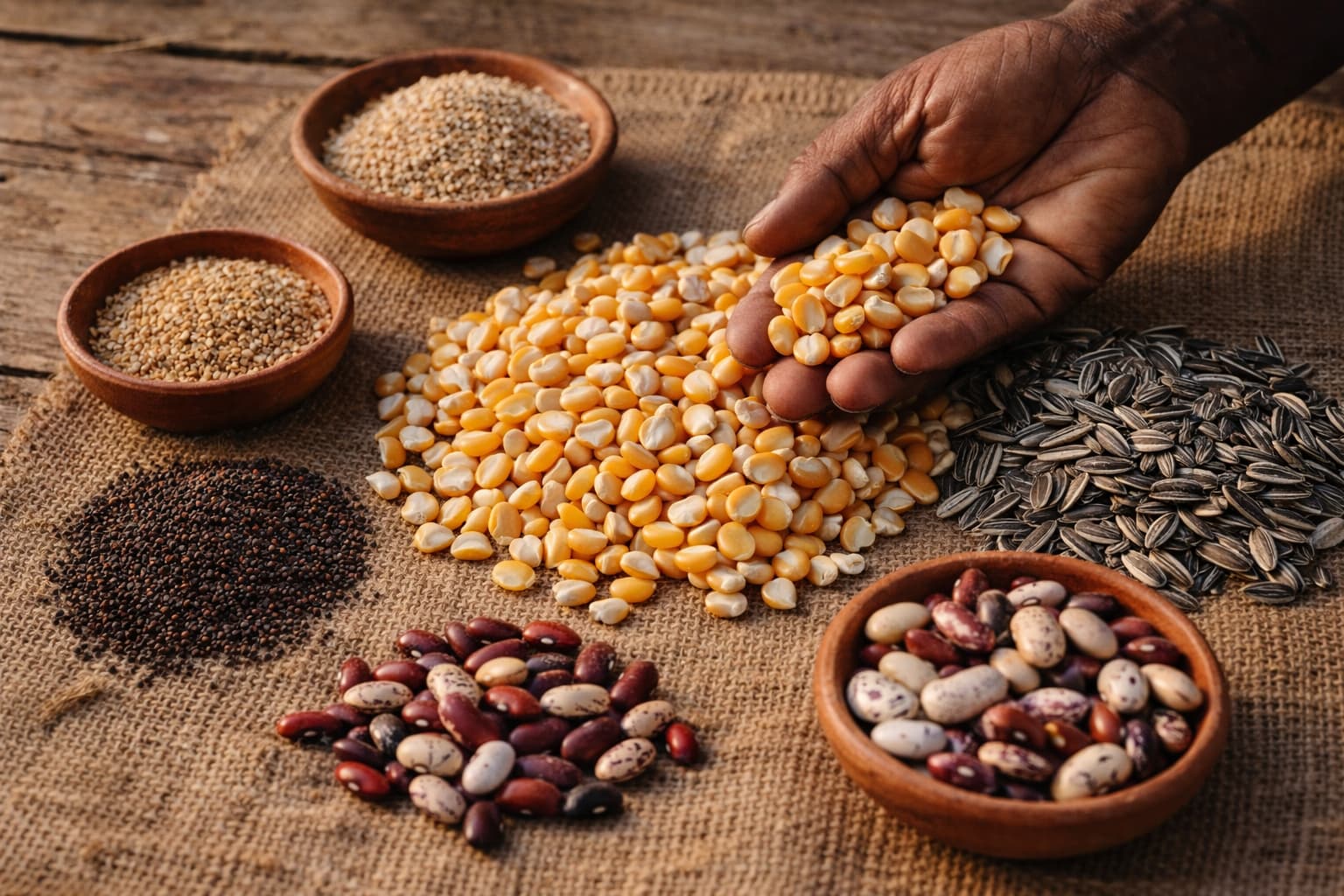
Hybrid Seeds vs Open-Pollinated Seeds
Among South Africa's most common and important questions for South African farmers, especially smallholders and emerging farmers, is whether to buy hybrid seeds every season, or use open-pollinated (OP) varieties whose seeds can be saved and replanted. There is no single right answer: the choice depends on your scale, resources, markets and farming system.
- ✅ Higher yield potential, 20–40% above OP in ideal conditions
- ✅ Better disease resistance package built into genetics
- ✅ More uniform plant size and harvest timing
- ✅ Better shelf life and post-harvest quality for markets
- ❌ Seed must be repurchased every season, cannot save
- ❌ Significantly more expensive (R1 500–R4 000/unit maize)
- ❌ Require higher input levels to reach yield potential
- ❌ Dependent on seed company supply chain
- ✅ Seeds can be saved and replanted each season, lowers costs
- ✅ Much cheaper to buy initially (R50–R200 for most veg seeds)
- ✅ Adapt over generations to your local conditions
- ✅ Greater genetic diversity, more resilience to drought/stress
- ❌ Lower yield potential than top F1 hybrids
- ❌ Less uniformity, variable plant sizes and maturity dates
- ❌ Often lower disease resistance in commercial varieties
- ❌ Less preferred by formal retail buyers requiring uniformity
💡 Our Recommendation for SA Smallholders: Use hybrid seed for your cash crops where yield and market quality matter most (maize, tomatoes, sweet peppers). Use open-pollinated varieties for home consumption crops and those with strong informal markets (spinach, butternut, pumpkin, indigenous leafy vegetables). This balances cost with performance.
Planting Depths & Germination Guide
Planting depth directly affects germination rate and seedling emergence. Too shallow and seeds dry out; too deep and seedlings can't push through to the surface. Use this table as your reference for every crop.
| Crop | Planting Depth | Spacing | Days to Germinate | Min Soil Temp |
|---|---|---|---|---|
| 🌽 Maize | 50–60mm | 25–30cm in row | 5–10 days | 12°C |
| 🫘 Soybeans | 30–50mm | 5–7cm in row | 5–8 days | 10°C |
| 🌻 Sunflower | 40–60mm | 25–35cm in row | 7–10 days | 10°C |
| 🍅 Tomatoes | 3–5mm (seedling tray) | 40–60cm in row | 7–14 days | 15°C |
| 🥬 Spinach | 15–20mm | 15–20cm in row | 7–10 days | 10°C |
| 🥬 Cabbage | 5–8mm (seedling tray) | 40–50cm in row | 5–8 days | 8°C |
| 🧅 Onions | 10–15mm | 8–10cm in row | 10–14 days | 10°C |
| 🫑 Peppers | 5–8mm (seedling tray) | 40–50cm in row | 10–21 days | 18°C |
| 🥕 Carrots | 5–10mm | 3–5cm in row | 10–17 days | 10°C |
| 🎃 Butternut | 25–30mm | 60–90cm in row | 7–10 days | 15°C |
| 🥦 Broccoli | 5–8mm (seedling tray) | 40–50cm in row | 5–10 days | 8°C |
| 🌿 Sorghum | 25–40mm | 10–15cm in row | 5–10 days | 15°C |
| 🌾 Wheat | 40–60mm | 8–10cm in row | 5–8 days | 5°C |
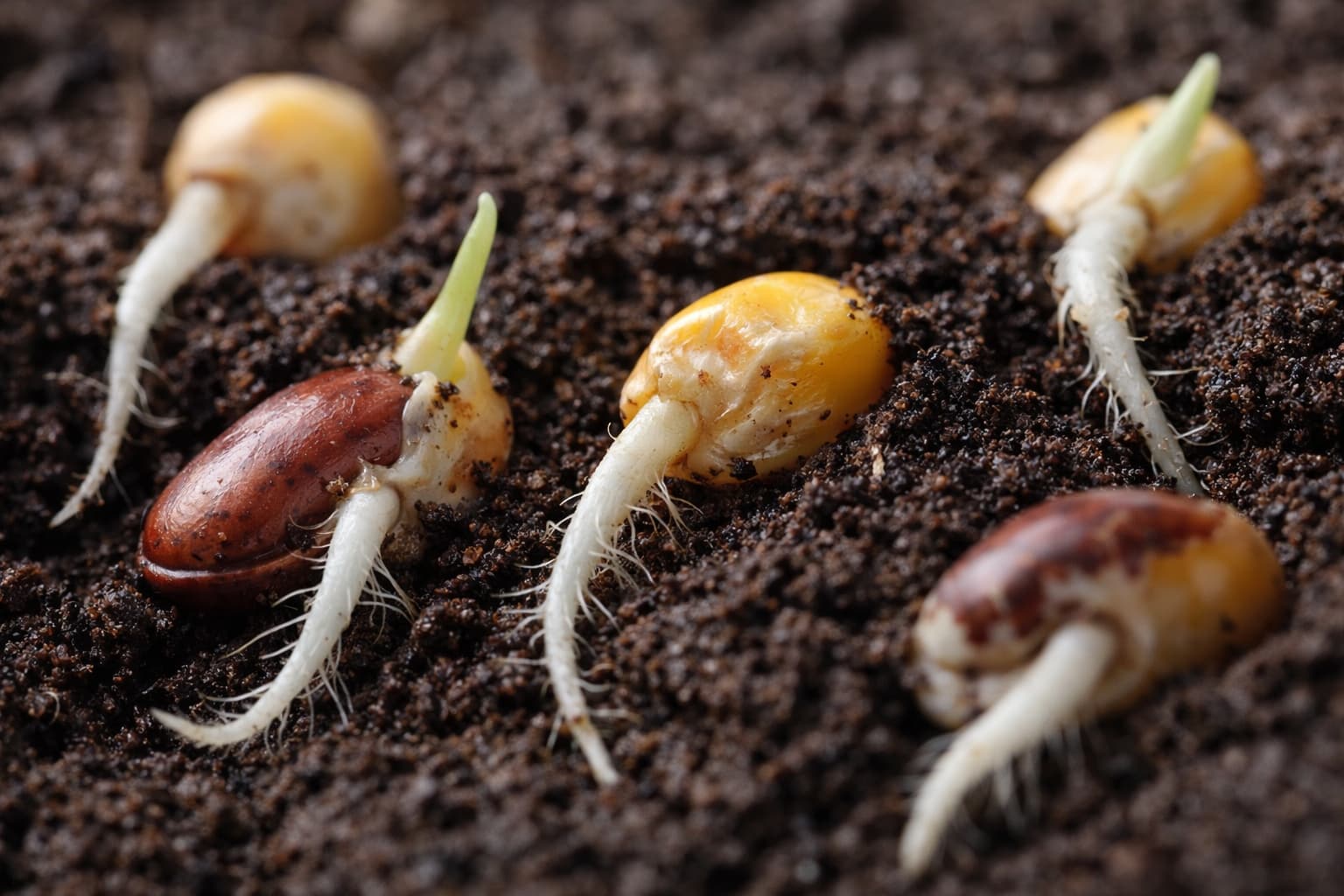
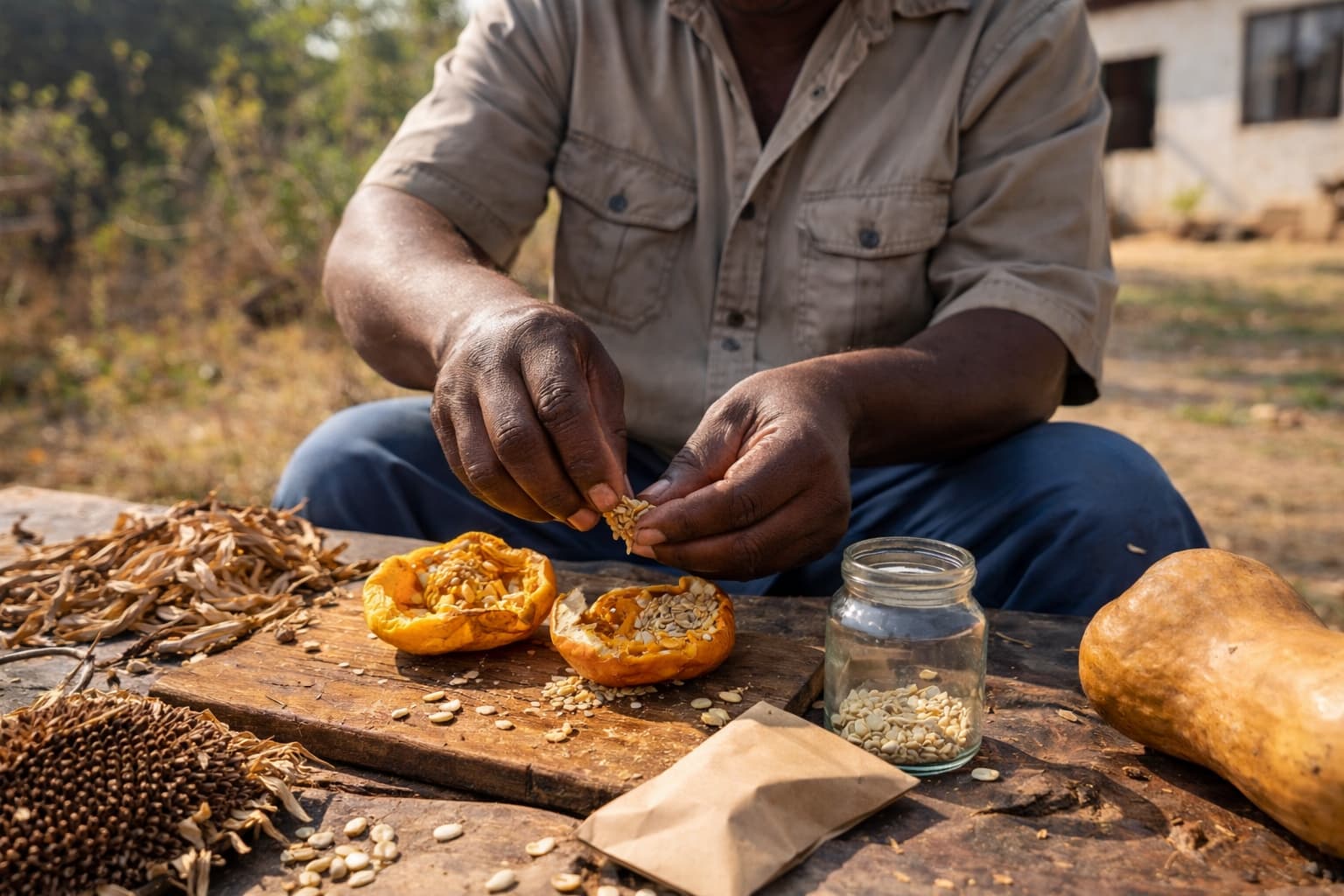
Seed Saving, How to Save Your Own Seeds
Seed saving is an ancient and practical skill that can significantly reduce input costs for South African smallholder farmers. It works best with open-pollinated varieties. Never attempt to save seeds from F1 hybrid plants, the second generation (F2) will not breed true and will show highly variable, unpredictable results.
How to Save Tomato Seeds
- Select your best-performing, healthiest, most disease-free plants. Mark them at flowering, do not harvest fruit from these plants for eating.
- Allow selected fruit to fully ripen, beyond eating ripeness, until soft and slightly overripe on the plant.
- Cut fruit and squeeze seeds with gel into a container of water. The gel covering inhibits germination and must be removed through fermentation.
- Allow the seed-gel mixture to ferment for 2–3 days at room temperature, stirring daily. Viable seeds sink; non-viable seeds and gel float.
- Pour off floating material, rinse viable seeds thoroughly with clean water.
- Spread seeds in a single layer on a ceramic plate or newspaper, never on paper towels (seeds stick). Dry in a cool, airy place for 5–7 days.
- Store in a sealed paper envelope or glass jar with silica gel in a cool, dark, dry location. Properly stored tomato seeds remain viable for 4–5 years.
How to Save Butternut & Squash Seeds
Allow butternuts to fully mature on the vine, the skin should be hard and cream-coloured, not green. Cut fruit, scoop out seeds, wash off pulp in a colander, and dry on a screen or newspaper for 2–3 weeks in a well-ventilated location. Squash seeds can be stored for 4–6 years if properly dried and kept cool and dark.
How to Save Bean & Pea Seeds
The easiest seeds to save. Leave pods on the plant until completely dry and brown. Harvest the dry pods and shell them. Lay seeds out to dry for another 1–2 weeks before storing. Bean seeds remain viable for 2–3 years.
⚠️ Isolation Distances: Cross-pollinating crops (peppers, squash, mealie) require isolation distances of 500m–1km from other varieties to maintain seed purity. Self-pollinating crops (tomatoes, beans, peas) can be grown close together without contamination risk.
Seed Storage, Keeping Seeds Viable
Poor storage is the number one cause of seed failure in South Africa. Our climate (hot summers, high humidity in summer-rainfall areas) accelerates seed deterioration dramatically. Follow these rules to maximise seed viability in storage:
- Temperature: Every 5°C increase in storage temperature roughly halves seed longevity. Store below 15°C where possible, a cool room, cellar, or fridge works well.
- Moisture: Seed moisture content and storage humidity are critical. Seeds should be completely dry before storing. Use sealed glass jars or airtight containers.
- Darkness: Light degrades seed viability over time. Always store in opaque containers or in a dark location.
- Silica gel: Add food-grade silica gel sachets to seed storage containers to absorb moisture. Reactivate silica gel by drying in an oven at 150°C for 1 hour.
- Labelling: Always label seeds with variety name, source, and date of harvest or purchase. Never rely on memory.
| Crop | Expected Viability | Germination Test Before Planting |
|---|---|---|
| 🌽 Maize (hybrid) | 1–2 years maximum | Essential, test 10 seeds on moist paper |
| 🍅 Tomatoes | 4–5 years | Recommended if over 2 years old |
| 🥬 Spinach / Swiss chard | 3–5 years | Good germinator, usually reliable |
| 🧅 Onions | 1–2 years | Essential, onion seed loses viability fast |
| 🫑 Peppers | 2–3 years | Recommended, slow germinators anyway |
| 🥕 Carrots | 2–3 years | Recommended, naturally low germination rate |
| 🎃 Butternut / Squash | 4–6 years | Rarely needed, excellent viability |
| 🫘 Beans / Peas | 2–3 years | Recommended if over 2 years old |
Where to Buy Seeds in South Africa
South Africa has a well-developed seed industry with both international and local seed companies supplying farmers at all scales. Here are the main sources:
- Agricultural co-operatives (NWK, OVK, TWK, Afgri, BKB): Best source for commercial quantities of grain seed. Staff agronomists can advise on variety selection for your area. Seasonal credit accounts available for registered farmers.
- Nurseries and garden centres: Excellent for vegetable seed in small quantities. Look for Starke Ayres, Hygrotech, and Sakata brand seed.
- Starke Ayres: SA's largest vegetable seed company. Branches in major cities. Wide range of locally tested varieties. Excellent technical support.
- Online (agrozone.co.za, seedsforafrica.co.za): Growing online seed market. Good for heirloom, open-pollinated, and specialty varieties not found at co-ops.
- DALRRD extension officers: Government extension services sometimes provide seeds to smallholders through support programmes, contact your provincial DALRRD office.
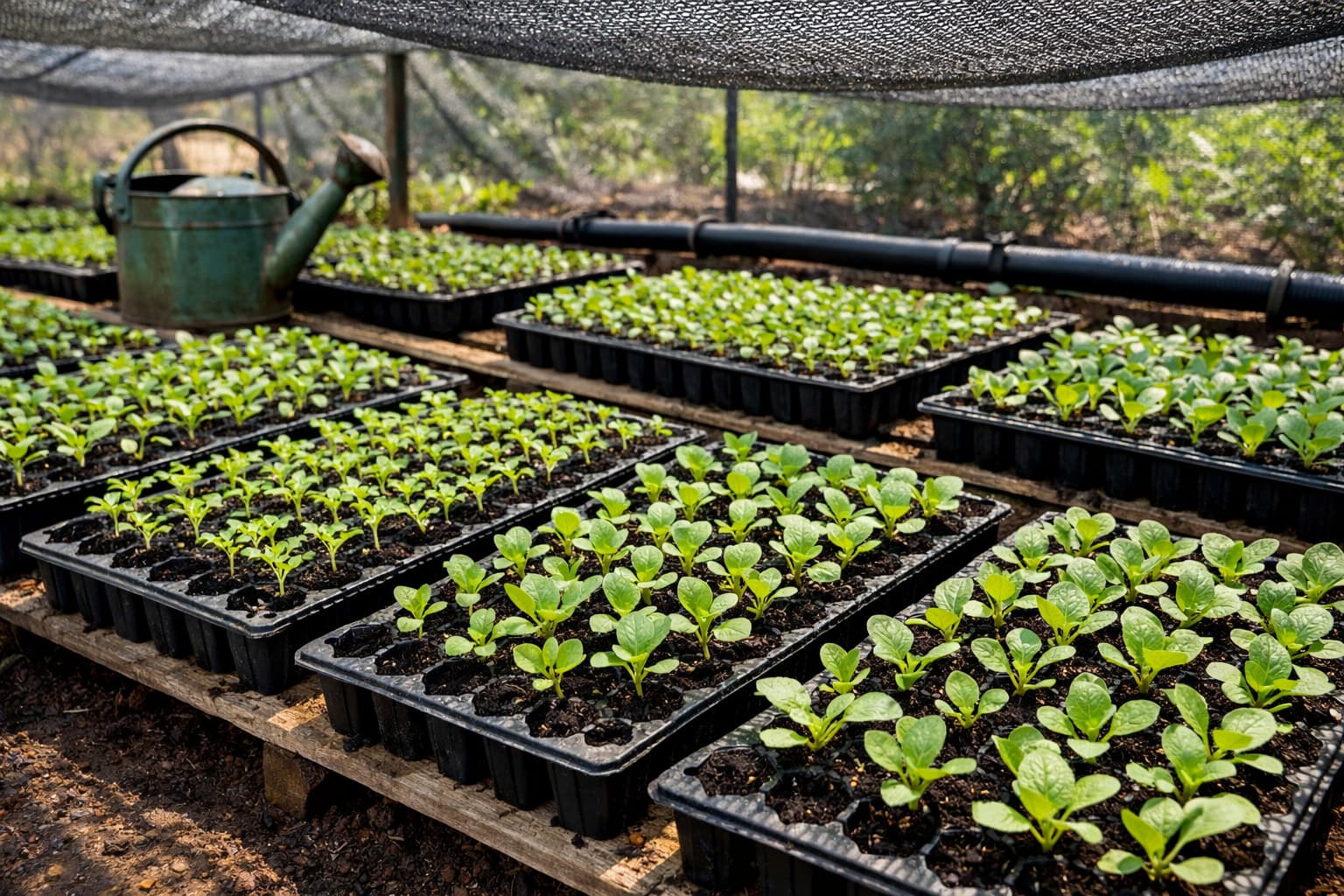
Germination Testing, Don't Plant Bad Seed
Before planting any seed that is more than 1 year old, or any seed whose viability you are unsure of, conduct a simple germination test. This takes 7–14 days but can save you from replanting an entire field.
- Count out exactly 10 seeds (or 20 for a more accurate result) from your batch.
- Place seeds on a moist paper towel or cloth, fold to cover seeds, and keep in a warm location (20–25°C).
- Check daily, keeping moist. Count the number of seeds that germinate over the period appropriate for that crop (see depth table above for days to germinate).
- Calculate germination percentage: 8 out of 10 seeds = 80% germination rate.
- Adjust your planting rate: If germination rate is 70%, increase your seed rate by 30% to compensate. Below 50% germination, do not plant the seed, buy fresh.
✅ Rule of thumb: Commercial seed should have a minimum germination rate of 85% for vegetables and 90%+ for grain crops. Most reputable SA seed companies include the germination rate and test date on the seed packet, always check this before buying.