Why Oyster Farming Makes Sense in South Africa
South Africa's coastline stretches over 2 800 km and includes a variety of productive estuaries, lagoons, and open-water bays that offer exceptional conditions for bivalve culture. The country's commitment to expanding the aquaculture sector through DAFF (now DAFR) and the Aquaculture Development and Enhancement Programme (ADEP) means there is significant policy support, grant funding, and technical assistance available to new entrants.
The global demand for premium, sustainably farmed shellfish continues to grow. South African oysters benefit from clean, cold, nutrient-rich Atlantic and Southern Ocean waters, conditions that produce the crisp, mineral-rich flavour profiles prized by fine dining restaurants from Cape Town to Johannesburg and export buyers in Europe and Asia.
Key Oyster Farming Regions in South Africa
Not all of South Africa's coastline is suitable for oyster farming. Success depends on water quality, temperature, salinity levels, tidal flow, and proximity to pollution sources. The following three regions are the country's established and emerging oyster farming zones:
Knysna Lagoon, The Garden Route
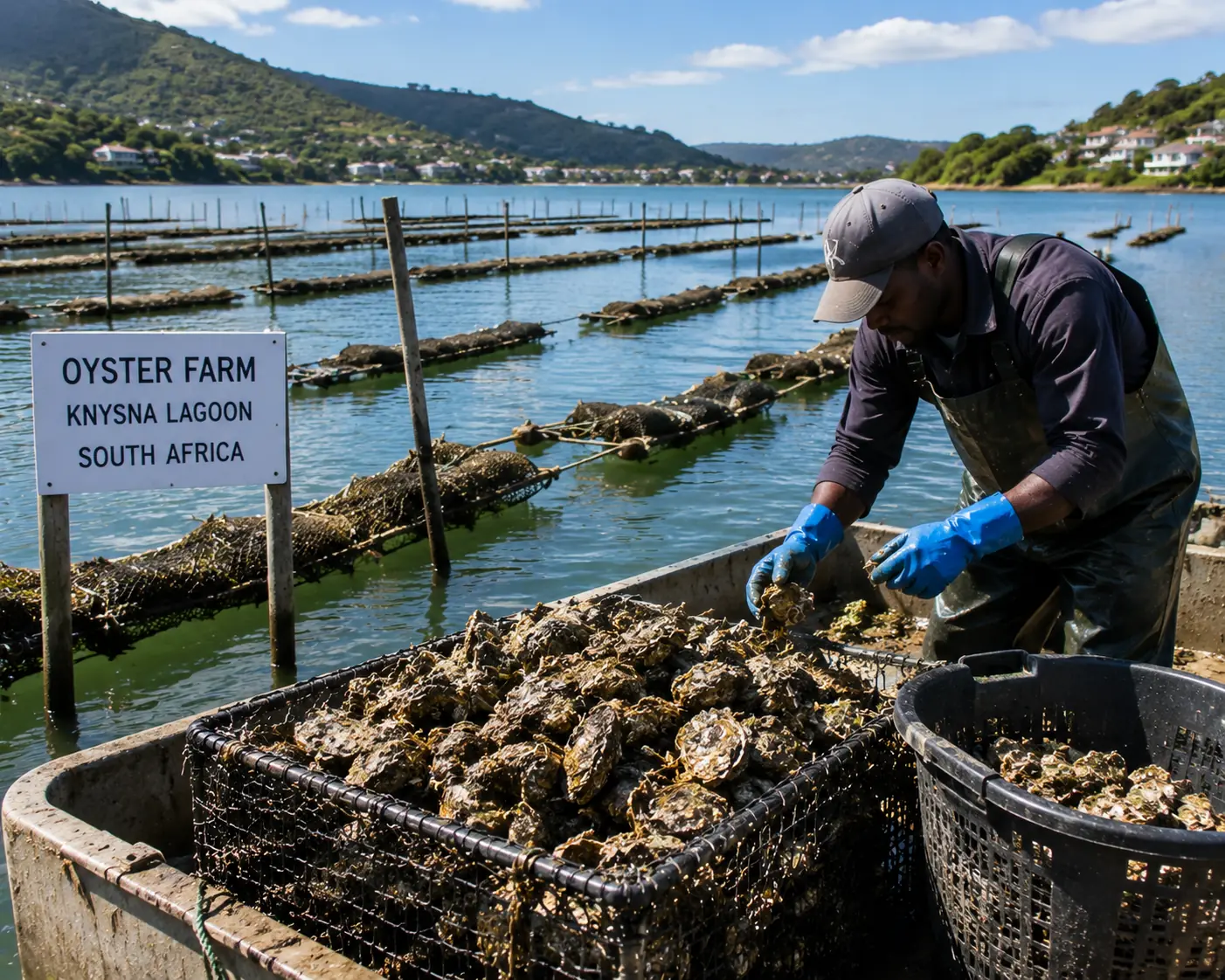
Knysna in the Western Cape is the heartland of South African oyster farming and is home to the famous Knysna oyster, a heritage brand recognised throughout the country. The Knysna Lagoon provides warm, sheltered waters that favour rapid growth of Pacific oysters (Crassostrea gigas) from November to April. The annual Knysna Oyster Festival, one of South Africa's biggest food and sport events, generates enormous demand and marketing exposure for local oyster farmers. Space in the lagoon is limited and highly sought-after, so new applicants should approach the Knysna Municipality and DAFR's Directorate: Aquaculture early. Yields of 50 000–80 000 oysters per hectare per year are achievable under optimal management.
Langebaan Lagoon, West Coast
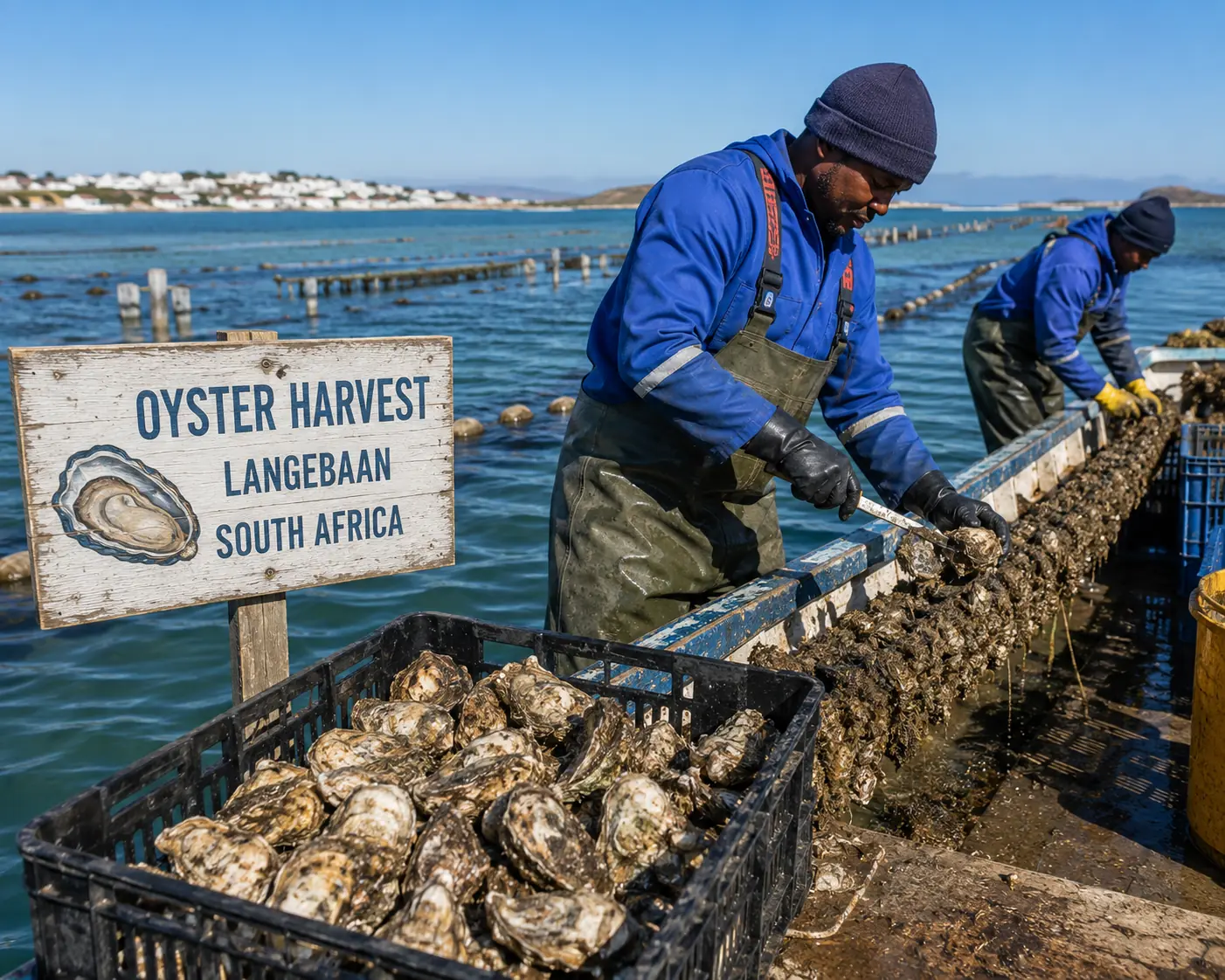
Situated within the West Coast National Park, Langebaan Lagoon offers some of the cleanest, coldest water in the country, ideal for producing oysters with a distinctive briny, mineral character. The colder water slows growth compared to Knysna, but the product quality is exceptional and commands premium pricing. Permits here are issued jointly by DAFR and SANParks, requiring additional environmental compliance documentation. Existing farms in Langebaan are small-scale, making it an area with potential for new development under the right permit framework.
Saldanha Bay, Industrial Mariculture Hub
Saldanha Bay on the West Coast is home to larger commercial mussel and oyster operations and is considered SA's primary mariculture hub. The bay's nutrient-rich upwelling waters support high productivity, and the presence of existing processing and cold-chain infrastructure makes it attractive for scale. New oyster ventures entering Saldanha Bay will need to comply with more rigorous industrial permit conditions and environmental impact assessments, but the infrastructure payoff is significant. This is also the main departure point for export-oriented shellfish operations targeting European markets.
Which Oyster Species to Farm in SA
South Africa primarily farms two oyster species commercially:
- Pacific Oyster (Crassostrea gigas), The global workhorse of oyster aquaculture. Fast-growing (harvest-ready in 18–24 months), high yield, and well-adapted to SA coastal waters. Widely available from registered spat suppliers. The dominant species at Knysna and Saldanha.
- Flat Oyster / Native Oyster (Ostrea edulis), Slower-growing (24–36 months) but commands a higher premium due to its rounder shape and nuttier flavour. Less common in SA commercial operations but of interest to niche, artisan producers.
Most new entrants begin with Pacific oysters due to the shorter grow-out period and more available spat supply. Your aquaculture consultant or DAFR extension officer can advise on the most suitable species for your specific site.
Permits, Leases & Regulations
Oyster farming in South Africa is regulated under the Marine Living Resources Act (MLRA) No. 18 of 1998 and overseen by the Department of Agriculture, Forestry and Fisheries (DAFR). Before you can place a single basket in the water, you need the following in place:
Operating an oyster farm without the required permits can result in prosecution, equipment confiscation, and permanent exclusion from the industry. Always secure approvals before spending on infrastructure.
- Aquaculture Development Permit (ADP), The primary licence issued by DAFR to authorise aquaculture activity in public water bodies. Apply at your nearest DAFR provincial office or via the online portal.
- Water Use Licence (WUL), Required from the Department of Water and Sanitation (DWS) if your operations affect a water resource. Estuarine sites generally require this.
- Environmental Authorisation (EA), Under NEMA (National Environmental Management Act), most commercial mariculture operations require a Basic Assessment or full Environmental Impact Assessment (EIA), conducted by a registered Environmental Assessment Practitioner (EAP).
- Municipal / SANParks Consent, In areas like Knysna and Langebaan, local authority or park consent is required alongside national permits.
- Certificate of Registration (COR), Required to sell shellfish for human consumption, issued after inspection by the Department of Health under the Foodstuffs, Cosmetics and Disinfectants Act.
Check our Farming Grants page, ADEP (Aquaculture Development and Enhancement Programme) has historically offered grants and soft loans for new mariculture entrants to cover capital costs and permit fees.
Sourcing Oyster Spat (Seed)
Oyster spat (the juvenile oysters used to seed your farm) must be sourced from DAFR-registered hatcheries to ensure genetic quality and disease freedom. In South Africa, registered spat suppliers are located primarily in the Western Cape and supply farms across both Knysna and Saldanha Bay. Spat is typically sold at 1–3mm shell length and arrives in mesh bags or on substrate collectors.
The cost of spat varies between R0.35 and R0.80 per unit, depending on size and supplier. For a one-hectare farm stocking 100 000 spat, your initial seed cost will be between R35 000 and R80 000. Bulk purchase discounts are available from most hatcheries for orders above 50 000 units. Contact DAFR's Aquaculture directorate for an updated list of registered spat suppliers in your province.
Some experienced farmers eventually establish their own spat collection systems using natural settlement substrate (cultch), such as oyster shell or PVC collectors suspended in the water column during spawning season (typically October–February along the Garden Route). This significantly reduces ongoing seed costs but requires technical skill and additional permits.
Grow-Out Systems & Farm Infrastructure
The grow-out phase, from seeding to marketable size, takes between 18 and 30 months depending on species, water temperature, feed availability, and husbandry practice. During this period your oysters must be housed in suitable structures that allow water flow while protecting against predators and storm damage. South African farmers use several established systems:
Longline Systems
The most widely used system in Knysna and Saldanha Bay. Horizontal ropes are suspended between anchor points with floats, and mesh lantern nets or oyster bags are attached at intervals. The oysters are distributed across the nets at low densities initially, then thinned (culled) as they grow to maintain water flow and feeding efficiency. Longlines are flexible, scalable, and work well in both sheltered lagoons and semi-exposed bays. Expect to invest R80 000–R150 000 per hectare for a complete longline setup including ropes, floats, bags, and anchoring.
Rack and Bag Systems
Metal or PVC racks are installed in the intertidal zone, with plastic mesh bags containing oysters placed on top. During low tide, the bags are air-dried, which is believed to strengthen shells and improve condition. Rack and bag is a popular system for small-scale farmers with sites in the mid-intertidal zone. Equipment costs are lower than longlines but manual labour per oyster is higher. A basic rack and bag setup for 0.25 hectares costs approximately R30 000–R60 000.
Tumbler Systems
Floating cylindrical cages that rotate with wave action, tumbling the oysters inside to chip the shell lip and encourage deeper cup formation. Tumbled oysters fetch premium prices from restaurants because of their consistent shape and plump meat. Tumblers are more capital-intensive and work best in sites with moderate wave exposure. Some Saldanha Bay operations combine longlines for the grow-out phase with tumblers for final finishing.
Farm Management & Husbandry
Oyster farming rewards careful, attentive management. Key routine tasks include:
- Monthly grading and thinning, Separate oysters by size to reduce competition and maintain optimal densities (typically 50–100 oysters per bag depending on size).
- Predator control, Mussels, starfish, whelks, and drilling snails are the primary predators. Regular inspection and physical removal are the safest control methods, as chemical treatments are prohibited in SA mariculture zones.
- Fouling management, Encrusting organisms (barnacles, tube worms, mussels) colonise equipment and oyster shells. Regular cleaning of bags and racks, and intertidal air exposure, reduces fouling burden.
- Water quality monitoring, Regularly test salinity, temperature, and turbidity at your site. Excessive freshwater influx during heavy rains can stress or kill oysters; having protocols for temporarily submerging or relocating stock is essential for farms near river mouths.
- Disease surveillance, While SA is largely free of major oyster diseases like Bonamia and Marteilia, routine monitoring is required by DAFR permit conditions. Never move stock between sites without authorisation.
Good record-keeping (stocking dates, mortality counts, growth measurements, grading records) is essential for your own management decisions, and it's also required for DAFR compliance reporting and food safety audits if you pursue export certification.
Harvesting, Grading & Packaging
Pacific oysters are ready for harvest when they reach a shell length of 75–100mm, which typically corresponds to a live weight of 80–120g. Most SA restaurant buyers prefer the 80–100g range. Harvesting involves removing bags or lantern nets from the water, washing oysters with seawater to remove sediment, and grading by size using manual or mechanical graders.
South African commercial grades are broadly:
- Grade 1 (Premium), 90–120mm, deep cup, no broken shells. Sold to fine dining restaurants and specialty seafood retailers. Highest price.
- Grade 2 (Standard), 75–90mm, slight irregularities acceptable. Sold to casual restaurants, fishmongers, and raw bars.
- Grade 3 (Culls), Misshaped, broken, or undersized. Used for processed products (smoked oysters, pasta sauces) or sold at heavily discounted bulk prices.
Packaging must comply with DAFF shellfish quality regulations. Oysters sold live must be kept in chilled, damp conditions (4–7°C) and clearly labelled with harvest date, farm of origin, and batch number. Shelf life is typically 5–10 days from harvest under cold chain conditions. For premium retail, consider branded mesh sacks or wooden crates, presentation matters enormously in this market.
Markets & Selling Your Oysters in South Africa
Oysters are a premium product and command some of the highest returns per unit weight of any South African aquaculture commodity. Successful farmers target multiple channels simultaneously:
Restaurant & Hotel Direct Sales
The most higher-value channel. Fine dining restaurants in Cape Town, the Garden Route, and Johannesburg pay R180–R260 per dozen for premium Grade 1 oysters delivered fresh. Develop relationships with head chefs and restaurant owners early. Many prefer to deal directly with farmers for provenance storytelling. Regular, reliable supply is more important than price in this market, a restaurant that trusts your delivery schedule will stay loyal for years.
Seafood Retailers & Markets
Cape Town's V&A Waterfront fish market, local seafood retailers, and the fresh produce markets network absorb significant volumes of Grade 1 and Grade 2 oysters. Prices are lower than direct restaurant sales but volumes are larger and payment is more predictable.
Tourism & Agri-Tourism
The Knysna Oyster Festival attracts over 100 000 visitors annually and is the single biggest sales event for Knysna oyster farmers. Selling direct to tourists at the farm gate or at food markets commands retail prices (R20–R30 per single oyster) with no middleman margin. Agri-tourism (farm tours, shucking experiences, tasting events) is a growing revenue stream for Knysna and Langebaan operators.
Export Markets
South African oysters have real export potential to European and Asian markets, where sustainably produced Southern Hemisphere shellfish fills seasonal gaps. To export, you will need GlobalGAP certification, a Certificate of Origin, and compliance with the importing country's food safety standards (EU shellfish regulations are among the most stringent globally). See our Export Farming guide for the full certification pathway.
Start-Up Costs & Financial Planning
Oyster farming is capital-intensive upfront but has relatively low ongoing operating costs. Here is a realistic range for a small-scale (0.5 hectare) Pacific oyster farm in the Knysna or Langebaan area:
- Permit and legal fees: R25 000–R60 000 (EIA, water use licence, aquaculture permit)
- Infrastructure (longlines, racks, bags, floats, anchors): R80 000–R200 000
- Initial spat purchase (50 000 units): R20 000–R40 000
- Boat and safety equipment: R40 000–R120 000 (second-hand viable)
- Working capital (18 months to first harvest): R30 000–R60 000
- Total estimated start-up: R195 000–R480 000
Check available support through the ADEP farming grants programme, which has subsidised oyster farmers with up to 50% of capital costs in previous funding rounds. The Land Bank and ABSA Agri also offer aquaculture finance products worth exploring.