Why Tilapia Farming is a Growing Opportunity in South Africa
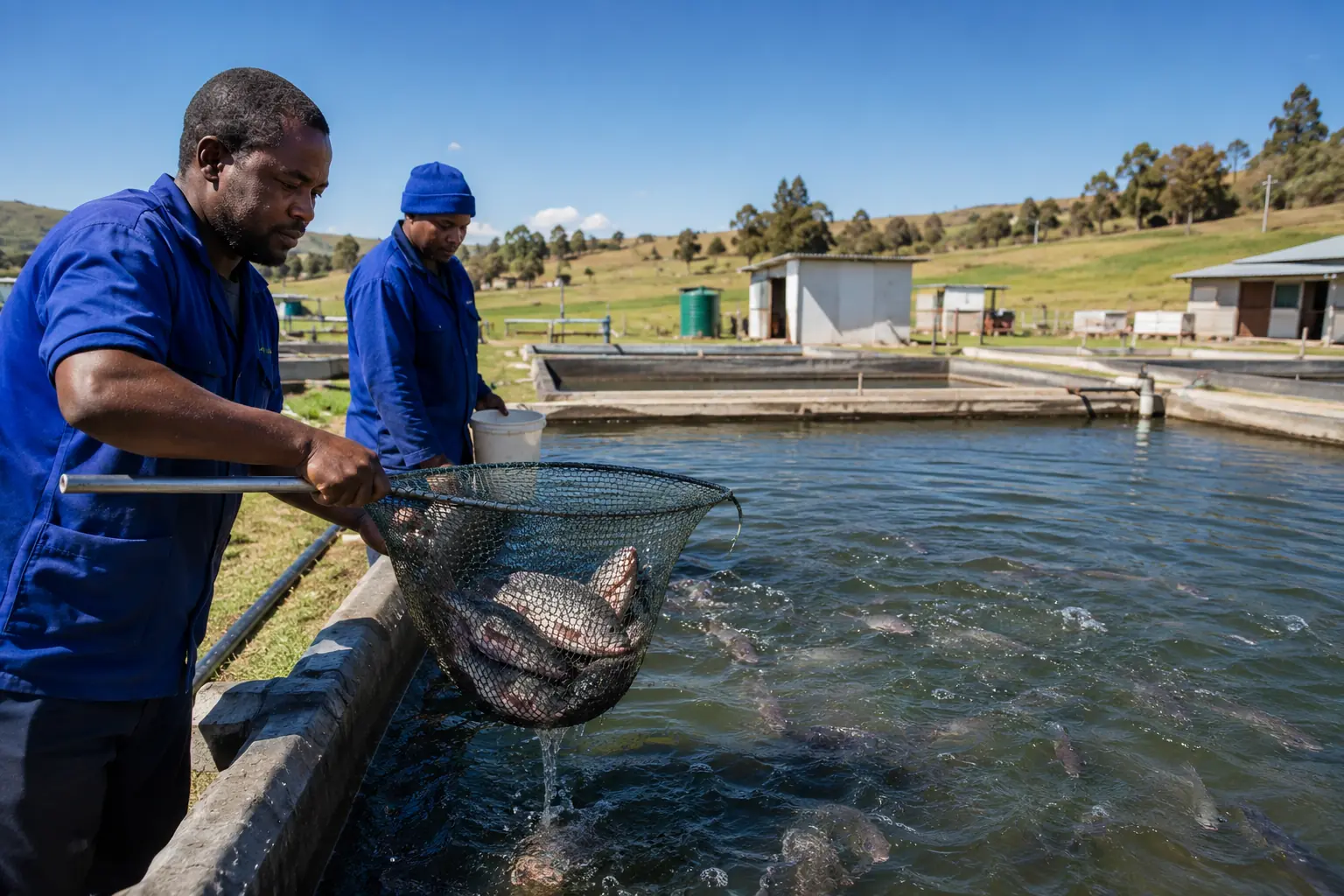
Tilapia is the world's second most farmed fish after carp, and for good reason, it grows fast, tolerates a wide range of water conditions, converts feed efficiently, and produces a mild, white-fleshed fish that is popular across many South African communities. In South Africa, the Nile tilapia (Oreochromis niloticus) is the primary farmed species, valued for its fast growth rate (reaching 500g in 6–8 months), hardiness, and broad consumer acceptance in both formal retail and informal markets.
South Africa has a significant freshwater fish deficit. Local aquaculture production covers only a fraction of domestic demand for fresh fish, with the remainder supplied through imported frozen products. This supply gap represents a clear opportunity for South African tilapia farmers who can consistently supply fresh, locally produced fish. Markets range from township fresh fish sellers and restaurant supply chains to formal retailers like Pick n Pay and Checkers, which have shown growing interest in locally farmed fish.
🐟 Tilapia's appeal for SA smallholders: Tilapia tolerates low dissolved oxygen better than most farmed fish species, is omnivorous (accepting plant-based feeds), breeds readily in captivity, survives water temperatures from 16–35°C, and can be raised in ponds, tanks, or raceways. These characteristics make it among the most accessible aquaculture species for new and small-scale farmers across South Africa.
However, tilapia farming in South Africa comes with an important regulatory caveat: Nile tilapia is classified as an alien invasive species under the National Environmental Management: Biodiversity Act (NEMBA). Farming and possession require a permit from the relevant provincial authority. This requirement is discussed in detail in the permits section of this guide. Understanding the regulatory environment before investing in infrastructure is critical.
Tilapia Species Suitable for South African Farming
Nile Tilapia (Oreochromis niloticus), Primary Commercial Species
Nile tilapia is by far the dominant farmed tilapia species globally and in South Africa. It grows the fastest (can reach 500g in 6–8 months under good conditions), has the best feed conversion ratio (FCR 1.5–2.0:1), and is widely accepted by consumers. Male Nile tilapia grow approximately 30–40% faster than females, which is why most commercial operations use monosex male tilapia (produced through hormonal sex reversal of fry) to prevent uncontrolled breeding and maximise production efficiency.
Blue Tilapia (Oreochromis aureus)
Blue tilapia tolerates cooler water temperatures than Nile tilapia, surviving down to 10°C, making it more suitable for production in cooler provinces like the Western Cape, parts of the Eastern Cape, and the Highveld in winter. Growth rate is somewhat slower than Nile tilapia. Blue tilapia is sometimes used in hybrid crosses with Nile tilapia to produce offspring with cold tolerance and fast growth.
Mozambique Tilapia (Oreochromis mossambicus), Indigenous
The Mozambique tilapia is actually indigenous to South Africa and therefore does not require the same permit conditions as Nile tilapia. It is present naturally in many Lowveld and KwaZulu-Natal river systems. However, it is slower-growing and smaller than Nile tilapia, limiting its commercial appeal. Some smallholders in permitting-restricted areas favour Mozambique tilapia for this reason. It also tolerates high salinity, which is useful in areas with brackish borehole water.
⚠️ Permits are required for Nile tilapia farming in South Africa. Under NEMBA regulations, Nile tilapia (Oreochromis niloticus) is listed as a Category 2 alien species in most provinces. Farming, possession, or transportation without a permit is illegal and can result in significant fines. Contact your provincial Department of Agriculture, Forestry and Fisheries (DAFF) or the Department of Forestry, Fisheries and the Environment (DFFE) to apply for the appropriate permit before acquiring fish or building infrastructure.
Tilapia Farming Systems: Which is Right for Your SA Farm?
| System | Setup Cost | Stocking Density | Management | Best For |
|---|---|---|---|---|
| Earthen ponds | R15,000 – R60,000/pond | 2–5 fish/m² | Low–medium | Limpopo, Mpumalanga; large-scale rural |
| Concrete ponds | R30,000 – R120,000/pond | 5–15 fish/m² | Medium | Peri-urban; longer-term investment |
| Plastic/fibreglass tanks | R3,000 – R15,000/tank | 20–50 fish/m³ | Medium–high | Urban, backyard; trial systems |
| Recirculating Aquaculture Systems (RAS) | R80,000 – R500,000+ | 50–150 fish/m³ | High; water quality monitoring | Year-round, water-scarce areas; commercial scale |
| Aquaponics integration | R20,000 – R200,000 | 20–40 fish/m³ | High | Dual fish + vegetable production |
For most new South African tilapia farmers, earthen or concrete ponds in warmer provinces offer the best balance of low capital cost and reliable production. Earthen ponds in Limpopo and Mpumalanga can utilise natural solar heating to maintain water temperatures in the tilapia's optimal range (25–30°C) for most of the year. Aquaponics systems, combining tilapia with vegetable production, have grown in popularity for peri-urban and smallholder farmers seeking to maximise income per square metre of operation.
How to Start Tilapia Farming in South Africa
Obtain Your Permit and Plan Your System
Before spending a rand on infrastructure, apply for your Nile tilapia farming permit through your provincial DAFF office or DFFE. Processing time varies by province (typically 4–12 weeks). Simultaneously, decide on your system type (earthen pond, concrete pond, tank, RAS) based on your available land, water source, budget, and target market. Develop a simple business plan showing production volumes, feed costs, and expected revenue, this will also support any grant applications.
Water Source and Quality Assessment
Tilapia needs clean, well-oxygenated water with adequate volume. Test your water source for pH (ideal 6.5–8.5), temperature, dissolved oxygen (minimum 4 mg/L; ideal 5–8 mg/L), ammonia, nitrite, and hardness. Borehole water in many SA regions contains high minerals but is generally suitable after basic adjustment. A reliable water supply is non-negotiable, calculate your water replacement needs based on pond/tank evaporation and water exchange requirements before siting your operation.
Build Your Ponds or Install Your Tanks
For earthen ponds: excavate to 1.0–1.5m depth, compact walls well to minimise seepage, and install inlet and drain pipes. Line with HDPE liner if seepage is a problem. Minimum recommended pond size for commercial production is 500m², smaller ponds are harder to manage and less productive per litre. For concrete ponds or tanks: ensure smooth finishes to prevent fish injury, install aeration from the start, and plan your drain system carefully. All systems need aeration (air pumps or paddle wheels) to maintain dissolved oxygen above 4 mg/L.
Source Quality Fingerlings
Purchase tilapia fingerlings (2–5g) from a reputable, certified hatchery. For commercial production, source monosex male fingerlings (produced through methyltestosterone hormone treatment of fry at the hatchery) to prevent early reproduction, which diverts energy from growth. Reputable SA hatcheries supplying tilapia fingerlings include operations in Limpopo, Mpumalanga, and KwaZulu-Natal. Ask for health certificates and ensure fingerlings have been tested for common diseases. Introduce fingerlings at 10–20 fish/m² (ponds) or 50–100 fish/m³ (tanks).
Feeding Programme
Tilapia feeding is the single largest ongoing cost in production, typically 50–60% of operating expenses. Use a quality pelleted tilapia feed with 25–32% protein content for fingerlings and juveniles, reducing to 20–28% protein for growers. Feed 2–4 times daily at 2–5% of body weight, adjust based on appetite (fish should consume feed within 15–20 minutes; uneaten feed sinks and degrades water quality). Local feed options include Cargill Aquaculture SA, Nutec/RCL Foods aquaculture feeds, and imported NovAqua products. Feed conversion ratio (FCR) of 1.5–2.0 is achievable with good management.
Water Quality Management, Your Daily Priority
In tilapia farming, water quality is the difference between fast growth and fish mortality. Monitor dissolved oxygen (DO) twice daily, morning (lowest of the day) and afternoon. Add emergency aeration if DO drops below 4 mg/L. Test ammonia and nitrite weekly, elevated levels indicate overfeeding or overcrowding and require immediate water exchange. Partial water changes of 10–20% per week dilute waste products in tanks and high-density ponds. In earthen ponds with lower stocking density and natural filtration, water changes are less frequent.
Harvesting and Post-Harvest Handling
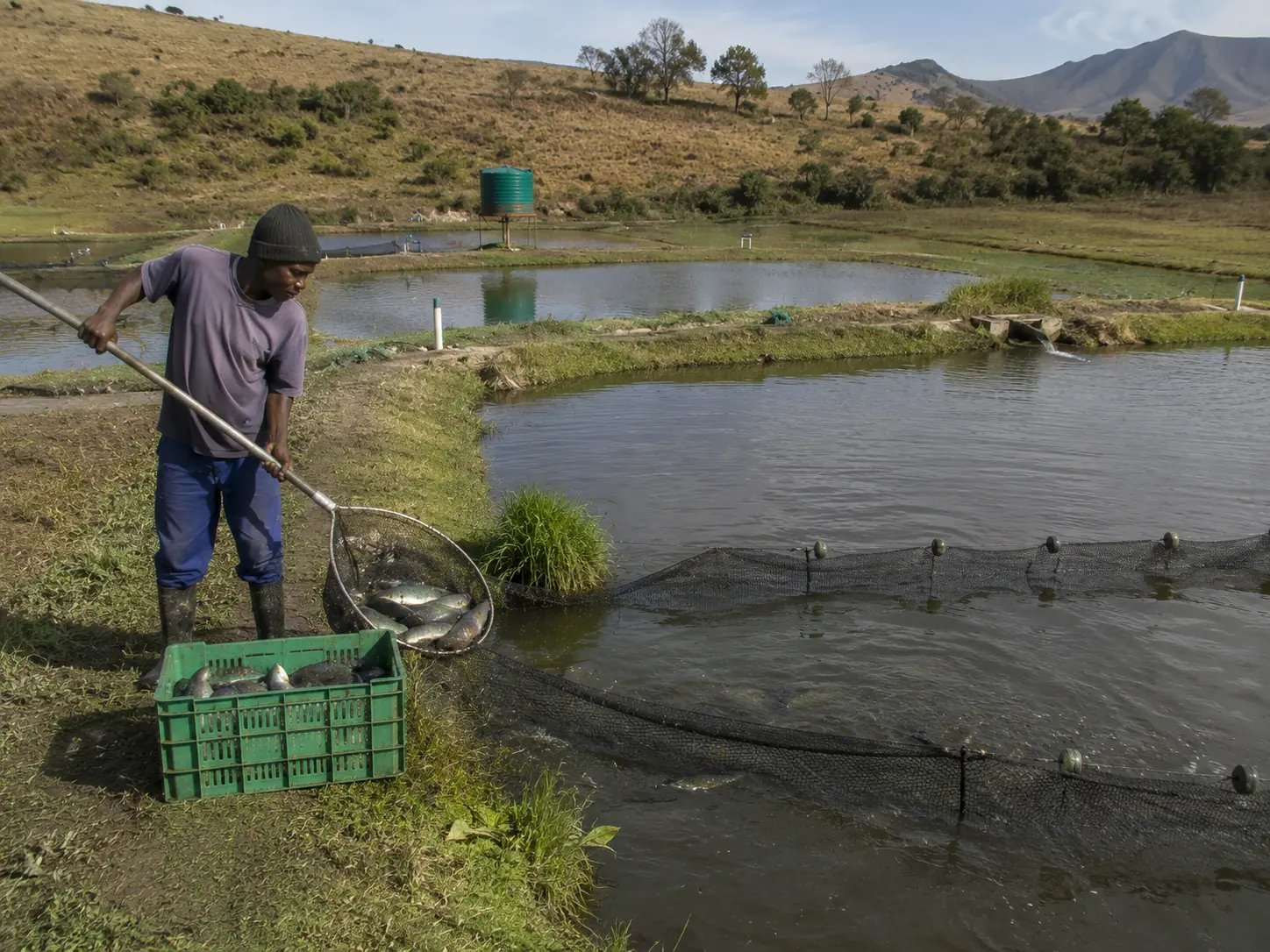
Tilapia reaches marketable size (300–600g whole fish, or 150–300g fillet) in 6–10 months depending on water temperature, stocking density, and feeding quality. Harvest by draining the pond or seining with a net. Deplete fish for 24–48 hours before harvest (stop feeding, hold in clean water) to empty gut content and improve flesh quality and flavour. Harvest in the cool early morning. Move fish to chilled water immediately after harvest, tilapia deteriorates quickly without cooling. Supply fresh, chilled tilapia to your buyers within 24–36 hours of harvest for best quality and price.
Tilapia Health Management: Common Diseases in SA Farms
Tilapia are relatively disease-resistant compared to other farmed fish species, but stressed fish (from poor water quality, overcrowding, temperature fluctuations, or poor nutrition) are susceptible to several common diseases. Prevention through good management is always more cost-effective than treatment.
Common Diseases and Conditions
- Aeromonas bacterial infections (Motile Aeromonas Septicaemia): Ulcers, haemorrhaging, and fin rot. Usually triggered by stress (low DO, handling, water quality crashes). Treat with water quality improvement; antibiotics may be prescribed by a veterinarian. Prevention is key, avoid oxygen stress events.
- Columnaris (Flavobacterium columnare): Grey-white lesions, saddle-shaped patches on the dorsal surface. Common in warm, crowded conditions. Improve water quality and reduce density. Salt baths (2–5 g/L NaCl) can help mild cases.
- Parasites, Trichodina and Dactylogyrus (gill flukes): Fish scratch against surfaces, show laboured breathing and reduced feeding. Gill flukes are treated with formalin baths (25–50 ppm for 1 hour) or potassium permanganate dips. Diagnose with a gill smear examined under a microscope.
- Ichthyophthirius (White Spot / Ich): White pinhead-sized spots on body and fins. Caused by the parasite Ichthyophthirius multifiliis. Raise water temperature to 28–30°C and treat with salt or formalin. This is introduced via infected fingerlings, quarantine new fish for 7–14 days before introducing to main ponds.
- Nutritional deficiencies: Spinal deformities, poor growth, anaemia. Usually caused by poor quality feed or insufficient feeding rates. Use quality, certified aquaculture peland avoid using expired feed.
🩺 Register with an aquaculture veterinarian: The SA Veterinary Council lists aquaculture-competent vets. Having a relationship with a vet before a disease outbreak occurs allows faster diagnosis and treatment. Many SA aquaculture farmers also consult with the Aquaculture Association of Southern Africa (AASA) for technical support and disease management guidance.
Where to Sell Tilapia in South Africa
Informal Fresh Fish Markets and Township Trade
The most accessible market for small and medium tilapia producers in SA is the informal fresh fish trade, at taxi ranks, township markets, spaza shops, and street traders. Live or fresh-chilled tilapia commands R40–R80 per kg whole weight at informal markets, with significant price variation by region. Limpopo, Mpumalanga, and KwaZulu-Natal have well-established informal fresh fish cultures. Build relationships with regular buyers (traders who come to your farm or who you supply weekly) for consistent offtake.
Restaurants and Catering
Restaurants, from township taverns and braai spots to formal restaurants in Johannesburg, Pretoria, and Durban, are growing markets for fresh tilapia. Tilapia is versatile (braai, fry, bake), affordable, and increasingly fashionable in South African food culture. Approach restaurant buyers with a consistent supply offer, a price per kg for cleaned or whole fish, and reliable weekly or twice-weekly deliveries. Consistency is what restaurant buyers value most.
Supermarkets and Formal Retail
Pick n Pay, Spar, and Checkers have all expressed interest in locally farmed fresh tilapia. However, formal retail supply requires food safety certification (HACCP or equivalent), consistent graded sizes (300–500g per fish, uniformly sized), appropriate cold-chain packaging, and guaranteed weekly volumes. Most small-scale producers find it easier to supply a fish wholesale agent or processing facility that aggregates product from multiple farms for retail.
Live Fish Sales, Premium Option
Live tilapia commands a significant price premium (15–30% above chilled fresh) in markets where live fish are valued, particularly in Chinese communities in Johannesburg and Cape Town, and in some traditional-market contexts across Limpopo and KwaZulu-Natal. Live fish sales require transport tanks with aeration and are more logistically complex but can substantially increase revenue per fish.
Value-Added Products
Processors who fillet, freeze, smoke, or dry tilapia capture higher margins per kilogram of fish. Smoked tilapia in particular has a strong domestic market and does not require refrigerated supply chains (shelf life 2–4 weeks at room temperature when properly smoked). For smallholders with processing capacity, smoked tilapia can be sold at markets, through WhatsApp groups, and via township retail at R60–R120 per smoked fish.
Tilapia Farming Budget and Profitability Estimates for South Africa
| Cost Item | Once-Off (2 × 500m² ponds) | Per Cycle (6–8 months) |
|---|---|---|
| Pond construction (earthen, 2 × 500m²) | R30,000 – R80,000 | — |
| Aeration equipment | R8,000 – R20,000 | — |
| Water supply infrastructure | R5,000 – R20,000 | — |
| Fingerlings (2,000–4,000 fish) | — | R3,000 – R8,000 |
| Feed (1.5–2.0 FCR, 500–800kg fish) | — | R9,000 – R20,000 |
| Electricity / fuel for aeration | — | R2,000 – R6,000 |
| Labour and management | — | R4,000 – R10,000 |
| Packaging, transport, marketing | — | R1,500 – R4,000 |
| Total capital (once-off) | R43,000 – R120,000 | — |
| Total per-cycle operating cost | — | R19,500 – R48,000 |
| Expected harvest (2 × 500m² ponds) | 500–1,000 kg whole fish per cycle | |
| Gross revenue at R50/kg | R25,000 – R50,000 per cycle | |
Tilapia farming profitability in South Africa is primarily driven by feed cost management and consistent market access. The break-even point on infrastructure is typically reached by cycle 3–4 (18–24 months). Operations that achieve FCR below 1.8, maintain fish survival above 90%, and sell direct to informal or restaurant markets (avoiding middlemen) can achieve net margins of 30–50% per cycle on established infrastructure.
Permits and Regulations for Tilapia Farming in South Africa
As noted above, Nile tilapia (Oreochromis niloticus) is classified as Category 2 alien invasive species under NEMBA in most SA provinces. Farming requires a permit (also called a Section 71 permit or aquaculture permit) from the relevant provincial authority. Key requirements typically include:
- Secure facilities that prevent escape of fish to natural water bodies (sealed pond drains, escape screens on water inlet/outlet pipes)
- An Environmental Impact Assessment (EIA) or basic screening for larger operations
- A fish health management plan
- Annual renewal and compliance inspections
Contact your provincial Department of Agriculture or the DFFE Aquaculture Development Division for your specific province's requirements. The Aquaculture Association of Southern Africa (AASA) provides permit application guidance and industry support for new entrants.