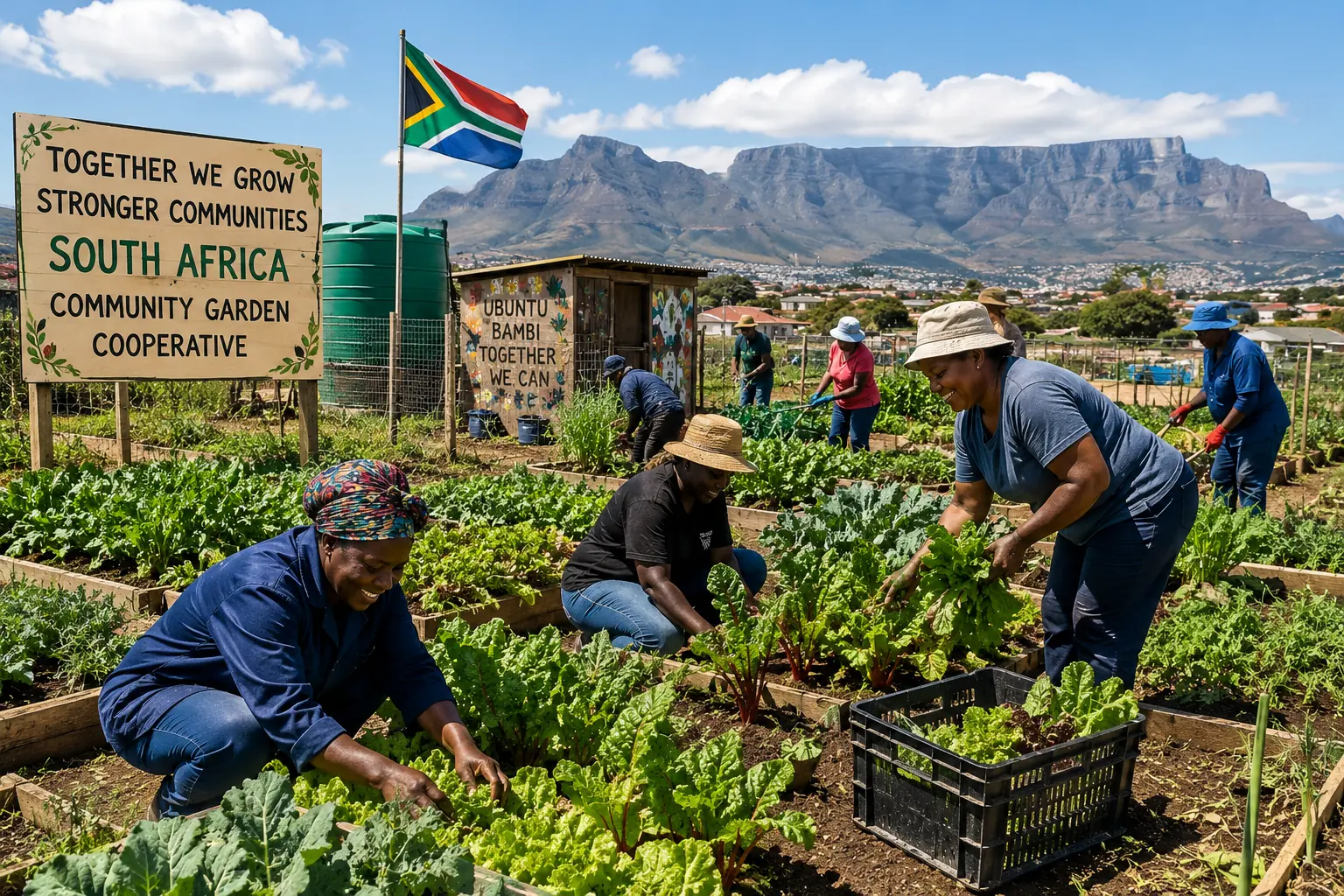
Community food gardens rank among the most powerful tools available to South African communities for improving food security, generating supplementary income, and building social cohesion, all on small, often communally managed plots of land. From Soweto and Khayelitsha to rural villages in Limpopo and the Eastern Cape, thousands of community gardens across the country are producing fresh vegetables, creating employment, and connecting people to the food they eat.
A community garden in the South African context can take many forms, a shared plot behind a church or school, a co-operative vegetable garden run by a group of unemployed women, a ward-level food production initiative supported by a municipality, or a formal cooperative enterprise that supplies surplus produce to a local fresh produce market. What all of them share is a collective structure: shared land, shared labour, shared inputs, and shared benefits.
This guide walks you through how to plan, establish, manage, and sustain a community food garden in South Africa, from choosing and securing your site, to building the right group structure, planning your crops, managing water, accessing funding, and turning your garden into a source of income as well as nutrition.
Why Start a Community Garden?
The case for community food gardens in South Africa goes well beyond growing vegetables. In a country where food insecurity affects millions of households, where youth unemployment exceeds 60% in many townships, and where fresh produce is expensive and often unavailable in low-income communities, a well-managed community garden delivers benefits at multiple levels:
- Food security: Direct access to fresh vegetables reduces household food expenditure and improves nutritional diversity for garden members and their families.
- Income generation: Surplus produce sold at local markets, spaza shops, or informal traders provides cash income to garden members, often at prices significantly better than minimum wage for the hours invested.
- Skills development: Gardening, business management, record-keeping, irrigation operation, and organic growing skills learned in a community garden have value beyond the garden itself.
- Social cohesion: Shared work toward a common goal builds community bonds, reduces conflict, and creates a shared asset that the community has a stake in protecting.
- Environmental benefits: Composting of organic waste, reduced use of synthetic chemicals in organic gardens, and greening of urban spaces all contribute to a healthier local environment.
In South Africa's specific context, community gardens also serve as practical platforms for government food security programmes, NGO nutritional interventions, and school feeding supplement initiatives, making them attractive targets for grant funding and institutional support.
Step-by-Step: Starting a Community Garden
Finding and Securing a Site
Land access is often the first and most significant challenge for community gardens in South African townships and urban areas. Most municipal land suitable for a community garden is technically under the jurisdiction of the local municipality, and informal use without permission creates insecurity that can result in the garden being bulldozed without warning, a risk that has destroyed many well-established community gardens in South African cities.
Before investing time and money in establishing a garden, secure your tenure in writing. Options include:
- Municipal land lease: Approach your ward councillor or the municipality's Parks and Recreation or Agriculture department to request a formal lease or land-use agreement for an identified piece of vacant municipal land. Many municipalities have processes for this and actively support community food gardens under urban agriculture policies.
- School grounds: Many schools have unused land suitable for a food garden. Approach the school governing body (SGB) with a proposal. School food gardens qualify for specific funding streams from the Department of Basic Education and various NGOs.
- Church or community hall land: Religious institutions and community centres often have underused land and are receptive to community gardening proposals, particularly where the garden serves a social welfare function.
- Private landowner agreement: A short-term land use agreement with a willing private landowner can work for getting started, but seek a multi-year arrangement in writing to protect your investment in soil preparation and infrastructure.
An ideal community garden site has the following characteristics: full sun for at least 6–8 hours per day, access to a reliable water source (municipal connection, borehole, or rainwater harvesting), relatively flat or gently sloping ground, protection from vandalism and theft (a fence is essential in most urban areas), and soil that is not contaminated with heavy metals or industrial chemicals, particularly important on former industrial or landfill sites.
Organising Your Group
The single biggest cause of community garden failure in South Africa is not poor soils or lack of water. It is poor group governance. Disagreements over who does the work, who gets the produce, how money is managed, and who makes decisions destroy more community gardens than any agronomic problem. Getting the group structure right from the start is the most important investment you can make.
Group Size and Composition
An ideal community garden group for a first-time operation has between 8 and 20 active members. Fewer than 8 and the workload becomes unsustainable for individuals during busy periods; more than 20 and governance complexity grows rapidly. Membership should be defined, a specific list of named individuals who have agreed to the group's rules and accepted their responsibilities.
Roles and Responsibilities
Every functional community garden needs at minimum: a chairperson (facilitates decisions and represents the group externally), a secretary (keeps records of meetings, agreements, and membership), a treasurer (manages money, keeps the cashbook, reports to the group), and a garden manager or production coordinator (oversees day-to-day planting, maintenance, and harvesting activities).
Labour Roster and Benefit Allocation
Before the first seed goes in the ground, agree on and document: how many days per week each member is expected to work, how absences are handled, how produce is allocated between members and sold commercially, and how revenue is divided or reinvested. A simple written constitution or group agreement signed by all members is worth far more than a verbal understanding when disputes arise, and in most long-running community gardens, disputes do arise.
Legal Structure
A community garden that sells produce and manages money should consider formalizing as a Non-Profit Organisation (NPO) registered with the Department of Social Development, or as a cooperative registered under the Cooperatives Act with the Department of Trade, Industry and Competition (DTIC). Formal status makes the group eligible for a wider range of grants, enables the group to open a bank account, provides legal protection for members, and increases credibility with institutional buyers and funders. The SEDA (Small Enterprise Development Agency) provides free support to cooperatives in South Africa and can assist with registration and governance.
Choosing Crops for Your Community Garden
Crop selection for a community garden should balance three priorities: nutritional value for members, market demand for surplus produce, and suitability for your specific climate and season.
High-Value, Fast-Growing Crops
The most consistently productive and marketable crops for South African community gardens include:
- Spinach and Swiss chard (morogo): Fast-growing, nutritious, productive over multiple harvests, and in high demand at informal markets. Spinach is the single most commonly grown and sold vegetable in South African township gardens.
- Cabbage: A staple in South African kitchens across all income groups. Easy to grow, high yielding, and widely marketable. Susceptible to caterpillars, plan for pest management.
- Tomatoes: The most in-demand vegetable in South Africa. Higher management requirements than leafy greens but excellent market prices when quality is good.
- Green beans: Productive, relatively fast to harvest (55–65 days), and well-suited to warmer seasons.
- Butternut squash: Low maintenance once established, stores well without refrigeration, and sold widely at informal markets.
- Herbs (parsley, coriander, chives): Small space requirement, fast growing, and excellent per-kilogram market prices relative to larger vegetables.
Crop Planning by Season
Plan your crops around South Africa's seasons for your province. In most summer rainfall provinces (Gauteng, Limpopo, KwaZulu-Natal, Mpumalanga), tomatoes, green beans, and butternut are summer crops, while spinach, cabbage, and carrots are cooler-weather crops planted in autumn and winter. In the Western Cape with its winter rainfall pattern, the seasons are broadly reversed. A year-round cropping plan that staggers planting dates to achieve continuous harvest is far more productive than planting everything at once.
Water Access and Irrigation
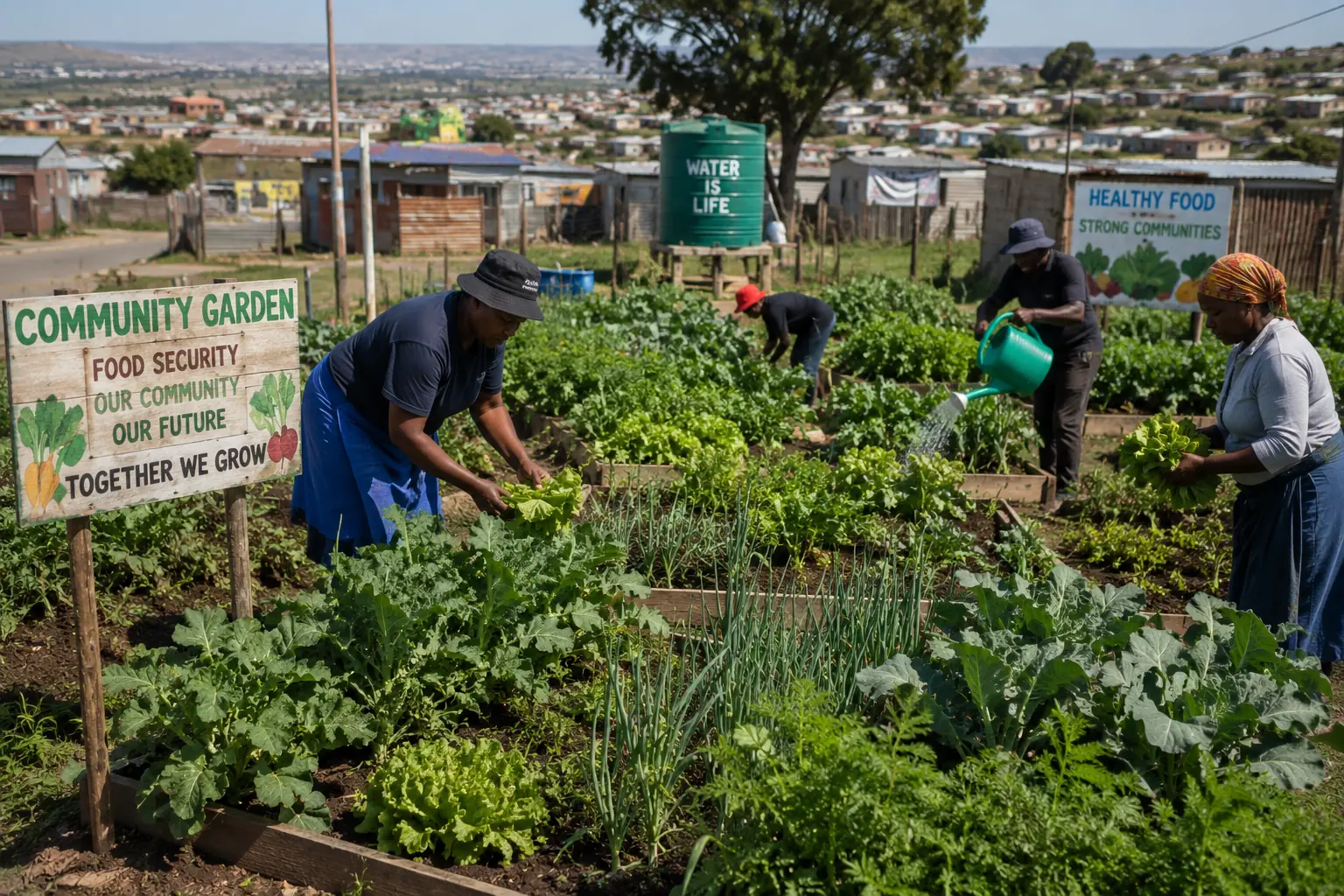
Water is the most limiting factor for most urban community gardens in South Africa. A garden with unreliable or expensive water cannot be productive, regardless of how fertile the soil is or how committed the members are. Before committing to a site, confirm your water source, quantity, and cost.
Water options for community gardens include a municipal tap connection (the most reliable but subject to outages and potentially costly if metered), a borehole (requires drilling costs and pump maintenance but provides independence from the municipal supply), rainwater harvesting tanks (excellent supplement in higher-rainfall areas but insufficient on their own in drier months), and greywater reuse from nearby households (feasible for some garden areas but requires appropriate application and crop choices).
For most community gardens, drip irrigation is the most water-efficient and practically manageable option. Drip irrigation kits designed for small-scale gardens are available from agri-retailers and NGO supply programmes at relatively low cost. The Water Research Commission (WRC) and the Department of Water and Sanitation both provide technical guides and support for water-efficient garden irrigation in South Africa.
Soil Preparation and Composting
Most urban soils in South African townships are highly degraded, compacted, low in organic matter, and often contaminated with construction debris. Improving soil health is a long-term investment that compounds over time as more compost is added and soil biology develops. Starting a compost system is among the first and most important actions for a new community garden.
A simple compost system requires two bays built from wire mesh, wooden pallets, or bricks. Fill one bay with alternating layers of dry brown material (dry leaves, cardboard, straw, wood chips) and wet green material (vegetable peels, grass clippings, weeds, fresh manure). Keep the pile moist and turn it every 2–3 weeks. Finished compost is ready in 6–12 weeks and dramatically improves soil structure, water retention, and fertility, reducing or eliminating the need to buy synthetic fertilizer. Chicken manure from nearby poultry operations is an excellent nitrogen-rich addition to compost piles and is often available cheaply or freely in rural and peri-urban areas.
Funding Your Community Garden
South Africa has a relatively rich ecosystem of funding available for community food gardens from government departments, development finance institutions, and NGOs. Key funding sources include:
- DAFF/DAFR Food Security Programmes: The national Department of Agriculture, Land Reform and Rural Development funds food gardens through its household and community food production programmes. Apply through your provincial Department of Agriculture office or ward-level extension officer.
- Municipal Urban Agriculture Programmes: Many South African municipalities (including the City of Johannesburg, City of Cape Town, eThekwini, and Tshwane) have dedicated urban agriculture and food security budgets supporting community gardens with seeds, tools, fencing, water connections, and training. Contact your ward councillor for information on your municipality's programme.
- Lotto (National Lotteries Commission): The NLC funds community-based food security projects through its Charities sector grants. Applications are accepted from registered NPOs and cooperatives.
- The Green Fund (DBSA): The Development Bank of Southern Africa's Green Fund supports community environmental projects including urban food gardens and composting initiatives.
- NGO and Corporate CSI Funding: Numerous South African NGOs (GroundWork, Abalimi Bezekhaya, FoodBank SA, and others) and corporate CSI programmes fund community garden establishment, training, and capacity-building. Research organisations active in your province and approach them with a clear proposal.
- SEDA (Small Enterprise Development Agency): Provides business development support, market access, and cooperative governance assistance to community enterprises including food gardens operating as cooperatives.
Selling Your Surplus Produce
A community garden that produces more than its members can consume has a genuine micro-enterprise opportunity. Surplus produce can be sold through several channels:
- Informal market sales: Direct sales to community members, at street-side stalls, or at local informal markets. Typically the highest per-unit price and requires no formal certification. Spinach, tomatoes, cabbage, and green beans are consistently in demand in township informal markets.
- Spaza and tuck shop supply: Establishing a regular supply relationship with local spaza shops or tuck shops provides a consistent buyer and regular income. Agree on consistent pricing and regular delivery schedules.
- School and institutional supply: Many schools under the National School Nutrition Programme are required to source produce locally where possible. Approach your nearest school's principal or the district Department of Basic Education office about supplying fresh vegetables to the school feeding programme.
- Fresh produce market agents: For community gardens that achieve commercial-scale production volumes, selling through a commission agent at the nearest fresh produce market enables access to a much larger buyer pool. Produce must be packed in standard market containers and meet basic quality and freshness standards.
🌿 Keys to a Long-Lasting Community Garden
- Get written land tenure before you invest, a garden on insecure land can be lost overnight and all your work wasted.
- Write down your group rules before planting, verbal agreements lead to disputes. A simple signed constitution covering labour, produce sharing, and money management prevents most conflicts.
- Start a compost system on day one. It is free, improves your soil continuously, and reduces your dependence on purchased fertilizer over time.
- Focus your first season on fast-growing, marketable crops, spinach, cabbage, and Swiss chard give you income quickly and build confidence in the group.
- Open a dedicated bank account for garden income, mixing garden money with personal finances is firmly among the most common sources of group conflict and collapse.
- Record everything, planting dates, harvest weights, sales, and expenses. Records prove your garden's value to funders and buyers, and help you improve season by season.
⚠️ Disclaimer
This guide is for general educational purposes. Community garden regulations, water use bylaws, and grant programme availability change regularly. Always verify current funding programmes with your municipal or provincial agriculture office, and consult a local extension officer for agronomy advice specific to your area and season.