Sorghum Types & Varieties for South African Farmers
South Africa grows several sorghum types, each with different end-market applications. Understanding which type suits your land, climate, and intended market is the first production decision:
Leading commercial varieties in SA include Overflow (white grain, high yield), Macia (white grain, preferred by processors), PAN 8564 (red grain, beer malt), and Jumbo (dual-purpose grain/forage). Seed companies including Pannar, Sensako, and Pioneer release new varieties regularly, always check the latest NTK (National Trial Committee) performance data for your specific region before making a variety decision.
Soil & Climate Requirements
Sorghum is among the most adaptable grain crops for South African conditions, but matching the variety and production system to your specific environment maximises both yield and profit:
Soil Type
Sorghum performs best on medium to heavy-textured soils, sandy loams, clay loams, and black turf soils (vertisols). Its deep, fibrous root system (reaching 1.5–2.0m under dryland conditions) is excellent at extracting subsoil moisture that shallower-rooted crops cannot access. Sorghum is more tolerant of clay-heavy soils and temporary waterlogging than maize. The key soil requirement is good drainage, prolonged waterlogging kills sorghum. Target a soil pH of 5.5–7.0 (water). Test your soil before planting and apply lime if necessary to bring pH above 5.5. See our soil and fertilizers guide for SA lime application rates.
Rainfall & Temperature
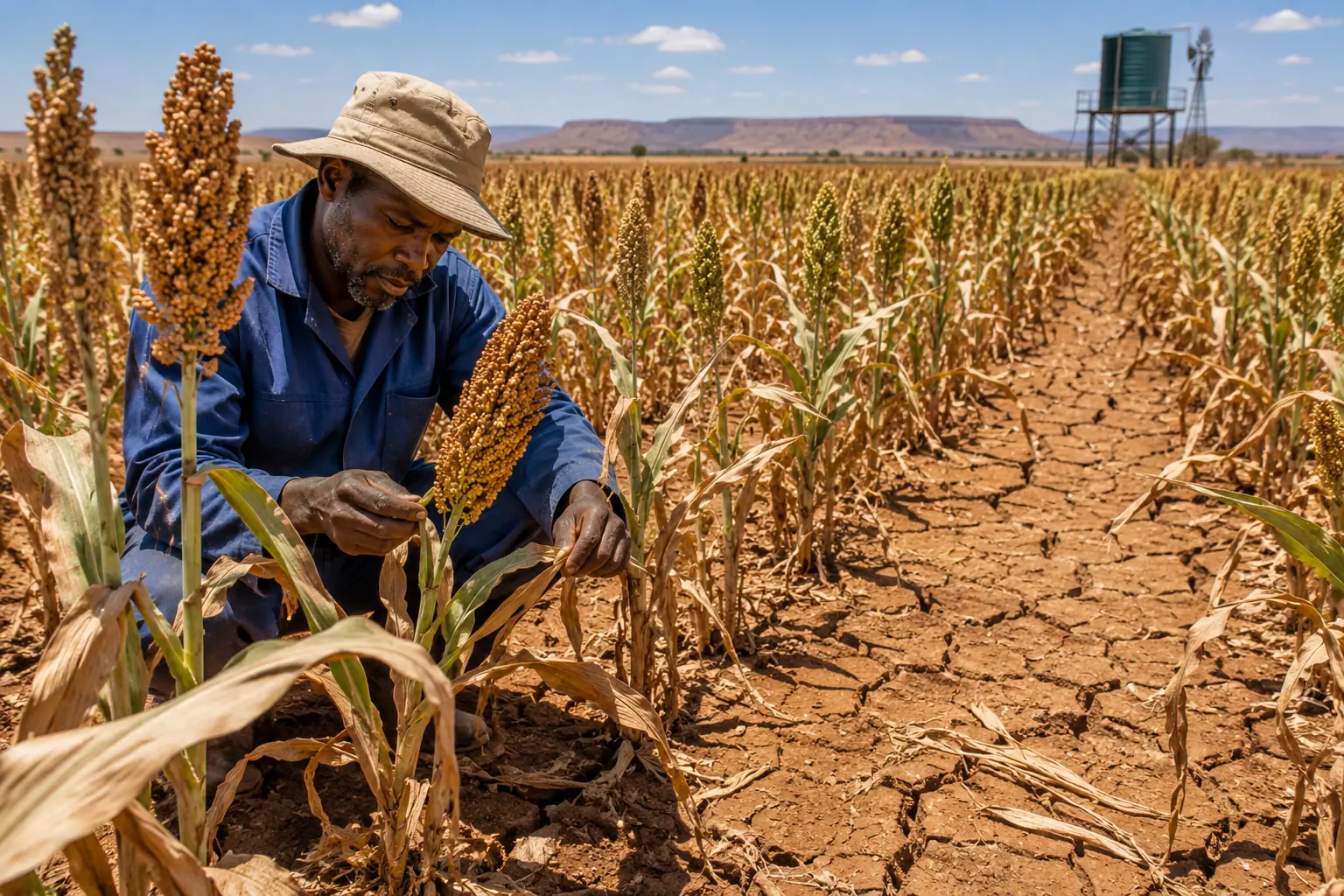
Sorghum is a C4 warm-season crop that thrives in high temperatures (optimum 26–34°C) and is more drought-tolerant than any other major grain crop grown in SA. It is produced primarily in the summer rainfall regions: North West, Limpopo, Free State, KwaZulu-Natal (inland), and the Eastern Cape. Minimum annual rainfall of 300mm is workable for dryland sorghum, though yields increase significantly with 450–600mm. Irrigation production is viable in arid regions and extends the range of commercial production into the Northern Cape and Limpopo Lowveld.
Land Preparation & Planting
Thorough land preparation is essential for good sorghum establishment. Sorghum seed is small (approximately 25 000 seeds/kg) and requires a firm, fine seedbed for reliable germination:
Tillage
Conventional tillage (primary ploughing to 25–30cm + secondary discing/harrowing to create a fine tilth) remains common in sorghum production areas, though no-till and conservation agriculture is gaining adoption in areas like the North West and Free State where wind erosion on bare soils between seasons is a problem. Under no-till, plant residue management is critical, heavy sorghum stubble can impede planter operation and create slug and disease habitat if not managed properly.
Planting Season
Summer rainfall regions: plant after the last frost risk and once soil temperature at 10cm depth exceeds 16°C consistently, typically October to December depending on province. In Limpopo (earlier, warmer onset): October. In the Free State and higher-altitude North West: November–December. Late planting beyond mid-December increases risk of frost damage at grain fill in the Free State and higher-rainfall Eastern Cape.
Planting Density & Depth
Plant sorghum seed at 2–3cm depth (never deeper than 4cm in cool soils) into firm, moist soil. Planting into dry soil and waiting for rain is generally unsuccessful with sorghum's small seed. Target plant populations vary by rainfall zone:
- Dryland, below 400mm rainfall: 40 000–60 000 plants/ha (row spacing 90–100cm)
- Dryland, 400–600mm rainfall: 80 000–100 000 plants/ha (row spacing 75–90cm)
- Irrigated production: 100 000–140 000 plants/ha (row spacing 75cm)
Use only certified, treated seed from registered suppliers to ensure germination percentage, genetic purity, and seed dressing against soil-borne pathogens and early-season insect pests.
Fertilisation & Nutrition
Sorghum has a lower nutrient demand than maize but still responds well to balanced nutrition, particularly nitrogen. A practical fertilisation programme for SA commercial sorghum production:
- Baseline soil test: Apply lime if pH below 5.5. Correct phosphorus and potassium deficiencies identified by soil analysis at land preparation time.
- Basal phosphorus: Apply 20–30 kg P/ha as single superphosphate or MAP at planting in the row or banded below the seed.
- Nitrogen: Sorghum requires 60–100 kg N/ha for dryland production and up to 140 kg N/ha under irrigation. Split applications (half at planting as LAN or urea, half at 6–8 leaf stage) improve nitrogen use efficiency and reduce leaching risk. Consider growing sorghum after a soybean or legume cover crop in your rotation to reduce synthetic nitrogen requirements.
- Zinc: Sorghum is sensitive to zinc deficiency, particularly on calcareous or heavily limed soils. Apply 5–10 kg ZnSO₄/ha if soil Zn is below critical level on your soil test results.
Pest, Disease & Weed Management
Sorghum has fewer major disease problems than maize but several serious pests require proactive management:
Key Pests
- Stalk Borer (Busseola fusca), The most damaging insect pest of South African sorghum. Larvae enter the whorl of young plants and bore into stems, causing characteristic "dead heart" symptoms. Scout weekly from emergence. Treat with registered insecticides (chlorpyrifos, carbofuran in granule) or apply Trichogramma egg parasitoids at planting for biological control. See our pest management guide.
- Head Bug (Eurystylus oldi), Small brown sucking bug that feeds on developing grain in the head. Common in warmer, more humid sorghum areas (Limpopo, KZN). Causes shrivelled grain and allows mould entry. Manage with registered pyrethroid sprays at heading if populations exceed economic thresholds.
- Birds, Quelea and red-winged starlings cause significant grain loss, particularly in white/cream sorghum during grain fill and ripening. Red/brown sorghum's tannin content deters bird feeding, a meaningful advantage in high-bird-pressure areas. Physical deterrents (noise cannons, reflective tape, gas guns) provide partial relief.
- Fall Armyworm (Spodoptera frugiperda), Increasingly damaging in SA since its arrival in 2016. Sorghum is a secondary host after maize. Scout young plants and treat whorls with Bt sprays or registered insecticides if infestation exceeds 2 larvae per 10 plants in the whorl.
Key Diseases
- Sorghum Ergot (Claviceps africana), Produces toxic honeydew in unfertilised florets during cool, humid flowering conditions. Sorghum ergot is a significant export quality and food safety concern. Use tolerant varieties and avoid planting in cool highland areas during wet seasons.
- Grain Mould Complex, Several fungal species colonise sorghum grain during wet harvests, causing discolouration and mycotoxin contamination. Harvest promptly when grain moisture drops below 14%; avoid leaving ripe grain on the plant during wet conditions.
- Striga (Witchweed), A parasitic plant (Striga asiatica and S. hermonthica) that attaches to sorghum roots and severely suppresses yield, particularly in heavily infested sandy soils in Limpopo and KZN. Use Striga-tolerant varieties, apply nitrogen fertiliser (Striga thrives in nitrogen-deficient conditions), and maintain a diverse crop rotation.
Weed Management
Weed competition in the first 4 weeks after emergence can reduce sorghum yields by 40–60%. Pre-emergent herbicides (atrazine, metolachlor) are the foundation of chemical weed control; post-emergent grass herbicides (propaquizafop for grasses) can be applied where necessary. In organic sorghum production, inter-row cultivation (mechanical weeding) at 2–3 weeks after emergence is the primary tool. Cover crop residue from the previous season suppresses early weed flushes significantly under no-till systems.
Harvesting & Storage
Sorghum reaches physiological maturity (black layer formation at the base of the grain) approximately 30–40 days after heading, depending on temperature. Target harvest when grain moisture content reaches 12–14%, below this level the risk of shattering losses during mechanical harvest increases. Above 16%, grain requires drying before safe storage.
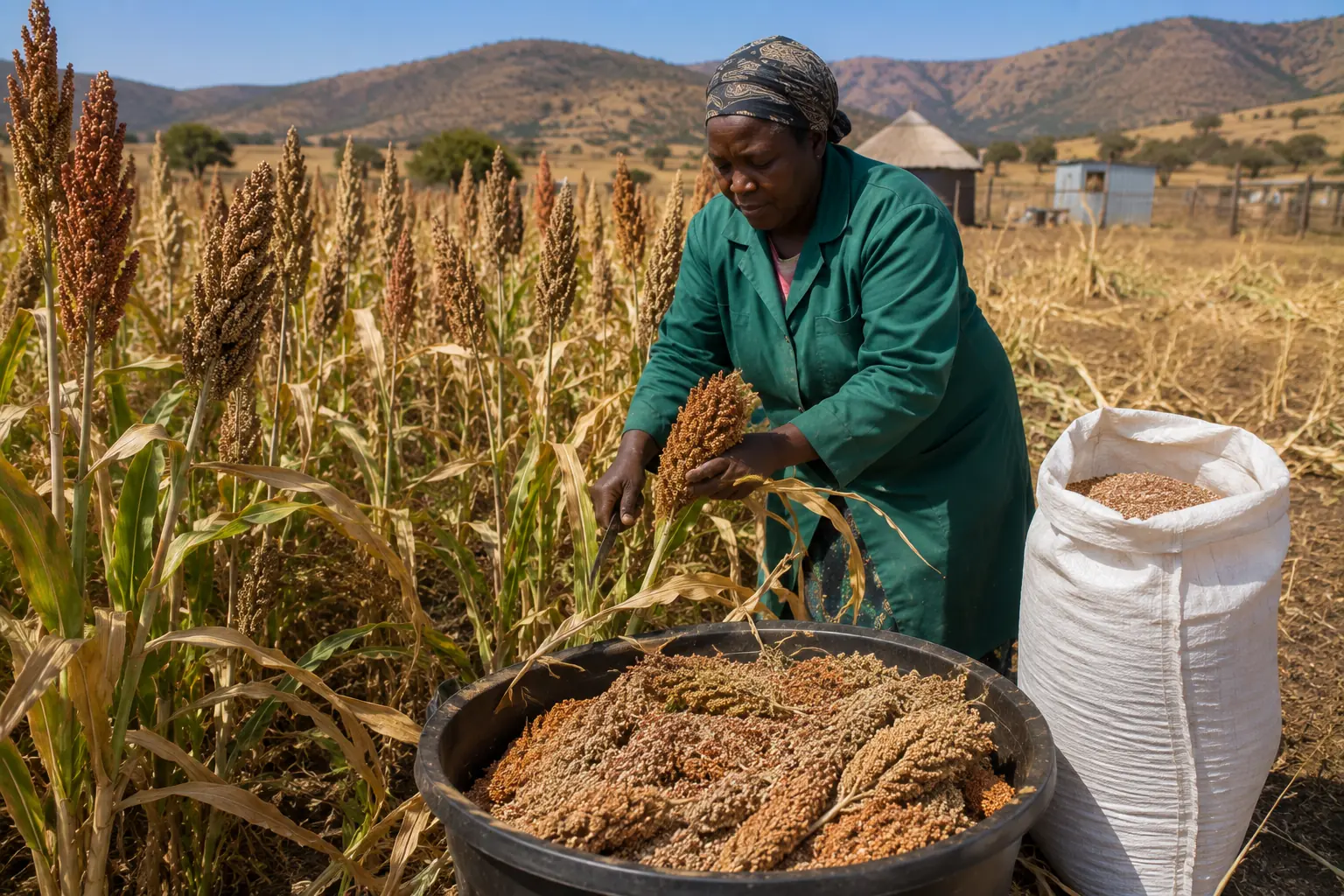
Combine harvesters with narrow concave clearances and low drum speeds are used for commercial harvesting, sorghum grain is smaller and harder than maize, requiring adjusted settings. Smallholder producers use manual head harvesting and small threshers widely available through agricultural cooperatives and equipment hire schemes.
Store sorghum grain below 13% moisture in clean, dry, well-ventilated grain stores. Sorghum is susceptible to grain weevils (Sitophilus spp.) and larger grain borers in storage, treat with registered grain protectants (pirimiphos-methyl, deltamethrin) at intake. Metal silo bags (hermetic storage) are increasingly adopted by SA smallholders for low-cost, chemical-free storage that prevents insect access by eliminating oxygen.
Markets, Selling Your Sorghum in South Africa
The South African sorghum market has several distinct buyer categories, each with different quality requirements and pricing structures:
- SAB (AB InBev) and Heineken SA, The largest single buyers of sorghum in SA, purchasing red sorghum for opaque sorghum beer (Castle Milk Stout's sorghum adjunct and Joburg traditional beer brands). SAB has historically operated formal sorghum contract schemes with North West and Free State producers. Contract pricing provides downside protection but limits upside participation. Contact SAB's agronomy department for current contract availability.
- Tiger Brands, Pioneer Foods (PepsiCo), Purchase white/cream sorghum for food processing (OROS sorghum-based snacks, Morvite porridge range, gluten-free product lines). These buyers require consistent grain quality: low tannin, low mould, specific moisture levels. Food-grade premiums of R300–R700/t above feed-grade pricing apply to compliant grain.
- Animal feed compounders, Sorghum is a direct substitute for maize in feed formulations (slightly lower energy but similar protein). When maize prices are elevated, feed compounders actively seek sorghum to reduce ration costs. The feed market provides a reliable base buyer but at lower prices than food/malt markets.
- Craft brewers and maltsters, The rapidly growing sorghum buyer segment in SA. SA's craft beer industry has grown significantly, and several craft brewers use sorghum as either a primary ingredient or malt adjunct. Contact the Craft Brewers Association of SA for connections to buyers seeking locally sourced sorghum malt.
- Cooperatives and grain traders, Most commercial sorghum in SA moves through agricultural cooperatives (NTK, TWK, VKB, Agri Limpopo) or private grain traders (Louis Dreyfus, Glencore, Afgri). Selling through cooperatives provides access to storage, drying, grading, and forward contract facilities. See our agri markets guide for the full cooperative landscape.