Farming Grants in South Africa for 2027: Programmes, Eligibility and How to Apply
Written by Siphesihle Zangwa, researcher, University of Mpumalanga. Cleaned up and edited by Samukelo Moloko, publisher, MzansiFarm. Updated 6 November 2026.
Farmers applying for government support in the 2027/28 financial year will encounter changes to South Africa's agricultural funding system. The biggest is the merger of the Comprehensive Agricultural Support Programme (CASP) and Ilima/Letsema into a single grant framework.
The National Policy on Comprehensive Producer Development Support, introduced in April 2025, is also moving into its nationwide implementation phase. Provincial agriculture departments are responsible for putting the policy into practice and assessing the needs of different categories of farmers.
Support is not limited to money for buying seed and fertiliser. Depending on the programme, farmers can apply for irrigation infrastructure, fencing, machinery, livestock, production inputs, training and assistance with agricultural processing.
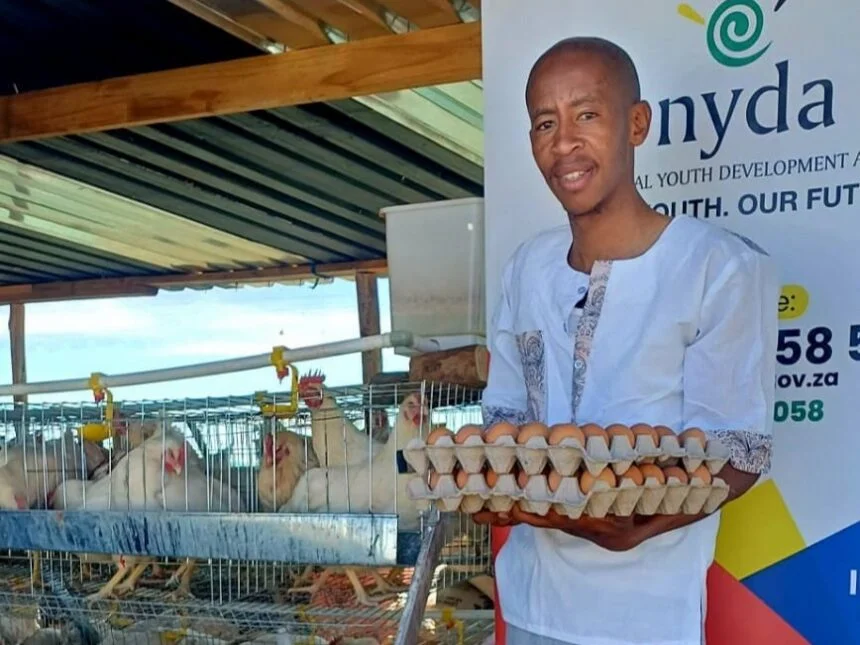
Other funding routes include the Land Bank's Blended Finance Scheme, the Industrial Development Corporation's Agri-Industrial Fund, the Department of Trade, Industry and Competition's Agro-Processing Support Scheme and youth funding through the National Youth Development Agency.
These programmes have different conditions. Some provide grants, others combine grants with loans, and some offer credit that must be repaid.
1. CASP and Ilima/Letsema: The Consolidated Agricultural Support Grant
The Comprehensive Agricultural Support Programme has been one of government's main instruments for supporting emerging and smallholder farmers.
Its support has covered:
- Farm infrastructure and irrigation.
- Production inputs and equipment.
- Agricultural training and mentorship.
- Extension and advisory services.
- Marketing and business development.
- Support for farmers entering commercial production.
Ilima/Letsema has traditionally supported increased agricultural production among emerging farmers and vulnerable farming communities, including crop, livestock and household food-production projects.
The two grant programmes were merged in 2026 as part of a move to reduce duplication and coordinate producer support. Agriculture Minister John Steenhuisen confirmed the merger in his June 2026 budget speech. The OECD's 2026 agricultural policy review also records the merger and the wider implementation of the producer-support policy.
Who can apply?
The producer-support framework covers different categories of agricultural producers, including:
- Household and subsistence farmers.
- Smallholder farmers.
- Land-reform beneficiaries.
- Previously disadvantaged producers.
- Commercial producers who meet the applicable programme conditions.
- Agricultural processing businesses.
The requirements depend on the type of project and the province.
A household vegetable garden will not be assessed in the same way as a commercial livestock operation or an established agro-processing business.
What can the funding cover?
Depending on provincial priorities and the approved project, assistance may include irrigation systems, farm fencing, machinery, production inputs, agricultural infrastructure, training and technical services.
The support may be delivered through the supply of approved equipment or inputs rather than a cash payment to the farmer.
Where do farmers apply?
Applications are handled through provincial departments of agriculture. Farmers should approach the office responsible for the district where their farming operation is located.
Ask for the current producer-support application form and business-plan template. Also establish whether applications are being accepted for the 2027/28 financial year.
The National Policy on Comprehensive Producer Development Support sets out the national framework.
2. Integrated Land Reform and Rural Development Support Programme
A new funding programme was launched on 26 October 2026 by the Department of Land Reform and Rural Development.
The Integrated Land Reform and Rural Development Support Programme (ILRRDSP) has an overall allocation of R2 billion, with R1.2 billion allocated for the 2026/27 financial year.
The programme brings funding, infrastructure, technical assistance, skills development and market access into a coordinated support system for land-reform beneficiaries.
The department is working with other development finance institutions, including the Land Bank, the Development Bank of Southern Africa and the IDC.
Who qualifies?
The programme is intended to support:
- Land-reform beneficiary farmers.
- Rural households.
- Communal Property Associations.
- Commonage farmers.
- Co-operatives.
- Producer groups.
- Restitution communities.
Women, young farmers, military veterans and farmworkers are among the groups prioritised by the department.
What does the programme fund?
The support covers more than production expenses. The announced activities include:
- Tractors, seed and agricultural equipment.
- Irrigation infrastructure.
- Storage facilities.
- Access roads.
- Agricultural technology.
- Agro-processing facilities.
- Skills development and technical support.
The programme also aims to support community-owned businesses and agricultural value chains.
Are applications open for 2027?
The first call for expressions of interest and development-support applications was issued in September 2026. According to the department's announcement on 27 October, applications for the current production season and assessments of infrastructure requirements were still being evaluated.
The first application period should therefore not be advertised as an open funding window. Farmers should contact the DLRRD to ask about the outcome of the first round and any further calls for the 2027/28 financial year.
Official information is available from the Department of Land Reform and Rural Development.
3. Land Bank Blended Finance Scheme
The Land Bank's Blended Finance Scheme combines a grant contribution from government with a repayable loan from the bank.
The programme was created to help qualifying developing farmers obtain finance for agricultural businesses that may struggle to secure conventional commercial loans.
Funding can support agricultural production, infrastructure, equipment and business expansion.
Who can apply?
The scheme is aimed at qualifying black producers and historically disadvantaged farmers seeking to develop or expand agricultural enterprises.
Applicants must meet the bank's assessment requirements, including the programme's beneficiary criteria, business viability and financial conditions.
The grant portion reduces the amount that must be financed through debt, but it does not remove the borrower's obligation to repay the loan component.
Is the Blended Finance Scheme accepting new applications?
<text color="danger" weight="medium">New applications were suspended as at 20 October 2026.</text>
This is an important point for farmers preparing their 2027 budgets.
The Land Bank suspended new applications after the grant funding available for the 2026/27 financial year was committed.
On 8 October, the Department of Land Reform and Rural Development announced an additional R500 million allocation for the scheme. However, Land Bank confirmed to Farmer's Weekly on 20 October that this money would support applications already received and would not reopen applications for new applicants.
The additional allocation followed a further R150 million commitment from the Department of Agriculture.
The bank has not announced a confirmed reopening date. It intends to resume applications when sufficient grant funding becomes available.
Farmers interested in the scheme should monitor the Land Bank website and contact their nearest branch before preparing an application.
4. Land Bank Agricultural Loans
Farmers who do not qualify for a grant or blended finance arrangement can investigate conventional agricultural finance.
The Land Bank provides loans for:
- Purchasing agricultural property.
- Tractors and farming machinery.
- Production expenses.
- Farm improvements.
- Irrigation and other infrastructure.
- Primary agriculture and agro-processing.
These products are loans, not grants. Borrowers must repay the money under the agreed lending conditions.
General eligibility requirements
The Land Bank lists the following general requirements:
- South African citizenship or permanent residence.
- A satisfactory credit record.
- A detailed business plan.
- Security equivalent to the amount borrowed.
- Sufficient income or projected cash flow to meet repayments.
The bank recognises that new-generation farmers may struggle to provide conventional security. It advises applicants to contact a branch to discuss available financing options.
Visit Land Bank's agricultural finance page for details.
5. IDC Agri-Industrial Fund
The Industrial Development Corporation works with the Department of Agriculture through the Agri-Industrial Fund to finance qualifying agricultural businesses.
The programme is aimed particularly at black-owned agricultural enterprises that need capital to establish or expand commercial production and participate in agricultural value chains.
The fund covers projects involving:
- Citrus, avocados, table grapes and blueberries.
- Macadamia and other tree nuts.
- Commercial poultry production.
- Livestock operations.
- Piggeries.
- Agricultural processing and expansion projects.
Who qualifies?
The IDC's published criteria require the applicant business to be at least 60% black-owned.
The funding can support capital equipment, infrastructure, working capital and production finance. Businesses must also contribute financially towards their projects.
The fund combines grant and debt components. The grant cannot be accessed as a stand-alone payment without IDC financing. The corporation indicates that it considers funding applications from R1 million upwards.
This programme is intended for commercially viable operations rather than small household gardens or farmers looking for a once-off input voucher.
How to apply
Applicants should prepare a business plan, financial projections, ownership documents and a detailed breakdown of the funding required.
Applications can be initiated through the IDC Agri-Industrial Fund.
6. IDC Agriculture and Agro-Processing Finance
The IDC also has a broader Agro-Processing and Agriculture division that finances companies involved in agricultural production and processing.
Its activities include horticulture, field-crop processing, meat and poultry, aquaculture, forestry and food manufacturing.
The IDC considers businesses that are establishing new industrial capacity or expanding existing operations. Projects should demonstrate economic viability and contribute to production capacity, employment or local value addition.
For start-up businesses, the IDC preferably limits its funding contribution to 60% of the total project requirement. It generally expects an equity contribution from the shareholders. Expansion projects have different funding structures and undergo individual assessment.
This is not a general agricultural grant. Applicants should expect a financial assessment, due diligence and contractual financing conditions.
See the IDC Agro-Processing and Agriculture funding page.
7. Agro-Processing Support Scheme
The Department of Trade, Industry and Competition operates the Agro-Processing Support Scheme (APSS).
Unlike production-support grants aimed at farmers buying inputs, this scheme supports businesses processing agricultural raw materials and adding value to agricultural products.
Examples include:
- Fruit and vegetable processing.
- Food manufacturing.
- Grain processing.
- Meat processing.
- Packaging and production facilities.
- Machinery used in agricultural processing.
How much funding is available?
The published APSS terms provide for a cost-sharing grant of 20% to 30% of qualifying investment costs, up to a maximum of R20 million over a two-year investment period.
An additional 10% may be considered for projects meeting all the specified economic-benefit criteria, including employment creation, transformation, geographical spread and local procurement.
The grant is not available for every expense incurred by an agricultural business. Applicants must show that the proposed investment supports the approved processing or beneficiation project.
Application requirements
Applicants need a business plan, detailed project budget and financial projections covering at least three years.
Existing businesses must provide recent audited or independently reviewed financial statements.
An important condition is that applications must be submitted before the investment activities begin. Machinery already purchased and put into commercial use before applying will not qualify for the incentive.
Since 1 June 2026, applications have been submitted through the dtic's Online Incentive Solution platform rather than by email.
Read the Agro-Processing Support Scheme guidelines before purchasing equipment or starting construction.
8. Agricultural Youth Fund
The Agricultural Youth Fund was established through a partnership between the Land Bank and the National Youth Development Agency.
It aims to assist young farmers who want to expand or diversify their agricultural businesses.
The initial fund was capitalised at R50 million, with equal contributions from the two institutions. The Land Bank provides the debt component, while the NYDA provides the grant component.
The first commodities identified for support include:
- Baby marrow.
- Patty pans.
- Chillies.
- Baby spinach.
- Piquanté peppers.
- Paprika.
The fund focuses on selected high-value crops with commercial and employment potential. More commodities may be added as the programme develops.
Applications are submitted through NYDA offices in accordance with the fund's application process.
The current application window and available funding should be confirmed with the Land Bank Agricultural Youth Fund before preparing a project.
9. NYDA Grant Programme for Young Farmers
The National Youth Development Agency also operates a general grant programme for young entrepreneurs.
Agricultural businesses can qualify under its agriculture-related category.
Who qualifies?
The published requirements include:
- Applicants aged 18 to 35.
- South African citizens and residents.
- Relevant business skills, experience or potential.
- Compliance with the programme's business and financial requirements.
The NYDA's current guidelines set a cumulative lifetime grant limit of R250,000 for agriculture- and technology-related projects. This is not an automatic payment. The amount depends on the business stage, application assessment and applicable funding threshold.
The general programme also limits annual business turnover to R750,000, with a separate R1 million limit for co-operatives.
Applicants must complete the required business management training, submit supporting documents and make a business presentation. The NYDA also conducts due diligence and credit checks.
The programme can support business assets and working capital, among other approved expenses. It does not fund vehicle purchases or the repayment of existing loans.
Applications can be made through the NYDA Grant Programme.
10. AgriSETA Discretionary Grants for Agricultural Training
Not all agricultural funding is intended to purchase machinery or finance crop production.
AgriSETA provides discretionary grant funding for skills development in the agricultural sector.
Its programmes cover:
- Agricultural bursaries.
- Internships.
- Graduate placements.
- Learnerships.
- Artisan development.
- Short agricultural skills courses.
- Adult education and training.
- Mentorship and support for rural structures.
For the 2027/28 funding cycle, AgriSETA's published application period ran from 1 August to 15 September 2026.
That window has closed. AgriSETA does not accept individual farmer applications for these discretionary grants. Applications must be submitted through eligible employers, accredited training providers, co-operatives, educational institutions or other qualifying organisations.
Farmers seeking training for employees should contact an accredited provider or approach AgriSETA about the next available application period.
Visit AgriSETA Discretionary Grant Funding.
11. Provincial Farming Grants and Support Programmes for 2027/28
Farmers should not rely only on national funding announcements. Provincial departments run their own application processes and may advertise support for particular commodities, districts or categories of producers.
The National Policy on Comprehensive Producer Development Support gives provinces responsibility for implementing producer support. The requirements and application dates can therefore differ between provinces.
Western Cape
The Western Cape Department of Agriculture administers CASP support for community producers, household projects, smallholders and commercial land-reform producers.
Its 2027/28 application notice included requirements for legal access to land and water, business plans and supporting compliance documents.
For smallholder and commercial land-reform producers, the notice required a land lease of at least nine years and eleven months, with a longer period of at least 15 years for long-term crops.
The linked notice gave 30 April 2026 as the closing date. Farmers should contact the department for confirmation of any later application round rather than assume the old notice remains open.
Official information is available through Western Cape Grants and Financial Aid.
Eastern Cape
The Eastern Cape Department of Agriculture has a Farmer Support Programme covering household food production, crop farming, livestock and agricultural infrastructure.
Applications for its 2027/28 support programme closed on 30 October 2026.
The department's programme includes applications for livestock, production inputs and infrastructure, with assessment based on the farmer's business plan and identified needs.
Farmers can check future opportunities through the Eastern Cape Department of Agriculture.
Limpopo
The Limpopo Department of Agriculture and Rural Development has published 2027/28 application forms for several categories:
- Household producers.
- Smallholder farmers.
- Agricultural processing businesses.
- Subsistence agro-processing projects.
- EPWP agricultural initiatives.
The forms are available on the department's 2027/2028 Farmer Support page.
Applicants should confirm the closing dates and supporting documents with the relevant district office.
12. Documents Farmers Should Prepare Before Applying
Funding applications can be delayed or rejected when important documents are missing or the proposed expenditure is not properly explained.
Each programme has its own checklist, but farmers should generally prepare the following:
Identity and business documents
A certified identity document, proof of residential address and contact details. Where applicable, include company or co-operative registration documents, shareholder information and tax details.
Proof of land access
Provide a title deed, lease, permission-to-occupy document or other legally recognised evidence of access to the land.
Where the farm is leased, check the minimum lease period required by the particular programme.
Water information
Include evidence of available water and any water-use authorisation required for the proposed agricultural activity.
Irrigation projects may require additional technical information.
Business plan
Explain the farming operation, proposed crops or livestock, production calendar, available infrastructure, labour requirements and expected buyers.
The plan should also explain how the requested support will improve the operation.
Financial information
Prepare a project budget, supplier quotations, cash-flow forecast and expected income and expenditure.
For larger commercial funding applications, audited or reviewed financial statements may be required.
Production information
Include previous planting records, livestock numbers, harvest information, sales invoices and evidence of farming experience where available.
Previous government assistance
Declare previous grants and agricultural support received. Some programmes exclude applicants who have already received similar assistance for the same project or funding period.
Keep copies of all submissions and proof that the department received them.
13. How to Write a Farming Business Plan for a Grant Application
A business plan should explain what the farmer produces, what assistance is needed and how the project will operate after the funding has been used.
For example, a vegetable farmer requesting irrigation support should include:
- The size and location of the production area.
- The crops to be planted.
- The source and availability of irrigation water.
- The type of irrigation equipment required.
- The cost of installation and maintenance.
- The expected production per season.
- The intended buyers and selling arrangements.
- The labour and operating expenses.
- The expected income and cash flow.
A livestock farmer should instead provide information about the herd, grazing capacity, animal health, fencing, water, feed costs and the market for animals or meat.
Do not inflate expected sales to make an application appear attractive. Funding assessors need figures that can be supported by the land, available resources and realistic market prices.
14. Where to Start Looking for Agricultural Funding in 2027
Farmers should approach the institution responsible for the type of assistance they need.
| Funding needInstitution or programme | |
| Farm infrastructure and production support | Provincial Department of Agriculture |
| Land-reform beneficiary support | Department of Land Reform and Rural Development |
| Grant and loan combination | Land Bank Blended Finance Scheme |
| Conventional agricultural loans | Land Bank |
| Commercial agricultural development | IDC Agri-Industrial Fund |
| Agro-processing equipment and facilities | dtic Agro-Processing Support Scheme |
| Youth farming businesses | NYDA and Agricultural Youth Fund |
| Agricultural training and mentorship | AgriSETA |
Before submitting an application, establish whether the programme is accepting new applications, which financial year it covers and whether funding remains available.
A published programme page does not necessarily mean that its application window is open.
Farmers should also avoid paying agents who promise to secure government grants in exchange for an upfront fee. Applications should be made through the official department, bank or funding institution.
Sources and Official Application Pages
Government agricultural support
National Policy on Comprehensive Producer Development Support — National policy governing agricultural producer support.
Department of Agriculture — Agricultural programmes and national support information.
Department of Land Reform and Rural Development — Land-reform and rural-development assistance.
Integrated Land Reform and Rural Development Support Programme announcement, 27 October 2026.
Agricultural finance
Land Bank – Financing for Farmers.
Land Bank – Blended Finance Scheme.
IDC – Agro-Processing and Agriculture.
Grants and youth support
dtic – Agro-Processing Support Scheme.
Land Bank – Agricultural Youth Fund.
AgriSETA – Discretionary Grants.
Provincial applications
Western Cape Department of Agriculture – Grants and Financial Aid.
Eastern Cape Department of Agriculture.
Limpopo Department of Agriculture and Rural Development – 2027/28 Farmer Support.
Editorial note: Funding programmes, budgets, eligibility requirements and application periods can change during the financial year. Information in this guide was checked on 6 November 2026. The latest official application notice and funding agreement take precedence over general programme descriptions.