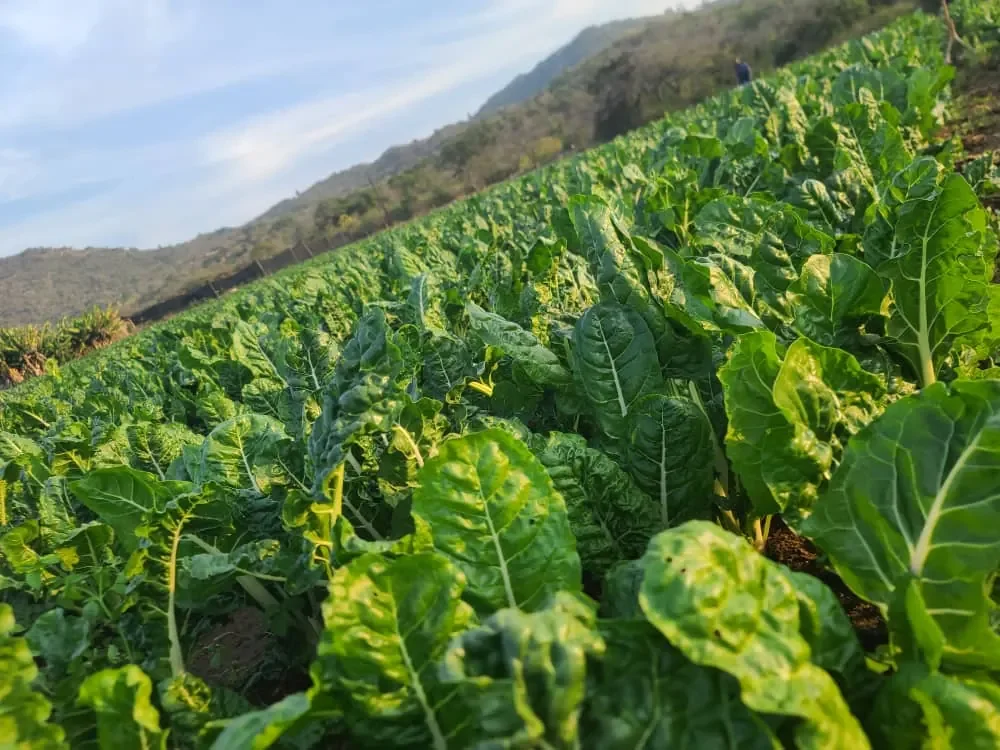
South African farmers do not need to own a large commercial farm to enter agricultural export markets. Smaller producers can also supply international buyers, provided their produce meets the importing country's requirements and the export chain can demonstrate where the product was grown, how it was handled and whether it passed the necessary inspections.
For fresh produce exporters, the process involves several organisations. The South African Revenue Service (SARS) handles customs registration, the Department of Agriculture manages food business operator registration and phytosanitary certification, the Perishable Products Export Control Board (PPECB) conducts export inspections and manages cold-chain requirements, and the Agricultural Produce Agents Council (APAC) registers fresh produce exporters under its statutory framework.
These are not interchangeable registrations, and they do not all apply to every type of exported product. Exporters of manufactured goods, for example, will have different compliance requirements from those shipping fresh citrus or avocados.
1. Register With SARS as an Exporter
The first administrative requirement is registration with SARS Customs and Excise.
SARS requires anyone wishing to export goods from South Africa to register as an exporter. This includes individuals, sole proprietors, companies, close corporations and trusts.
How to register
Applications are submitted through SARS eFiling using the Registration, Licensing and Accreditation (RLA) system.
The process involves:
- Linking the organisation's profile to the individual's eFiling profile.
- Assigning the appropriate RLA user rights and roles.
- Completing the Customs client application.
- Submitting the application and monitoring its progress through the eFiling inbox.
Documents required
The SARS exporter registration guidelines list supporting documents that include:
- Proof of residential address.
- Certified copy of the applicant's identity document.
- Company or close corporation registration documents, where applicable.
- Relevant SARS tax registration letters.
- A resolution, consent or other authority where applicable.
- Recent telephone or cellphone account details.
- Proof of bank account details.
SARS also states that the individual applicant must be older than 21 and have a permanent address in South Africa.
No security is required at the point of registration. Customs nevertheless reserves the right to request security depending on the applicant's risk status.
An exporter using a licensed customs clearing agent does not need separate EDI-user registration to submit customs declarations. This additional registration is required when the exporter intends to submit those declarations independently.
2. Register the Farming Operation With the Department of Agriculture
Customs registration does not mean that a farm is automatically approved to supply regulated agricultural products to overseas markets.
For fresh produce, farms, packhouses and export marketing agents must also comply with the Department of Agriculture's Food Business Operator (FBO) registration requirements.
The registration system supports traceability by assigning codes to different activities in the agricultural supply chain.
Understanding the different FBO codes
The Department uses several codes depending on the type of operation.
| CodeRegistration category | |
| PUC | Production Unit Code – identifies the farm or production unit |
| PHC | Packhouse Code – identifies the packing facility |
| CCS | Commercial Cold Store Code |
| PPOCES | Processing Plant Code |
| CD | Container Depot Code |
| TRANS | Transport Operator Code |
Export marketing agents also need the applicable FBO registration.
A farmer producing avocados, for instance, needs the appropriate production-unit registration. Where the fruit is packed at a separate commercial facility, that packhouse must also have the required registration.
These codes allow produce to be traced through the export chain and back to its production origin.
Where to register
The Department provides the Food Business Operator registration page, which includes application forms, an online registration guide and information about the FBO database.
Farmers should confirm the documents required for their particular operation before submitting an application.
3. Obtain Phytosanitary Certification
A phytosanitary certificate confirms that an agricultural consignment meets the plant-health requirements of its intended destination.
This is particularly important for fresh produce because importing countries control the movement of pests and plant diseases across their borders.
A South African exporter cannot assume that produce cleared for local sale will automatically qualify for export.
How phytosanitary certification works
The Department of Agriculture issues phytosanitary certificates after the relevant requirements have been assessed.
For fresh produce, the Department's export manual states that each export consignment requires the relevant phytosanitary certification.
Applications are handled through the electronic eCert platform.
The exporter must register as a user, register the relevant business and complete the electronic application for the intended destination country and commodity.
The required supporting documents differ according to the selected export agreement.
Special export markets
Some destinations have additional phytosanitary protocols covering specific crops, production areas and packing facilities.
These requirements may include:
- Approved production areas.
- Orchard or vineyard registration.
- Pest monitoring and control.
- Additional inspections.
- Approved packhouses.
- Specific treatment procedures.
The Department's export information and protocols should be checked before production is committed to a particular overseas buyer.
A consignment that fails to meet the destination country's requirements may be delayed, rejected or prevented from entering the market.
4. Register With PPECB for Inspection and Export Certification
The Perishable Products Export Control Board was established in 1926 and operates as a national public entity responsible for quality certification and cold-chain management in the perishable products industry.
For fresh produce exports, its involvement is compulsory.
The Department's fresh produce export manual states that every shipment must be inspected and passed for export by PPECB.
What does PPECB inspect?
The organisation provides several services throughout the export process.
These include:
- Inspection of produce against applicable export quality requirements.
- Food safety audits.
- Inspection of packing and handling facilities.
- Approval and inspection of cold stores.
- Container and transport equipment inspections.
- Monitoring temperatures during loading and transportation.
PPECB also checks whether products and transport arrangements meet the relevant quality and temperature conditions.
Which certificates are required?
An important distinction is that PPECB does not simply issue three identical certificates for every export.
For fresh produce, each inspected export consignment requires a PPECB export certificate accompanied by an addendum. These documents are generated through its TITAN system.
Food safety certification is a separate matter. Following a successful statutory audit, PPECB can issue a South African Good Agricultural Practices (SA GAP) compliance certificate. Certain recognised commercial food safety certifications may qualify an operation for exemption from SA GAP certification, although oversight can still involve unannounced audits.
Cold-chain management is another service. It involves temperature control, approved storage and transport conditions rather than a universal pre-cooling certificate required for every shipment.
Farmers should confirm which inspections and certifications apply to their commodity and destination.
Registering with PPECB
Exporters can find registration information through the PPECB registration process.
Its digital certification system, TITAN 2.0, allows clients to manage inspection and export certification activities.
PPECB announced its first fully digital export certificates through TITAN 2.0 on 13 November 2025.
5. Register With the Agricultural Produce Agents Council
Fresh produce exporters also need to consider registration with the Agricultural Produce Agents Council (APAC).
The statutory registration requirement is set out in section 16(1)(a) of the Agricultural Produce Agents Act.
The Department's step-by-step fresh produce export manual identifies APAC registration as a mandatory requirement for South African fresh produce exporters.
This is particularly relevant to businesses that operate as export marketing agents and arrange the sale of farmers' produce to international buyers.
APAC's responsibilities include regulating the agricultural produce agency industry and administering the applicable registration requirements.
Applications and further information are available from the APAC export agents page.
6. Keep Production and Traceability Records
Export certification depends on being able to identify where produce originated and how it moved through the supply chain.
A farmer should maintain accurate production records from the beginning of the growing season.
Useful records include:
- Farm and production-unit identification.
- Planting dates and crop varieties.
- Orchard or vineyard details, where applicable.
- Pesticide and fertiliser applications.
- Harvest dates and quantities.
- Packing and storage information.
- Inspection results.
- Consignment and destination details.
These records help establish traceability and demonstrate compliance with food safety and importing-country requirements.
The Department's fresh produce export manual explains that FBO codes, pallet identification and container numbers help link exported products to their original production units.
Without reliable records, an exporter may struggle to demonstrate that a consignment meets the required traceability and food safety standards.
7. Check Whether Your Product Requires an Export Permit
SARS customs registration does not replace an export permit where one is required.
Certain goods are subject to export controls under South African legislation and international agreements.
The International Trade Administration Commission (ITAC) administers the applicable export control permit process.
Not every agricultural product requires an ITAC export permit. The requirement depends on the product and its applicable export-control measures.
Before arranging a shipment, identify the product's customs classification and establish whether it appears on the controlled-goods list.
The South African Government's exporter and export permit information explains the process and provides the relevant application forms.
8. Check the Buyer's Requirements Before Shipping
Regulatory approval does not necessarily mean that a retailer or overseas importer will accept the produce.
International buyers may impose additional requirements covering pesticide residues, packaging, labelling, product grades, certification and delivery arrangements.
For example, a retailer may require GlobalG.A.P. certification even where the government export requirements have otherwise been met.
The maximum residue limits for pesticides also differ between markets. A chemical permitted for use locally may be restricted or subject to a lower residue limit in the destination country.
Exporters should establish these conditions with the buyer and the relevant commodity organisation before packing the first consignment.
For fresh produce, the Fresh Produce Exporters' Forum (FPEF) provides industry information and export training.
9. Where to Find the Official Export Requirements
| OrganisationMain responsibilityOfficial information | ||
| SARS | Customs exporter registration | SARS Exporters |
| Department of Agriculture | FBO registration and phytosanitary certification | FBO Registration |
| eCert | Electronic phytosanitary applications | eCert |
| PPECB | Produce inspection, export certification and cold-chain management | PPECB |
| APAC | Fresh produce exporter and agent registration | APAC |
| ITAC | Permits for controlled exports | ITAC |
A practical starting point: Farmers intending to export fresh produce should first identify their destination market and commodity, then establish the required SARS, FBO, phytosanitary, PPECB and APAC registrations. The procedures can overlap, so there is no universal rule that all registrations must be completed in precisely the same sequence. They should, however, be in place before the shipment is dispatched.
Research Sources and Further Reading
Government export requirements
SARS – Registration as an Exporter — Customs registration, eFiling procedures, supporting documents and EDI requirements.
Department of Agriculture – Food Business Operator Registration — FBO application forms, registration guidance and production-unit codes.
Department of Agriculture – Step-by-Step Manual for South African Fresh Produce Exporters (August 2021) — Statutory registration, inspection, export documentation, phytosanitary requirements and APAC registration.
Department of Agriculture – Export Certification Procedures — Export certificates, inspection procedures and supporting documentation.
eCert – Getting Started — Registration and electronic phytosanitary certificate applications.
Inspection and industry regulation
PPECB – Overview — Mandate and responsibilities of the Perishable Products Export Control Board.
PPECB – Cold Chain Management — Export cold stores, transport inspections and temperature management.
PPECB – Food Safety Services — SA GAP audits and food safety requirements.
PPECB – TITAN 2.0 Digital Export Certification, 14 November 2025 — Introduction of digital export certificates and addendums.
APAC – Export Agent Registration — Registration requirements for fresh produce exporters and agents.
Fresh Produce Exporters' Forum — Export industry information and training.
Export permits and trade controls
South African Government – Export Permits — Controlled goods and export permit applications.
International Trade Administration Commission — Export control measures and permit information.
Written by Siphesihle Zangwa, researcher, University of Mpumalanga. Cleaned up and edited by Samukelo Moloko, publisher, MzansiFarm. Updated 7 November 2026.